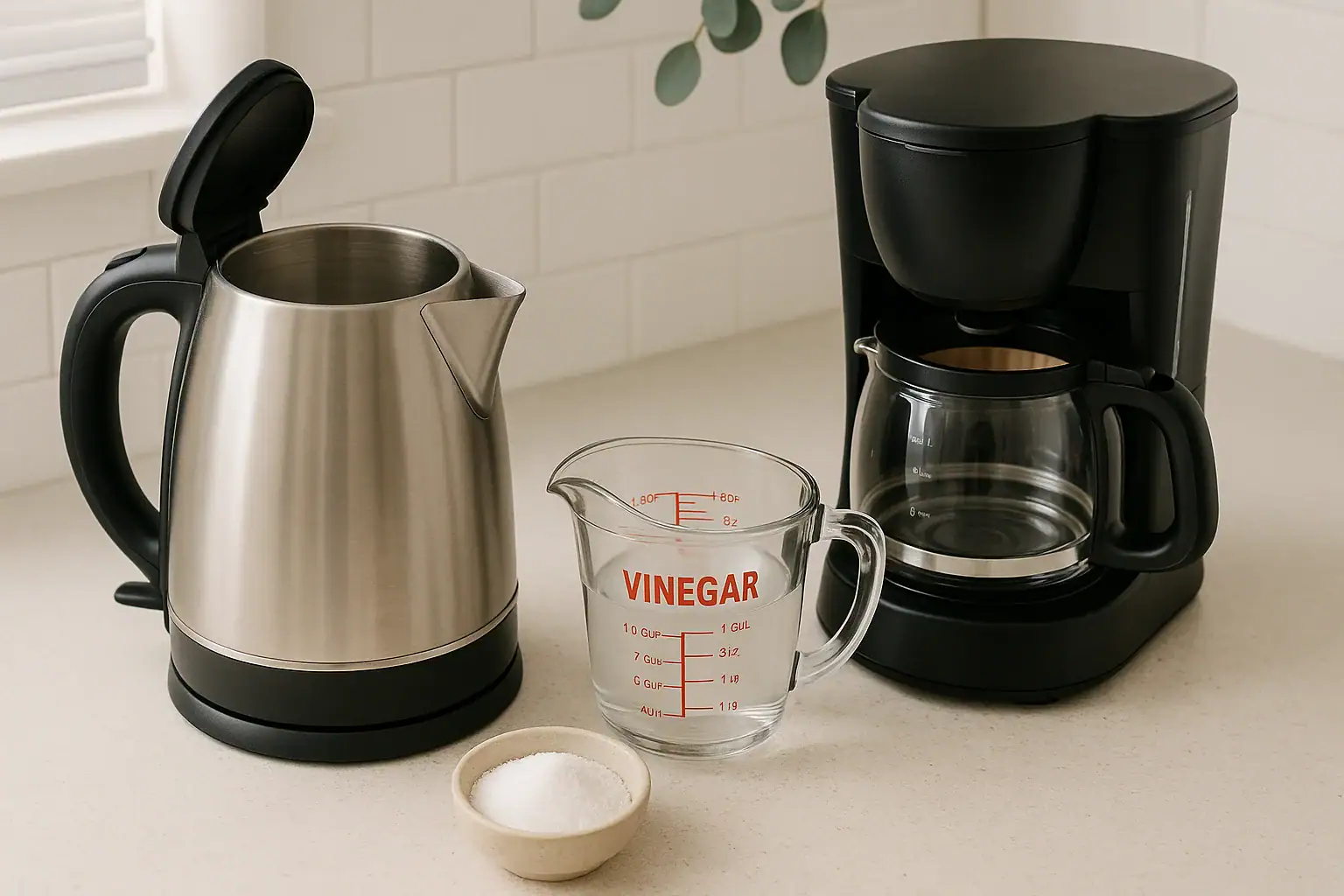
Hard water can quietly ruin your favorite hot drinks. Over time, minerals like calcium and magnesium build up inside your kettle and coffee maker, forming a white or chalky layer called limescale. This buildup can make appliances less efficient, slow to heat, noisy, and even change the taste of your coffee or tea. Regular descaling keeps your equipment working well and helps your drinks taste the way they should.
Two of the most popular home descaling options are vinegar and citric acid. Both are inexpensive and widely available, but they are not identical. Each has its own pros, cons, and best uses, especially when you are dealing with different materials and appliance designs. This guide compares vinegar vs citric acid for descaling kettles and coffee makers, and walks you through safe, step-by-step methods for each option.
Why Descaling Matters for Kettles and Coffee Makers
Whenever you heat hard water, minerals separate out and cling to the surfaces they touch. In a kettle or coffee maker, that usually shows up as white, beige, or even brownish crust on the heating element, the bottom, or internal tubing.
Signs Your Kettle or Coffee Maker Needs Descaling
- White or chalky residue on the bottom or sides of the kettle
- Flakes of scale floating in hot water
- Coffee that tastes flat, bitter, or slightly metallic
- Longer heating or brewing times than usual
- More noise when the appliance heats up
- Reduced steam or weak coffee flow
Ignoring limescale does more than affect taste. Heavy buildup can overwork heating elements, shorten appliance life, and in some cases cause uneven heating or hot spots that may damage the unit.
Vinegar vs Citric Acid: Key Differences
Both vinegar and citric acid are mild acids that dissolve mineral deposits. However, they behave differently and leave different aftereffects in your appliances.
What Is Vinegar?
Vinegar is a water-based solution of acetic acid, usually around 5 percent acidity for common household use. It is a strong odor cleaner and descaler that has been used in kitchens for generations.
Pros of using vinegar for descaling:
- Easy to find in most grocery stores
- Inexpensive and shelf-stable
- Effective on moderate to heavy limescale
- Can also help cut through some organic residues and odors
Cons of using vinegar:
- Strong smell that can linger in plastic parts and silicone seals
- May affect taste if not rinsed thoroughly
- Can be harsh on some rubber gaskets and finishes if used too strong or too often
What Is Citric Acid?
Citric acid is a naturally occurring acid found in citrus fruits. For descaling, it is usually sold as a dry, odorless, crystalline powder that you dissolve in water.
Pros of using citric acid for descaling:
- Very mild or no lingering smell
- Gentle on most metals, glass, and many plastics when properly diluted
- Leaves less noticeable aftertaste than vinegar when rinsed
- Easy to store in a small container and mix as needed
Cons of using citric acid:
- May be slightly less aggressive on very heavy, old scale compared with strong vinegar solutions
- Requires measuring and mixing with water
- Not always available in every grocery aisle, though often found online or in baking or canning sections
Which Is Safer for Your Appliances?
Both can be safe when properly diluted and rinsed. The main safety considerations are:
- Material compatibility: Stainless steel, glass, and many plastics tolerate either option when diluted. Very strong vinegar or acid solutions may be too harsh for some finishes or soft metals over time.
- Seals and gaskets: Repeated exposure to strong acids can slowly weaken some rubber or silicone components. Using moderate strength solutions and limiting contact time reduces this risk.
- Smell and taste: Vinegar is more likely to leave a noticeable odor or flavor if not rinsed thoroughly, especially in coffee makers with internal tubing.
For most users, citric acid is the more pleasant option because it is low odor and easier to rinse away. Vinegar can be a good choice when buildup is heavy and you are willing to run several rinse cycles.
How Often Should You Descale?
How often you need to descale depends mainly on your water hardness and how often you use the appliance.
General Guidelines
- Very hard water: descale every 3 to 4 weeks
- Moderately hard water: descale every 6 to 8 weeks
- Soft water or filtered water: descale every 3 months or as needed
If you see visible scale or notice changes in taste or performance, descale sooner rather than later. Light, frequent descaling is easier on your appliances than waiting for a thick layer to build up.
Safety Tips Before You Start Descaling
Before using vinegar or citric acid in your kettle or coffee maker, keep these safety basics in mind:
- Always unplug electric appliances before filling, emptying, or cleaning.
- Allow recently used appliances to cool to avoid burns.
- Do not mix vinegar and other cleaners, especially chlorine-based products.
- Use only food-safe acids and clean, potable water.
- Avoid abrasive tools that can scratch stainless steel, glass, or coated surfaces.
- Check your appliance manual for any specific warnings about acidic cleaners.
How to Descale a Kettle with Vinegar
Vinegar is a straightforward option for kettles, especially those made of stainless steel or glass. Because kettles are open, the smell dissipates more easily than in closed coffee systems.
Vinegar Descaling Ratio for Kettles
A common and effective mixture is:
- 1 part white vinegar
- 1 part water
Step-by-Step: Descaling a Kettle with Vinegar
- Unplug and cool: Make sure the kettle is unplugged and completely cool.
- Fill with solution: Fill the kettle to the maximum mark with equal parts vinegar and water.
- Heat the mixture: Turn the kettle on and bring the solution just to a boil, then switch it off.
- Soak: Let the hot vinegar solution sit in the kettle for 20 to 30 minutes. For heavy scale, you can soak up to 1 hour.
- Check and gently scrub: After soaking, pour out the solution. Use a soft brush or non-scratch sponge to loosen any remaining deposits.
- Rinse thoroughly: Rinse the inside several times with clean water until the vinegar smell is minimal.
- Boil fresh water: Fill the kettle with clean water, bring it to a boil, then discard. Repeat once more if you still notice a smell or taste.
If you are sensitive to vinegar odor, follow with one more plain water boil to clear any remaining scent.
How to Descale a Kettle with Citric Acid
Citric acid works well for kettles and is especially nice if you dislike strong odors. It is usually sold as a powder, so you will need to mix it with water.
Citric Acid Descaling Ratio for Kettles
A practical mixture for most kettles is:
- 1 to 2 tablespoons citric acid powder
- 4 cups (about 1 liter) of warm water
Step-by-Step: Descaling a Kettle with Citric Acid
- Unplug and cool: Make sure the kettle is unplugged and cool to the touch.
- Mix the solution: Dissolve the citric acid powder in warm water until fully dissolved.
- Fill the kettle: Pour the solution into the kettle, covering any visible scale.
- Heat gently: Bring the solution to a near boil, then switch the kettle off. You do not need a rolling boil.
- Soak: Let the solution sit for 20 to 30 minutes. The scale should begin to dissolve and may flake off.
- Empty and inspect: Pour out the solution and inspect the interior. Use a non-scratch sponge to remove any remaining residue.
- Rinse and boil water: Rinse several times with clean water. Boil a full kettle of fresh water and discard it to remove any remaining acid.
If scale is still present, repeat with a slightly stronger solution rather than extending soak times for many hours.
How to Descale a Coffee Maker with Vinegar
Coffee makers have internal tubing and components you cannot see, so descaling is about more than the visible reservoir. Vinegar can dissolve scale inside these hidden areas, but it requires thorough rinsing to remove the smell and taste.
Vinegar Descaling Ratio for Coffee Makers
For many standard drip coffee makers, a typical ratio is:
- 1 part vinegar
- 1 part water
Step-by-Step: Descaling a Drip Coffee Maker with Vinegar
- Empty the machine: Remove any coffee grounds and filters. Make sure the carafe is clean.
- Mix the solution: Fill the water reservoir with equal parts vinegar and water.
- Start a brew cycle: Begin a brew cycle without coffee grounds, allowing the solution to move into the internal system.
- Pause halfway: When about half the solution has cycled through, pause the machine (if possible) and let it sit for 20 to 30 minutes to work on internal scale.
- Complete the cycle: Resume and finish the brew cycle, then discard the hot solution from the carafe.
- Rinse cycles: Fill the reservoir with fresh water only and run at least two full brew cycles, discarding the water each time.
- Check for odor: Smell the carafe and brewed water. If vinegar odor remains, run one or two more plain water cycles.
For single-serve or specialized coffee systems, follow the same general idea but adjust volumes and steps to match the manufacturer instructions.
How to Descale a Coffee Maker with Citric Acid
Citric acid is often preferred for coffee makers because it is easier to rinse and less likely to leave a lingering smell. The method is similar to vinegar descaling but uses a measured powder solution.
Citric Acid Descaling Ratio for Coffee Makers
A common starting point is:
- 1 to 2 tablespoons citric acid powder
- 4 to 6 cups of warm water (adjust for your reservoir size)
Step-by-Step: Descaling a Drip Coffee Maker with Citric Acid
- Prepare the machine: Remove coffee grounds and filters. Clean the carafe.
- Mix the solution: Dissolve citric acid in warm water until no crystals remain.
- Fill the reservoir: Pour the solution into the water tank.
- Run a brew cycle: Start a brew cycle without coffee grounds, allowing the solution to move through the system.
- Soak mid-cycle: If possible, pause when half the solution has passed through and let the machine sit for 15 to 20 minutes.
- Finish and discard: Complete the cycle and discard the used solution.
- Rinse with water: Run at least two full cycles with fresh water only, discarding the water each time.
Because citric acid has very little odor, two rinse cycles are often enough, though you can run more if you prefer.
Which Is Better for You: Vinegar or Citric Acid?
Both methods can work well. The best choice depends on your priorities and your specific appliances.
Choose Vinegar If:
- You need a solution that is easy to find and low cost
- You are dealing with heavy, stubborn limescale buildup
- You do not mind running extra rinse cycles to remove odor
- You are mainly descaling an open kettle where smell is less of an issue
Choose Citric Acid If:
- You are sensitive to strong smells and tastes
- You want a gentler, low-odor option for frequent maintenance
- You are descaling a coffee maker with internal tubing and plastic parts
- You prefer a dry product that stores easily and mixes as needed
For many households, a practical approach is to use citric acid for regular maintenance descaling and reserve vinegar for occasional deep cleanings when buildup is more severe.
Preventing Limescale Between Descaling Sessions
Reducing mineral buildup in the first place makes descaling easier and less frequent. Consider these simple habits:
- Use filtered water: A basic water filter can lower mineral content and slow scale formation.
- Empty unused water: Do not leave water sitting in kettles or coffee reservoirs for long periods.
- Wipe surfaces dry: After use, allow lids to stay open briefly so moisture can evaporate.
- Descale on a schedule: Mark a reminder on your calendar based on your water hardness.
- Rinse after each use: For kettles, a quick rinse and swirl can remove loose minerals before they harden.
When to Avoid Vinegar or Citric Acid
Most modern kettles and coffee makers tolerate mild acids, but there are exceptions. Always check your manual first. In general, use extra caution if:
- Your appliance has decorative or coated metal that could be sensitive to acids
- The manual specifically warns against vinegar or acidic cleaners
- You see signs of corrosion or damage on internal parts
- You have a specialty coffee system with proprietary cleaning products recommended by the manufacturer
If in doubt, start with a weaker solution, limit contact time, and rinse thoroughly. If you notice any unusual discoloration or damage, stop and consult the manufacturer.
Final Thoughts
Keeping kettles and coffee makers free of limescale is one of the simplest ways to protect your appliances and enjoy better-tasting hot drinks. Both vinegar and citric acid are effective, budget-friendly options when used correctly. Vinegar is strong and widely available, while citric acid offers a gentler, low-odor alternative that many people prefer for coffee equipment.
Choose the method that fits your comfort level, follow safe dilution and rinsing practices, and descale regularly based on your water hardness. With a consistent routine, you can extend the life of your appliances and keep every cup of coffee or tea tasting clean and fresh.
If you are interested in more tips for caring for your kitchen and water-related appliances, you can explore additional guides and how-tos at this water and kitchen resource hub.
 Coffee Maker Descaling Schedule for Better Taste: A Simple Checklist
 How to Safely Remove a Stuck Refrigerator Water Filter
 Ice Maker Water Tastes Bad: Common Causes and Easy Fixes