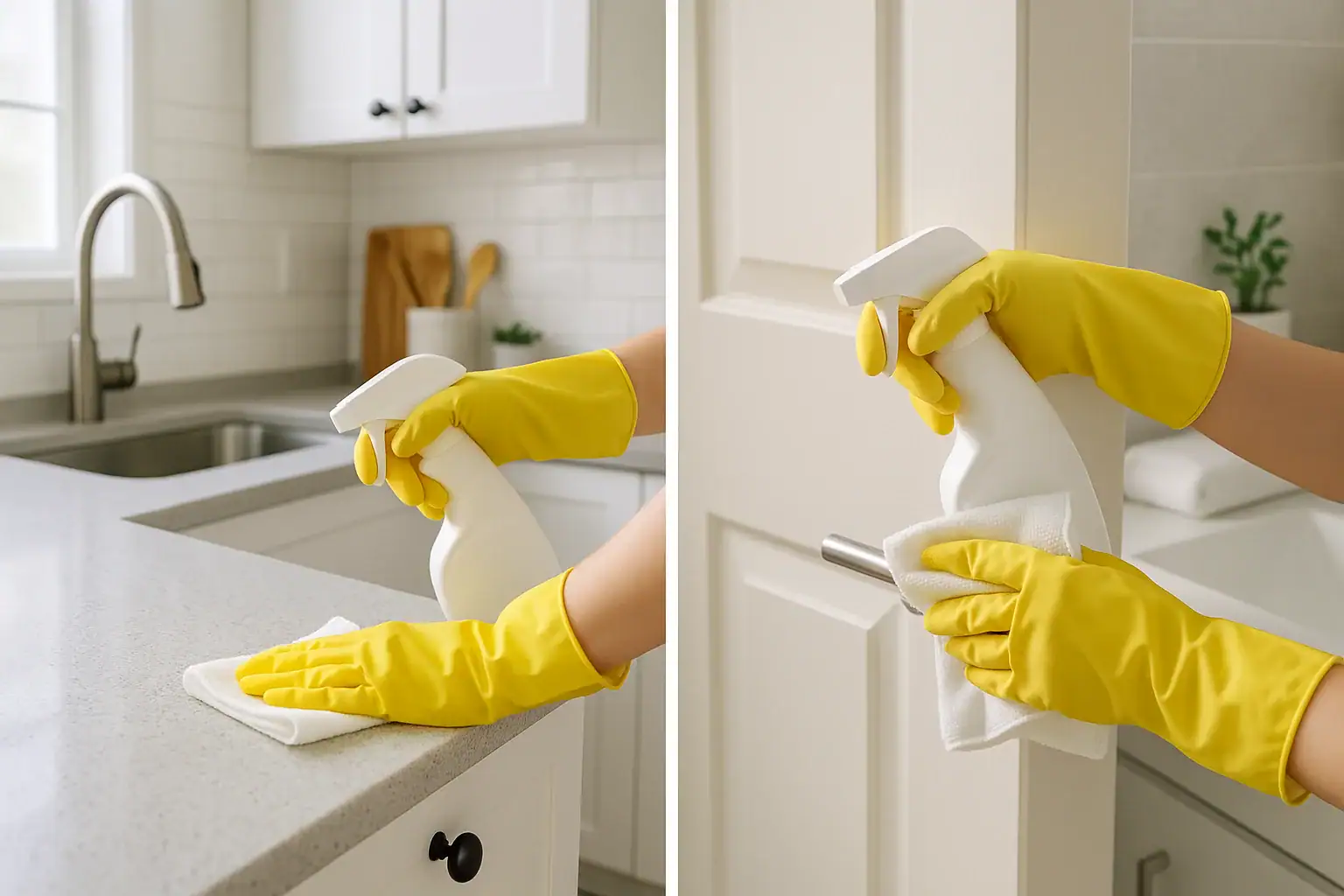
Disinfecting is one of those household tasks that sounds simple, but can easily be overdone or done incorrectly. Many people spray disinfectant on every surface, every day, thinking more is always better. Others assume basic cleaning is enough in every situation. The truth is somewhere in the middle: some surfaces truly need regular disinfecting, others only need routine cleaning, and some should be left mostly alone. Knowing the difference helps you protect your household from germs without exposing your family, pets, and home to unnecessary chemicals.
On this page(click to collapse)
- Cleaning vs. Disinfecting vs. Sanitizing
- When Disinfecting Is Truly Necessary
- What Usually Does Not Need Disinfecting
- How to Disinfect Surfaces Safely Step by Step
- Disinfecting Different Types of Surfaces
- How Often Should You Disinfect?
- Common Disinfecting Mistakes to Avoid
- Reducing the Need for Frequent Disinfecting
- Putting It All Together
- Related guides
This guide explains how to disinfect surfaces safely, when disinfecting is actually needed, and when simple cleaning is sufficient. You will learn the difference between cleaning, sanitizing, and disinfecting, which areas of your home are high-risk, and how to use disinfectants correctly so they work as intended. You will also find practical tips to reduce germ buildup in the first place, so you can spend less time scrubbing and more time enjoying a healthy home.
Cleaning vs. Disinfecting vs. Sanitizing
Before you reach for any product, it helps to understand what you are trying to accomplish. Not every mess needs the strongest possible solution. In fact, using a disinfectant when it is not needed can be wasteful and may contribute to skin irritation, indoor air issues, and surface damage over time.
What “cleaning” means
Cleaning is the process of removing dirt, food residue, dust, and some germs from surfaces using soap or detergent and water. Cleaning does not necessarily kill germs, but it physically removes many of them. For most everyday situations, cleaning is enough.
- Removes visible dirt and grime
- Helps reduce the number of germs by rinsing or wiping them away
- Is the first step before sanitizing or disinfecting
What “sanitizing” means
Sanitizing reduces the number of germs on a surface to a level considered safe by public health standards. It does not necessarily kill all viruses and bacteria, but it lowers the overall germ count.
- Commonly used on food-contact surfaces like cutting boards and countertops
- Often faster than full disinfection
- Useful for everyday kitchen cleanup
What “disinfecting” means
Disinfecting uses chemicals or other methods to kill most germs on surfaces, including many viruses and bacteria. Disinfecting is more intensive than sanitizing and is best reserved for high-risk situations.
- Targets germs that can cause illness
- Requires specific contact time (the surface must stay wet long enough)
- Should follow a thorough cleaning step for best results
In a typical household, you will mostly clean, sometimes sanitize, and disinfect only when there is a higher risk of spreading illness or contamination.
When Disinfecting Is Truly Necessary
Not every surface needs to be disinfected daily. Focus your efforts where germs are most likely to spread or cause illness. This targeted approach helps you keep your home healthier without overusing chemicals.
High-touch surfaces
These are surfaces many people touch throughout the day, often without thinking. During cold and flu season, after someone has been sick, or when you have guests, it is wise to disinfect these areas regularly.
- Door handles and knobs
- Light switches and lamp switches
- Faucet handles and toilet flush levers
- Refrigerator, microwave, and oven handles
- Remote controls and game controllers
- Stair railings and banisters
Bathroom surfaces
Bathrooms are high-moisture spaces where germs can spread easily. Some surfaces here benefit from regular disinfecting, especially in shared bathrooms.
- Toilet seats, lids, and flush handles
- Bathroom sink handles and counters
- Shower handles and frequently touched tile areas
- Bathroom door handles and cabinet pulls
Kitchen and food-prep areas
Foodborne germs can cause serious illness, so kitchen hygiene matters. You do not need to disinfect every inch of your kitchen daily, but certain situations call for more than simple cleaning.
Disinfect or sanitize after:
- Handling raw meat, poultry, or seafood on counters or cutting boards
- Cleaning up raw egg spills
- Cleaning up juices or drips from raw meat packaging
- Dealing with spoiled food leaks in the refrigerator
After illness or exposure
When someone in your household is sick or recently recovered, disinfecting becomes more important to help limit the spread of germs.
- Disinfect high-touch surfaces daily while someone is ill
- Pay extra attention to shared bathrooms and remote controls
- Disinfect surfaces touched by bodily fluids (vomit, blood, mucus) after cleaning
What Usually Does Not Need Disinfecting
Some surfaces rarely need more than regular cleaning. Over-disinfecting these areas can waste time and products without adding real health benefits.
Floors in low-risk areas
Unless there has been a spill of bodily fluids or raw meat, most floors can be cleaned with regular floor cleaner or a mild solution.
- Hallways, living rooms, and bedrooms
- Rugs and carpets without contamination
- Entryway floors that only see normal foot traffic
Walls and ceilings
Walls and ceilings typically do not need disinfecting unless they have been directly contaminated by a sneeze, cough, or spill. In most cases, dusting and occasional spot-cleaning are enough.
Furniture and soft surfaces
Soft surfaces like couches, curtains, and pillows are better handled with vacuuming, washing, or steam cleaning rather than frequent chemical disinfecting.
- Vacuum upholstered furniture regularly
- Launder removable covers according to care labels
- Spot-clean spills quickly to prevent stains and odors
Personal spaces for healthy individuals
For healthy people, personal desks, nightstands, and dressers usually only need occasional cleaning. You can wipe them with a damp cloth and gentle cleaner unless they have been exposed to illness or raw food.
How to Disinfect Surfaces Safely Step by Step
Once you know a surface truly needs disinfecting, it is important to do it correctly. Many people spray and wipe immediately, which can leave germs behind. Follow these steps for safer, more effective disinfection.
1. Clean the surface first
Disinfectants work best on clean surfaces. Dirt, grease, and dried food can block the disinfectant from reaching germs.
- Remove crumbs, dust, or debris with a cloth or paper towel.
- Wash with soap or a general cleaner and water.
- Rinse or wipe away any residue.
2. Choose an appropriate disinfectant
Select a product suited to the surface and the type of germs you are concerned about. Always read the label for:
- Approved surfaces (for example, hard nonporous vs. soft surfaces)
- Required contact time (how long the surface must stay wet)
- Safety instructions, including ventilation and protective gear
3. Protect yourself and your home
Even household disinfectants can be irritating if used carelessly. Take basic precautions each time you disinfect.
- Open windows or turn on exhaust fans for better airflow.
- Wear disposable or reusable cleaning gloves.
- Avoid mixing different cleaners or disinfectants.
- Keep children and pets away from freshly treated surfaces until dry.
4. Apply enough product and let it sit
Disinfectants must stay on the surface long enough to work. Spraying lightly and wiping right away is mostly just cleaning again, not disinfecting.
- Apply the disinfectant so the surface is thoroughly wet.
- Check the label for the required contact time, often several minutes.
- Re-wet the surface if it dries before the time is up.
5. Wipe or rinse if needed
Some products can be left to air-dry, while others should be rinsed, especially on food-contact surfaces.
- For kitchen counters and cutting boards, rinse with clean water after disinfecting.
- Dry with a clean towel or allow to air-dry fully.
- Wash your hands after removing gloves.
Disinfecting Different Types of Surfaces
Not all surfaces can handle the same products. Using the wrong method can damage finishes or reduce effectiveness. Adjust your approach based on the material you are cleaning.
Hard, nonporous surfaces
These surfaces are the easiest to disinfect and are commonly found in kitchens and bathrooms.
- Countertops made of laminate, stone, or solid surfaces
- Bathroom sinks, toilets, and tubs
- Appliance handles and knobs
Clean first, then apply a suitable disinfectant, making sure the surface stays wet for the recommended time. Rinse food-prep areas afterward.
Electronics and touchscreens
Electronics are high-touch but sensitive to moisture. Too much liquid can damage them.
- Turn off and unplug devices before cleaning.
- Use a lightly dampened cloth instead of spraying directly on the device.
- Avoid getting moisture into openings or ports.
- Follow the manufacturer’s cleaning guidance when available.
Soft surfaces and textiles
Soft surfaces cannot usually be fully disinfected with typical household products, but you can reduce germs significantly.
- Wash bedding, towels, and washable rugs in the warmest water safe for the fabric.
- Dry items completely in a dryer or in direct sunlight when possible.
- For non-washable items, vacuum thoroughly and spot-clean as needed.
Children’s items
Items used by children, especially those that go in the mouth, require extra care.
- Wash washable toys in warm soapy water, then rinse well.
- Sanitize or disinfect according to product instructions, then rinse again if needed.
- For hard toys, focus on those shared between children or used during illness.
How Often Should You Disinfect?
The right schedule depends on your household, health concerns, and daily habits. Instead of disinfecting everything all the time, build a simple routine based on risk.
Everyday cleaning
On most days, focus on cleaning rather than disinfecting.
- Wipe kitchen counters after meal prep with soap and water or a general cleaner.
- Clean bathroom sinks and counters as needed to remove toothpaste, soap, and grime.
- Do quick spot-cleaning of spills and sticky spots.
Weekly or regular disinfecting
Some surfaces benefit from periodic disinfecting, even when no one is sick.
- Bathroom toilets and sink handles
- Kitchen sink and faucet handles
- Frequently used light switches and door handles
- Remote controls and shared devices
During and after illness
Increase disinfecting when someone has a contagious illness or when there has been exposure to bodily fluids.
- Disinfect high-touch surfaces daily until the person recovers.
- Clean and disinfect bathroom surfaces more frequently.
- Wash bedding, towels, and frequently used cloth items in warm water.
Common Disinfecting Mistakes to Avoid
Even with good intentions, it is easy to make mistakes that reduce effectiveness or increase risk. Being aware of these habits can help you disinfect more safely and efficiently.
Using too much product
More is not always better. Over-spraying can leave residue, create strong odors, and waste product. Apply enough to wet the surface but avoid puddles and overspray.
Wiping too soon
Wiping immediately after spraying is one of the most common errors. If the surface does not stay wet for the recommended time, many germs may survive. Always check the label and set a timer if needed.
Mixing products
Mixing different cleaners or disinfectants can create harmful fumes or reactions. Use one product at a time, and never combine them in the same container or on the same surface without rinsing thoroughly between uses.
Ignoring ventilation
Using disinfectants in small, closed spaces can lead to strong odors and irritation. Open windows, run fans, or take short breaks to step into fresh air, especially when cleaning bathrooms and small rooms.
Skipping handwashing
Gloves are helpful, but they are not a complete substitute for washing your hands. After you finish disinfecting, remove gloves carefully and wash your hands with soap and water.
Reducing the Need for Frequent Disinfecting
One of the best ways to maintain a healthy home is to prevent germs from building up in the first place. Simple habits can reduce how often you need to reach for disinfectants.
Encourage good hand hygiene
Clean hands are your first line of defense.
- Wash hands after using the bathroom, before eating, and after handling raw foods.
- Teach children to wash hands for at least 20 seconds.
- Keep hand soap available at every sink.
Manage clutter
Cluttered surfaces are harder to clean and disinfect. Keeping counters and tables as clear as possible makes quick wipe-downs easier and more effective.
Use washable items where possible
Choose items that can be easily washed and dried.
- Use washable dishcloths and towels instead of many disposable wipes.
- Launder reusable cleaning cloths in warm water after heavy use.
- Opt for washable mattress and pillow protectors in bedrooms.
Establish simple routines
Short, regular cleaning habits can reduce the need for deep disinfecting sessions.
- Wipe kitchen counters after cooking.
- Give bathroom sinks a quick clean every few days.
- Do a weekly pass on high-touch surfaces with a disinfectant when needed.
Putting It All Together
Disinfecting does not have to be overwhelming or constant. The key is to understand when it is truly necessary and how to do it safely. Focus on high-touch areas, bathrooms, and food-prep spaces, especially during illness or after handling raw foods. For most other surfaces, regular cleaning is enough.
By cleaning first, using disinfectants correctly, and building simple daily habits, you can maintain a healthier home without overusing harsh products. A thoughtful approach protects your household, your surfaces, and your time, helping you keep your space clean, organized, and comfortable all year long.
If you want to explore more ways to streamline your cleaning and organizing routines, consider setting up a simple home schedule that works for your lifestyle and revisiting it each season as your needs change.
Recommended next:
Related posts
Browse this topic →
Scent Free Cleaning Routine for Sensitive Noses: A Practical Guide
How to Create Smart Garage Shelf Zones for Tools, Sports Gear, and Household Backstock
Laundry Sorting Systems for Small Households: Simple Ways to Stay Organized
How to Remove Water Stains on Glass Tables, Mirrors, and Shower Glass
How to Clean Under Appliances Safely Without Moving Everything
Charger Drawer Organization for Cables, Adapters, and Batteries
Keep reading
About this site
Signature Home Guide publishes practical, independent home guides. We aim to be clear, helpful, and transparent.
Affiliate disclosure
As an Amazon Associate, we earn from qualifying purchases. Some links on this site may be affiliate links. If you buy through these links, we may earn a small commission at no extra cost to you. This helps support our content. Learn more.