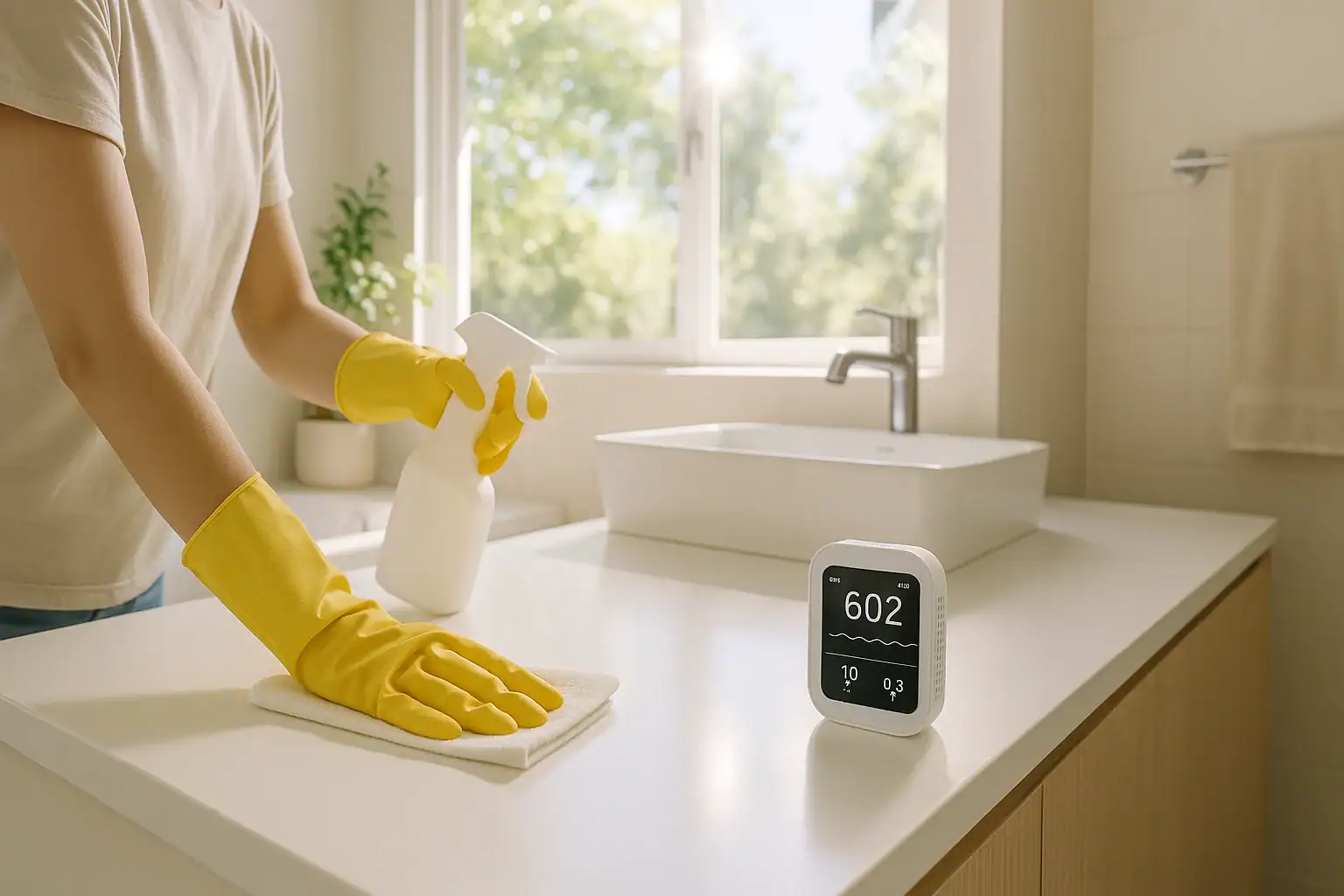
If you recently bought an air quality monitor, you may be surprised or even alarmed when the VOC number suddenly jumps right after you clean. It can feel confusing: your home looks and smells fresh, yet the device insists the air just got worse. The good news is that a spike in VOC readings after cleaning is common and usually manageable. Understanding what is happening in the air, how your monitor works, and which cleaning habits matter most can help you respond calmly and effectively.
This guide explains why VOC readings often rise after cleaning, what those numbers actually mean for your health, and the practical steps you can take to reduce exposure. You will also learn how to choose and use cleaning products in a way that keeps your home both clean and comfortable to breathe in.
What VOCs Are and Why Your Monitor Detects Them
VOCs, or volatile organic compounds, are gases released from certain solids and liquids. They evaporate easily at room temperature, which means they can quickly move from a surface or container into the air you breathe.
Common indoor sources of VOCs include:
- Household cleaners and disinfectants
- Air fresheners, candles, and fragrance sprays
- Paints, stains, and varnishes
- Adhesives, glues, and caulks
- New furniture, flooring, and mattresses
- Personal care products such as perfumes and hair sprays
- Office supplies like markers and some inks
Indoor air quality monitors typically measure something called total VOCs (TVOCs). Instead of identifying each chemical separately, they provide a single combined number that reflects the overall level of VOC gases in the air. That is why the reading can jump quickly when you spray a cleaner or wipe down a surface with a product that evaporates.
Why VOC Readings Spike After Cleaning
A spike in VOC readings after cleaning is usually the result of several overlapping factors. Understanding these can help you decide when to be concerned and when a short-term increase is expected.
1. Cleaning Products Release VOCs as They Evaporate
Many cleaners are designed to dry quickly and cut through grease, soap scum, or grime. To do that, they often rely on solvents and other ingredients that evaporate easily. As soon as you spray, pour, or wipe them, VOCs are released into the air.
Typical cleaning tasks that can cause a sharp TVOC rise include:
- Spraying glass or multi-surface cleaners on windows, mirrors, and counters
- Using degreasers on stoves, ovens, or range hoods
- Cleaning bathrooms with shower, tile, or grout products
- Using disinfectant sprays or wipes on high-touch surfaces
- Polishing furniture, floors, or stainless steel
Because the monitor senses the gases in real time, the reading can jump within seconds of using these products.
2. Fragrance and Scented Additives
Many cleaners, fabric refreshers, and air fresheners contain fragrance blends. These scents are made from various chemicals, many of which are VOCs. Even products labeled as having a light scent can contribute to a noticeable increase in your monitor’s readings.
If you notice that the VOC number spikes most when you use scented sprays, candles, or plug-in fresheners, fragrance is likely a major contributor.
3. Poor Ventilation While You Clean
When you clean in a closed room, VOCs can build up quickly because there is nowhere for the gases to go. Bathrooms, laundry rooms, and small kitchens are common problem areas.
Without fresh air coming in or stale air being pushed out, your air quality monitor may show a high TVOC level for longer than expected, even after you finish cleaning.
4. Stirring Up Existing Pollutants
Cleaning does more than add new VOCs to the air. It can also disturb dust and residues that were already on surfaces. When you dust, vacuum, or scrub, you may release particles and trapped gases that had settled earlier.
For example:
- Vacuuming can stir up dust that contains residues from older cleaning sessions, personal care products, or outdoor pollution.
- Scrubbing surfaces can release old cleaner residue that had dried and then partially re-evaporates.
- Using hot water or steam can increase evaporation of existing chemicals on surfaces.
5. Temperature and Humidity Changes
Cleaning often involves warm water and sometimes hot surfaces. Warmer temperatures and higher humidity can increase the rate at which VOCs off-gas from surfaces, furnishings, and building materials.
If you clean with hot water, run a hot shower while scrubbing the tub, or use a steam cleaner, you may see a VOC spike that is partly due to increased off-gassing, not just the cleaner itself.
How Worried Should You Be About VOC Spikes?
Seeing a high number on your air quality monitor can be unsettling, but context matters. Not every spike is an emergency. Consider these factors when deciding how concerned to be.
Short-Term vs. Long-Term Exposure
Short-term VOC spikes that last minutes to a few hours after cleaning are common. Many people experience temporary symptoms such as:
- Mild eye, nose, or throat irritation
- Headaches or lightheadedness
- A stronger sense of odor or chemical smell
These symptoms usually improve once the area is ventilated and levels drop. Long-term exposure to elevated VOCs, however, can contribute to more persistent issues, especially for sensitive individuals.
Who Is Most Sensitive to VOCs
Some people are more affected by VOCs than others. Extra caution is wise if your household includes:
- Infants and young children
- Pregnant people
- Older adults
- Anyone with asthma, allergies, or other respiratory conditions
- People who experience migraines or chemical sensitivities
For these groups, reducing both the intensity and frequency of VOC spikes is especially important.
Understanding Your Monitor’s Ranges
Each air quality monitor uses its own scale and categories, but many provide labels such as good, moderate, or poor. Review the user guide for your specific device so you know:
- What numerical range is considered typical for indoor air
- At what level the device recommends ventilation
- How quickly readings usually respond to changes
Remember that TVOC readings are a broad indicator, not a medical diagnosis. Use them as a tool to guide your habits, not as the only measure of safety.
Immediate Steps to Take When VOCs Spike After Cleaning
If your monitor shows a sharp rise right after you clean, there are several simple actions you can take to bring levels down more quickly.
1. Increase Ventilation Right Away
Moving fresh air through the space is the fastest way to reduce VOCs.
- Open windows and doors on opposite sides of the room or home to create a cross-breeze.
- Turn on exhaust fans in bathrooms, kitchens, and laundry rooms.
- Use portable fans to push indoor air toward open windows or doors.
Keep ventilation going for at least 30 to 60 minutes after you finish cleaning, or until your monitor shows that levels have dropped back into your usual range.
2. Leave the Room While Products Dry
The strongest VOC release often happens while cleaners are wet and drying. If possible:
- Apply the cleaner, scrub or wipe, then step out of the room while surfaces dry.
- Close the door behind you but leave a window open or an exhaust fan running.
- Re-enter once the smell has faded and your monitor shows improvement.
3. Avoid Layering Multiple Products at Once
Using several cleaners, sprays, and fragrances in a short period can cause a much larger VOC spike than using one product at a time.
Try to:
- Clean one area or surface at a time instead of the whole home at once.
- Skip air fresheners or scented candles immediately after cleaning.
- Rinse surfaces with plain water when the label recommends it to remove residue.
4. Use an Air Purifier with the Right Filter
Some air purifiers include filters designed to reduce gases and odors. These often contain activated carbon or similar materials that can help absorb certain VOCs.
Place the purifier in the room you are cleaning, run it on a higher setting during and after cleaning, and maintain the filters as recommended so they stay effective.
Long-Term Strategies to Reduce VOC Spikes From Cleaning
Beyond reacting to spikes, you can adjust your cleaning routine and product choices to keep VOC levels more stable over time.
1. Rethink Your Cleaning Products
Not all cleaners release the same amount of VOCs. When shopping or organizing your supplies, consider:
- Fragrance-free options: Products without added scent usually emit fewer VOCs related to fragrance.
- Simpler formulas: Multi-purpose cleaners that handle several tasks may reduce the number of different products you use.
- Concentrates: Some concentrates are designed to be diluted with water, which can reduce the amount of solvent in the air per use.
Always follow label directions, especially around ventilation and safe use. More product is not always better; using extra can increase VOCs without improving cleanliness.
2. Use Low-VOC Methods Where Possible
Many everyday cleaning tasks can be handled with lower-VOC approaches, especially for routine maintenance.
- Microfiber cloths: These can often clean glass, mirrors, and counters with just water.
- Soap and water: Mild soap with warm water can handle many surfaces without strong solvents.
- Spot cleaning: Address spills and messes quickly so you need less aggressive products later.
Reserve stronger cleaners for occasional deep cleaning rather than daily use.
3. Improve Overall Home Ventilation
Homes that are tightly sealed for energy efficiency can trap VOCs more easily. To reduce buildup:
- Use kitchen and bathroom exhaust fans every time you cook or shower.
- Open windows regularly when outdoor conditions allow.
- Consider having your home’s ventilation system evaluated by a qualified professional if you often see high readings.
4. Store Cleaning Products Wisely
Even when you are not using them, some products can slowly release VOCs from the container.
- Keep containers tightly closed when not in use.
- Store them in a cool, well-ventilated area, away from living and sleeping spaces if possible.
- Avoid storing large quantities of rarely used products inside the home.
5. Adjust Your Cleaning Schedule
Timing can make a big difference in how VOC spikes affect you.
- Clean earlier in the day so you can ventilate for several hours before bedtime.
- Avoid heavy cleaning right before guests arrive, especially if they are sensitive.
- Spread out deep-cleaning tasks over several days instead of doing everything at once.
How to Use Your VOC Monitor as a Helpful Tool
Your air quality monitor can do more than warn you about spikes. It can also guide you toward better habits over time.
1. Run Simple Experiments
Try small changes and watch how your VOC readings respond. For example:
- Clean one bathroom with your usual products and another with fragrance-free or lower-VOC options.
- Clean once with windows closed, then repeat another day with windows open and fans on.
- Compare using a spray cleaner directly on surfaces versus spraying it onto a cloth first.
Record which approaches lead to smaller and shorter spikes. Over time, you can build a routine that keeps your home clean with less impact on air quality.
2. Learn Your Home’s “Normal” Range
Pay attention to your monitor on days when you are not cleaning or cooking. This helps you understand your typical baseline. Then, when you see a spike, you can compare it to what is normal for your space.
3. Combine VOC Data With How You Feel
Numbers are only part of the story. Notice how you and your household feel during and after cleaning sessions. If certain products or methods consistently cause headaches, coughing, or irritation, that is valuable information, even if the monitor does not show an extreme number.
When to Seek Additional Help
Most VOC spikes related to cleaning are short-lived and manageable with better ventilation and product choices. However, there are times when it makes sense to get extra support.
Persistent High Readings
If your VOC levels stay elevated for days at a time, even when you are not cleaning or using strong products, consider:
- Checking for hidden sources such as new flooring, furniture, or recent remodeling work.
- Looking for signs of moisture problems or mold, which can be associated with other indoor air issues.
- Consulting a qualified indoor air quality professional for testing and recommendations.
Health Concerns
If anyone in your home experiences ongoing symptoms such as frequent headaches, breathing difficulties, or irritation that seems linked to indoor air, discuss this with a healthcare provider. Share your observations about when symptoms appear, what products you use, and what your monitor shows.
Key Takeaways: Managing VOC Spikes After Cleaning
Seeing your VOC readings jump after cleaning does not mean you have to stop keeping your home tidy. Instead, it is an invitation to clean more thoughtfully.
- VOCs are gases released from many common cleaners, especially those that are scented or fast-drying.
- Short-term spikes after cleaning are common, but you can reduce their intensity and duration.
- Ventilation is your most powerful tool: open windows, use exhaust fans, and let rooms air out.
- Choosing simpler, lower-VOC, and fragrance-free products can make a noticeable difference.
- Your air quality monitor can help you test what works best in your specific home.
With a few adjustments, you can maintain a clean home while keeping the air more comfortable to breathe for you and your family.
 What Happens When Furniture Blocks a Return Vent? Troubleshooting Guide
 Door Sweep and Weatherstripping Comfort Upgrade Guide
 How Often to Change HVAC Filters With Pets: A Practical Homeowner Checklist