
Wildfire smoke can travel hundreds of miles, turning clear skies hazy and pushing fine particles into homes far from any flames. Even if you are not in an evacuation zone, smoke and wildfire season can seriously affect your indoor air quality. The good news: with a combination of sealing, filtration, and smart ventilation, you can significantly reduce smoke exposure inside your home and create a safer breathing environment for everyone in your household.
This guide walks you through practical, step-by-step strategies to prepare your home before smoke arrives, respond during heavy smoke days, and recover after the air begins to clear. You will learn how to seal common leak points, choose effective filtration options, and ventilate safely without pulling more smoke indoors. The focus is on realistic actions for typical US homes, including apartments, rentals, and single-family houses.
How Wildfire Smoke Affects Indoor Air
Wildfire smoke is a mix of gases and tiny particles. The smallest particles, known as PM2.5, are the most concerning for health because they can travel deep into the lungs and even enter the bloodstream. When outdoor smoke levels rise, these particles can easily infiltrate homes through gaps, open windows, and poorly filtered ventilation systems.
Common short-term effects of smoke exposure include:
- Burning or watery eyes
- Coughing, sore throat, or chest tightness
- Headaches and fatigue
- Worsening of asthma or other breathing issues
People with asthma, chronic lung or heart conditions, older adults, children, and pregnant people are especially sensitive to smoke. That makes it even more important to turn your home into a cleaner air zone when wildfire smoke moves through your area.
Step 1: Monitor Air Quality and Plan Ahead
Before adjusting your home, you need to know what is happening outside. Air quality can change hour by hour during wildfire season, so it helps to keep an eye on reliable local information.
Use air quality tools
Look up local air quality using:
- Government or local air quality websites that report the Air Quality Index (AQI)
- Weather apps with smoke or air quality sections
- Local news and public health alerts
In general:
- AQI 0–50: Good. Normal ventilation and outdoor activity are usually fine.
- AQI 51–100: Moderate. Sensitive people may want to limit outdoor exposure.
- AQI 101–150 and above: Unhealthy for some or all groups. Start smoke precautions indoors.
Create a cleaner air room
Plan one room in your home to be your main “cleaner air room” on smoky days. Ideally, choose a room where you spend a lot of time, such as a bedroom or living room, that:
- Has doors that close fully
- Has relatively few windows or exterior doors
- Can fit a portable air cleaner or filtration setup
You will focus your best sealing and filtration efforts on this space, especially if you have limited time or budget.
Step 2: Seal Your Home Against Smoke Infiltration
Sealing is about reducing the pathways that allow smoky outdoor air to leak indoors. You do not need to make your home airtight, but even simple steps can noticeably reduce smoke entry and improve comfort.
Check and seal around doors
Exterior doors are common leak points. To improve them:
- Use weatherstripping around the sides and top of doors where you feel drafts.
- Add or replace door sweeps at the bottom of doors to block gaps.
- For a quick temporary fix, roll up a towel and place it along the bottom of the door during heavy smoke periods.
- Make sure sliding glass doors are fully closed and locked to pull the panels tight against the seals.
Reduce window leaks
Windows can leak both around the frame and through small gaps when they are closed. Focus on:
- Ensuring windows are fully latched and locked when smoke is present.
- Applying removable weatherstripping or draft-sealing tape around frames if you feel air movement.
- Using heavy curtains or tightly woven blinds to add an extra barrier layer.
- For older windows, using removable plastic window film kits can help reduce leakage during smoke season.
Address other leak points
Smoke can also enter through less obvious openings. When possible, check:
- Fireplace dampers: Keep the damper fully closed when not in use. Do not use wood-burning fireplaces or stoves during smoke events.
- Attic hatches: Ensure they close tightly; add weatherstripping if needed.
- Wall penetrations: Seal gaps around pipes, cables, and vents with appropriate caulk or foam, especially in basements and utility rooms.
- Window AC units: Seal around the unit with foam strips or panels to reduce gaps, or remove and close the window if you have another cooling option.
Even if you cannot seal every leak, focusing on the cleaner air room and main living areas can make a noticeable difference during wildfire season.
Step 3: Improve Filtration for Cleaner Indoor Air
Sealing reduces how much smoke gets in. Filtration removes particles from the air that does make it inside. A combination of whole-home and room-level filtration is ideal, but even basic upgrades can help.
Upgrade your central HVAC filter
If your home has a forced-air heating or cooling system, the filter in that system is a powerful tool against smoke particles. Consider these steps:
- Use a high-efficiency filter that is rated to capture fine particles. Look for a filter with a MERV rating in the higher range recommended for residential systems.
- Check your system manual or consult a professional before moving to a much higher MERV rating, as overly restrictive filters can strain some systems.
- Replace filters more often during smoke season, since they can load up quickly with particles.
- When outdoor air is smoky and it is not too hot or cold, you may be able to run the fan on “On” instead of “Auto” to keep air circulating through the filter more frequently.
Use portable air cleaners in key rooms
Portable air cleaners are especially helpful in bedrooms and living areas. For smoke season:
- Choose a unit sized appropriately for the room. Check the clean air delivery rate (CADR) and match it to your room’s square footage.
- Use devices that include a fine particle filter designed to capture smoke-sized particles.
- Place the cleaner away from walls and furniture, ideally near the center of the room or where you spend the most time.
- Run it on a higher setting during heavy smoke, then reduce to a quieter setting for sleeping if needed.
Low-cost filtration options
If a portable air cleaner is not in your budget, there are still ways to improve filtration:
- Use the best-quality furnace filter your system can safely handle and run the fan more often.
- Focus on sealing and ventilation strategies to reduce how much smoke enters in the first place.
- Consider simple fan-and-filter projects only if you can do so safely, following fire safety guidance and never leaving improvised setups unattended.
Remember that filtration is only effective if air is moving through the filter. Whether you rely on a central system or portable units, consistent operation during smoke events is key.
Step 4: Practice Safe Ventilation During Smoke Events
Ventilation is usually good for indoor air quality, but during wildfire smoke events, bringing in outdoor air can make things worse. The goal is to limit smoky air coming in while still controlling moisture and indoor pollutants.
When outdoor air is unhealthy
During periods of high smoke and poor air quality:
- Keep windows and exterior doors closed as much as possible.
- Turn off window fans or whole-house fans that pull outdoor air inside.
- Avoid using bathroom or kitchen exhaust fans for long periods, as they can draw smoky air in through leaks elsewhere.
- Set any fresh-air intakes on your HVAC system to “recirculate” if that option is available.
Balancing moisture and indoor pollutants
Even when smoke is present, you still need to manage moisture and indoor sources of pollution. To strike a balance:
- Use exhaust fans briefly when showering or cooking, then turn them off once the moisture or odors are under control.
- Avoid activities that add a lot of particles indoors, such as burning candles, using incense, or smoking inside.
- Try to limit frying or high-heat cooking that generates smoke and grease in the air.
- If you use cleaning sprays, choose unscented products when possible and ventilate briefly when outdoor air quality improves.
Ventilating when air quality improves
Wildfire smoke often comes in waves. When air quality temporarily improves or wind shifts:
- Open windows on opposite sides of your home for a short period to create cross-ventilation.
- Use window or box fans facing outwards to help push stale indoor air outside.
- After airing out, close windows and return to filtration mode if smoke returns.
This “pulse ventilation” approach lets you refresh indoor air when conditions allow, without leaving your home open to smoke for long stretches.
Step 5: Protect Sensitive Household Members
Some people are more affected by wildfire smoke than others. If you live with someone who is more sensitive, you may want to take additional precautions.
Focus on the cleaner air room
For sensitive individuals, make the cleaner air room as protective as possible:
- Use your best portable air cleaner in that room and run it continuously during smoke events.
- Seal doors, windows, and vents in that room more carefully than in the rest of the home.
- Keep pets with heavy dander out of the room if they worsen breathing issues for someone.
- Encourage rest and low-activity time in this room when air quality is poor.
Consider personal protection when going outside
When household members need to go outside during smoky periods:
- Limit time outdoors, especially for exercise or strenuous work.
- Check guidance from health authorities on the use of well-fitted respirator-style masks that can filter fine particles.
- Plan errands or outdoor tasks for times of day when local air quality is better, if possible.
If anyone in your household has a chronic lung or heart condition, follow their healthcare provider’s plan for smoke events and keep necessary medications accessible.
Step 6: After the Smoke Clears
When wildfire smoke finally moves away, it is tempting to throw open every window and return to normal immediately. A short recovery routine can help you clear out lingering particles and get your home back to its usual comfort level.
Ventilate thoroughly
Once outdoor air quality returns to healthy levels:
- Open multiple windows and doors to create strong cross-breezes.
- Run fans to help move stale indoor air out and bring fresh air in.
- Use bathroom and kitchen exhaust fans to help remove any remaining odors.
Clean surfaces and fabrics
Fine particles from smoke can settle on surfaces and soft furnishings. To reduce residue:
- Dust with damp cloths rather than dry dusting, which can re-suspend particles.
- Vacuum carpets, rugs, and upholstery using a vacuum with a good filtration system, if available.
- Launder bedding, curtains, and frequently used blankets from your cleaner air room.
- Wipe down hard surfaces such as countertops, shelves, and window sills.
Service filters and equipment
After a heavy smoke period:
- Check your central HVAC filter and replace it if it looks dirty or has been in use through a long smoke event.
- Inspect and replace filters in portable air cleaners according to the manufacturer’s guidance.
- Review what worked well and what did not, and make a list of improvements you want to complete before the next smoke season.
Special Considerations for Apartments and Rentals
If you rent or live in an apartment, you may have less control over building systems, but you can still take meaningful steps to protect your indoor air.
Focus on what you can control
In multi-unit buildings:
- Seal gaps around your own doors and windows as much as your lease allows.
- Create a cleaner air room with a portable air cleaner and good door seals.
- Keep windows closed during smoke events, especially on sides of the building facing the smoke plume.
- Avoid using window fans that can pull smoky air directly into your unit.
Communicate with building management
Consider asking management or maintenance staff about:
- How often central filters are changed during wildfire season.
- Whether common-area ventilation settings can be adjusted when smoke is heavy.
- Any building-wide guidance for residents during smoke events.
Even if building-wide changes are limited, your individual actions inside your unit can still significantly improve your comfort and air quality.
Simple Checklist for Smoke and Wildfire Season
To make preparation easier, use this quick checklist as smoke season approaches:
Before smoke season
- Choose your cleaner air room and check that doors and windows close tightly.
- Stock up on appropriate HVAC filters and plan a replacement schedule.
- Obtain or check portable air cleaners for main living and sleeping areas.
- Gather basic sealing supplies such as weatherstripping, draft stoppers, and removable tape.
- Bookmark local air quality resources and set up alerts if available.
When smoke is present
- Monitor local AQI and follow guidance from local authorities.
- Keep windows and exterior doors closed as much as possible.
- Switch HVAC systems to recirculate if that option is available.
- Run portable air cleaners on higher settings, especially in the cleaner air room.
- Limit indoor activities that create additional smoke or fumes.
After smoke clears
- Open windows for cross-ventilation when outdoor air quality is good.
- Clean surfaces, vacuum, and launder key fabrics.
- Replace or clean filters in HVAC systems and portable units.
- Update your plan based on what you learned this season.
Bringing It All Together
Smoke and wildfire season can be stressful, but you have more control over your indoor air than you might think. By combining sealing, effective filtration, and thoughtful ventilation, you can turn your home into a safer refuge when outdoor air quality declines. Start with the basics: reduce leaks, upgrade filters where you can, and create at least one cleaner air room for your household.
These steps not only help during wildfire events, but also support better everyday indoor air quality. With a little planning and a few targeted improvements, your home can offer more comfort and protection throughout the year, even when smoke fills the skies outside.
If you want to explore more ways to improve your home’s air and comfort, including humidity control, ventilation strategies, and seasonal maintenance tips, you can continue with additional resources in the same topic area.
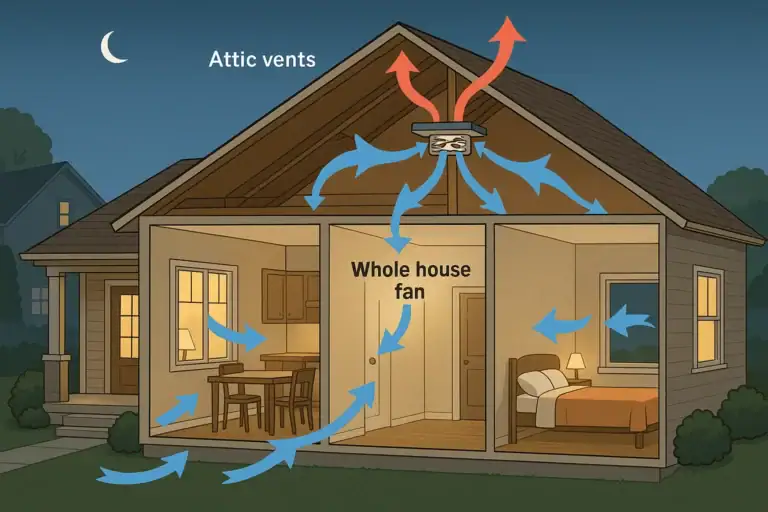 Whole House Fan Ventilation Guide for Cool Evenings
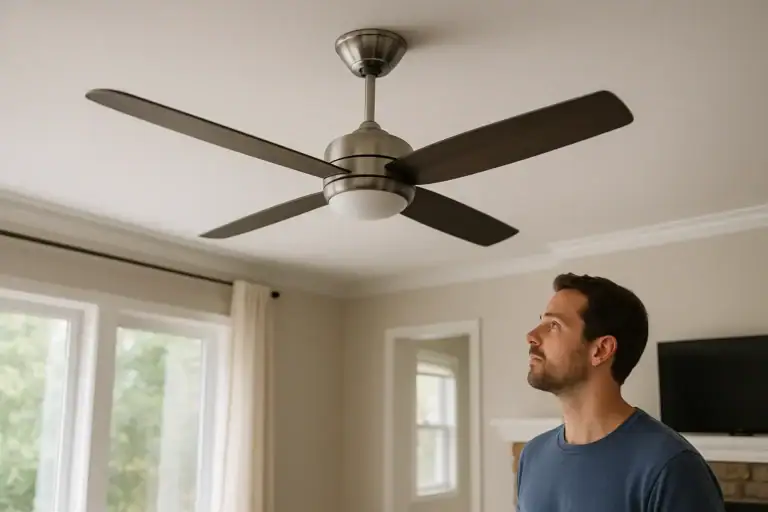 Ceiling Fan Wobbling: Safe Checks Before Balancing
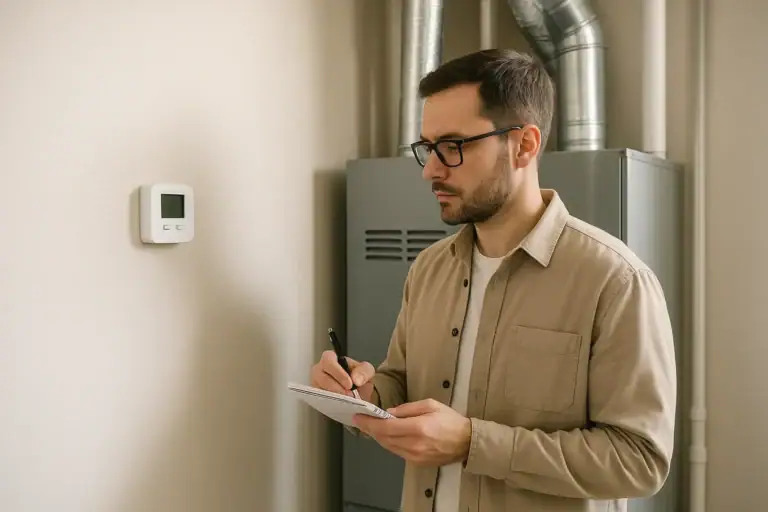 Furnace Short Cycling: Safe Checks Before Calling Service