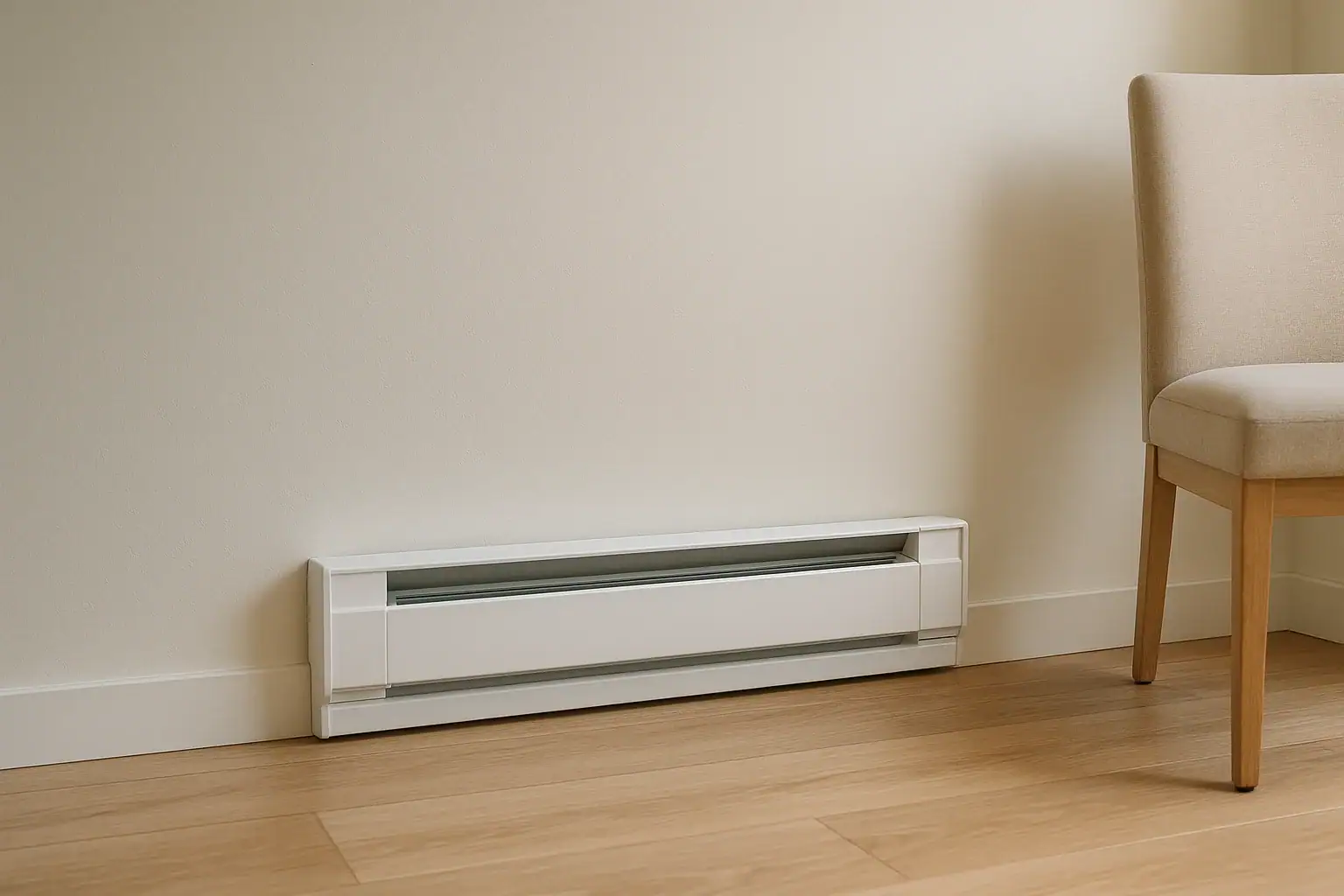
Is a burning dust smell from a baseboard heater normal?
When you first turn on an electric baseboard heater for the season, a light burning or dusty smell is usually normal. Dust, pet hair, and lint collect on the fins and housing while the heater sits unused. When it heats up, that buildup burns off and creates a brief odor.
This “burning dust” smell should:
- Start soon after the heater turns on
- Be mild to moderate, not harsh or chemical
- Fade noticeably within 30–60 minutes of continuous operation
- Improve each time you use the heater over a few days
If the smell is strong, doesn’t go away, or seems more like burning plastic, wiring, or smoke, treat it as a warning sign and turn the heater off until you can investigate more safely.
Quick safety check before you troubleshoot
Because baseboard heaters get very hot and involve electricity, start with safety:
- Turn the thermostat for that heater all the way down so it shuts off.
- Let the heater cool completely (at least 30–60 minutes).
- Do not remove covers or work on wiring unless you are comfortable and the circuit is off at the breaker.
- If you see smoke, scorch marks, or melting plastic, leave the heater off and contact a qualified electrician or heating contractor.
For fire safety guidance in general, the National Fire Protection Association public education pages are a useful reference.
Common reasons a baseboard heater smells like burning dust
1. Normal dust burn-off at the start of the season
This is the most common cause. Dust and fibers settle on the hot metal fins and inside the housing. When the heater warms up after months of being off, they burn away.
What it usually looks like:
- Heater hasn’t run in months
- Light haze or faint odor, especially in the first hour
- Smell improves quickly with ventilation
What to do: Open a window slightly, run a fan to move air, and let the heater run under supervision. If the smell fades and doesn’t return strongly, it was likely just dust burn-off.
2. Heavy dust, pet hair, or debris on the heater
If the heater is very dusty or clogged with pet hair, the odor can be stronger and last longer.
What it usually looks like:
- Visible dust bunnies or hair along the heater
- Darkened dust on the fins
- Smell returns every time the heater cycles on
What to do: Clean the heater carefully (steps below). Regular light cleaning can prevent the smell from building up again.
3. Objects too close to the heater
Baseboard heaters need clearance. Items placed too close can overheat and create a strong burning smell.
Possible culprits:
- Furniture pushed against the heater
- Curtains or drapes hanging over it
- Plastic toys, cords, or power strips nearby
- Clothing, bedding, or towels draped on top
What to do:
- Turn the heater off and let it cool.
- Move anything flammable or meltable well away from the heater.
- Inspect for any melted plastic or scorch marks. If you see damage, leave the heater off and have it checked by a professional.
The U.S. Consumer Product Safety Commission heating safety guidance recommends keeping combustibles away from heating equipment to reduce fire risk.
4. New heater smell
A newly installed baseboard heater can have a slight chemical or paint-like odor the first few times it runs as manufacturing residues burn off.
What to do: Follow the manufacturer’s instructions. Typically, you’ll run the heater on high for a period with windows open. If the smell is very strong, causes irritation, or doesn’t fade after several uses, contact the installer or manufacturer.
5. Electrical or overheating issues
Less commonly, a persistent burning smell can signal an electrical problem or overheating inside the heater or wiring.
Warning signs:
- Smell like burning plastic, rubber, or wiring insulation
- Heater cycling on and off rapidly or not turning off
- Discoloration, scorch marks, or heat damage on the cover or wall
- Buzzing, crackling, or popping sounds
What to do:
- Turn the thermostat down and switch the circuit off at the breaker.
- Do not use the heater again until it is inspected.
- Contact a licensed electrician or heating professional.
If you ever see smoke or flames, leave the area and call emergency services.
How to safely clean a dusty baseboard heater
Light cleaning can reduce burning dust smells and help the heater operate more consistently. These steps apply to typical electric baseboard heaters; always check your manufacturer’s instructions first.
Step 1: Power down and cool
- Turn the thermostat for that heater to the lowest setting.
- Switch the circuit breaker off if you’ll be removing covers.
- Wait until the heater is completely cool to the touch.
Step 2: Remove loose dust
- Use a vacuum with a brush attachment to gently clean along the top and front of the heater.
- If the front cover lifts off easily (many do), remove it carefully and vacuum inside around the fins.
- A soft paintbrush or small brush can help loosen dust between fins while you vacuum.
Avoid:
- Bending the thin metal fins
- Using water, spray cleaners, or anything wet inside the heater
- Sticking metal tools into the heater
Step 3: Wipe the exterior
- Use a slightly damp cloth with mild soap to wipe the exterior housing only.
- Dry thoroughly so no moisture can drip inside.
Step 4: Reassemble and test
- Reinstall the cover securely.
- Turn the breaker back on.
- Set the thermostat up slowly and monitor the heater.
- Expect a light odor the first time after cleaning, but it should be milder and fade more quickly.
When the burning smell is not normal
Turn the heater off and have it checked by a professional if you notice any of the following:
- Strong, sharp smell that does not improve after an hour of use and cleaning
- Odor like burning plastic, rubber, or wiring insulation
- Visible smoke, scorch marks, or discoloration on the heater or wall
- Heater surface extremely hot to the touch compared with others in the home
- Breaker tripping or lights dimming when the heater runs
In these cases, it’s safer to leave the heater off until a qualified electrician or HVAC technician can inspect it.
Preventing burning dust smells in the future
A few simple habits can keep odors down and improve comfort:
- Vacuum along heaters regularly: Include them in your normal floor and baseboard cleaning routine.
- Maintain clearances: Keep furniture, curtains, and cords away from heaters so they can breathe and stay safer.
- Do a preseason check: Before cold weather, clean heaters and run them briefly with windows cracked to burn off any light dust.
- Watch for changes: If a familiar heater suddenly smells different or stronger, treat it as a sign to inspect and clean.
For more ways to keep your home comfortable and safe around heating equipment, you can explore the Air & Comfort guides at Signature Home Guide.
When to call a professional
Consider bringing in a pro if:
- You are not comfortable turning off breakers or removing heater covers.
- The heater is old and has visible rust, damage, or loose parts.
- There are any signs of electrical issues or overheating.
- Odors persist after cleaning and normal burn-off time.
A licensed electrician or heating contractor can check wiring connections, thermostats, and the heater itself to confirm it’s safe to keep using.
Managing odors and comfort often ties into the rest of your home’s heating and air systems; if you’re planning broader improvements, the Air & Comfort hub offers additional decision guides and maintenance tips.
 HVAC Filter Arrow Direction: Common Installation Mistakes and How to Fix Them
 Musty Smell When the AC Turns On: Troubleshooting and Fixes
 Bathroom Humidity After a Shower: What Is Normal and What Actually Helps