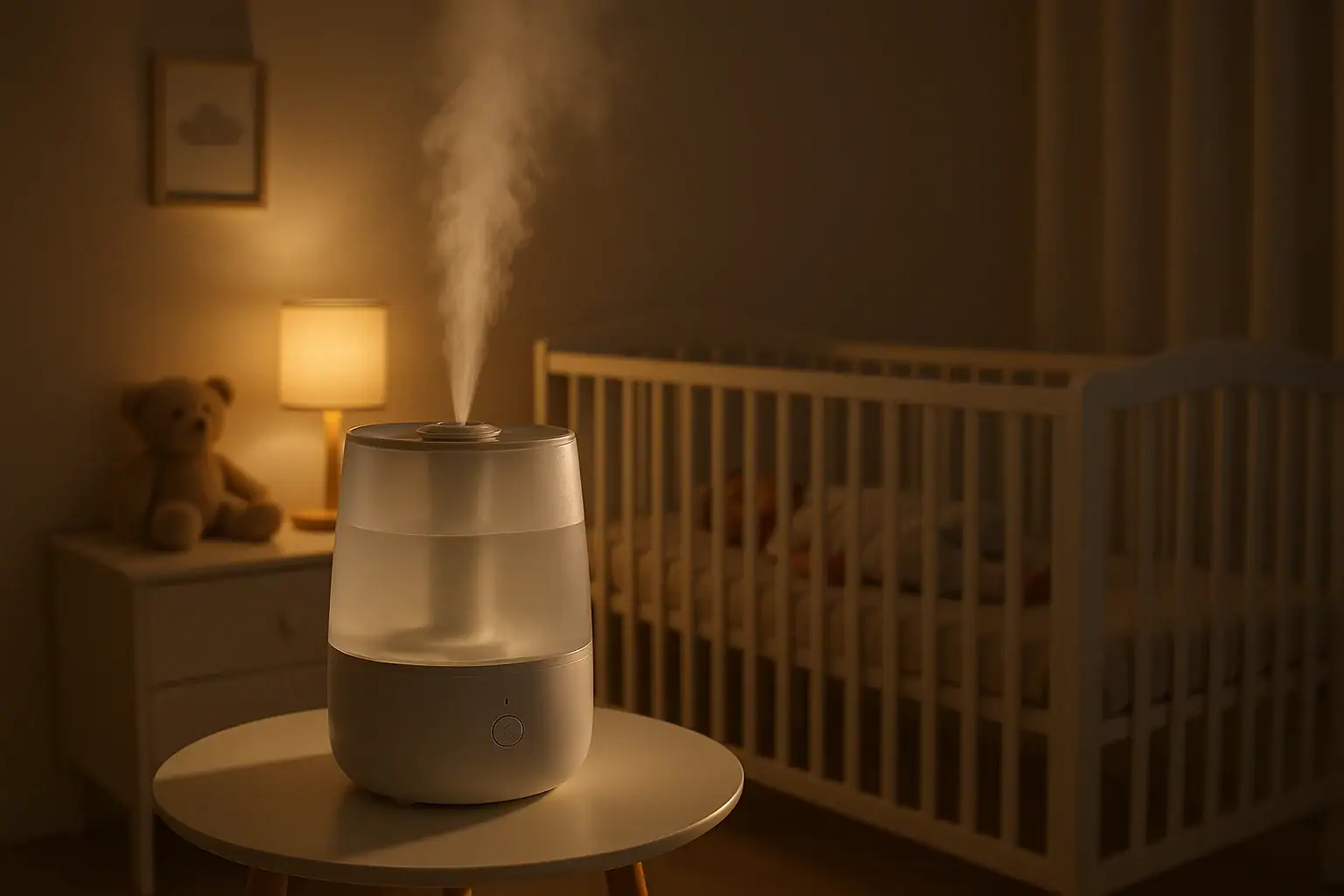
Creating a comfortable nursery is about more than cute decor and soft blankets. Air quality matters just as much, especially for tiny lungs that are still developing. A well-chosen humidifier can help keep your baby’s nursery at a healthy moisture level, support easier breathing, and reduce dry skin and congestion. But not every model is ideal for an infant’s room. The best humidifier for a baby nursery should be quiet enough not to disturb sleep, simple and safe to use, and easy to clean so you can stay ahead of germs and mineral buildup.
On this page(click to collapse)
- Why a Humidifier Can Help in a Baby Nursery
- Ideal Humidity Level for a Baby Nursery
- Best Type of Humidifier for a Baby Nursery
- Best-For Criteria: What Matters Most in a Nursery Humidifier
- How to Place a Humidifier Safely in a Baby Nursery
- Daily Use and Cleaning Routine
- Common Mistakes to Avoid with Nursery Humidifiers
- Step-by-Step Checklist: Choosing the Best Humidifier for Your Baby Nursery
- Creating a Comfortable, Calm Nursery Environment
- Related guides
This guide walks you through everything you need to know before you buy. You will learn which type of humidifier is best for a baby nursery, the safety features to look for, how to compare noise levels, and how to choose a design that is actually easy to clean. You will also find practical tips on placement, daily upkeep, and how to tell if your nursery humidity is in a healthy range. Use this as a step-by-step checklist so you can confidently choose a humidifier that keeps your baby comfortable and helps everyone sleep better.
Why a Humidifier Can Help in a Baby Nursery
Indoor air often becomes dry, especially during heating season or in naturally arid climates. Babies are more sensitive to dry air because their nasal passages and skin are delicate and still adapting to the environment. A nursery humidifier adds moisture back into the air, which can make the room feel more comfortable and soothing.
Key benefits of using a nursery humidifier
- Softer breathing and less dryness: Moist air can help reduce dry nose, throat, and coughing that sometimes worsen at night.
- More comfortable skin: Gentle humidity can ease dry, flaky skin and chapped lips, especially in winter.
- Better sleep environment: A comfortable humidity level may help your baby sleep more soundly and wake less often from discomfort.
- Support during cold season: When your baby has a stuffy nose, added moisture in the air can help keep mucus from becoming too thick and irritating.
While a humidifier can be helpful, it is not a medical device or a cure for illness. The goal is to create a gentle, balanced environment that supports your baby’s comfort while you follow your pediatrician’s guidance for any health concerns.
Ideal Humidity Level for a Baby Nursery
Before choosing a humidifier, it helps to understand what you are aiming for. Most experts recommend keeping indoor humidity around 40% to 50% for comfort and health. This range is usually appropriate for a baby nursery as well.
Why balance matters
- Too dry (under about 30%): Can contribute to dry skin, nosebleeds, and irritation in the nose and throat.
- Too humid (over about 60%): Can encourage mold, dust mites, and musty odors, which you do not want in a nursery.
To keep humidity in the ideal range, consider using a small digital hygrometer in the nursery. This simple tool shows you the current humidity level so you can adjust your humidifier output or run time as needed.
Best Type of Humidifier for a Baby Nursery
There are several types of humidifiers, but not all are equally suited for a baby’s room. When you are focused on safety, quiet operation, and easy cleaning, some designs stand out more than others.
Cool mist vs. warm mist
For a baby nursery, cool mist is generally preferred. Warm mist units heat water to create steam, which can pose a burn risk if a curious child gets too close or pulls the unit down. Cool mist models do not use heat, making them a safer choice for infant and toddler spaces.
Cool mist humidifiers come in two common styles:
- Ultrasonic cool mist: Uses high-frequency vibrations to create a fine mist. These are typically very quiet, energy efficient, and compact. They are popular for nurseries because they run softly in the background.
- Evaporative cool mist: Uses a fan that blows air through a wet wick or filter. These can self-regulate humidity to some extent, since evaporation slows when the room reaches a comfortable level. They may produce a gentle fan sound that some families enjoy as white noise.
Both styles can work well in a nursery. If silence is your top priority, ultrasonic models are often the best fit. If you prefer a bit of airflow sound and do not mind replacing filters, an evaporative model may appeal to you.
Best-For Criteria: What Matters Most in a Nursery Humidifier
When you are choosing the best humidifier for a baby nursery, focus on how well the unit fits your real daily life. The following criteria will help you narrow down options to the models that are truly best for quiet, safe, and low-stress use.
1. Quiet operation for uninterrupted sleep
Noise level is one of the most important factors in a nursery humidifier. Babies can be light sleepers, and a loud motor or gurgling tank is the last thing you want at 2 a.m.
Look for features such as:
- Low decibel rating: Many nursery-friendly units operate around the volume of a whisper or soft fan.
- Dedicated sleep or night mode: This often reduces fan speed, dims lights, and minimizes beeps.
- Smooth, consistent sound: A steady hum or gentle fan noise is less disruptive than frequent clicks, drips, or gurgles.
If possible, choose a humidifier with adjustable mist levels so you can run it on a lower, quieter setting overnight while still maintaining comfortable humidity.
2. Easy-to-clean design for better hygiene
Humidifiers work with water, and standing water can encourage mineral deposits and microbial growth if not cleaned regularly. In a baby nursery, cleanliness is essential. The best humidifier for this space should make cleaning as simple and quick as possible.
Prioritize designs that offer:
- Wide tank opening: A larger opening lets you reach your whole hand inside to scrub, instead of relying only on rinsing.
- Simple internal layout: Fewer tight corners, tubes, and hidden crevices mean less chance for buildup and easier cleaning.
- Clear cleaning instructions: Look for models with straightforward guidelines for daily rinsing and weekly deep cleaning.
- Dishwasher-safe parts (if specified by the manufacturer): Some water tanks or lids can be placed on the top rack, which can save time.
For nursery use, plan on emptying and air-drying the tank daily, and doing a more thorough cleaning at least once a week. Choosing a model that makes this routine simple will save you frustration and help keep the mist as clean as possible.
3. Safety features tailored to a baby’s room
Safety is always the top priority in a nursery. In addition to choosing a cool mist design, look for built-in safeguards that make the humidifier safer and easier to trust.
Helpful safety features include:
- Automatic shutoff: The unit turns off when the tank is empty or when it is lifted from the base, preventing overheating or damage.
- Stable, tip-resistant base: A wide, sturdy base helps prevent the unit from tipping if it is bumped.
- Cord management: A shorter cord or built-in cord wrap helps keep wires out of a baby’s reach.
- No exposed hot surfaces: Cool mist units avoid the burn risk associated with steam-based designs.
Always place the humidifier where your baby cannot touch it or pull on the cord, and avoid placing it directly on fabric or wood surfaces that could be damaged by moisture.
4. Tank size and runtime that match your routine
Another way to choose the best humidifier for your baby nursery is to think about how often you want to refill it. A larger tank can run longer, but may be heavier to carry to the sink. A smaller tank is lighter but may require refilling more often.
Consider:
- Overnight runtime: Look for a unit that can run at least 8 to 10 hours on a medium or low setting without running dry.
- Room size rating: Check that the humidifier is sized for your nursery’s square footage so it can maintain comfortable humidity without overworking.
- Refill convenience: Top-fill designs let you pour water in from above without removing the tank, which can be easier when holding a baby.
For many nurseries, a small to medium tank that runs through the night on a low setting strikes a good balance between convenience and performance.
5. Simple, baby-friendly controls and lighting
Bright indicator lights and loud beeps can be disruptive in a dark nursery. The best humidifier for this space will give you control without waking your baby.
Look for:
- Dimmable or no lights: Night mode or the ability to turn off display lights keeps the room dark.
- Quiet buttons: Soft-touch controls that do not beep loudly every time you make an adjustment.
- Simple interface: Clear mist-level settings and a straightforward on/off function make it easy to use even when you are tired.
Some parents like a very soft built-in night light, while others prefer total darkness. If you choose a unit with a light, make sure you can dim or disable it if needed.
How to Place a Humidifier Safely in a Baby Nursery
Placement is just as important as the humidifier itself. The goal is to spread moisture evenly through the room without creating damp spots or putting the unit within reach of your baby.
Smart placement tips
- Keep it out of reach: Place the humidifier on a stable, flat surface at least several feet away from the crib or changing table.
- Aim the mist away from the crib: Direct mist toward the center of the room, not directly at your baby’s face or bedding.
- Protect surfaces: Set the unit on a waterproof tray or mat if you are concerned about moisture affecting furniture.
- Allow airflow: Do not block the vents or place the unit too close to walls, curtains, or electronics.
Check the area around the humidifier occasionally. If you notice condensation on nearby surfaces or windows, lower the mist level or move the unit farther away from the crib and walls.
Daily Use and Cleaning Routine
Even the best humidifier for a baby nursery can cause problems if it is not cleaned regularly. A simple routine will help keep the mist fresher and the unit running smoothly.
Daily steps
- Empty any remaining water in the morning rather than letting it sit in the tank for days.
- Rinse the tank with clean water and let it air-dry with the cap off when not in use.
- Refill with fresh, cool water before bedtime, following the manufacturer’s fill line.
Using distilled or filtered water can help reduce mineral buildup and white dust, especially in areas with hard tap water. Check your user manual to see what type of water is recommended.
Weekly deep cleaning
Once a week, plan a more thorough cleaning session. Always follow the instructions provided with your specific model, but a typical routine may include:
- Unplugging the unit and disassembling the tank and base components.
- Soaking removable parts in a mild cleaning solution recommended by the manufacturer.
- Gently scrubbing the tank interior with a soft brush to remove any film or deposits.
- Rinsing all parts thoroughly with clean water and letting them dry completely before reassembly.
Never use harsh chemicals or cleaners that are not approved in the manual, as residues could be released into the air. A consistent cleaning schedule is one of the best ways to keep your baby’s nursery air fresh and comfortable.
Common Mistakes to Avoid with Nursery Humidifiers
Knowing what not to do can be just as helpful as knowing what to buy. Avoid these common humidifier mistakes in your baby’s room:
- Over-humidifying the room: Running the humidifier on high all night without checking humidity can lead to damp walls, windows, and bedding.
- Using scented additives: Avoid adding essential oils, fragrances, or medicated liquids unless your pediatrician specifically recommends it and your humidifier is designed for it.
- Skipping cleanings: Letting water sit in the tank for days or ignoring visible buildup can reduce air quality.
- Placing it too close to the crib: Direct mist on bedding can create dampness and discomfort for your baby.
- Ignoring the filter (if applicable): If your unit uses a filter or wick, replace it on the schedule recommended by the manufacturer.
Step-by-Step Checklist: Choosing the Best Humidifier for Your Baby Nursery
To pull everything together, use this quick checklist while you compare options. The best humidifier for your baby nursery will check most or all of these boxes:
Nursery humidifier checklist
- Cool mist design with no exposed hot surfaces.
- Noise level soft enough for light sleepers, ideally with a quiet or night mode.
- Wide tank opening and simple internal design for easy cleaning.
- Automatic shutoff when the tank is empty or removed.
- Stable, tip-resistant base and manageable cord length.
- Tank size and runtime that cover at least a full night on a low or medium setting.
- Controls and lights that are simple, dimmable, and nursery-friendly.
- Clear instructions for cleaning and filter replacement (if used).
Once you have chosen a model that fits these criteria, pair it with a small hygrometer so you can monitor humidity levels and adjust as needed. With the right setup, your baby’s nursery can stay comfortably moist, quiet, and safe throughout the night.
Creating a Comfortable, Calm Nursery Environment
A humidifier is just one part of a soothing nursery. Combine it with other comfort-focused choices—such as breathable bedding, gentle lighting, and a consistent bedtime routine—to create a space where your baby can rest and grow. When you select a humidifier that is quiet, easy to clean, and designed with safety in mind, you are not just buying a device. You are investing in a calmer, more comfortable environment for both you and your baby.
As your child grows, continue to check in on how the room feels. Adjust humidity settings with the seasons, keep up with cleaning, and replace the unit when it no longer performs well. With a little attention, the right humidifier can be a simple, reliable tool that supports healthier air and better sleep in your baby nursery.
Related posts
Browse this topic →
Smoke and Wildfire Season: Sealing, Filtration, and Safe Ventilation at Home
Why VOC Readings Spike After Cleaning (And What To Do About It)
Air Quality Monitor Basics: PM2.5, VOC, CO2—What Numbers To Trust

CO2 Levels at Home: What’s Normal and How to Improve Ventilation
How to Use Exhaust Fans Correctly for Better Bathroom and Kitchen Airflow
Mold in the Bathroom: A Practical Humidity Control Checklist
Keep reading
About this site
Signature Home Guide publishes practical, independent home guides. We aim to be clear, helpful, and transparent.
Affiliate disclosure
As an Amazon Associate, we earn from qualifying purchases. Some links on this site may be affiliate links. If you buy through these links, we may earn a small commission at no extra cost to you. This helps support our content. Learn more.