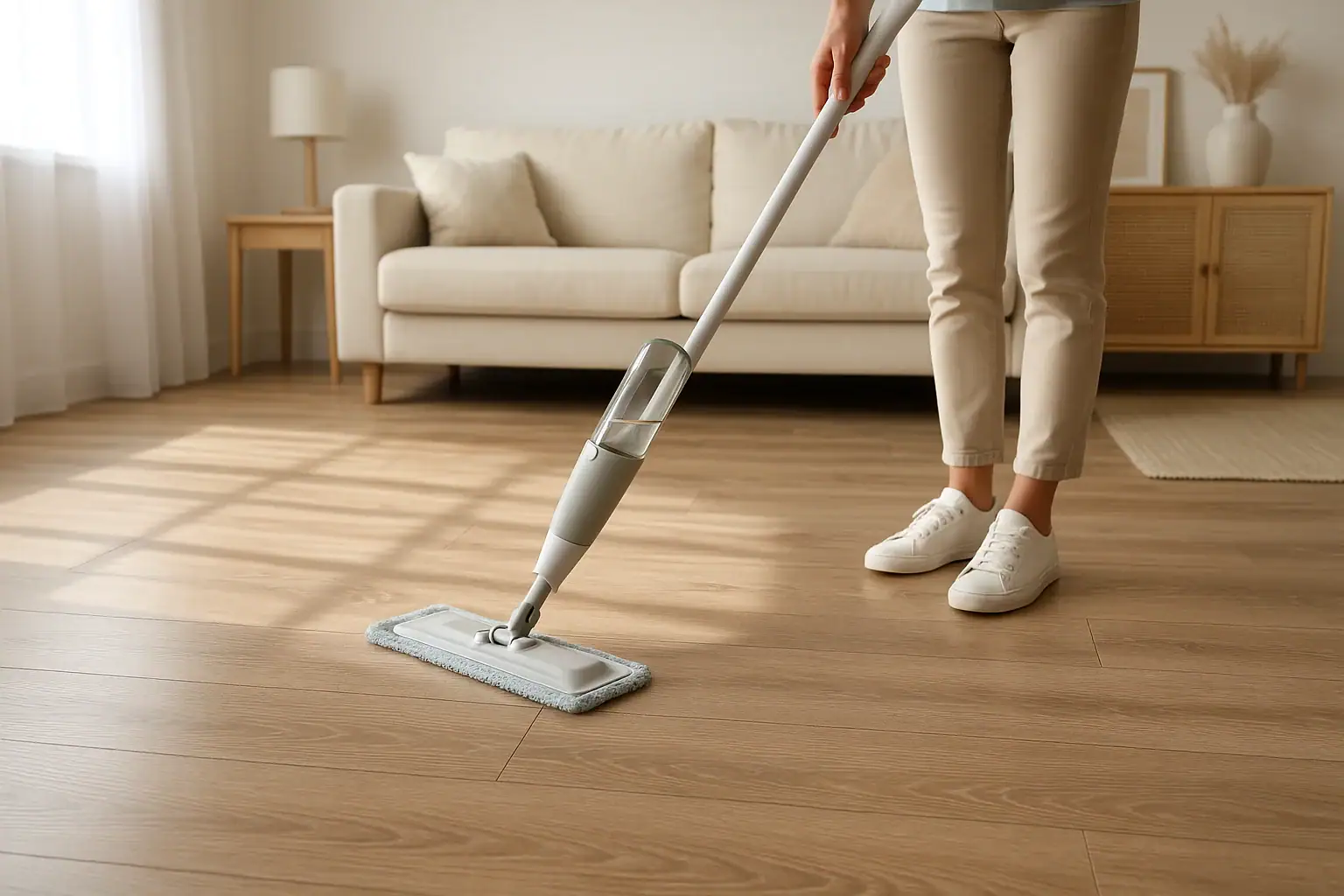
Laminated flooring is popular because it is affordable, attractive, and easier to care for than many other hard surfaces. Still, it has one big weakness: moisture. Too much water or the wrong cleaner can cause swelling, buckling, dullness, or a cloudy film that never seems to go away. The good news is that keeping laminate floors clean and streak free is simple once you understand what they need and what to avoid.
On this page(click to collapse)
- How Laminate Floors Are Different
- Tools and Supplies You Actually Need
- Daily and Weekly Cleaning Routine
- Spot Cleaning Spills and Stains
- Deep Cleaning Without Damaging the Floor
- How to Prevent Swelling in Laminate Floors
- How to Avoid and Remove Hazy Buildup
- Extra Protection and Maintenance Tips
- Putting It All Together
- Related guides
This guide walks you through the best way to clean laminate floors without swelling, haze, or streaks. You will learn the right tools, safe DIY cleaning solutions, and a step-by-step routine for daily, weekly, and deep cleaning. You will also see common mistakes that damage laminate and how to fix cloudy buildup if it has already happened. Use this as a practical reference you can come back to whenever your floors need attention.
How Laminate Floors Are Different
Understanding how laminate is built will explain why some cleaning methods work well and others cause damage.
Basic Layers of Laminate Flooring
- Wear layer: A clear, tough topcoat that protects against scratches and stains.
- Design layer: A printed image that gives the look of wood, stone, or tile.
- Core layer: A dense fiberboard that is very sensitive to moisture.
- Backing layer: A stabilizing layer that helps resist warping from below.
The core layer is the main reason you must avoid excess water. If moisture seeps between planks or through damaged seams, the core can swell and cause raised edges, buckling, or soft spots.
Why Swelling and Haze Happen
Most laminate floor problems come from either too much liquid or the wrong type of cleaner.
- Swelling or buckling: Caused by standing water, steam mops, wet mopping, or leaks that reach the core.
- Haze or cloudy film: Often from soap-based cleaners, oil-based products, polish, or using too much cleaner without rinsing.
- Streaks: Usually from using too much product, dirty mop heads, or letting cleaner air-dry in thick patches.
The best way to clean laminate floors keeps moisture to a minimum and uses a light, residue-free cleaner.
Tools and Supplies You Actually Need
You do not need a closet full of specialty products to care for laminate. A few simple tools and gentle cleaners are enough.
Recommended Tools
- Soft broom or dust mop: For daily dry cleaning without scratching.
- Vacuum with hard floor setting: Use one with a brush roll that can be turned off or is designed for bare floors.
- Microfiber flat mop: Ideal for damp mopping with very little water.
- Spray bottle: To lightly mist cleaner instead of soaking the floor.
- Soft cloths or microfiber towels: For spot cleaning and drying spills.
Safe Cleaning Solutions
Choose low-residue, low-moisture options. You can use a store-bought laminate floor cleaner or make a simple DIY mix.
Simple DIY laminate floor cleaner:
- 2 cups warm water
- 1 cup white vinegar
- 1 teaspoon mild dish soap (optional, for greasy areas)
Mix in a spray bottle and shake gently. Always mist onto the mop, not directly onto the floor, to avoid over-wetting.
Cleaners and Tools to Avoid
- Steam mops or steam cleaners
- Soaking wet string mops or sponge mops
- Oil soap, wax, or polish
- Abrasive scrub pads or scrub brushes with stiff bristles
- Ammonia, bleach, or strong alkaline cleaners
- Vinegar used at full strength without dilution
These products can strip the finish, leave residue, or drive moisture into seams, leading to swelling and haze.
Daily and Weekly Cleaning Routine
A consistent routine is the best way to keep laminate floors looking new without damaging them. Focus on dry cleaning most days and light damp cleaning as needed.
Step 1: Daily Dry Cleaning
Dry cleaning removes grit that can scratch the wear layer and dull the surface.
Options for daily cleaning:
- Use a soft broom or dust mop to pick up dust and crumbs.
- Vacuum on the hard floor setting, avoiding spinning brushes that can scratch.
Pay extra attention to entryways, kitchen areas, and high-traffic paths where dirt builds up fastest.
Step 2: Weekly Damp Mopping
Damp mopping once a week (or more often in busy areas) removes stuck-on dirt and light spills without soaking the floor.
- Prepare the floor: Sweep or vacuum thoroughly so grit does not scratch while you mop.
- Lightly dampen the mop: Rinse the microfiber pad in clean water, wring it out well, and attach it to the mop head. It should be just slightly damp, not dripping.
- Apply cleaner: Lightly mist your cleaning solution onto the mop pad or a small section of the floor. Avoid spraying large areas at once.
- Mop in sections: Work in small areas, moving with the grain of the boards when possible. Rinse and wring out the pad as it gets dirty.
- Dry if needed: If any areas look wet, quickly wipe with a dry microfiber cloth or towel.
The floor should dry within a few minutes. If it stays wet longer than that, you are using too much liquid.
Spot Cleaning Spills and Stains
Quick response is the key to preventing swelling, warping, and staining on laminate floors.
How to Handle Everyday Spills
- Blot immediately: Use a soft cloth or paper towel to soak up liquids as soon as they spill.
- Clean the area: Lightly mist your cleaner onto a cloth or the floor and wipe the spot.
- Dry the seam: Pay attention to plank edges. Wipe them dry so no moisture seeps down.
Sticky or Greasy Spots
For sticky residue from drinks, food, or tracked-in messes:
- Mist the area with diluted vinegar solution.
- Let it sit for 30 to 60 seconds.
- Wipe with a soft cloth or microfiber pad.
- Rinse the cloth and wipe again with plain water, then dry.
Scuff Marks and Tough Residue
To remove rubber scuffs or stubborn marks:
- Rub gently with a dry microfiber cloth.
- If needed, dampen the cloth with a small amount of cleaner.
- For hardened residue like tape or sticker glue, place an ice cube in a bag over the spot for a few minutes to harden it, then gently scrape with a plastic card held at a low angle.
Avoid metal scrapers, steel wool, or anything that can scratch the surface.
Deep Cleaning Without Damaging the Floor
Deep cleaning a few times a year can revive dull laminate, but it must be done carefully to avoid swelling or haze.
Step-by-Step Deep Clean
- Clear the area: Move furniture and rugs out of the way. Use felt pads under heavy pieces to avoid scratching when you move them back.
- Thorough dry clean: Vacuum or sweep carefully, including edges and under baseboards where dust collects.
- Use a fresh microfiber pad: Start with a clean pad so you are not spreading old residue.
- Damp mop with diluted cleaner: Work in small sections with a lightly misted pad. Rinse and wring the pad often.
- Buff dry: After each section, lightly buff with a dry microfiber cloth to remove any remaining moisture or streaks.
Targeting High-Traffic Dull Areas
If certain paths look more worn or dull:
- Focus deep cleaning on those strips first.
- Use slightly warmer water in your solution to help break up grime, but keep it very limited in amount.
- Buff in the direction of the plank seams to reduce visible streaks.
How to Prevent Swelling in Laminate Floors
Prevention is much easier than repair when it comes to swelling and warping. Most damage happens slowly over time from repeated moisture exposure.
Moisture Control Habits
- Wipe spills immediately: Do not let water, drinks, or pet accidents sit on the floor.
- Avoid wet mopping: Never pour water directly onto laminate or use a bucket-and-mop method that leaves the floor visibly wet.
- Skip the steam: Steam can force moisture into seams and edges, leading to swelling.
- Use mats in wet-prone areas: Place absorbent mats near sinks, dishwashers, and entry doors.
- Check for leaks: Address plumbing leaks, appliance drips, or window leaks quickly.
Protecting Seams and Edges
The edges of laminate planks are the most vulnerable spots.
- Do not flood-clean near baseboards or transitions.
- Use a slightly drier mop along seams and edges.
- Keep pet water bowls on trays or mats to catch splashes.
How to Avoid and Remove Hazy Buildup
A cloudy or hazy film is one of the most common complaints with laminate floors. It usually comes from residue, not damage to the floor itself.
Common Causes of Haze
- Using soap-based or oil-based cleaners
- Using too much product and not removing the excess
- Layering polish or shine products meant for other surfaces
- Hard water deposits if you mop with mineral-heavy water
Best Way to Clean Laminate Floors Without Haze
To keep haze from forming in the first place:
- Use a light, low-residue cleaner designed for hard floors or the diluted vinegar mix.
- Apply cleaner sparingly and avoid over-spraying.
- Buff with a dry microfiber cloth after damp mopping to remove any leftover film.
- If you have hard water, use distilled water in your cleaning solution.
How to Remove Existing Haze
If your laminate already looks cloudy, try this method:
- Test a small area: Choose a low-visibility spot to test your method first.
- Mix a cleaning solution: Combine 2 cups warm distilled water, 1 cup white vinegar, and a few drops of mild dish soap in a spray bottle.
- Lightly mist and scrub: Spray a small section and gently scrub with a clean microfiber pad in circular motions.
- Rinse the pad often: Rinse, wring, and continue. This helps lift off old residue rather than spreading it.
- Buff dry: Immediately buff the area with a dry microfiber cloth.
Repeat as needed until the haze clears. If a heavy polish or wax was used in the past, you may need several passes over time to fully remove the buildup.
Extra Protection and Maintenance Tips
A few simple habits will keep your laminate floors looking clean and bright for years.
Protect Against Scratches
- Use felt pads under chairs, tables, and furniture legs.
- Avoid dragging heavy items across the floor; lift or use sliders instead.
- Place doormats at entrances to catch grit and small stones.
- Ask family and guests to remove shoes in areas with laminate flooring.
Manage Sunlight and Temperature
- Use blinds or curtains to limit intense direct sunlight that can fade patterns over time.
- Maintain a stable indoor temperature and humidity level when possible.
When to Call a Professional
If you notice widespread swelling, soft spots, or planks that have lifted, cleaning alone will not fix the problem. In those cases:
- Identify and stop any moisture source first.
- Consult a flooring professional to assess whether damaged planks can be replaced.
- Use the safe cleaning and maintenance steps above to protect any new sections.
Putting It All Together
The best way to clean laminate floors without swelling or haze is simple: keep moisture low, use gentle cleaners, and clean consistently. Focus on daily dry cleaning, light weekly damp mopping, and quick spill cleanup. Avoid steam, soaking wet mops, and heavy polishes that leave residue. With these habits in place, your laminate floors can stay smooth, bright, and free of cloudy buildup for many years.
For more practical cleaning and organization guides, explore related topics and build a routine that keeps every room in your home looking its best.
Related posts
Browse this topic →
Pantry Organization Basics: Zones, Labels, and a Simple Maintenance Routine
How to Organize Cleaning Supplies for Speed and Safety at Home
Spring Cleaning Checklist for the Whole Home (Printable Plan)
How to Disinfect Surfaces Safely: What Really Needs It and What Does Not
How to Clean Hardwood Floors Without Ruining the Finish
Vacuum vs Mop Order: The Most Efficient Floor Cleaning Routine Checklist
Keep reading
About this site
Signature Home Guide publishes practical, independent home guides. We aim to be clear, helpful, and transparent.
Affiliate disclosure
As an Amazon Associate, we earn from qualifying purchases. Some links on this site may be affiliate links. If you buy through these links, we may earn a small commission at no extra cost to you. This helps support our content. Learn more.