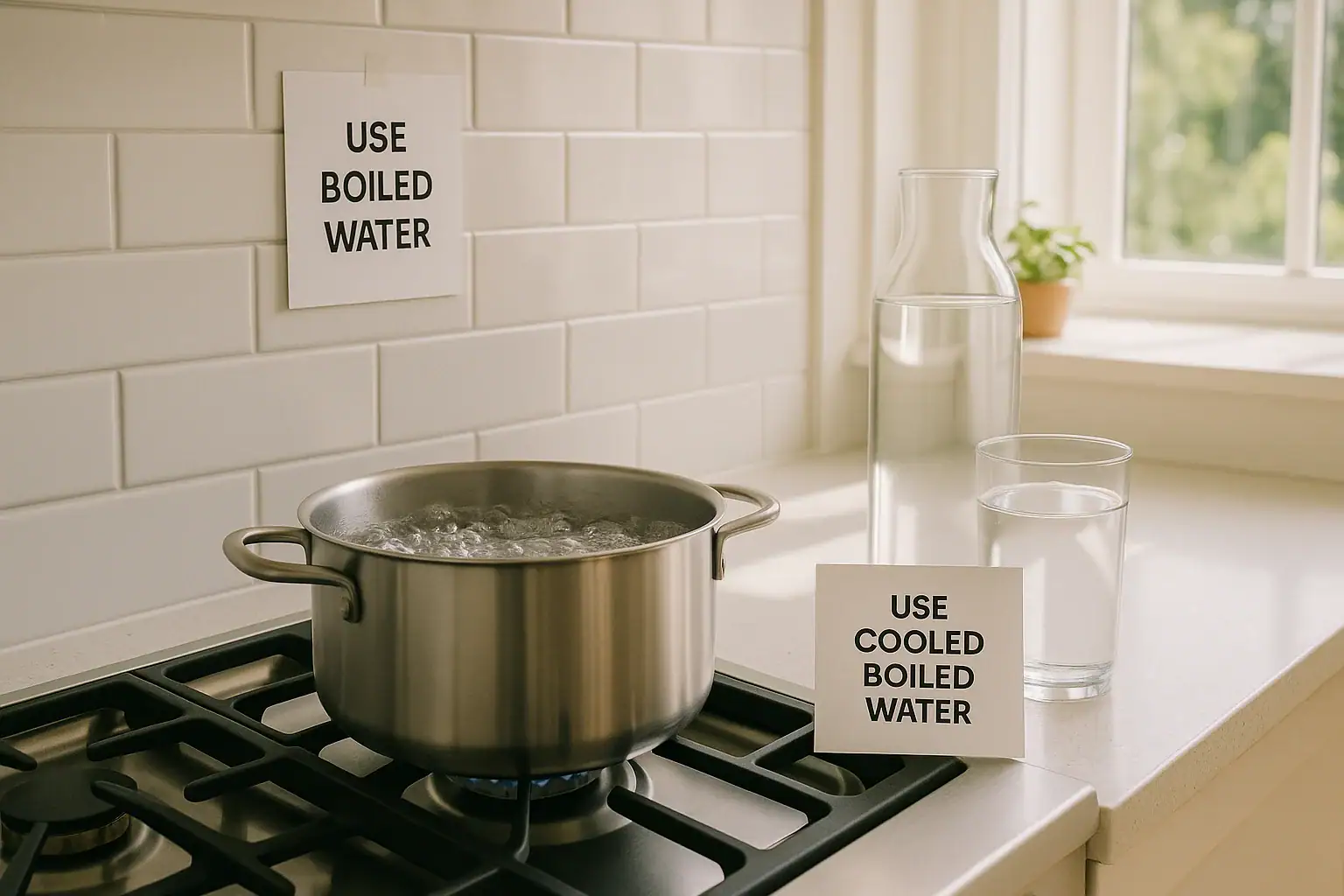
Finding out that your tap water is under a boiling water advisory can be unsettling. You depend on that water for drinking, cooking, cleaning, and caring for your family. When an advisory is announced, you may wonder what is actually unsafe, whether your current water filter is enough, and how long you need to keep boiling water. This guide explains what a boiling water advisory really means, how to handle water safely at home, and the limits of common household filters. With a clear plan, you can protect your household, avoid unnecessary panic, and return to normal confidently when the advisory is lifted.
On this page(click to collapse)
- What a Boiling Water Advisory Really Means
- When You Must Boil Water and When You Can Skip It
- How to Boil Water Safely at Home
- What Your Home Water Filter Can and Cannot Do
- How to Use Filters Safely During a Boiling Water Advisory
- Special Guidance for Babies, Older Adults, and People With Weak Immune Systems
- Safe Dishwashing, Cleaning, and Personal Care
- What To Do When the Advisory Is Lifted
- Preparing Your Home for Future Boiling Water Advisories
- Related guides
What a Boiling Water Advisory Really Means
A boiling water advisory is a public health warning that your tap water may be contaminated with germs that can make you sick. It does not always mean the water is definitely unsafe, but it means there is enough risk that you should treat your water before using it for drinking or other direct consumption.
Advisories are usually issued by local water utilities or health departments after events that can compromise the safety of the water system, such as:
- Water main breaks or sudden drops in water pressure
- Flooding that may allow surface water to enter the system
- Equipment failures at treatment plants
- Detection of bacteria or other harmful microorganisms in testing
- Planned maintenance that temporarily affects treatment or pressure
The main concern during a boiling water advisory is usually microbial contamination, especially bacteria, viruses, and parasites that can cause gastrointestinal illness. These organisms can be killed by proper boiling, which is why boiling is the primary recommendation.
When You Must Boil Water and When You Can Skip It
During a boiling water advisory, you should treat tap water as unsafe for any use that could lead to swallowing it or having it contact food or open wounds. In general, you should boil tap water before using it for:
- Drinking, including plain water and flavored drinks made with tap water
- Making ice cubes
- Preparing infant formula or baby food
- Brushing teeth and rinsing your mouth
- Washing fruits and vegetables
- Cooking foods that absorb water, such as rice, pasta, or oatmeal
- Preparing drinks like coffee, tea, and powdered beverages, unless the water is boiled long enough in the process
- Rinsing dishes, utensils, and food-preparation surfaces if they will air-dry and be used for eating
Some uses of tap water are still considered safe without boiling, because the risk of swallowing harmful germs is low. In most advisories, you can usually:
- Shower or bathe, as long as you avoid swallowing water and protect open wounds
- Wash hands with soap and running water, then dry thoroughly
- Do laundry as usual
- Flush toilets and use water for general cleaning of floors and surfaces
Always check the specific instructions from your local health department or water provider. In rare situations, a “do not use” notice may be issued instead of, or in addition to, a boiling advisory. That type of notice means water should not be used for any purpose, including bathing.
How to Boil Water Safely at Home
Boiling water is simple, but doing it correctly matters. The goal is to heat the water long enough and hot enough to kill harmful microorganisms.
Step-by-step boiling instructions
- Fill a clean pot or kettle with tap water. If the water looks cloudy, let it settle and pour off the clearer water on top, or strain it through a clean cloth or coffee filter.
- Place the pot on the stove and bring the water to a rolling boil. This means large bubbles are continuously breaking the surface.
- Once it reaches a rolling boil, keep it boiling for at least 1 full minute. If you live at high elevation (above about 6,500 feet), boil for at least 3 minutes.
- Turn off the heat and allow the water to cool naturally. Do not add ice or cold tap water to speed cooling, as that may reintroduce germs.
- Store the boiled water in clean, covered containers. If possible, use containers that you only use for safe drinking water.
Tips for managing boiled water
- Make more than you think you need so you are not constantly boiling small batches.
- Label containers as “boiled water” and keep them separate from untreated tap water.
- Use boiled water within 24 to 48 hours for best quality.
- If you run out of fuel or cannot boil, ask local authorities about emergency water distribution or approved disinfection tablets.
What Your Home Water Filter Can and Cannot Do
Many households rely on pitchers, faucet attachments, under-sink filters, refrigerator dispensers, or whole-house systems to improve their water. During a boiling water advisory, it is important to understand that most of these filters are not designed to make unsafe water safe from germs.
Common types of home water treatment
Here are some common systems and what they typically address:
- Activated carbon filters (pitchers, faucet units, refrigerator filters): These mainly improve taste and reduce chlorine, some odors, and some chemical contaminants. Most do not reliably remove bacteria, viruses, or parasites.
- Basic sediment filters (whole-house or under-sink units): These remove larger particles like sand, rust, or dirt. They are not designed to kill or fully remove harmful microorganisms.
- Reverse osmosis systems: These can reduce many dissolved minerals and some microorganisms, but their effectiveness depends on design, maintenance, and certification. They may not be a complete replacement for boiling during an advisory unless specifically certified for microbiological reduction and used exactly as directed.
- Ultraviolet (UV) disinfection units: These systems use light to inactivate microorganisms. They require proper installation, clean water, and working bulbs. Even then, local guidance may still recommend boiling during an advisory, especially if other issues like cloudy water are present.
- Distillation units: These boil water and collect the steam, leaving many contaminants behind. A properly functioning distiller can be effective against microorganisms, but you must follow manufacturer instructions and keep the unit clean.
Why filters often are not enough during an advisory
Boiling water advisories are usually triggered by a concern about disease-causing germs. Many household filters are not certified to remove or kill these organisms. Relying on them alone can give a false sense of security.
Key reasons filters may fall short include:
- Filter pore size: Some germs are smaller than what the filter can catch.
- Lack of disinfection: Many systems improve taste but do not disinfect.
- Maintenance issues: Old or clogged cartridges can allow contaminants to pass through or even become a source of bacteria.
- Certification limits: A filter may be certified for taste and odor, but not for microbiological safety.
Unless your system is specifically designed and certified to make microbiologically unsafe water safe, you should still boil water during an advisory. If you are unsure, treat your filter as a quality improvement tool, not a safety guarantee.
How to Use Filters Safely During a Boiling Water Advisory
Even if your filter cannot replace boiling, it can still play a role. The safest approach is usually to boil first, then filter if you prefer better taste.
Boil first, then filter
For most households, this is the recommended order:
- Boil tap water as directed during the advisory.
- Allow the boiled water to cool in a clean, covered container.
- Pour the cooled, boiled water through your filter pitcher or other taste-improving device.
- Store the filtered, boiled water in a clean, covered container and use within 24 to 48 hours.
This way, boiling handles safety, and the filter improves taste and odor that some people notice after boiling.
What to do with built-in and whole-house systems
If you have a built-in under-sink filter, refrigerator dispenser, or whole-house system, follow these steps during the advisory:
- Do not assume the system makes water safe from germs unless it is clearly certified for that purpose.
- Use boiled or bottled water for drinking, cooking, and other high-risk uses.
- After the advisory ends, follow your system’s instructions for flushing and replacing cartridges.
- Consider keeping a simple backup method, such as a pot for boiling and a dedicated storage container, for future advisories.
Special Guidance for Babies, Older Adults, and People With Weak Immune Systems
Certain household members are more vulnerable to waterborne germs, including infants, pregnant people, older adults, and anyone with a weakened immune system. For them, taking extra precautions is wise, even if others in the home are less concerned.
Infants and young children
- Use only boiled or appropriately treated water for infant formula, baby cereal, and purees.
- Do not use water from a pitcher, refrigerator dispenser, or faucet filter unless it has been boiled first.
- If you use ready-to-feed formula, you may not need to add water, but follow product directions carefully.
- For toddlers who drink tap water, switch to boiled or bottled water until the advisory is lifted.
Older adults and people with health conditions
- Use boiled or bottled water for all drinking and food preparation.
- Consider using boiled water for brushing teeth and rinsing dentures or oral appliances.
- If you have open wounds, avoid soaking them in unboiled tap water; use boiled and cooled water or follow your healthcare provider’s advice.
Safe Dishwashing, Cleaning, and Personal Care
Everyday tasks like washing dishes or taking a shower can raise questions during a boiling water advisory. The goal is to avoid swallowing contaminated water or leaving it on items that contact your mouth.
Washing dishes
How you wash dishes safely depends on your setup:
- Dishwasher with a hot, sanitizing cycle: Many dishwashers reach temperatures high enough to kill germs, especially on a sanitizing setting. If your dishwasher has this feature and is in good working order, you can usually use it as normal. Check local guidance if you are unsure.
- Hand-washing dishes: Wash dishes as usual with hot tap water and dish soap, then rinse them in water that has been boiled and cooled, or soak them for at least one minute in a solution of 1 teaspoon of unscented household bleach per gallon of boiled, cooled water. Allow dishes to air-dry completely.
Bathing and showering
- Healthy adults and older children can usually bathe or shower with unboiled tap water, as long as they avoid swallowing it.
- Young children should be supervised closely to prevent them from drinking bath water.
- Use caution if you have open cuts, recent surgery, or medical devices that should not be exposed to tap water; consult your healthcare provider.
Handwashing and cleaning
- Handwashing with soap and running tap water is generally acceptable. Dry hands thoroughly with a clean towel or air dryer.
- For extra protection, especially before eating or preparing food, you can follow handwashing with an alcohol-based hand sanitizer.
- Regular household cleaning of surfaces can continue with tap water and standard cleaners. Disinfecting products can help reduce any remaining germs.
What To Do When the Advisory Is Lifted
Once authorities announce that the boiling water advisory is over, your water system has met safety standards again. However, you may still need to take a few steps at home to clear out any potentially contaminated water and refresh your plumbing and appliances.
Flush your plumbing
To flush your home’s pipes:
- Turn on all cold water faucets in your home, starting with the ones closest to where water enters the building.
- Run the water for several minutes, or follow the time recommended by local officials.
- Flush toilets a few times to bring fresh water into the tanks and bowls.
Clean and replace filters
- Replace cartridges in pitchers, faucet units, under-sink filters, and refrigerator dispensers that were used during the advisory.
- Follow the manufacturer’s instructions for flushing and restarting reverse osmosis, UV, or whole-house systems.
- Empty and clean any water storage containers you used for boiled water before refilling them with regular tap water.
Appliances and ice makers
- Discard any ice made during the advisory from automatic ice makers or trays.
- Run the ice maker through several cycles and discard that ice as well, following your appliance’s instructions.
- Run water dispensers on refrigerators for several minutes to clear the lines.
Preparing Your Home for Future Boiling Water Advisories
Boiling water advisories can happen with little warning, especially after storms, flooding, or infrastructure issues. A few simple preparations can make them much easier to handle.
Build a small water safety kit
Consider keeping the following on hand:
- Several clean, food-grade containers with tight lids for storing boiled water
- A large pot or kettle dedicated to boiling water
- Unscented household bleach with clear directions for emergency disinfection
- Backup drinking water for at least a few days per person in your household
- Extra fuel if you rely on gas or another non-electric heat source
Know where to find reliable information
- Sign up for local alerts from your city, county, or water utility.
- Bookmark your local health department’s website for detailed instructions during advisories.
- Keep contact information for your water provider in case you have questions.
With a basic plan and an understanding of what boiling water advisories mean, you can respond calmly, protect your family’s health, and use your home’s water systems wisely until normal service is restored.
For more guidance on managing water safely in your kitchen and throughout your home, you can explore related topics in the water and kitchen section of your favorite home resource sites, including tips on storage, filtration options, and emergency preparedness.
Related posts
Browse this topic →
How to Choose a Shower Filter for Chlorine, Hardness, and Skin Comfort
Nitrate and Well Water Basics: Risks, Testing, and Treatment Paths
Microplastics in Water: What We Know and Filtration Options at Home
Lead in Drinking Water: Where It Comes From and Practical Ways to Reduce It
How to Clean a Dishwasher Filter (and How Often You Should Do It)
Dishwasher Smells: Why It Happens and How to Fix It for Good
Keep reading
About this site
Signature Home Guide publishes practical, independent home guides. We aim to be clear, helpful, and transparent.
Affiliate disclosure
As an Amazon Associate, we earn from qualifying purchases. Some links on this site may be affiliate links. If you buy through these links, we may earn a small commission at no extra cost to you. This helps support our content. Learn more.