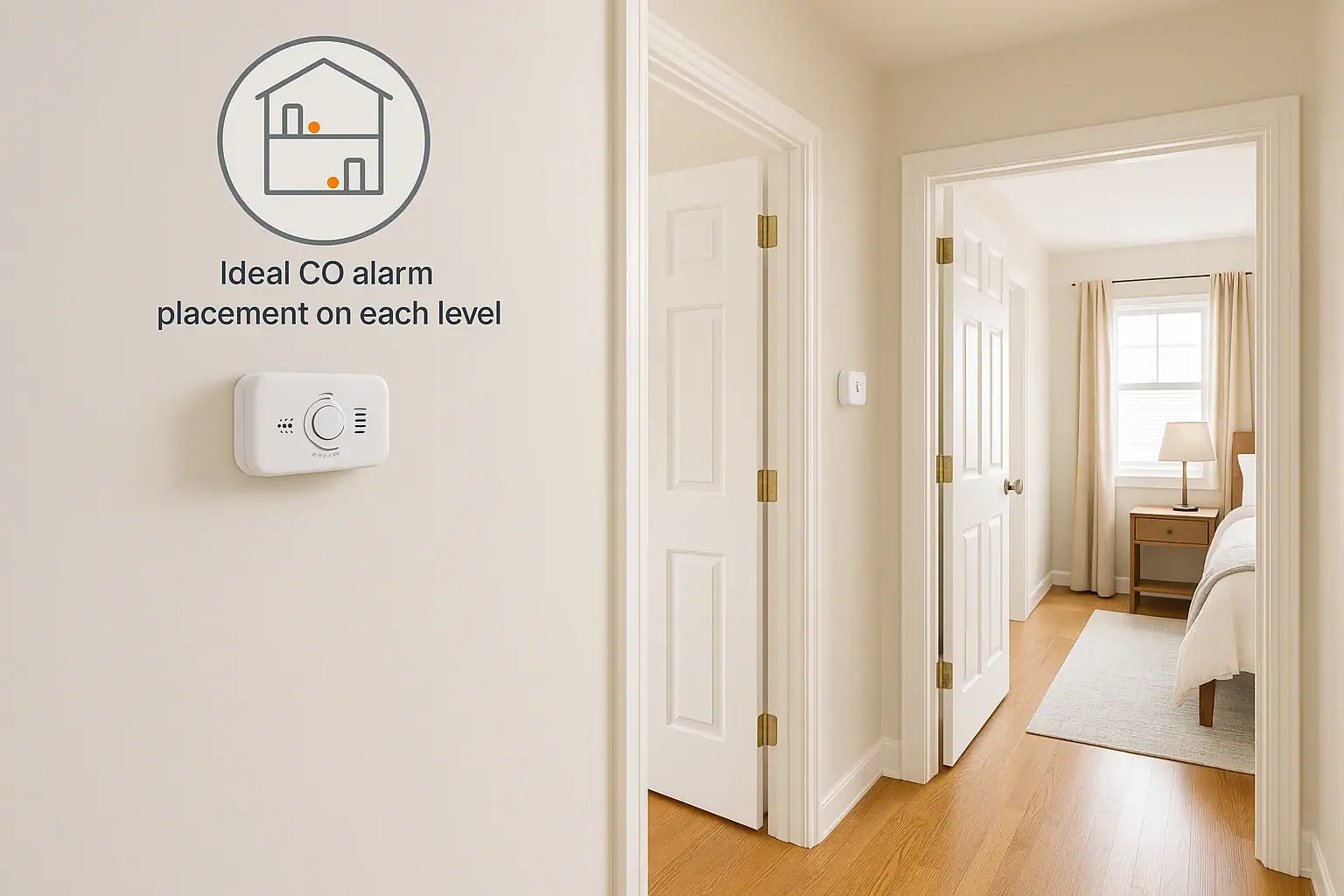
Carbon monoxide is a colorless, odorless gas that can build up in a home without any obvious warning signs. Because you cannot see or smell it, the most reliable way to protect your household is to install carbon monoxide alarms in the right places and keep them in good working order. Proper placement is just as important as having the alarms in the first place. When alarms are installed too low, too far away, or in the wrong rooms, they may not warn you in time.
On this page(click to collapse)
- Why Carbon Monoxide Alarms Are Essential
- Simple Rules for Carbon Monoxide Alarm Placement
- Where to Install Carbon Monoxide Alarms in Key Areas
- Places to Avoid When Installing Carbon Monoxide Alarms
- How Many Carbon Monoxide Alarms Does Your Home Need?
- Maintenance Tips to Keep Your Alarms Reliable
- What to Do If a Carbon Monoxide Alarm Sounds
- Quick Checklist for Carbon Monoxide Alarm Placement
- Bringing It All Together
- Related guides
This guide walks you through simple, practical rules for carbon monoxide alarm placement in a typical US home. You will learn where alarms are required, where they work best, where they should never be installed, and how to handle special situations such as multi-level homes, apartments, basements, and garages. You will also find maintenance tips and a quick checklist you can use to walk through your home and confirm that your alarms are ready to protect your family.
Why Carbon Monoxide Alarms Are Essential
Carbon monoxide (CO) is produced whenever fuel burns, including natural gas, propane, oil, wood, charcoal, and gasoline. Common household sources include furnaces, water heaters, gas stoves, fireplaces, and vehicles running in attached garages. When these systems work properly and are vented correctly, CO is usually carried safely outdoors. Problems arise when equipment malfunctions, vents are blocked, or fuel-burning appliances are used in enclosed spaces.
Because symptoms of CO poisoning can look like the flu or food poisoning, people often do not realize what is happening until levels are dangerously high. Early symptoms may include:
- Headache
- Dizziness or lightheadedness
- Nausea or vomiting
- Confusion or trouble thinking clearly
- Weakness or fatigue
Alarms are designed to detect rising CO levels before they reach life-threatening concentrations. However, they can only do that effectively when they are installed in the right locations, at the right height, and in the right number for the size and layout of your home.
Simple Rules for Carbon Monoxide Alarm Placement
Placement rules can vary slightly by manufacturer and local building codes, but the following guidelines are widely recommended for homes in the United States. Always read and follow the instructions that come with your specific alarm, and check your local requirements if you are remodeling or building.
Rule 1: Install on Every Level of Your Home
Every level that people use should have at least one carbon monoxide alarm. This includes:
- Basements or lower levels with fuel-burning appliances
- Main living floors
- Upper floors with bedrooms or living spaces
- Finished attics used as bedrooms or offices
CO can spread throughout a home, but it may concentrate more on certain levels, especially near appliances or attached garages. Having an alarm on each level increases the chances that you will be alerted quickly, no matter where the leak begins.
Rule 2: Place Near Every Sleeping Area
At minimum, there should be a carbon monoxide alarm outside each separate sleeping area so that it can wake you if CO levels rise while you are asleep. In many homes, this means:
- One alarm in the hallway outside a cluster of bedrooms
- Additional alarms near any separate guest room or in-law suite
- For large homes, more than one alarm along long bedroom hallways
If bedrooms are spread out on different sides of the house or on different floors, treat each group of bedrooms as its own sleeping area and install alarms accordingly.
Rule 3: Place Near, But Not Right Next to, Fuel-Burning Appliances
Anywhere you have a fuel-burning appliance, you should have a carbon monoxide alarm on the same level. Examples include:
- Gas or oil furnaces
- Gas water heaters
- Gas or wood fireplaces
- Gas stoves or ovens
- Gas clothes dryers
However, do not mount the alarm directly next to the appliance. A good rule is to place it at least 5 to 20 feet away, depending on the size of the room and manufacturer guidance. This helps reduce nuisance alarms from brief, harmless bursts of CO that can occur when an appliance first starts up.
Rule 4: Follow Height Recommendations
Carbon monoxide mixes with the air in a room and does not rise or fall as dramatically as smoke. This gives you some flexibility in height, but general recommendations include:
- Wall-mounted alarms: Place them at least a few inches below the ceiling, often around eye level or higher, following the product instructions.
- Ceiling-mounted alarms: Install them in the center of the room or at least several inches away from the wall.
- Plug-in alarms: Use outlets that keep the alarm unobstructed and off the floor, and avoid outlets behind furniture.
The most important point is to keep the alarm where air circulates freely, away from corners where air may be trapped and away from vents that could blow fresh air directly onto the sensor.
Rule 5: Keep Alarms Accessible and Audible
Alarms only help if you can hear and maintain them. When choosing locations:
- Make sure the alarm can be heard clearly in bedrooms with doors closed.
- Avoid placing alarms behind large furniture, curtains, or doors.
- Mount alarms where you can reach them for testing and battery changes.
- In multi-story homes, consider interconnected alarms so that when one sounds, they all sound.
Where to Install Carbon Monoxide Alarms in Key Areas
Every home is different, but many share similar spaces where CO alarms are especially important. Use these room-by-room tips as a practical guide.
Bedrooms and Hallways
For sleeping areas, the goal is to wake people quickly. Common setups include:
- Single hallway with several bedrooms: Place one alarm in the hallway, roughly in the middle, mounted on the wall or ceiling.
- Bedrooms on opposite sides of the house: Install one alarm near each bedroom group, not just in a central hallway.
- Bedroom with attached sitting room: An alarm in the shared space just outside the bedroom door is usually appropriate.
A good rule is to have an alarm within about 10 to 15 feet of each bedroom door, unless your local code specifies a different distance.
Living Room and Family Room
Living areas often contain fireplaces or gas heaters. In these rooms:
- Place an alarm on the same level, roughly in the main living area.
- Keep it at least several feet away from the fireplace or heater to avoid nuisance alarms.
- Avoid mounting directly above fireplaces or on walls that get very warm.
If your living room is open to the kitchen or dining area, one well-placed alarm can often cover the combined space.
Kitchen and Dining Area
Gas ranges and ovens can produce small amounts of CO, especially when used for long periods. To reduce false alarms while still staying safe:
- Do not mount the alarm directly above or beside the stove.
- Place it at least 5 to 10 feet away from cooking appliances.
- Avoid areas where steam, grease, or cooking fumes are heavy.
If your kitchen is small, consider placing the alarm just outside the kitchen, in an adjacent hallway or dining area, as long as it is still on the same level.
Basements and Utility Rooms
Basements often contain furnaces, water heaters, or other fuel-burning equipment. For these areas:
- Install at least one alarm on the basement level.
- Place it near the bottom of the stairs or in the main open area.
- Keep it a reasonable distance from the furnace or water heater, following the manufacturer’s minimum distance.
If your basement is finished with bedrooms or living spaces, treat those areas like any other sleeping or living floor and add additional alarms as needed.
Attached Garage and Entry Areas
Vehicles running in an attached garage are a major source of carbon monoxide. Even a short warm-up with the garage door open can allow CO to seep into the home. To reduce this risk:
- Do not install alarms inside the garage, where exhaust can cause frequent alarms and damage the sensor.
- Install an alarm in the room or hallway directly above or next to the attached garage.
- Make sure the door between the garage and the house seals well and closes fully.
Never leave vehicles, generators, or fuel-powered tools running in an attached garage, even with doors or windows open.
Places to Avoid When Installing Carbon Monoxide Alarms
Some locations can cause false alarms or prevent the sensor from working correctly. When planning your layout, avoid placing CO alarms in the following spots:
- Directly above or next to fuel-burning appliances such as stoves, fireplaces, or furnaces
- Inside bathrooms where steam and humidity can interfere with the alarm
- Near windows or exterior doors where drafts may dilute CO levels around the sensor
- Right next to supply vents or fans that blow air directly onto the alarm
- In very dusty or greasy areas such as unfinished workshops or directly above cooking areas
- Behind curtains, furniture, or decorative panels that block air flow
- In unheated spaces that can drop below the alarm’s rated temperature range
When in doubt, choose a nearby wall or ceiling location that is open, dry, and representative of the air people are actually breathing in that area.
How Many Carbon Monoxide Alarms Does Your Home Need?
The right number of alarms depends on your home’s size, layout, and the number of floors and sleeping areas. As a starting point, consider these guidelines:
- At least one alarm on every level of the home, including the basement
- At least one alarm outside each separate sleeping area
- Additional alarms in large or divided living spaces, if recommended by the manufacturer
In a small one-story home with bedrooms grouped together, you might meet these guidelines with two alarms: one in the bedroom hallway and one in the main living area. In a larger two-story home with a finished basement and multiple bedroom areas, you may need several alarms to cover each level and sleeping zone.
If you are unsure, it is generally safer to have more alarms than the bare minimum, as long as they are placed correctly and maintained properly.
Maintenance Tips to Keep Your Alarms Reliable
Correct placement is only half of the safety equation. Carbon monoxide alarms also need regular care to stay effective over time. Build these habits into your home maintenance routine:
- Test alarms monthly. Use the test button on each unit to confirm that it sounds and that interconnected alarms trigger each other if that feature is available.
- Replace batteries as recommended. Many alarms use replaceable batteries that should be changed at least once a year or when the unit chirps to signal a low battery.
- Keep alarms clean. Gently vacuum around vents and wipe the exterior with a dry cloth to remove dust.
- Check the expiration date. Most carbon monoxide alarms are designed to last 5 to 10 years. Look for a manufacture or replacement date on the back or side of the unit and replace it when it reaches the end of its service life.
- Review instructions after any renovation. If you remodel, add rooms, or move appliances, revisit your alarm layout and adjust placement if needed.
Mark testing and replacement dates on a calendar or set reminders on your phone so these tasks are not forgotten.
What to Do If a Carbon Monoxide Alarm Sounds
Knowing how to respond is just as important as having alarms installed. If a CO alarm goes off and you do not see an obvious cause such as a test or low-battery chirp, take it seriously. General safety steps include:
- Move everyone outdoors or to fresh air immediately. Do not ignore the alarm or assume it is a false alert.
- Call emergency services from outside the home. Describe the situation and follow their instructions.
- Do not re-enter the home until emergency responders say it is safe.
- Have fuel-burning appliances inspected by qualified professionals before using them again.
If anyone is experiencing symptoms such as headache, dizziness, nausea, or confusion, mention this when you call for help and seek medical attention promptly.
Quick Checklist for Carbon Monoxide Alarm Placement
Use this short checklist to walk through your home and confirm that your carbon monoxide alarms are placed for maximum protection:
- There is at least one CO alarm on every level of the home, including the basement.
- There is an alarm in the hallway or area outside each group of bedrooms.
- There is at least one alarm on the same level as each fuel-burning appliance.
- No alarms are installed directly next to stoves, fireplaces, or furnaces.
- No alarms are inside bathrooms or directly above showers or tubs.
- Alarms are not blocked by furniture, curtains, or decorations.
- Alarms are installed according to the height and distance guidelines in the manufacturer’s instructions.
- Each alarm has been tested recently and is within its service life.
Taking an hour to review placement and test your alarms can provide years of added protection for your household.
Bringing It All Together
Carbon monoxide alarm placement does not need to be complicated. Focus on these simple ideas: one alarm on every level, alarms near every sleeping area, and alarms on the same level as fuel-burning appliances, all installed in open, well-ventilated spots where you can hear and maintain them. Avoid bathrooms, corners, and spots right next to appliances or vents.
Once your alarms are installed correctly, keep them in good shape with regular testing, battery changes, and timely replacement. Combined with safe use of fuel-burning appliances and proper ventilation, these basic steps create a strong safety net for your home. If you are ever unsure, consult local building guidelines or a qualified home safety professional for advice tailored to your specific layout.
Related posts
Browse this topic →
Smart Air Quality Alerts: How to Set Thresholds That Make Sense
How to Choose a Fire Extinguisher for the Kitchen (Classes Explained)
Emergency Kit for Apartments: Closet-Friendly Essentials for Small Spaces
Home Fire Escape Plan: Map, Meeting Point, and Practice Checklist
Childproofing the Smart Home: Settings and Physical Safety Tips
Garage Door Safety: Sensors, Remotes, and Common Failure Fixes
Keep reading
About this site
Signature Home Guide publishes practical, independent home guides. We aim to be clear, helpful, and transparent.
Affiliate disclosure
As an Amazon Associate, we earn from qualifying purchases. Some links on this site may be affiliate links. If you buy through these links, we may earn a small commission at no extra cost to you. This helps support our content. Learn more.