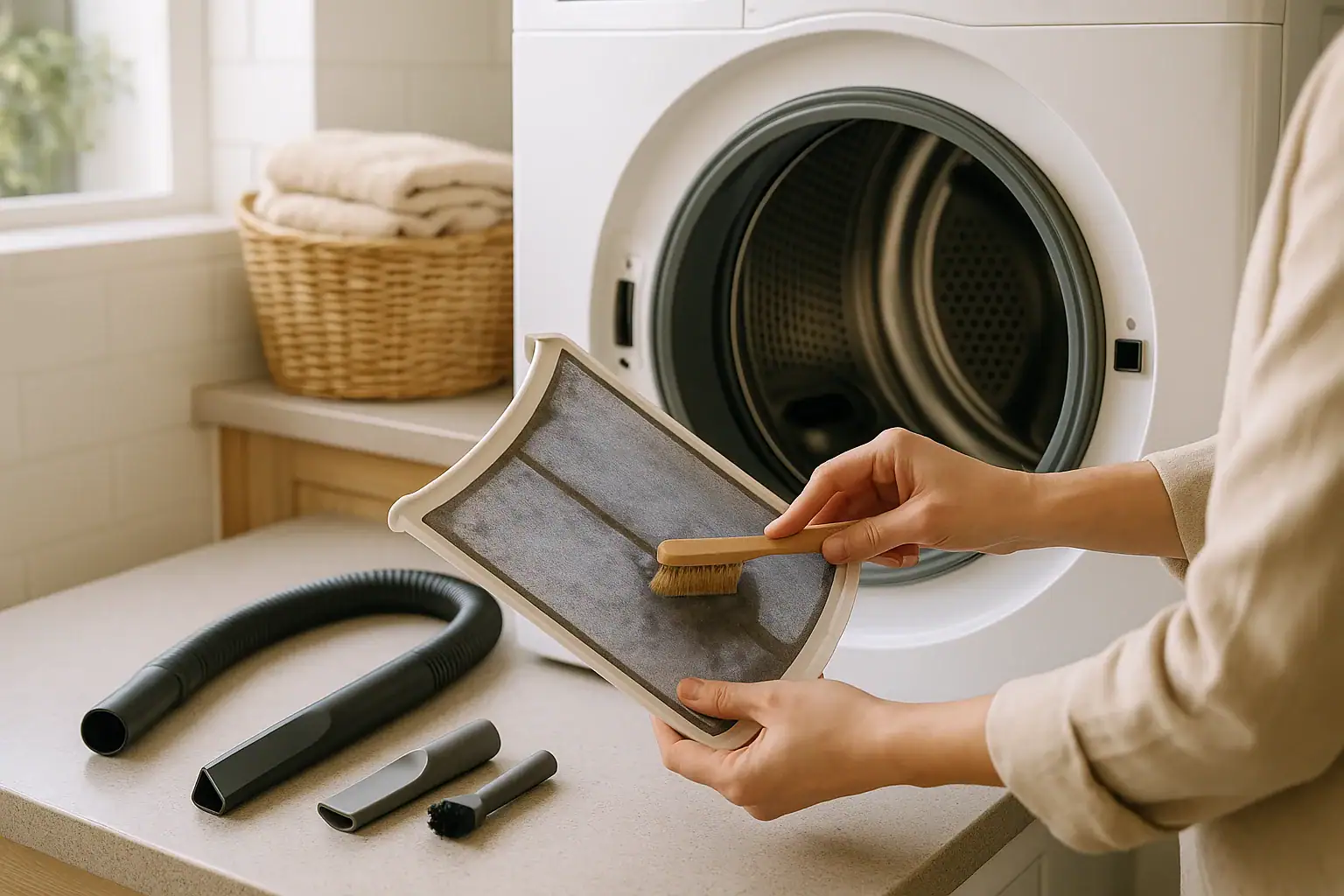
Quick overview: cleaning the lint trap housing
To clean a dryer lint trap housing, first remove the lint screen and vacuum inside the housing with a narrow attachment. Then loosen stuck lint with a flexible brush, vacuum again, and wipe the area dry. Always unplug an electric dryer or shut off the gas supply before doing deeper cleaning.
Regularly clearing lint from the housing helps the dryer vent air more freely and can reduce the chance of overheating. For full safety guidance, also follow your dryer manufacturer’s instructions and recommendations from the U.S. Consumer Product Safety Commission on clothes dryer safety.
Safety steps before you start
Dryers involve heat, moving parts, and (for gas models) combustion, so treat deeper cleaning as a light maintenance task, not a repair.
- Turn the dryer off and let it cool completely.
- Unplug the dryer from the wall outlet. For gas dryers, also close the gas shutoff valve if you will be moving the appliance.
- Pull the dryer away from the wall only as far as the vent and gas line (if present) safely allow.
- Do not remove panels, disconnect gas lines, or open sealed compartments unless the manufacturer’s manual specifically instructs you and you are comfortable doing so.
If you smell gas, see scorch marks, or the dryer shuts off repeatedly, stop and contact a qualified appliance technician or, for gas concerns, your gas utility or local fire department’s non-emergency line.
What you will need
- Vacuum with hose and crevice or upholstery attachment
- Dryer lint brush or flexible bottle-style brush (long, narrow)
- Soft cloths or microfiber towels
- Mild dish soap and warm water (for washing the lint screen)
- Flashlight
Optional but helpful:
- Compressed air (used gently and carefully)
- Small mirror to see inside the housing
Step-by-step: how to clean the lint trap housing
1. Remove and wash the lint screen
- Pull out the lint screen or filter from the top of the dryer or just inside the door, depending on your model.
- Peel off any visible lint with your fingers and discard it in the trash.
- If the screen looks coated with residue (often from dryer sheets or fabric softener), wash it:
- Rinse under warm water.
- Gently scrub with a soft brush and a drop of dish soap.
- Rinse thoroughly and let it dry completely before reinstalling.
A clean screen allows better airflow and makes it easier to see what is happening inside the housing.
2. Vacuum inside the lint trap housing
- With the lint screen removed, shine a flashlight into the opening to see how much lint is inside.
- Attach a crevice tool or narrow nozzle to your vacuum hose.
- Carefully insert the attachment into the lint trap housing and vacuum as far down as you can reach without forcing it.
- Move the attachment around the sides and corners to pull out loose lint.
Work slowly so you do not bump or damage any sensors or fragile plastic parts inside the opening.
3. Loosen stuck lint with a lint brush
- Insert a flexible dryer lint brush into the housing.
- Gently push the brush down until you feel resistance, then rotate and pull it back out to drag lint upward.
- Wipe the lint off the brush into a trash bag.
- Repeat several times, reaching along different sides of the housing.
Do not force the brush if it catches on something solid; you do not want to bend or break internal parts. If you feel a hard obstruction, that may be a job for a professional.
4. Vacuum again and wipe the opening
- Use the vacuum hose again to collect the loosened lint.
- Check with a flashlight. If you still see clumps, repeat the brush-and-vacuum cycle.
- Wipe around the rim of the lint trap opening with a slightly damp cloth to remove dust.
Keep moisture away from electrical components and do not pour water into the housing.
5. Reinstall the lint screen and test
- Make sure the lint screen is completely dry.
- Slide it back into place, ensuring it seats fully and smoothly.
- Plug the dryer back in and reopen the gas shutoff valve if you closed it.
- Run the dryer on a short, no-heat or low-heat cycle to confirm normal airflow and operation.
How often to clean the lint trap housing
- Every load: Remove lint from the lint screen.
- Every 1–3 months: Deep clean the lint trap housing with a brush and vacuum, depending on how often you use the dryer and how much lint your laundry produces.
- At least annually: Have the full dryer vent system inspected and cleaned, especially if it runs a long distance or has bends.
The National Fire Protection Association’s guidance on clothes dryer fires emphasizes keeping lint filters and vents clear as part of reducing fire risk. Your local codes or utility may have additional recommendations.
Signs your lint trap housing needs attention
Clean the housing sooner if you notice:
- Clothes taking longer than usual to dry
- The top or sides of the dryer feeling hotter than normal
- Burning or musty lint smells during a cycle
- Visible lint around the lint trap opening or door seal
These can also point to issues in the vent duct or exterior vent hood. If cleaning the lint trap housing does not improve performance, consider having the entire vent path inspected.
When to call a professional
Stop DIY cleaning and contact a qualified appliance technician or vent cleaning service if:
- You see scorch marks, melted plastic, or charring near the lint trap.
- The brush gets stuck or you feel a solid blockage you cannot dislodge.
- The dryer shuts off mid-cycle or trips breakers repeatedly.
- You are not comfortable moving the dryer or working around gas connections.
For more routine home care tasks, you can build a simple maintenance schedule that includes dryer cleaning, decluttering, and other light chores. See additional ideas in the Cleaning & Organization guides on Signature Home Guide.
Simple routine to keep lint under control
- Empty the lint screen before or after every load.
- Avoid overloading the dryer, which can trap more lint inside.
- Use dryer sheets and fabric softeners sparingly to reduce residue on the screen.
- Check that the exterior vent hood opens freely and is not blocked by lint, nests, or debris.
These small habits, combined with periodic lint trap housing cleaning, help your dryer vent more effectively and support safer operation over time.
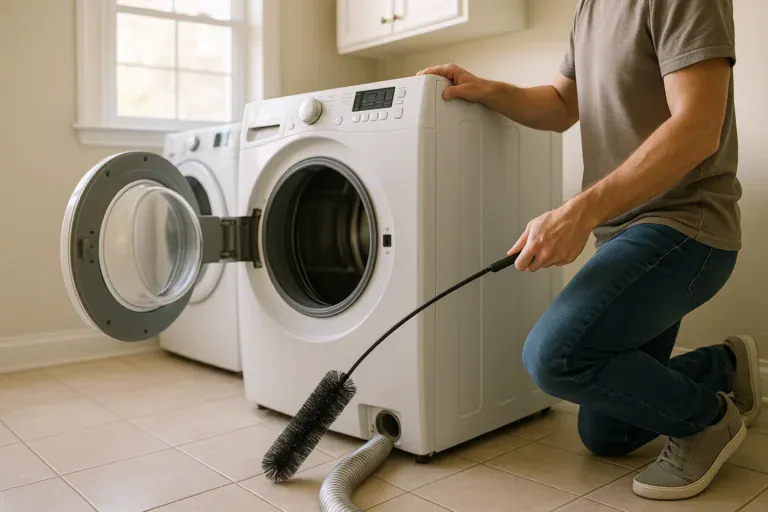 How to Clean a Dryer Vent Safely at Home
 How to Clean Shower Door Tracks and Prevent Slime Buildup for Good
 How to Remove Lint and Pet Hair from Laundry More Effectively