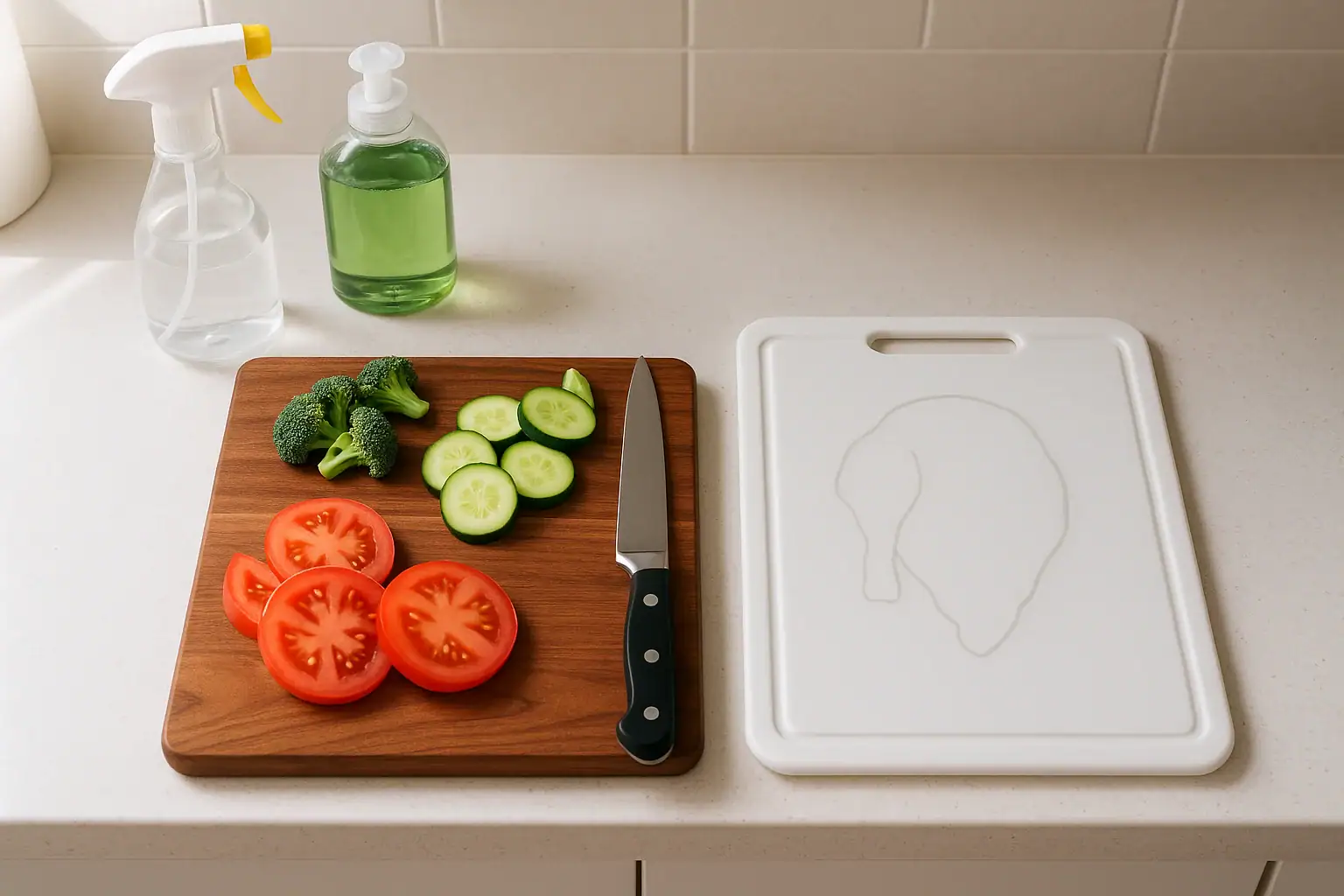
Cutting boards are one of the most used tools in any kitchen, but they can also be one of the most overlooked when it comes to food safety. Whether you are slicing vegetables, carving cooked meat, or prepping raw chicken, the surface under your knife matters. The material, how you use the board, and how you clean it all influence how many germs are left behind. Many home cooks wonder if wood or plastic is safer, and what it really takes to sanitize a board. Understanding the differences can help you choose the right board for each task and set up simple cleaning habits that protect your household from foodborne illness.
On this page(click to collapse)
- Why Cutting Board Hygiene Matters
- Wood vs Plastic Cutting Boards: How They Compare
- Best Uses for Wood vs Plastic Cutting Boards
- Everyday Cleaning vs Sanitizing: What Is the Difference?
- How to Clean and Sanitize Wood Cutting Boards
- How to Clean and Sanitize Plastic Cutting Boards
- Preventing Cross-Contamination in the Kitchen
- When to Replace Your Cutting Boards
- Choosing the Right Cutting Board Setup for Your Kitchen
- Related guides
Why Cutting Board Hygiene Matters
Raw meat, poultry, seafood, and unwashed produce can carry bacteria such as Salmonella, E. coli, and Campylobacter. When these foods touch a cutting board, germs can transfer to the surface and then spread to other foods, your hands, and kitchen tools.
Good cutting board hygiene helps you:
- Reduce the risk of foodborne illness
- Prevent cross-contamination between raw and ready-to-eat foods
- Keep knives sharper and cutting surfaces in better condition
- Extend the life of your boards so you replace them less often
The material of your board plays a role, but your cleaning and sanitizing habits are just as important. Both wood and plastic can be safe when used and maintained correctly.
Wood vs Plastic Cutting Boards: How They Compare
Wood and plastic behave differently when exposed to moisture, knife cuts, and bacteria. Instead of assuming one is always safer, it helps to understand the strengths and weaknesses of each material.
How Wood Cutting Boards Behave
Wood cutting boards are made from hardwoods such as maple, walnut, cherry, or beech. These woods are dense and have a tight grain that resists deep cuts and helps limit moisture penetration.
Key hygiene-related traits of wood boards include:
- Natural porosity: Wood can absorb a small amount of liquid. Some studies suggest that bacteria get pulled into the wood and then die off as the surface dries.
- Self-healing surface: Shallow knife marks tend to close up over time, leaving fewer deep grooves where bacteria can hide.
- Less slippery: A stable, non-slip surface means fewer accidents and less chance of food sliding into contaminated areas.
However, wood boards also have limitations:
- They should not be soaked or run through most dishwashers, as prolonged heat and water can warp or crack them.
- Deep cracks, splits, or heavily worn surfaces can trap food particles and germs.
- They require occasional oiling to prevent drying and cracking.
How Plastic Cutting Boards Behave
Plastic cutting boards are usually made from materials such as polyethylene. They are non-porous, relatively lightweight, and often dishwasher safe.
Hygiene-related traits of plastic boards include:
- Non-porous surface: Liquids and juices tend to stay on the surface rather than soaking in, which can make cleaning and sanitizing more straightforward.
- Dishwasher safe: Many plastic boards can go into a dishwasher, where hot water and detergent help remove and kill germs.
- Color-coding options: It is easy to use different colored boards for different tasks to reduce cross-contamination.
Drawbacks of plastic boards include:
- They can develop deep knife grooves over time, which are difficult to clean thoroughly.
- Older, heavily scarred plastic boards may harbor more bacteria than a well-maintained wood board.
- Some thin plastic boards can warp in the dishwasher or slide around on the counter.
Which Is More Hygienic: Wood or Plastic?
Studies on cutting board hygiene have shown mixed results. In some cases, wood boards showed fewer live bacteria after drying, while in other cases plastic boards were easier to sanitize effectively, especially when washed in a dishwasher.
In practical home use:
- Both wood and plastic can be hygienic when cleaned and sanitized properly.
- Both can become unsafe if they are heavily worn, cracked, or not cleaned after contact with raw animal products.
- The safest option is to match the board to the task and maintain it consistently.
Instead of focusing on which material is universally better, focus on how you use, clean, and replace your boards.
Best Uses for Wood vs Plastic Cutting Boards
One of the simplest ways to improve cutting board hygiene is to dedicate certain boards to certain types of food. This reduces the chance that bacteria from raw meat will end up on ready-to-eat foods.
When to Use Wood Cutting Boards
Wood boards are especially useful for:
- Bread and baked goods: The surface is gentle and helps keep crumbs under control.
- Fruits and vegetables: Ideal for produce that will be eaten raw, such as tomatoes, cucumbers, and herbs.
- Cooked meats: Great for carving roasted poultry or beef, as long as the board is cleaned afterward.
- Cheese and snacks: Stable, attractive, and gentle on knives.
Many home cooks prefer to avoid using wood boards for raw poultry or raw ground meat, because these foods carry higher levels of bacteria and the boards cannot be sanitized in a dishwasher.
When to Use Plastic Cutting Boards
Plastic boards are often the better choice for:
- Raw poultry: Chicken and turkey juices can be messy. A plastic board can go straight into the dishwasher.
- Raw meat and seafood: Beef, pork, and fish can also leave behind bacteria that you want to remove with hot water and detergent.
- High-risk foods: Anything that is likely to carry harmful bacteria is safer on a board you can sanitize aggressively.
Because plastic boards are typically less expensive, it is easier to replace them when they become heavily scarred or stained.
Everyday Cleaning vs Sanitizing: What Is the Difference?
Many people rinse their cutting board and think it is clean, but there is an important difference between cleaning and sanitizing.
- Cleaning: Removes visible food, grease, and dirt using soap and water. This step also removes many germs but does not necessarily kill them.
- Sanitizing: Uses heat or a chemical solution to reduce the number of germs on a surface to safer levels after it has been cleaned.
In a home kitchen, you do not need to sanitize after every use. However, you should sanitize your cutting boards whenever they have been in contact with raw meat, poultry, seafood, or eggs, and any time someone in your home has a weakened immune system or is more vulnerable to illness.
How to Clean and Sanitize Wood Cutting Boards
Wood cutting boards need a gentler approach than plastic, but you can still clean and sanitize them effectively.
Step-by-Step Cleaning for Wood Boards
- Scrape off food: Use a bench scraper or spatula to remove food particles from the surface.
- Wash with hot, soapy water: Use a mild dish detergent and a non-abrasive sponge or brush. Scrub all surfaces, including the sides and any juice grooves.
- Rinse thoroughly: Rinse under warm running water until all soap is gone.
- Dry immediately: Pat the board dry with a clean towel, then stand it upright or on a rack so air can circulate around it.
Avoid soaking wood boards in water or leaving them in a wet sink, as this can cause warping and splitting.
Simple Ways to Sanitize Wood Boards
Because wood boards are not usually dishwasher safe, use one of these methods after cleaning:
- Vinegar solution: Spray or wipe the board with white vinegar. Let it sit for several minutes, then wipe and allow to air-dry completely.
- Hydrogen peroxide: After cleaning, pour a small amount of 3% hydrogen peroxide on the surface and spread it with a clean cloth. Let it bubble for a few minutes, then wipe and dry.
- Boiling water rinse (brief): For sturdy boards, you can pour very hot (not simmering) water over the surface for a few seconds, then dry immediately. Do not soak.
Always let wood boards dry fully between uses. Bacteria survive and multiply more easily on damp surfaces.
Deodorizing and Deep Cleaning Wood Boards
To remove odors and stains from wood boards:
- Sprinkle coarse salt or baking soda over the surface.
- Cut a lemon in half and use the cut side to scrub the board, pressing the salt or baking soda into the surface.
- Let sit for 5–10 minutes.
- Rinse with warm water, then dry thoroughly.
Oiling Wood Cutting Boards
Regular oiling helps protect wood boards from drying out and cracking, which can harbor bacteria.
To oil a board:
- Make sure the board is completely clean and dry.
- Apply a food-safe mineral oil or a conditioner designed for wood kitchenware.
- Spread the oil evenly with a clean cloth or paper towel, covering all sides.
- Let it soak in for several hours or overnight.
- Wipe away any excess oil with a dry cloth.
Repeat this process whenever the board looks dry or dull, or about once a month with regular use.
How to Clean and Sanitize Plastic Cutting Boards
Plastic boards are generally easier to sanitize because they can withstand higher heat and more aggressive cleaning methods.
Step-by-Step Cleaning for Plastic Boards
- Scrape off food: Remove any stuck-on food with a scraper or spatula.
- Wash with hot, soapy water: Use dish detergent and a scrub brush or sponge to clean all surfaces.
- Rinse well: Rinse under hot running water to remove soap and loosened debris.
- Dry: Air-dry in a dish rack or dry with a clean towel.
Dishwasher Sanitizing for Plastic Boards
If your plastic board is labeled as dishwasher safe, this is one of the most effective ways to sanitize it.
To sanitize in the dishwasher:
- Place the board on the top rack if possible, or where it will not block the spray arms.
- Run a full cycle with hot water and heated drying.
- Make sure the board is completely dry before storing.
If your dishwasher has a sanitizing cycle, use it for boards that have been in contact with raw meat or poultry.
Bleach Solution for Plastic Boards
For a deeper sanitizing step, you can use a mild bleach solution after washing the board. This method is especially helpful for boards used with raw poultry or when someone in your home is at higher risk of infection.
To use a bleach solution safely:
- Clean the board thoroughly with hot, soapy water and rinse.
- Mix a sanitizing solution of 1 tablespoon of unscented liquid chlorine bleach in 1 gallon of cool water.
- Immerse the board fully or pour the solution over the surface, ensuring full coverage.
- Let it sit for about 2 minutes.
- Rinse with clean water and allow the board to air-dry completely.
Always follow safety instructions on the bleach container and keep solutions away from children and pets.
Preventing Cross-Contamination in the Kitchen
Even a perfectly cleaned cutting board can become a problem if it is used in ways that spread germs from raw foods to ready-to-eat items.
Use these habits to reduce cross-contamination:
- Use separate boards: Keep at least one board for raw meat, poultry, and seafood, and a different board for fruits, vegetables, and cooked foods.
- Wash between tasks: If you must use the same board, wash and sanitize it thoroughly before switching from raw to ready-to-eat foods.
- Wash hands often: Wash your hands with soap and water after handling raw meat or eggs and before touching other foods or kitchen tools.
- Clean knives and tools: Wash knives, tongs, and other utensils after they touch raw foods and before using them on cooked foods.
- Keep towels clean: Replace dishcloths and towels frequently, especially if they have been used to wipe up meat juices.
When to Replace Your Cutting Boards
No matter how careful you are, cutting boards do not last forever. Over time, they develop wear that makes them harder to clean and more likely to harbor bacteria.
Consider replacing a cutting board if you notice:
- Deep grooves or cuts: Knife marks that you cannot clean thoroughly or that trap food particles.
- Cracks or splits: Especially on wood boards, where moisture and bacteria can collect.
- Warping: A board that rocks or does not sit flat on the counter, which can be unsafe and harder to clean.
- Persistent stains or odors: Smells that remain even after thorough cleaning and deodorizing.
- Loose pieces or peeling: On plastic boards, any flaking or peeling surface is a sign it is time to replace.
As a general guideline, heavily used plastic boards may need replacement every year or two, while well-maintained wood boards can last much longer if they are kept clean, dry, and oiled.
Choosing the Right Cutting Board Setup for Your Kitchen
You do not need a large collection of boards to keep your kitchen safe. A simple, thoughtful setup can make everyday cooking more hygienic and less stressful.
For many households, a practical combination looks like this:
- One or two plastic boards dedicated to raw meat, poultry, and seafood
- One medium or large wood board for fruits, vegetables, bread, and cooked foods
- An extra small board for quick tasks like slicing citrus or chopping herbs
If you like, you can assign colors or labels to remind everyone which board is for which type of food. Store boards upright or in a rack so air can circulate and surfaces stay dry between uses.
By understanding how wood and plastic boards differ and following simple cleaning and sanitizing steps, you can enjoy cooking with confidence, knowing your cutting surfaces are helping support a safer kitchen.
For more ideas on improving kitchen safety and water-wise habits at home, explore related guides and tips at Signature Home Guide.
Related posts
Browse this topic →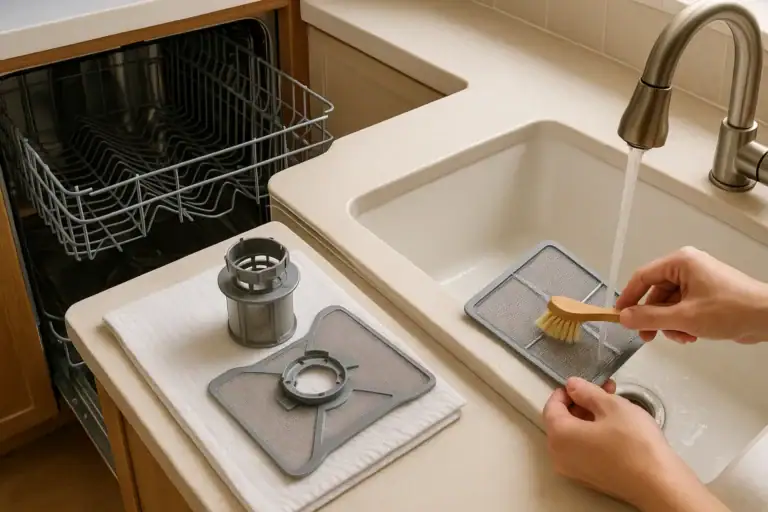
How to Clean a Dishwasher Filter (and How Often You Should Do It)
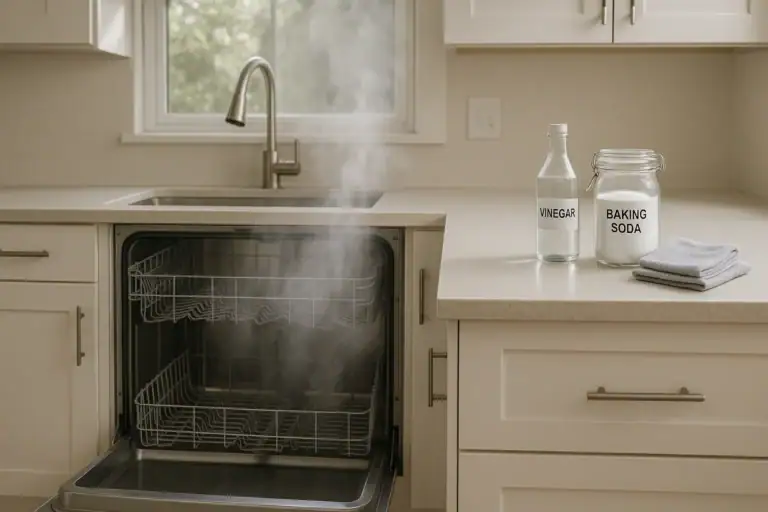
Dishwasher Smells: Why It Happens and How to Fix It for Good
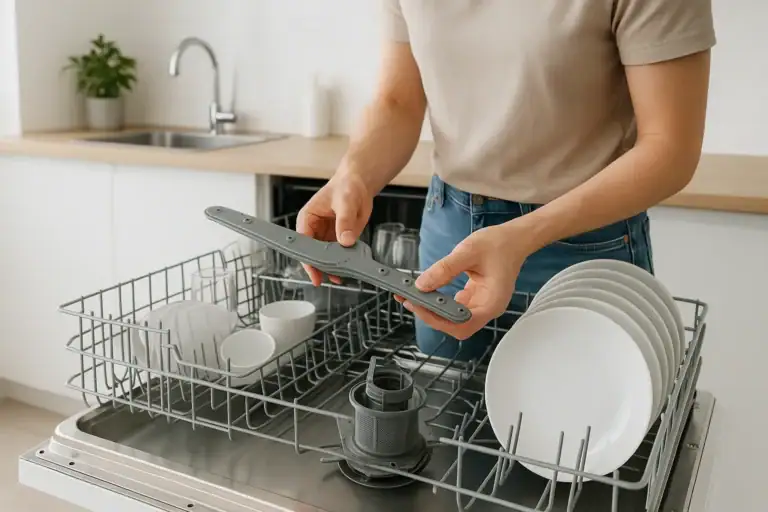
Dishwasher Not Cleaning Well? Spray Arm, Filter, and Loading Fixes
How to Sharpen Kitchen Knives at Home: Simple Method and Safety Tips
Food Storage Safety: Fridge Zones and How Long Food Really Lasts
How to Organize a Small Kitchen Pantry for Faster Meal Prep
Keep reading
About this site
Signature Home Guide publishes practical, independent home guides. We aim to be clear, helpful, and transparent.
Affiliate disclosure
As an Amazon Associate, we earn from qualifying purchases. Some links on this site may be affiliate links. If you buy through these links, we may earn a small commission at no extra cost to you. This helps support our content. Learn more.