Emergency Kit for Apartments: Essentials That Fit in a Closet
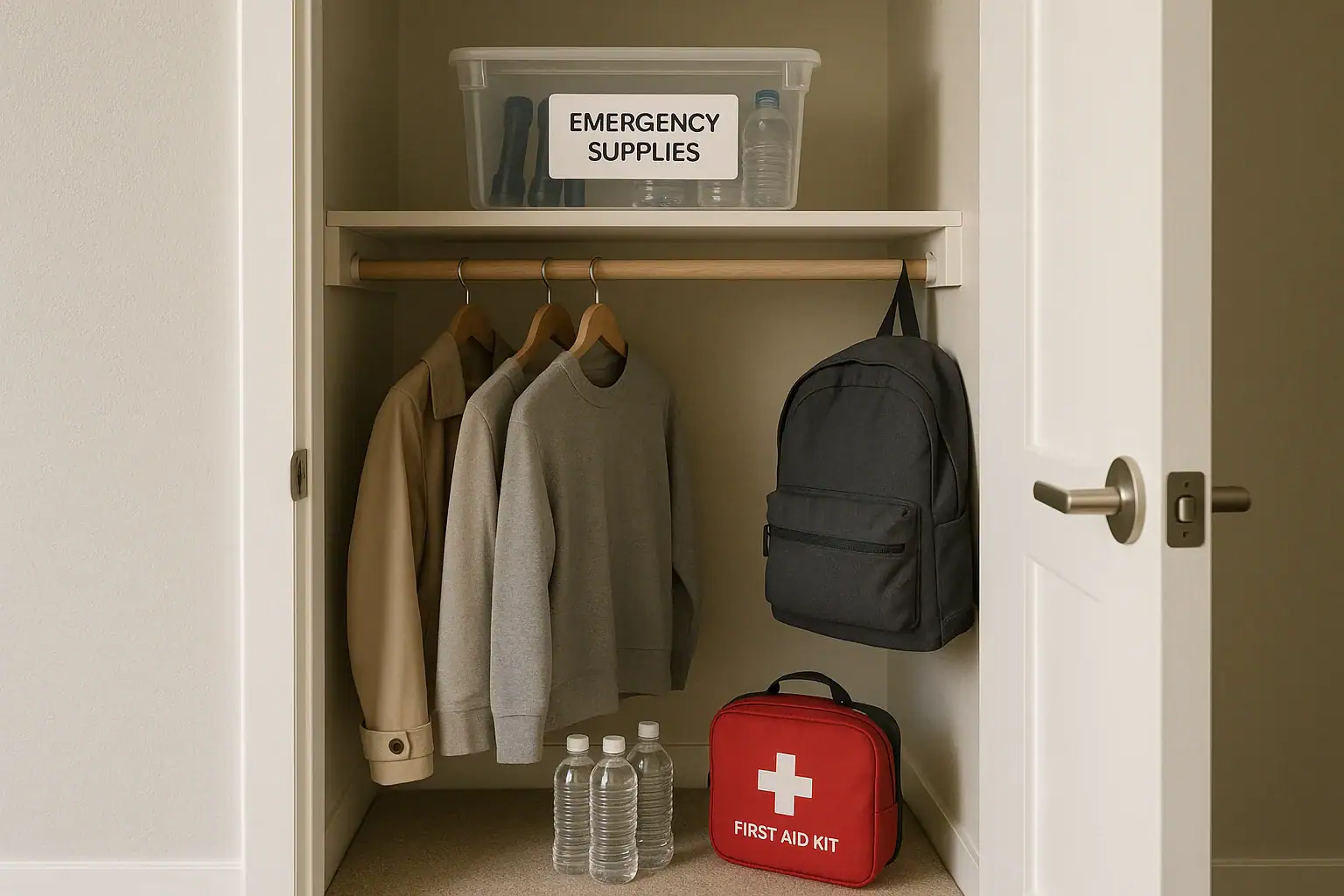
Living in an apartment does not mean you have to sacrifice emergency preparedness. In many buildings, you cannot store supplies in hallways, stairwells, or balconies, and you may not have a garage or basement. That makes it even more important to build an emergency kit that is compact, organized, and easy to grab. With a little planning, you can fit everything you need for several days of basic safety and comfort into a single closet or small storage area.
On this page(click to collapse)
- Why Apartment Residents Need a Tailored Emergency Kit
- Planning Your Apartment Emergency Kit
- Closet-Friendly Emergency Kit Essentials
- Grab-and-Go Bag for Fast Apartment Evacuations
- Smart Storage Strategies for Small Apartments
- Apartment-Specific Safety Upgrades
- Keeping Your Apartment Emergency Kit Updated
- Putting It All Together
- Related guides
This guide walks you through the must-have items for an apartment-friendly emergency kit, how to store them in tight spaces, and simple ways to keep your supplies updated. The focus is on practical, realistic steps for people in small homes, including renters who may have limited control over their building. Use this as a checklist to build or improve your own kit so you are ready for power outages, storms, building issues, or other unexpected events.
Why Apartment Residents Need a Tailored Emergency Kit
Apartment living comes with unique risks and limitations that shape how you prepare for emergencies. You may share walls with neighbors, rely on elevators, and depend on building management for major systems like heat, water, and security. You also have less control over structural safety and evacuation routes than someone in a standalone home.
Common apartment-specific challenges include:
- Limited storage space: Closets and cabinets fill up fast, so every emergency item needs to earn its place.
- Shared infrastructure: A problem in one unit or floor can affect many residents, especially with plumbing, electrical, and fire systems.
- Evacuation constraints: Stairwells, locked doors, and crowded exits can slow you down during a fire or other urgent situation.
- Rules and restrictions: Some buildings limit what you can store on balconies or in common areas, and may have rules about certain equipment.
A well-planned emergency kit for apartments accounts for these realities. The goal is not to stockpile everything, but to have a compact, organized set of essentials that supports you for at least 72 hours if services are disrupted or you need to leave quickly.
Planning Your Apartment Emergency Kit
Before you start buying supplies, take a few minutes to plan. This helps you avoid clutter and focus on what you will truly use.
Set Clear Goals for Your Kit
For most apartment residents, a practical goal is to be ready for:
- Short-term shelter in place: Staying in your unit without power or water for one to three days.
- Quick evacuation: Leaving the building with a grab-and-go bag if there is a fire, gas leak, or structural issue.
- Minor medical needs: Treating small injuries until you can reach professional care.
Once you know what you are preparing for, you can choose items that serve more than one purpose and fit into your limited storage.
Choose a Storage Spot That Works
In an apartment, your emergency kit should be both accessible and out of the way. Ideal locations include:
- An entryway or coat closet
- A bedroom closet floor or shelf
- Under-bed storage bins for lighter items
- A sturdy plastic bin in a living room closet
Aim to keep the main kit in one place so you can grab it quickly. If you build a separate grab-and-go bag, store it near your front door or bedroom so it is easy to reach even in low light or smoke.
Closet-Friendly Emergency Kit Essentials
The following sections break down what to include in a compact emergency kit that fits in a closet. You can store most items in a single large bin, backpack, or combination of both.
Water and Compact Food Options
Water and food take up the most space, so it is important to be strategic.
Water Storage in Small Spaces
Emergency guidelines often suggest one gallon of water per person per day for drinking and basic hygiene. In an apartment, that much water can be hard to store, but you can still improve your situation with a few steps:
- Store sealed bottles or jugs of water on the closet floor or under the bed.
- Use stackable containers to maximize vertical space.
- Keep a collapsible water container or two in your kit so you can fill them if you have warning of an event.
Even a few days of drinking water for each person is better than none. Rotate bottled water every 6–12 months by using it and replacing it.
Non-Perishable, No-Cook Foods
Choose foods that are compact, have a long shelf life, and do not require cooking. Good options include:
- Ready-to-eat canned meals and soups
- Canned beans and vegetables
- Nut butters in plastic jars
- Granola bars, trail mix, and dried fruit
- Instant oatmeal packets (can be made with hot or room-temperature water)
- Crackers and shelf-stable snack packs
Store a manual can opener with your food. Prioritize items you already enjoy so rotation is easy. Aim for at least three days of simple meals and snacks for each person.
Lighting and Power for Apartment Emergencies
Power outages are one of the most common disruptions in apartment buildings. Being able to see and keep devices running makes a big difference.
- Flashlights: Keep at least one small flashlight per person, plus an extra in a central spot. Compact models fit easily in a closet bin.
- Headlamps: These free up your hands during an emergency and are ideal for navigating dark stairwells.
- Battery-powered lantern: A small lantern can light up a room more safely than open flames.
- Extra batteries: Store batteries in their original packaging or a small organizer to prevent corrosion.
- Portable power banks: Pre-charged power banks help keep phones and small devices running during an outage.
Avoid using candles in apartments whenever possible, especially in older buildings or homes with children or pets. Battery-powered lighting is safer and just as effective.
First Aid and Health Essentials
A compact first aid kit does not take much space but is crucial in an emergency. You can buy a pre-assembled kit and add a few personal items, or build your own using a small pouch or plastic box.
Include items such as:
- Adhesive bandages in various sizes
- Gauze pads and medical tape
- Antiseptic wipes and antibiotic ointment
- Elastic bandage for sprains
- Tweezers and small scissors
- Disposable gloves
- Pain relievers suitable for adults and children in the home
- Allergy medication if needed
- Thermometer
Also prepare for ongoing health needs:
- A list of current medications and dosages
- Copies of prescriptions
- At least a few days of extra essential medications, if possible
Store medications according to label directions and check expiration dates regularly.
Documents and Personal Information
Important documents are easy to overlook, yet they are some of the hardest things to replace after an emergency. In an apartment, a small, fire-resistant document pouch or folder can fit neatly in a closet and protect critical papers.
Consider including:
- Copies of identification for each household member
- Copies of your lease and renter’s insurance information
- Contact numbers for building management and maintenance
- Emergency contact list for family, friends, and medical providers
- Printed list of important account numbers if you rely on digital records
Store digital copies in secure cloud storage as a backup, but assume you may not have immediate access to devices or the internet.
Clothing, Warmth, and Shelter Items
Temperature control can be a big issue in apartment emergencies, especially during winter power outages or summer heat waves. A few compact items can help you stay more comfortable.
- Emergency blankets: Thin, reflective blankets take up very little space and help retain body heat.
- Lightweight blankets or throws: Roll or vacuum-pack extras for your closet.
- Extra socks and underwear: Pack at least one spare set per person in a sealed bag.
- Layering pieces: A thin, long-sleeve shirt and hat for each person can make a big difference in cold conditions.
- Sturdy shoes: If you usually wear soft indoor shoes, keep a pair of closed-toe shoes near your kit for quick evacuation.
If space allows, include a compact rain poncho for each person. These fold flat and can be stored in pockets of your emergency bag.
Basic Tools and Safety Gear for Apartments
Even in a small space, a few basic tools can help you respond to minor damage or navigate the building more safely.
- Multi-tool or small toolkit with screwdriver, pliers, and utility knife
- Work gloves to protect your hands from debris
- Dust masks or respirators for smoky or dusty conditions
- Whistle to signal for help if you are trapped or need attention
- Duct tape for quick repairs and sealing gaps
- Plastic sheeting or heavy-duty trash bags for temporary protection from leaks or drafts
Check your building’s rules about any restricted items, and always prioritize your personal safety when using tools in damaged or unstable areas.
Hygiene and Sanitation in Tight Quarters
In an apartment, plumbing issues or power outages can quickly affect hygiene. A small hygiene kit helps you stay cleaner and more comfortable until services are restored.
Pack items such as:
- Travel-size soap and hand sanitizer
- Toothbrushes and toothpaste
- Moist towelettes or cleansing wipes
- Toilet paper and tissues
- Personal hygiene products specific to your household
- Small trash bags for waste
Store these in a labeled pouch or small tote so you can easily move them to the bathroom or take them with you if you need to leave the building.
Grab-and-Go Bag for Fast Apartment Evacuations
In some emergencies, such as a fire or gas leak, you may have only minutes to leave your apartment. A dedicated grab-and-go bag, stored near your exit or bed, ensures you can leave quickly with the basics.
Use a backpack so you can keep your hands free for doors, stair rails, or assisting others. Include:
- Copies of key documents or a small document pouch
- Small first aid kit
- Flashlight and extra batteries
- Portable power bank and charging cable
- Emergency blanket and lightweight layer of clothing
- Basic snacks and a small water bottle
- Keys, some cash, and a list of contacts
You can keep bulkier items, like extra water and food, in your main closet kit and focus your grab-and-go bag on what you need for the first several hours away from home.
Smart Storage Strategies for Small Apartments
Fitting an emergency kit into a closet is easier when you use vertical space and organize items by category.
Use Bins, Bags, and Labels
Consider breaking your kit into a few clearly labeled containers:
- Main bin: Food, water, lighting, tools, and hygiene items
- First aid pouch: Medical supplies and medications
- Document pouch: Papers and copies of IDs
- Grab-and-go backpack: Essentials for fast evacuation
Stack bins on the closet floor, store lighter items on shelves, and tuck slim pouches along the sides. Clear or lightly tinted bins make it easier to see what is inside without opening everything.
Maximize Underused Spaces
If your main closet is already crowded, look for overlooked spots:
- Under-bed storage for water, blankets, and extra clothing
- Top shelves in bedroom or hallway closets for lightweight items
- Behind-door organizers for flashlights, batteries, and small tools
The goal is to keep items together enough that you can find them quickly, while still working within the limits of apartment living.
Apartment-Specific Safety Upgrades
Your emergency kit works best when paired with a few simple safety checks around your apartment. These do not take much space but can significantly improve your readiness.
Check and Support Existing Safety Systems
Most apartment buildings already have basic safety features. Take time to understand and support them:
- Test smoke and carbon monoxide alarms regularly and replace batteries as needed.
- Know where fire extinguishers are located on your floor.
- Review posted evacuation routes and stairwell locations.
- Ask management how to report urgent maintenance issues after hours.
Keep a small, easy-to-reach flashlight near your bed so you can find your way to exits if alarms sound at night.
Plan for Pets and Roommates
If you live with others, include them in your planning:
- Set a meeting spot outside the building in case you are separated.
- Decide who will grab the emergency kit and who will assist children, older adults, or pets.
- For pets, add a small supply of food, a collapsible water bowl, and a leash or carrier to your kit.
Review the plan a few times a year so everyone remembers their role and knows where the kit is stored.
Keeping Your Apartment Emergency Kit Updated
An emergency kit is only useful if the contents are in good condition and match your current needs. Set a reminder on your calendar to review your supplies at least twice a year.
During each check, you can:
- Replace expired food, water, medications, and batteries.
- Update documents, contact lists, and insurance information.
- Adjust clothing sizes for children and seasonal needs.
- Test flashlights, power banks, and any battery-powered devices.
Small, regular updates are easier than trying to rebuild the kit from scratch after several years. Tie your check-ins to something you already do, such as the start of spring and fall, or when you change clocks for daylight saving time.
Putting It All Together
Building an emergency kit for an apartment is less about collecting every possible item and more about choosing compact, high-impact essentials that fit your space and lifestyle. By focusing on water, food, lighting, first aid, documents, clothing, and a few basic tools, you can create a closet-friendly kit that supports you through common disruptions and more serious events.
Take the process step by step. Start with what you already have, add a few items each month, and store everything in a clearly labeled bin or bag. With thoughtful planning and smart storage, even a small apartment can hold a powerful safety net for you and the people you live with.
For more ways to strengthen safety and comfort in your home, explore additional smart home and safety tips and adapt them to your unique space and needs.
Related posts
Browse this topic →
Smart Air Quality Alerts: How to Set Thresholds That Make Sense
How to Choose a Fire Extinguisher for the Kitchen (Classes Explained)
Home Fire Escape Plan: Map, Meeting Point, and Practice Checklist
Childproofing the Smart Home: Settings and Physical Safety Tips
Garage Door Safety: Sensors, Remotes, and Common Failure Fixes
How to Shut Off Water Quickly in an Emergency: A Simple Home Checklist
Keep reading
About this site
Signature Home Guide publishes practical, independent home guides. We aim to be clear, helpful, and transparent.
Affiliate disclosure
As an Amazon Associate, we earn from qualifying purchases. Some links on this site may be affiliate links. If you buy through these links, we may earn a small commission at no extra cost to you. This helps support our content. Learn more.