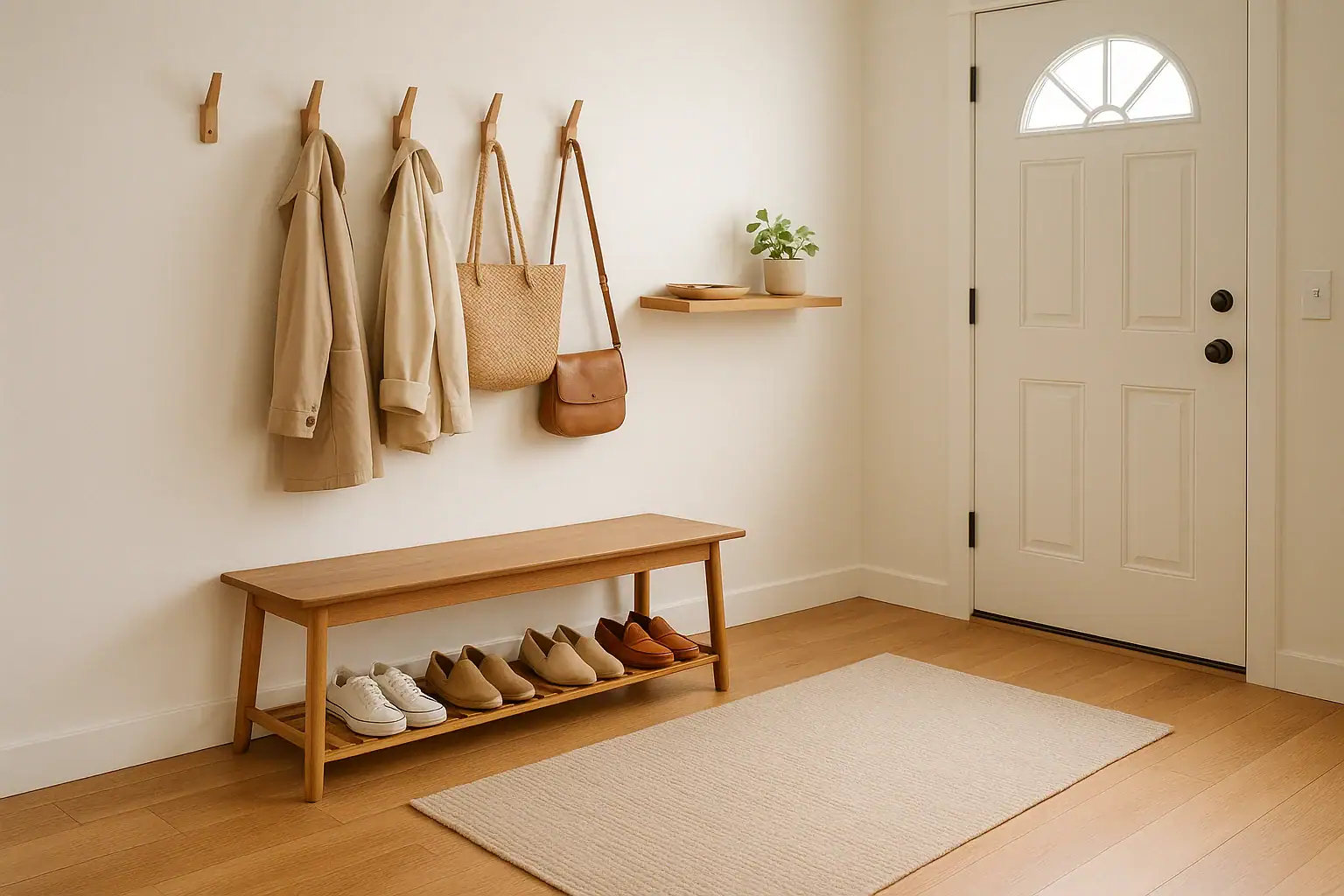
Your entryway sets the tone for your entire home. It is the first place you see when you walk in and the last spot you pass as you head out the door. When this space is cluttered with shoes, bags, mail, and random items, it can make every arrival and departure feel stressful and chaotic. The good news is that you do not need a large foyer or expensive furniture to keep this area under control. With a simple, thoughtful system, you can turn even a small entry into a calm, organized landing zone that works for your real life.
On this page(click to collapse)
- Step 1: Decide What Your Entryway Needs to Do
- Step 2: Clear the Space and Start Fresh
- Step 3: Create Simple Zones That Match Your Routine
- Step 4: Choose Storage That Fits Your Space
- Step 5: Set Up a Simple Shoe and Coat System
- Step 6: Create a Drop Zone for Keys, Wallets, and Mail
- Step 7: Give Each Family Member a Home Base
- Step 8: Add Simple Daily and Weekly Habits
- Step 9: Keep Safety and Comfort in Mind
- Step 10: Adjust Your System as Life Changes
- Bringing It All Together
- Related guides
This guide walks you through how to design a practical entryway organization system that stops clutter at the door. You will learn how to define zones, choose smart storage, and build quick daily habits that keep everything in its place. Whether you have a full mudroom, a small hallway, or just a wall by the front door, you can adapt these ideas to fit your home and your family.
Step 1: Decide What Your Entryway Needs to Do
Before you buy a single basket or hook, take a moment to think about how you actually use your entryway. The most organized spaces are designed around real routines, not ideal ones.
Questions to ask yourself
- How many people use this door every day?
- Do you come in with arms full of groceries, sports gear, or work bags?
- Do kids need a place to drop backpacks, lunch boxes, and shoes?
- Do you usually bring in mail and packages through this door?
- Do you need a spot to keep pet leashes or outdoor gear?
- Is this also where guests enter, or is it mostly used by your household?
Write down the specific items that tend to pile up near your door. This might include:
- Shoes and boots
- Coats, jackets, and hats
- Bags, backpacks, and purses
- Keys, wallets, and sunglasses
- Mail, packages, and returns
- Pet leashes, waste bags, and treats
- Sports equipment or seasonal gear
This list becomes your blueprint. Your entryway system should give every one of these items a specific, easy-to-use home.
Step 2: Clear the Space and Start Fresh
It is almost impossible to design a good system on top of existing clutter. Start by clearing everything out of your entryway so you can see the space with fresh eyes.
How to reset your entryway
- Empty the area completely. Remove shoes, coats, bags, mail piles, and any furniture or storage that is not working.
- Sort items by category. Make piles for shoes, outerwear, bags, mail, pet gear, and random items that belong elsewhere.
- Edit what you keep by the door. Only daily or weekly essentials should live in the entryway. Off-season items can be stored in closets, bins, or another part of the home.
- Clean the space. Sweep or vacuum, wipe down baseboards, and clean any surfaces. A clean slate makes it easier to commit to new habits.
Once you have cleared and edited, you will have a realistic sense of how much storage you actually need and what must stay near the door.
Step 3: Create Simple Zones That Match Your Routine
The key to stopping clutter at the door is to create clear zones. Each zone is a small, defined area with a specific purpose. When everything has a zone, it is easier for everyone in the household to know where things go.
Core entryway zones
Most homes benefit from some version of these basic zones:
- Shoe zone for everyday footwear
- Outerwear zone for coats, jackets, and hats
- Bag zone for backpacks, work bags, and purses
- Drop zone for keys, wallets, and sunglasses
- Paper zone for mail, forms, and receipts
- Specialty zone for pet gear or sports items, if needed
You do not need a large space for each zone. Even a small shelf, a set of hooks, or a single basket can define a zone if it is clearly labeled and consistently used.
Planning your layout
As you plan your layout, think about the natural flow as you enter:
- Where do your feet land when you step inside? That is the best spot for a shoe mat or rack.
- Where do your hands naturally reach to hang a coat or bag? That is where hooks or a rack should go.
- Where do you usually set down keys or mail? That is the ideal place for a small table, shelf, or wall-mounted organizer.
Design your zones to support these natural movements instead of fighting them. The easier it is to put something away, the more likely it is to stay organized.
Step 4: Choose Storage That Fits Your Space
Once you know your zones, you can choose storage pieces that fit both your space and your habits. You do not need matching sets or elaborate built-ins. Simple, sturdy solutions that are easy to use will serve you best.
Ideas for small entryways or apartments
- Wall hooks or peg rails: Use them for coats, bags, and hats. Mount them at heights that work for both adults and kids.
- Over-the-door hooks: A great option if you are short on wall space.
- Slim shoe rack or tray: Place it right by the door to catch everyday shoes and protect floors.
- Floating shelf with small containers: Use this as a mini command center for keys, mail, and sunglasses.
- Wall-mounted file holder: Assign sections for incoming mail, bills, school papers, and items that need action.
Ideas for larger entryways or mudrooms
- Bench with storage underneath: Combines a place to sit and put on shoes with hidden baskets or cubbies.
- Cubbies or lockers: Give each family member a dedicated space for shoes, bags, and outerwear.
- Freestanding coat rack: Helpful if wall space is limited or you want flexible placement.
- Closed cabinets or doors on cubbies: Useful if you prefer a cleaner look and want to hide visual clutter.
Storage tips that make your system easier to maintain
- Use open storage for daily items. Baskets, hooks, and open shelves are faster to use than drawers and doors.
- Label where things go. Simple labels for baskets, hooks, and cubbies make it easier for everyone to follow the system.
- Limit capacity on purpose. A small shoe rack or a set number of hooks encourages you to keep only current-season items at the door.
- Choose easy-to-clean materials. Entryways see dirt, moisture, and heavy use. Look for washable rugs, wipeable baskets, and sturdy mats.
Step 5: Set Up a Simple Shoe and Coat System
Shoes and outerwear are usually the biggest sources of entryway clutter. A clear, realistic limit on how many items can live by the door keeps this under control.
Shoe system ideas
- Pick a number per person. Decide how many pairs each person can keep at the door. For example, one everyday pair, one athletic pair, and one seasonal pair.
- Use a shoe mat or tray. Place it right inside the door to catch dirt and moisture and to visually define the shoe zone.
- Assign each person a spot. Use separate sections, baskets, or shelves so shoes do not pile up randomly.
- Rotate weekly. Once a week, return extra pairs to bedroom closets and reset the shoe area.
Coat and outerwear system ideas
- Limit coats at the door. Keep only current-season, frequently used coats in the entryway. Store extras elsewhere.
- Add hooks at multiple heights. Lower hooks help kids hang their own coats and backpacks.
- Use a basket for hats and gloves. One or two shared baskets are easier to maintain than many small containers.
- Seasonal swap. At the start of each season, swap heavy winter items for lighter layers or vice versa.
Step 6: Create a Drop Zone for Keys, Wallets, and Mail
A defined drop zone is one of the most powerful ways to stop clutter from spreading beyond the entryway. When keys, wallets, and mail always land in the same place, you save time and reduce stress.
Setting up a key and essentials station
- Choose a small surface. A narrow console table, a floating shelf, or even a wall-mounted ledge works well.
- Add a tray or small bowl. Use it for keys, loose change, and small essentials.
- Include a small dish or hook for sunglasses. This prevents them from getting scratched or lost.
- Keep it uncluttered. Only true daily essentials should live here.
Managing mail and paper clutter
Mail and papers can quickly take over surfaces if they do not have a clear home. A simple paper system can keep this under control.
- Open mail near a trash or recycling bin. Immediately discard junk mail and empty envelopes.
- Use a wall file or standing sorter. Create labeled sections such as “To Pay,” “To File,” and “To Read.”
- Set a weekly paper day. Once a week, empty the sorter: pay bills, file papers, and recycle what you no longer need.
- Keep the sorter small. A limited amount of space prevents long-term paper buildup.
Step 7: Give Each Family Member a Home Base
When everyone in the household has a clear, personal spot in the entryway, it becomes much easier to keep track of daily items.
Ideas for individual zones
- Hooks with name labels. Assign each person a hook for coats and bags.
- Personal baskets or bins. Use them for shoes, hats, gloves, and small items.
- Kid-friendly storage. Place children’s hooks and baskets lower so they can put things away independently.
- Dedicated spot for school items. Use a bin or basket for school folders, library books, and lunch boxes.
Explain the system to everyone and walk through it together. When each person knows exactly where their items go, you spend less time tracking down lost belongings in the morning.
Step 8: Add Simple Daily and Weekly Habits
Even the best system will fail without a few small habits to support it. The goal is not perfection, but a quick reset that keeps clutter from building up.
Daily habits that take five minutes or less
- Two-minute reset when you get home. Hang coats, place shoes on the rack, and drop keys and mail in their spots.
- Evening check. Before bed, do a quick scan of the entryway and return any stray items to their zones.
- Prepare for tomorrow. Place backpacks, work bags, and any items you need to take with you by the door.
Weekly habits that keep the system on track
- Shoe reset. Return extra shoes to closets and wipe down the mat or tray.
- Paper reset. Empty the mail sorter, pay bills, and recycle or shred what you no longer need.
- Seasonal gear check. Put away items you are not using and bring out what you need for the current weather.
- Quick clean. Sweep, vacuum, or mop the entryway floor and wipe down surfaces.
These small routines prevent clutter from becoming overwhelming and help your entryway stay functional with minimal effort.
Step 9: Keep Safety and Comfort in Mind
An organized entryway should also be safe and comfortable. A few thoughtful choices can make your space more welcoming and practical.
Safety tips for a busy entryway
- Keep floors clear. Avoid leaving loose shoes or bags in walking paths to reduce tripping hazards.
- Use sturdy hooks and anchors. Make sure wall hooks and shelves are properly installed and can handle the weight of bags and coats.
- Choose non-slip rugs or mats. Look for options with a non-skid backing, especially if your entryway gets wet.
- Manage cords and chargers. If you charge devices near the door, keep cords tidy and out of walkways.
Comfort touches that support your system
- Add a sturdy doormat inside and outside. This helps catch dirt before it spreads through the house.
- Include a place to sit. A small bench or stool makes it easier to put on and take off shoes.
- Make sure lighting is bright enough. Good lighting helps you find items quickly and makes the space feel more inviting.
Step 10: Adjust Your System as Life Changes
Your entryway organization system should evolve as your life changes. New jobs, school schedules, hobbies, or pets can all affect what you need near the door.
Plan to review your setup a few times a year. Ask yourself:
- Are there items that never seem to have a place?
- Is there a zone that is always overflowing?
- Has your routine changed since you first set up the system?
- Could a small adjustment, like an extra hook or basket, solve a recurring problem?
Small tweaks are usually enough to keep your entryway working well. Remember that the goal is not a picture-perfect space, but a functional one that makes daily life smoother.
Bringing It All Together
Stopping clutter at the door is less about having the perfect furniture and more about having a simple, consistent system. By clearing the space, defining zones, choosing practical storage, and building a few quick habits, you can transform your entryway into a calm, organized landing zone that supports your day.
Whether you are working with a compact apartment entry or a spacious mudroom, the same principles apply: give every item a home, make it easy to put things away, and reset the space regularly. Over time, these small steps add up to a smoother routine, fewer lost items, and a more welcoming start and finish to every day.
If you are looking for more ideas to keep the rest of your home tidy, explore additional cleaning and organization tips and create simple systems that support the way you truly live.
Related posts
Browse this topic →
How to Clean Blinds and Curtains Without Taking Them Down
How to Clean Windows Fast Without Streaks: Tools and Technique
How to Organize Cables and Chargers to Keep Them Tidy, Safe, and Easy to Find
Closet Organization for Small Spaces: A Simple Capsule Approach
Pantry Organization Basics: Zones, Labels, and a Simple Maintenance Routine
How to Organize Cleaning Supplies for Speed and Safety at Home
Keep reading
About this site
Signature Home Guide publishes practical, independent home guides. We aim to be clear, helpful, and transparent.
Affiliate disclosure
As an Amazon Associate, we earn from qualifying purchases. Some links on this site may be affiliate links. If you buy through these links, we may earn a small commission at no extra cost to you. This helps support our content. Learn more.