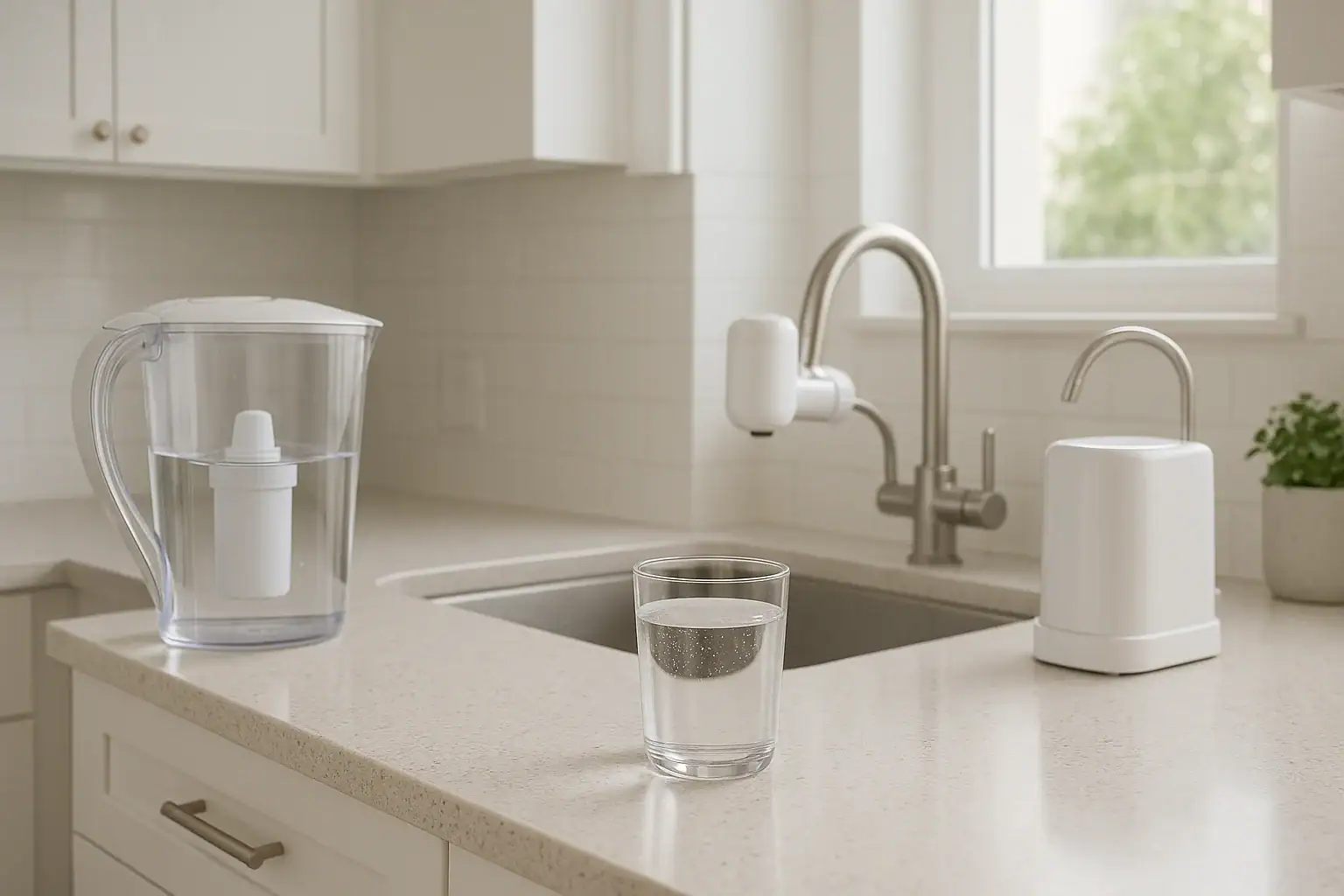
Clean, great-tasting water is one of the most important upgrades you can make in your kitchen. But once you start shopping for water filters, it is easy to feel overwhelmed by the different styles, features, and claims. Three of the most common options for everyday kitchen use are faucet-mount filters, pitcher filters, and countertop filters. Each style has its own strengths, limitations, and ideal user. The right choice for your home depends on your water quality, space, budget, and daily habits.
This guide walks through how each type works, what they are best at, and the trade-offs to consider. By the end, you will be able to match the right filter style to your kitchen and your routine, instead of guessing based on packaging claims or price alone.
How Kitchen Water Filters Work
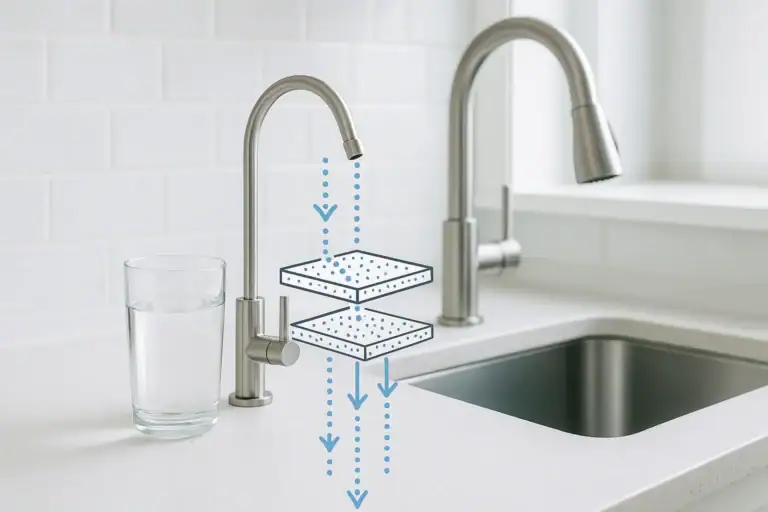
Most home water filters use a combination of mechanical filtration and adsorption to remove or reduce unwanted substances. The exact performance depends on the design and the filter media inside, but the basic ideas are similar across faucet-mount, pitcher, and countertop models.
Common Contaminants Filters Target
Depending on the product, kitchen filters may help reduce:
- Chlorine and chloramine, which affect taste and odor
- Particulates like rust, sand, and sediment
- Lead and other heavy metals from old plumbing
- Certain pesticides and industrial chemicals
- Some organic compounds that cause off-flavors
Some countertop systems also use advanced technologies such as reverse osmosis or multi-stage filtration to target a broader range of contaminants. Always review performance data and any independent testing for the specific filter you are considering.
Faucet-Mount Water Filters
Faucet-mount filters attach directly to the end of your kitchen faucet. They are designed to provide filtered water on demand without taking up counter or fridge space.
How Faucet-Mount Filters Work
These units usually replace the standard aerator on your faucet. Inside the housing is a small cartridge that water flows through before it reaches your glass or pot. Most have a small lever or switch that lets you choose between filtered and unfiltered water, so you can save the filter for drinking and cooking.
Pros of Faucet-Mount Filters
- On-demand filtration: Filtered water comes straight from the tap, so you do not need to wait for a pitcher to drip through.
- Space-saving: No need for extra counter space or room in the fridge.
- Easy to install: Most screw on by hand in a few minutes with basic adapters.
- Good for cooking: Convenient when you need several quarts of filtered water for pasta, soups, or soaking beans.
Cons of Faucet-Mount Filters
- May not fit every faucet: Some pull-down or specialty faucets are not compatible.
- Flow rate can drop: Filtering can slow the stream, especially as the cartridge clogs.
- Filter life is limited: Cartridges are relatively small and may need frequent replacement in larger households.
- Visible on the faucet: The unit changes the look and may feel bulky to some users.
Best For
Faucet-mount filters are a strong fit if you:
- Want filtered water for both drinking and cooking without filling a pitcher
- Have limited counter space but a compatible faucet
- Prefer a low upfront cost and simple installation
Pitcher Water Filters
Pitcher filters are one of the most familiar options. They look like a regular water jug with a built-in filter in the reservoir. You pour tap water into the top, it passes through the filter, and collects in the bottom for later use.
How Pitcher Filters Work
Most pitcher filters rely on gravity. You fill the upper chamber with tap water, and as it slowly flows through the cartridge, contaminants are reduced. The filtered water is stored in the lower chamber, ready to pour from the spout.
Pros of Pitcher Filters
- Simple to use: No tools or installation required. Just fill and pour.
- Portable: Easy to move between rooms, take to the table, or store in the refrigerator.
- Great for chilled water: Designed to fit on a fridge shelf or in the door.
- Low upfront cost: Often one of the most affordable ways to start filtering water.
Cons of Pitcher Filters
- Limited capacity: You only have as much filtered water as the pitcher can hold.
- Wait time: It can take several minutes for water to pass through the filter.
- Ongoing refills: Larger households may feel like they are constantly topping it off.
- Uses fridge space: The pitcher occupies shelf or door space that could hold food.
Best For
Pitcher filters are a good match if you:
- Mostly want filtered water for drinking rather than cooking
- Rent or move frequently and do not want to install anything
- Prefer cold filtered water ready in the refrigerator
- Have a small household or moderate daily water use
Countertop Water Filters
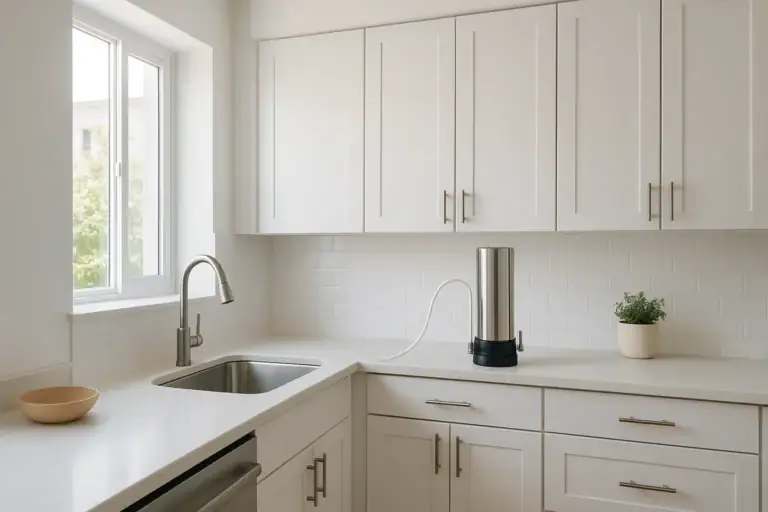
Countertop filters sit on your kitchen counter and connect to your faucet with a small hose or diverter valve. Some are simple carbon-based systems, while others use multi-stage or advanced filtration for more thorough treatment.
How Countertop Filters Work
Most countertop units connect to the faucet with a diverter that lets you switch between regular tap water and the filter. When you turn on the tap and activate the diverter, water flows through the countertop system and comes out of its own spout. Because these units are larger than faucet-mount filters, they can hold more filter media and sometimes multiple stages.
Pros of Countertop Filters
- Higher capacity: Larger cartridges often last longer between replacements.
- Potentially better performance: Multi-stage systems can target a wider range of contaminants.
- Good flow rate: Many provide a steady stream suitable for filling pots and bottles.
- No under-sink work: Installation usually does not require plumbing changes.
Cons of Countertop Filters
- Uses counter space: The unit and hose take up room near your sink.
- Visible tubing: Some people do not like the look of a hose connected to the faucet.
- Faucet compatibility: As with faucet-mount filters, some specialty faucets may not work with the diverter.
- Higher upfront cost: More complex systems usually cost more than basic pitchers or faucet units.
Best For
Countertop filters are ideal if you:
- Want more thorough filtration without installing an under-sink system
- Use a lot of filtered water for both drinking and cooking
- Have enough counter space near the sink
- Are comfortable with a more visible setup in exchange for performance
Side-by-Side Comparison: Faucet-Mount vs Pitcher vs Countertop
To decide which filter fits your kitchen, it helps to compare the three types across a few key factors: performance, convenience, space, and cost.
1. Filtration Performance
- Pitcher filters: Often focus on improving taste and odor by reducing chlorine and some common contaminants. Performance varies by cartridge design.
- Faucet-mount filters: Typically similar to pitcher filters in what they target, but with on-demand flow. Some models may offer additional reduction claims.
- Countertop filters: Frequently offer the most advanced options in this group, especially multi-stage systems. These may address a broader set of substances and provide more detailed performance data.
2. Convenience and Ease of Use
- Pitcher: Easiest to start using, but requires regular refilling and waiting for gravity to work.
- Faucet-mount: Very convenient for quick glasses of water and cooking, but may slow the flow and change how your faucet feels.
- Countertop: Convenient for higher volumes and frequent use, but adds a separate spout and hose to manage.
3. Space and Aesthetics
- Pitcher: Takes space in the refrigerator; nothing changes at the sink.
- Faucet-mount: No counter or fridge space required, but the device is always visible on the faucet.
- Countertop: Uses counter space and includes visible tubing, which may or may not fit your preferred kitchen look.
4. Upfront and Ongoing Cost
Costs vary widely by brand and technology, but you can think of them in general tiers:
- Pitcher filters: Usually the lowest upfront cost. Replacement filters are relatively small, and you may need them every one to three months depending on use.
- Faucet-mount filters: Moderate upfront cost. Cartridges tend to be replaced every few months, with cost depending on capacity and performance.
- Countertop filters: Often the highest upfront cost in this group, especially multi-stage systems. However, larger cartridges may last longer, which can balance the long-term cost.
How to Choose the Right Filter for Your Kitchen
The best filter is the one that fits your water quality, lifestyle, and space so well that you actually use and maintain it. Use the steps below to narrow down your choice.
1. Understand Your Water
Start by learning what is in your tap water. You can:
- Review your local water quality report, usually available online from your utility
- Consider a home test kit if you are on a private well or want more specific data
- Pay attention to taste, odor, and visible issues like discoloration or sediment
If your main concerns are chlorine taste and mild odors, a pitcher or faucet-mount filter may be enough. If you are worried about a wider range of contaminants, a more advanced countertop system may be worth considering.
2. Evaluate Your Space and Setup
Look closely at your kitchen layout and faucet style:
- If you have a pull-down sprayer or a nonstandard faucet, a faucet-mount or countertop diverter may not fit.
- If your counter space is limited but your fridge has room, a pitcher could be the most practical.
- If you have generous counter space near the sink, a countertop system can be convenient and accessible.
3. Consider Your Daily Habits
Think about how you actually use water in your kitchen:
- For frequent cooking: Faucet-mount or countertop filters make it easier to fill pots and pans with filtered water.
- For mostly drinking: A pitcher in the fridge may be all you need, especially for a small household.
- For high-volume use: A countertop system with a larger capacity can reduce the need for constant refills.
4. Factor in Maintenance
Every filter needs regular cartridge changes to stay effective. When comparing options, ask yourself:
- How often are filter changes recommended based on gallons or time?
- Are replacement cartridges easy to find and affordable for your budget?
- Will you realistically remember to change them on schedule?
Choosing a system with clear indicators or easy-to-track replacement intervals can help you maintain consistent water quality.
5. Balance Budget and Benefits
Finally, weigh what you are willing to spend against the benefits you want:
- If you want the lowest cost entry point, start with a pitcher filter.
- If you want convenience at the tap without major changes, look at faucet-mount units.
- If you want more robust filtration and higher capacity, explore countertop systems.
Quick Decision Guide
Use this quick guide to match a filter type to your situation:
- Choose a pitcher filter if: You want an easy, low-cost way to improve taste and keep cold filtered water in the fridge, and you do not mind refilling.
- Choose a faucet-mount filter if: You want filtered water directly from the tap for both drinking and cooking, have a compatible faucet, and prefer not to use counter or fridge space.
- Choose a countertop filter if: You use a lot of filtered water, want more advanced filtration options, and have room on your counter for a dedicated unit.
Whichever option you choose, the most important step is to install it correctly, replace the filter on schedule, and pay attention to any changes in taste, odor, or flow. With a little planning, you can match the right filter style to your kitchen and enjoy cleaner, better-tasting water every day.
Related posts
Browse this topic →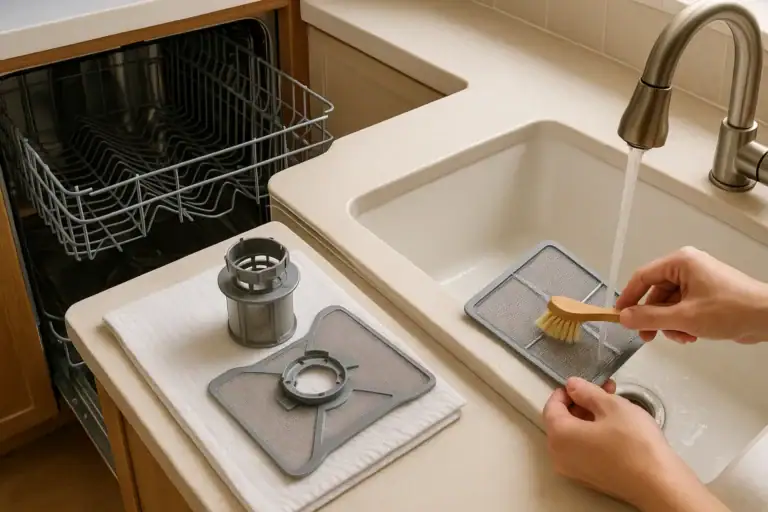
How to Clean a Dishwasher Filter (and How Often You Should Do It)
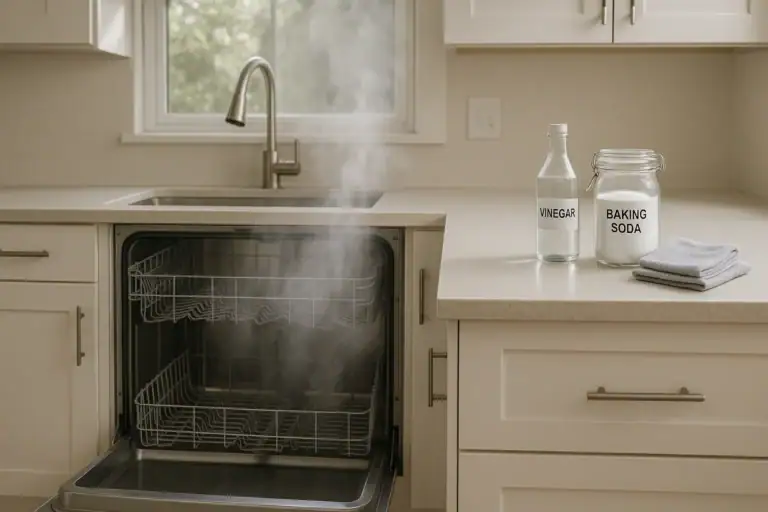
Dishwasher Smells: Why It Happens and How to Fix It for Good
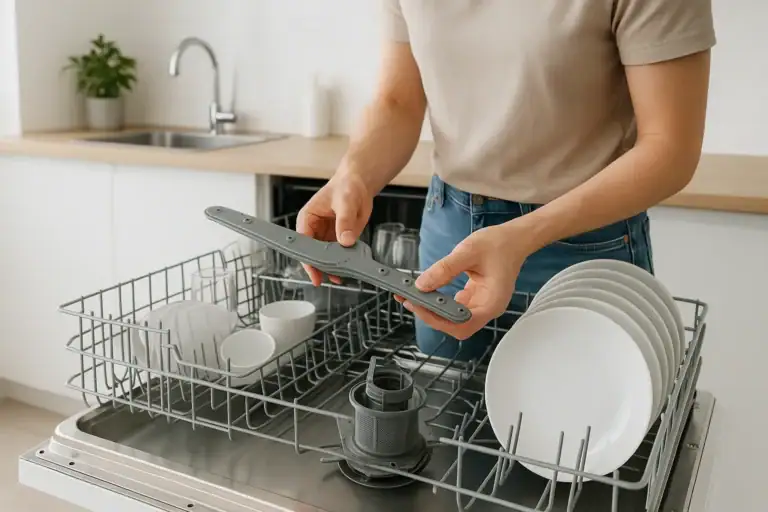
Dishwasher Not Cleaning Well? Spray Arm, Filter, and Loading Fixes
How to Sharpen Kitchen Knives at Home: Simple Method and Safety Tips
Cutting Board Hygiene: Wood vs Plastic and How to Sanitize Safely
Food Storage Safety: Fridge Zones and How Long Food Really Lasts
Keep reading
About this site
Signature Home Guide publishes practical, independent home guides. We aim to be clear, helpful, and transparent.
Affiliate disclosure
As an Amazon Associate, we earn from qualifying purchases. Some links on this site may be affiliate links. If you buy through these links, we may earn a small commission at no extra cost to you. This helps support our content. Learn more.