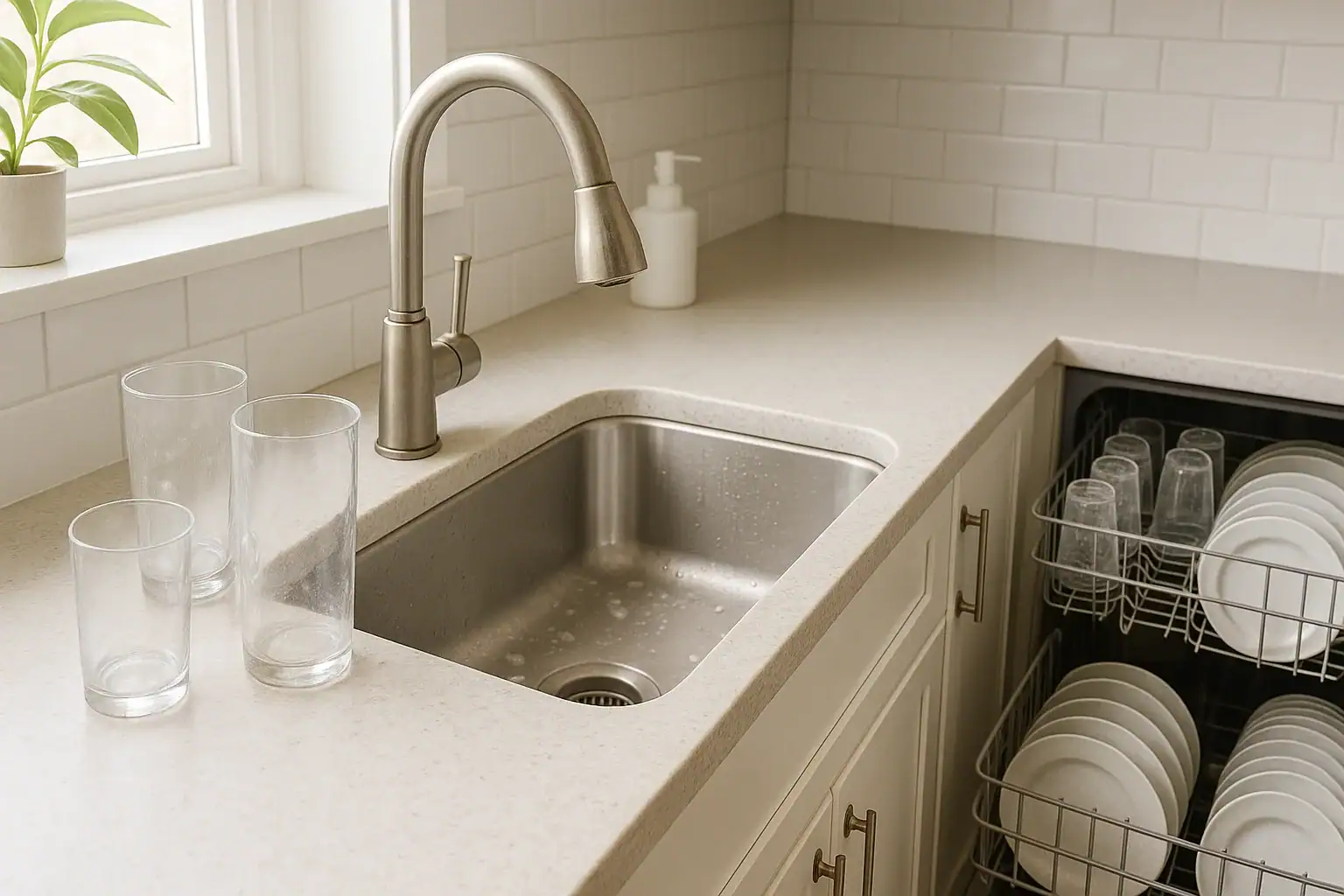
Hard water is one of those invisible household issues that rarely gets attention until something goes wrong. Cloudy glasses, chalky spots on dishes, a coffee maker that brews more slowly than it used to, or a dishwasher that never seems to clean quite right can all trace back to the same cause: mineral-heavy water. Understanding what hard water is, how it affects your kitchen, and what you can do about it can save you money, time, and frustration. This guide walks you through the basics of hard water, the damage it can cause to appliances and dishes, and practical solutions that fit a range of budgets and lifestyles.
On this page(click to collapse)
- What Is Hard Water?
- How Hard Water Affects Kitchen Appliances
- What Hard Water Does to Dishes, Glassware, and Cookware
- Hidden Costs of Hard Water in the Kitchen
- How to Tell If You Have Hard Water in Your Kitchen
- Everyday Ways to Reduce Hard Water Effects in the Kitchen
- Long-Term Solutions for Hard Water in the Kitchen
- Kitchen Habits That Help Control Hard Water Build-Up
- When to Take Action on Hard Water
- Key Takeaways
- Related guides
What Is Hard Water?
Hard water is water that contains higher levels of dissolved minerals, mainly calcium and magnesium. These minerals are naturally picked up as water moves through soil and rock. The more minerals it collects, the “harder” the water becomes.
Hardness is usually measured in grains per gallon (gpg) or milligrams per liter (mg/L). In general:
- Soft water: 0–3 gpg
- Moderately hard: 3–7 gpg
- Hard: 7–10 gpg
- Very hard: 10+ gpg
Many areas in the United States have hard or very hard water. While hard water is usually safe to drink, it can be tough on your kitchen, especially on anything that heats water or sprays it under pressure.
How Hard Water Affects Kitchen Appliances
The minerals in hard water do not simply disappear after use. When water is heated or evaporates, it leaves behind mineral deposits called scale. Over time, this scale builds up inside your kitchen appliances, affecting performance and shortening their lifespan.
Dishwasher Problems from Hard Water
Dishwashers are on the front line when it comes to hard water. They use hot water, spray nozzles, and multiple cycles, all of which encourage mineral buildup.
Common dishwasher issues linked to hard water include:
- Cloudy or spotted dishes: White spots, streaks, and a hazy film on glassware and utensils.
- Residue on the interior: Chalky deposits on the walls, racks, and spray arms.
- Clogged spray arms: Mineral buildup blocks the small holes that spray water, reducing cleaning power.
- Longer cycles or poor cleaning: The machine may run longer or still leave food and film on dishes.
Over time, scale can stress the heating element and pump, leading to repairs or early replacement.
Hard Water and Your Coffee Maker or Kettle
Any appliance that heats water is especially vulnerable to scale. Coffee makers, electric kettles, and hot water dispensers often show visible buildup.
Signs of hard water damage in these appliances include:
- White or tan crust inside: A rough, chalky layer on the bottom or heating element.
- Slower heating: It takes longer to brew coffee or boil water.
- Strange taste: Mineral deposits can affect the flavor of coffee, tea, and hot beverages.
- Shortened lifespan: Heating elements work harder and fail sooner when coated in scale.
Refrigerators with Ice Makers and Water Dispensers
Refrigerators that provide filtered water and ice are also affected by hard water, even if they have built-in filters. Filters can help with taste and some particles, but they do not always remove dissolved minerals that cause hardness.
Look for these signs:
- White flakes in ice: Small mineral particles frozen into the cubes.
- Scale on nozzles and trays: Chalky rings and spots where water drips or pools.
- Reduced water flow: Mineral deposits can narrow tubing and clog small openings.
Faucets, Sprayers, and Sink Fixtures
Even if your major appliances seem fine, the kitchen sink area may tell a different story. Hard water leaves visible marks on anything it touches regularly.
Common issues include:
- Crust around faucet bases: Hard, white buildup where water pools.
- Clogged aerators: Mineral deposits inside the tiny screen at the tip of the faucet reduce water pressure.
- Stiff pull-out sprayers: Scale can build up inside the hose and spray head.
- Spots on stainless steel: Persistent white spots or dull patches on sinks and fixtures.
What Hard Water Does to Dishes, Glassware, and Cookware
Hard water does not just affect the machines; it also affects the items you wash in them. Over time, minerals can leave a film and even damage certain surfaces.
Cloudy Glasses and White Spots
One of the most noticeable signs of hard water in the kitchen is cloudy drinking glasses. Instead of coming out of the dishwasher sparkling, they look dull, hazy, or spotted.
There are two main causes:
- Mineral deposits: Calcium and magnesium left behind when water dries on the surface.
- Etching: Over time, the combination of hot water, detergent, and minerals can actually wear away the surface of glass, causing permanent cloudiness.
Mineral deposits can often be removed with a gentle acid like white vinegar. Etching, however, is permanent damage to the glass surface.
Film on Plates, Bowls, and Utensils
Hard water can leave a thin, chalky film on everyday dishes. Plates may feel less smooth, and utensils may not look fully clean even after a full cycle in the dishwasher.
This film is a mix of minerals and leftover detergent that did not rinse away properly. The harder the water, the more detergent you may end up using, which can make the problem worse.
Impact on Cookware and Bakeware
Different cookware materials react differently to hard water:
- Stainless steel: Prone to water spots and a dull, streaky finish if not dried quickly.
- Nonstick pans: Mineral deposits can build up around the edges and rivets, making them harder to clean.
- Glass and ceramic bakeware: May develop cloudy patches or a white ring where water evaporates.
- Cast iron: Hard water can leave mineral spots that may need to be scrubbed away before re-seasoning.
Hidden Costs of Hard Water in the Kitchen
While hard water might seem like a cosmetic problem, it can have real financial consequences over time.
Shorter Appliance Lifespan
Scale buildup forces motors, pumps, and heating elements to work harder. This can lead to:
- More frequent repairs
- Reduced energy efficiency
- Earlier replacement of dishwashers, coffee makers, and other appliances
Higher Energy and Detergent Use
Hard water often means:
- Running appliances on longer or hotter cycles to get dishes clean
- Using more dish soap or detergent than recommended
- Repeating wash cycles when items still look dirty or cloudy
These small changes add up in utility bills and household spending.
How to Tell If You Have Hard Water in Your Kitchen
You do not need specialized equipment to suspect hard water. Many signs are easy to spot in everyday use.
Common Visual Clues
- White, chalky spots on clean dishes and glasses
- Cloudy glassware that does not clear up after washing
- Scale or crust around faucets, sink drains, and sprayer heads
- Mineral rings where water sits in the sink or on countertops
Performance and Cleaning Clues
- Dishwasher that struggles to rinse away soap and food
- Appliances that heat water more slowly over time
- Needing more soap to get dishes or hands clean
Testing Your Water Hardness
If you want a clearer answer, consider:
- Home test strips: Simple strips you dip in tap water to estimate hardness.
- Digital testers: Handheld meters that measure dissolved solids.
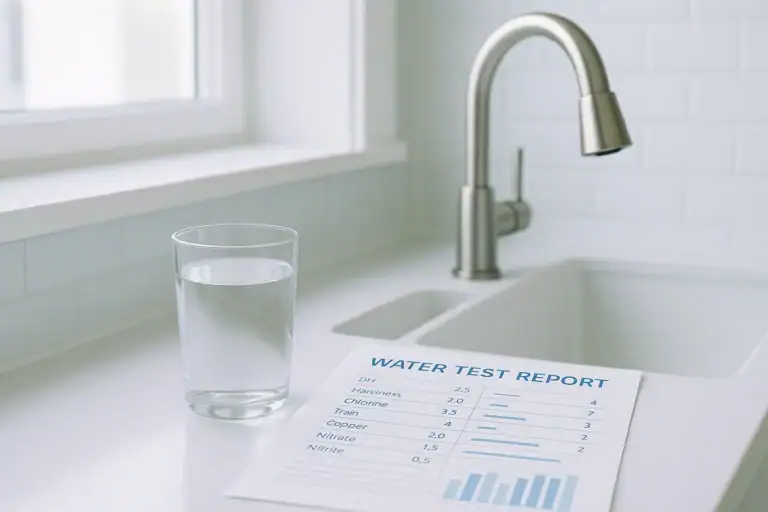
- Local water report: Many water utilities publish hardness levels for their service areas.
Everyday Ways to Reduce Hard Water Effects in the Kitchen
If a whole-house solution is not in the budget right now, there are still many practical steps you can take to minimize the impact of hard water in your kitchen.
Adjust How You Use Your Dishwasher
Simple changes in how you load and run your dishwasher can make a noticeable difference:
- Do not overload: Give water and detergent room to reach every surface.
- Use a rinse aid: Rinse aids help water sheet off dishes instead of drying in droplets that leave spots.
- Choose the right cycle: Use a cycle that matches how dirty your dishes are; extra-hot cycles can sometimes worsen etching on glass.
- Check the manual: Some dishwashers allow you to adjust settings based on water hardness.
Vinegar Rinses for Dishes and Glassware
White vinegar is a gentle acid that can dissolve mineral deposits:
- Soak cloudy glasses in a mixture of equal parts white vinegar and warm water for 15–30 minutes, then rinse and dry.
- For stubborn spots, wipe with a cloth dipped in vinegar, then rinse thoroughly.
- Run an empty dishwasher cycle with a cup of vinegar on the top rack to help loosen interior scale. Check your appliance manual first.
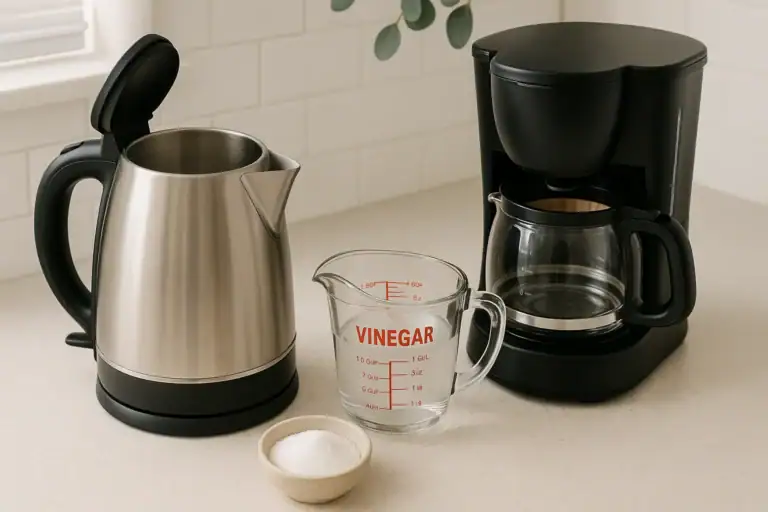
Protecting Your Coffee Maker and Kettle
Regular descaling keeps hot beverage appliances working well:
- Fill the reservoir with a mixture of half white vinegar and half water.
- Run a brew or boil cycle, then turn off and let it sit for 15–30 minutes.
- Rinse by running two or more cycles with fresh water only.
- Repeat every 1–3 months, depending on how hard your water is and how often you use the appliance.
Cleaning Faucets and Sink Fixtures
To remove scale from faucets and sprayers:
- Soak a cloth or paper towel in white vinegar and wrap it around the affected area.
- Secure it with a rubber band and let it sit for 30–60 minutes.
- Scrub gently with a soft brush or non-scratch pad, then rinse and dry.
- Unscrew faucet aerators occasionally and soak them in vinegar to remove buildup.
Long-Term Solutions for Hard Water in the Kitchen
While regular cleaning and small adjustments help, they do not change the hardness of the water itself. If hard water is causing ongoing problems, you may want to consider longer-term options.
Point-of-Use Filters and Conditioners
These devices treat water at a specific location, such as the kitchen sink or a single appliance.
- Under-sink filters: Improve taste and remove some contaminants, but most do not soften water. Check whether a filter is designed to reduce hardness.
- Countertop or faucet-mounted units: Convenient for drinking and cooking water, though not always effective against hardness.
- Inline filters for appliances: Some dishwashers, refrigerators, and coffee makers can be connected to dedicated filters to reduce scale.
Whole-House Water Treatment Options
Whole-house systems treat water as it enters your home, protecting all fixtures and appliances, including those in the kitchen.
Common options include:
- Traditional softening systems: Use a process that exchanges hardness minerals for other ions, significantly reducing scale formation.
- Conditioning systems: Designed to change how minerals behave so they are less likely to stick to surfaces, rather than removing them completely.
These systems involve an upfront investment and ongoing maintenance, but they can extend the life of appliances, reduce cleaning time, and improve the look of dishes and fixtures throughout the home.
Kitchen Habits That Help Control Hard Water Build-Up
Even with treatment systems or regular cleaning, daily habits play a big role in how much hard water affects your kitchen.
- Dry surfaces quickly: Wipe down sinks, faucets, and stainless steel after heavy use to prevent spots.
- Rinse dishes before spots dry: If you hand-wash, rinse thoroughly and dry with a soft towel instead of air-drying.
- Use the right amount of detergent: More is not always better. Follow the instructions for your water hardness level if provided.
- Schedule regular descaling: Put reminders on a calendar for cleaning your dishwasher, coffee maker, and kettle.
- Check for leaks and drips: Slow drips leave constant mineral trails that are harder to remove later.
When to Take Action on Hard Water
Hard water does not usually require an emergency response, but there are clear signs that it is time to do more than just wipe away spots.
Consider testing your water and exploring treatment options if you notice:
- Persistent cloudiness or etching on glassware, even after vinegar soaks
- Frequent repairs or early failure of dishwashers, coffee makers, or other appliances
- Heavy scale on faucets and sink fixtures that quickly returns after cleaning
- Rising energy or water bills as you run longer or repeated wash cycles
Addressing hard water early can prevent more expensive problems later and make your kitchen easier to maintain day to day.
Related posts
Browse this topic →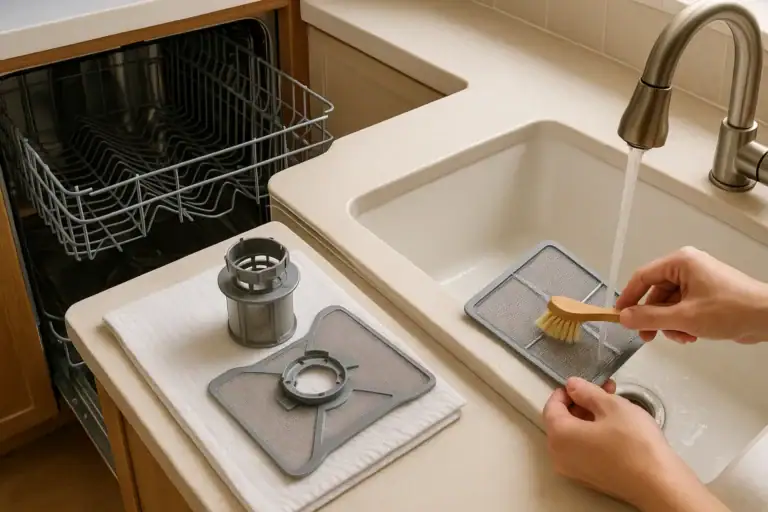
How to Clean a Dishwasher Filter (and How Often You Should Do It)
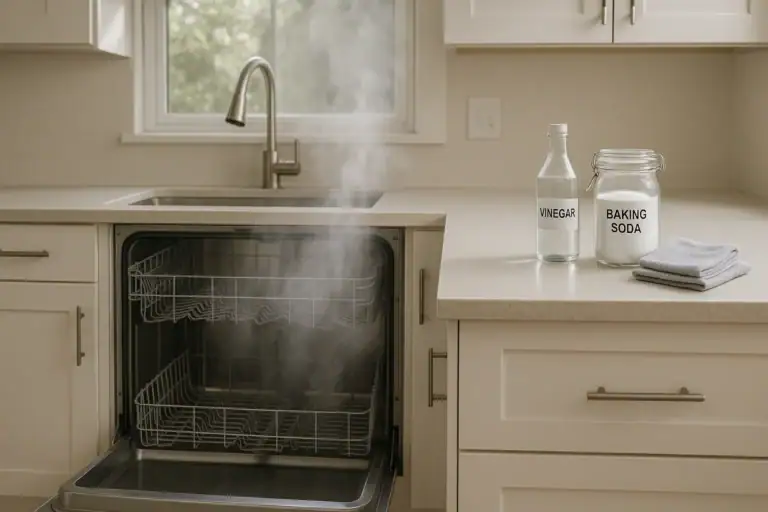
Dishwasher Smells: Why It Happens and How to Fix It for Good
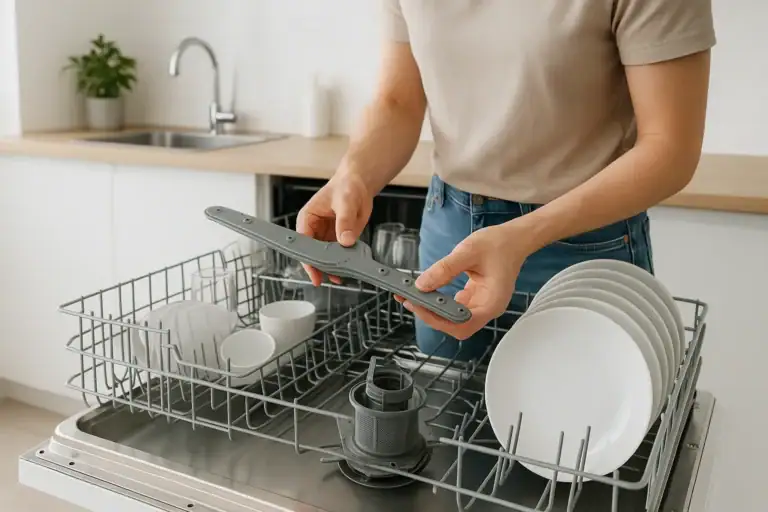
Dishwasher Not Cleaning Well? Spray Arm, Filter, and Loading Fixes
How to Sharpen Kitchen Knives at Home: Simple Method and Safety Tips
Cutting Board Hygiene: Wood vs Plastic and How to Sanitize Safely
Food Storage Safety: Fridge Zones and How Long Food Really Lasts
Keep reading
About this site
Signature Home Guide publishes practical, independent home guides. We aim to be clear, helpful, and transparent.
Affiliate disclosure
As an Amazon Associate, we earn from qualifying purchases. Some links on this site may be affiliate links. If you buy through these links, we may earn a small commission at no extra cost to you. This helps support our content. Learn more.