On this page(click to collapse)
- Why Your Dishwasher Filter Matters
- Types of Dishwasher Filters
- How Often Should You Clean a Dishwasher Filter?
- What You Need to Clean a Dishwasher Filter
- Step-by-Step: How to Remove and Clean a Dishwasher Filter
- 1. Turn off and empty the dishwasher
- 2. Locate the filter system
- 3. Unlock and remove the filter
- 4. Remove loose debris from the tub
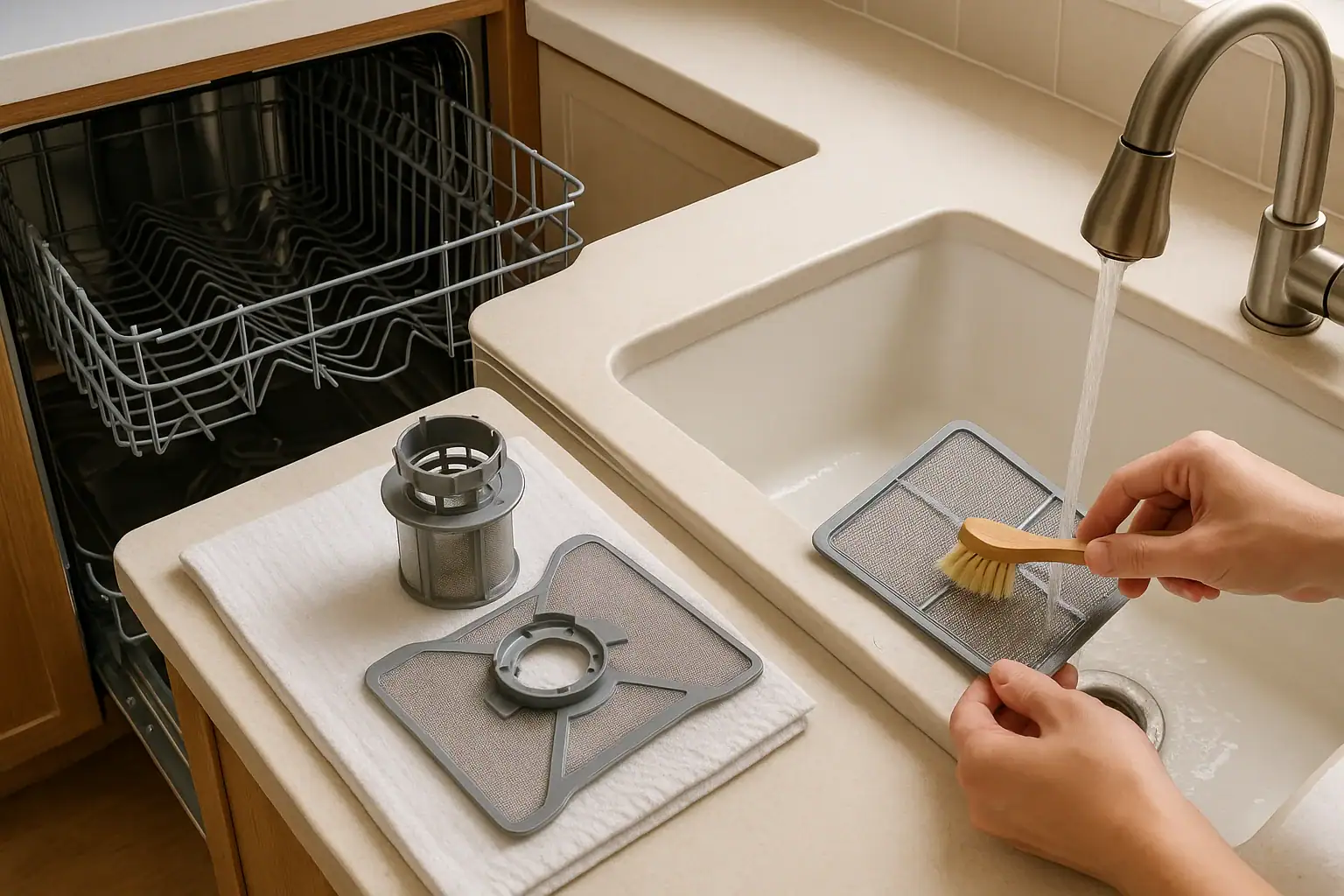
- 5. Rinse the filter under warm water
- 6. Scrub gently with soap
- 7. Tackle mineral buildup if needed
- 8. Rinse and inspect
- 9. Reinstall the filter correctly
- 10. Run a short test cycle
- How to Keep Your Dishwasher Filter Cleaner for Longer
- Dealing With Odors and Cloudy Dishes
- When to Replace a Dishwasher Filter
- Simple Maintenance Schedule You Can Follow
- Key Takeaways
- Related guides
When dishes start coming out cloudy, streaked, or still speckled with food, many people assume the dishwasher is breaking down. In reality, one of the most common causes is a dirty or clogged dishwasher filter. The filter traps food particles and debris so they do not recirculate onto your dishes or clog the drain. When it is neglected, your dishwasher has to work harder, cycles can become less effective, and unpleasant odors may develop. The good news is that cleaning a dishwasher filter is simple, requires only basic supplies, and can dramatically improve performance. This guide walks you through how to clean a dishwasher filter step by step, how often to do it, and how to keep it cleaner for longer.
Why Your Dishwasher Filter Matters
Most modern dishwashers use a filtration system to catch food scraps and prevent them from circulating during the wash cycle. When the filter is clean, water flows freely and the spray arms can do their job properly. When it is dirty, several problems can show up.
Signs your dishwasher filter needs cleaning
- Dishes come out with stuck-on food or gritty residue
- Glasses look cloudy or have spots even with rinse aid
- The dishwasher smells musty or like old food
- Water pools in the bottom of the tub after a cycle
- The cycle seems louder than usual due to strain on the pump
If you notice one or more of these signs, your filter is a likely culprit and should be inspected and cleaned.
Types of Dishwasher Filters
Before cleaning, it helps to know which type of filter your dishwasher uses. Most household dishwashers in the United States use a manual, removable filter system, but some older models may have a self-cleaning style.
Manual (removable) filters
Manual filters are designed to be taken out and rinsed regularly. They usually consist of:
- A cylindrical or cone-shaped mesh filter
- A flat filter screen that sits at the bottom of the tub
- Sometimes a coarse filter or cover that snaps over the main filter
If your dishwasher is fairly quiet and energy efficient, it likely has this style of filter. These need to be cleaned by hand on a regular schedule.
Self-cleaning filters
Self-cleaning filters use a built-in grinder or chopper to break down food particles and flush them away. These require less frequent maintenance but are usually louder during operation. Many newer models have moved away from this style in favor of quieter manual filters. Even with a self-cleaning system, it is still wise to check the bottom of the tub and around the drain for debris from time to time.
How Often Should You Clean a Dishwasher Filter?
The best cleaning schedule depends on how often you run the dishwasher and how much food is left on the dishes. As a general guideline:
- Heavy use (daily loads, minimal scraping): Clean the filter about once a week.
- Moderate use (a few loads per week, basic scraping): Clean every 2 to 4 weeks.
- Light use (occasional loads, dishes mostly rinsed): Clean every 1 to 3 months.
If you notice odors, standing water, or poor cleaning results, clean the filter right away, even if it is ahead of schedule. A quick visual check when you unload the bottom rack can help you catch buildup early.
What You Need to Clean a Dishwasher Filter
Most households already have everything needed to clean a dishwasher filter properly. Avoid harsh tools that could damage the mesh or plastic.
Basic supplies
- Soft dish brush or old soft-bristled toothbrush
- Soft sponge or non-scratch scrub pad
- Mild dish soap
- Warm water
- Small bowl or sink space for soaking
- Paper towels or a clean cloth
Optional but helpful items include a wooden skewer or cotton swabs for tight crevices and white vinegar for mineral buildup.
Step-by-Step: How to Remove and Clean a Dishwasher Filter
Always check your appliance manual for model-specific instructions. The steps below cover the general process most removable filters follow.
1. Turn off and empty the dishwasher
- Make sure the dishwasher is completely off and has finished its cycle.
- Open the door and remove the bottom rack to access the floor of the tub.
- Check that the bottom of the tub is cool enough to touch.
2. Locate the filter system
The filter is usually in the center or back of the dishwasher floor, around the base of the lower spray arm. You may see a round or rectangular cover with arrows or small icons on it.
3. Unlock and remove the filter
- Look for arrows indicating which way to turn to unlock, often counterclockwise.
- Grasp the handle or raised portion of the cylindrical filter and twist gently to unlock.
- Lift the cylinder straight up and out.
- If there is a flat filter screen, slide or lift it out according to the markings.
Do not force anything. If it is stuck, check for hidden tabs or consult the manual to avoid breaking the locking mechanism.
4. Remove loose debris from the tub
- Use a paper towel or cloth to wipe out any visible food scraps or sludge around the filter opening.
- Check the area under the filter for seeds, bones, or small pieces that may have collected.
- Be cautious of sharp items such as broken glass or utensils.
5. Rinse the filter under warm water
- Hold the cylindrical filter under warm running water to flush away loose particles.
- Turn it over and rinse from both inside and outside so water flows through the mesh.
- Rinse the flat screen or coarse filter in the same way.
6. Scrub gently with soap
- Apply a small amount of mild dish soap to a soft brush or sponge.
- Scrub the mesh surfaces, paying attention to any greasy or dark areas.
- Use a toothbrush or cotton swabs to reach small crevices and seams.
- For stubborn grease, let the filter soak in warm, soapy water for 10 to 15 minutes, then scrub again.
7. Tackle mineral buildup if needed
If your home has hard water, you may notice white or chalky deposits on the filter. To address this:
- Fill a bowl or small basin with equal parts warm water and white vinegar.
- Soak the filter for 15 to 20 minutes.
- Gently scrub again with a soft brush to loosen mineral deposits.
- Rinse thoroughly with clean water to remove any remaining vinegar and residue.
8. Rinse and inspect
- Rinse all filter pieces under warm running water until they feel clean and no soap remains.
- Hold the mesh up to the light to check for clogs; you should see light passing through the openings.
- Make sure there are no tears, cracks, or warped areas. Damaged filters should be replaced to protect the pump.
9. Reinstall the filter correctly
- Place the flat filter screen back into position, making sure it lies flat and locks into its grooves.
- Insert the cylindrical filter into the opening, aligning any tabs or arrows.
- Turn the filter in the direction indicated (often clockwise) until it locks firmly in place.
- Give it a gentle tug upward to confirm it is secure and will not come loose during a cycle.
- Slide the bottom rack back into the dishwasher.
10. Run a short test cycle
After reassembling the filter, run a short rinse or quick wash cycle with the dishwasher empty. This helps flush out any loosened debris and confirms everything is seated correctly and running smoothly.
How to Keep Your Dishwasher Filter Cleaner for Longer
A few simple habits can reduce how often you need to deep-clean the filter and help your dishwasher run more efficiently.
Scrape, do not fully rinse
Scrape large food scraps into the trash or compost before loading dishes, but you do not have to fully rinse everything clean. Modern dishwashers are designed to handle a normal amount of residue, and the detergent works best when it has something to break down.
Avoid problem items
Certain foods and debris can clog the filter quickly or damage the pump. Try to keep these out of the dishwasher:
- Large bones and shells
- Fruit pits and seeds
- Popcorn kernels
- Twist ties, rubber bands, or other small non-food items
- Sticky labels from jars and containers
Load dishes properly
Overloading can block spray arms and cause food to settle in the filter area. Follow these tips:
- Do not stack bowls or plates so tightly that water cannot circulate.
- Place heavily soiled items facing the spray arms.
- Make sure utensils are not slipping through the rack and blocking the filter cover.
Use the right detergent and cycle
Use a detergent formulated for automatic dishwashers and follow the recommended amount. Running a periodic hot or heavy cycle can help break down grease and keep the filter and interior cleaner, especially if you often use quick or eco cycles.
Dealing With Odors and Cloudy Dishes
Even with a clean filter, other factors can affect how fresh your dishwasher smells and how clear your dishes look.
Odors after cleaning the filter
If smells linger after you clean the filter:
- Wipe the door gasket and edges with warm, soapy water.
- Clean around the spray arms and check for trapped food particles.
- Run an empty hot cycle with a dishwasher-safe cup of white vinegar on the top rack.
- Leave the door slightly open between cycles to let the interior dry.
Cloudy glasses and film
Cloudiness may be from hard water minerals or detergent residue. Helpful steps include:
- Using a rinse aid to improve drying and reduce spots.
- Occasionally running a hot cycle with a dishwasher cleaner or vinegar.
- Checking your water temperature; many detergents work best around 120 degrees Fahrenheit.
- Ensuring the filter is truly clear and not partially blocked by mineral deposits.
When to Replace a Dishwasher Filter
Filters are designed to last for years, but they can wear out over time, especially if they are not cleaned regularly or have been scrubbed with abrasive tools.
Signs a filter should be replaced
- Visible tears or holes in the mesh
- Cracks in the plastic frame or locking tabs
- Warping that prevents the filter from sitting flat or locking securely
- Persistent poor cleaning performance even after thorough cleaning
If you suspect your filter is damaged, check your appliance manual for the correct replacement part number. A properly fitting filter is important to protect the pump and maintain water flow.
Simple Maintenance Schedule You Can Follow
To keep your dishwasher running smoothly without much effort, consider this easy routine:
- Every week: Do a quick visual check of the filter area when unloading the bottom rack. Remove any visible scraps.
- Every month: Remove and clean the filter with warm soapy water. Wipe the door gasket and edges.
- Every few months: Run an empty hot cycle with vinegar or a dishwasher cleaner to reduce buildup.
- As needed: Clean more often if you notice odors, standing water, or poor cleaning results.
These small steps can extend the life of your dishwasher, reduce the chance of repairs, and keep your dishes looking their best.
Related posts
Browse this topic →
Dishwasher Smells: Why It Happens and How to Fix It for Good
Dishwasher Not Cleaning Well? Spray Arm, Filter, and Loading Fixes
How to Sharpen Kitchen Knives at Home: Simple Method and Safety Tips
Cutting Board Hygiene: Wood vs Plastic and How to Sanitize Safely

Food Storage Safety: Fridge Zones and How Long Food Really Lasts
How to Organize a Small Kitchen Pantry for Faster Meal Prep
Keep reading
About this site
Signature Home Guide publishes practical, independent home guides. We aim to be clear, helpful, and transparent.
Affiliate disclosure
As an Amazon Associate, we earn from qualifying purchases. Some links on this site may be affiliate links. If you buy through these links, we may earn a small commission at no extra cost to you. This helps support our content. Learn more.