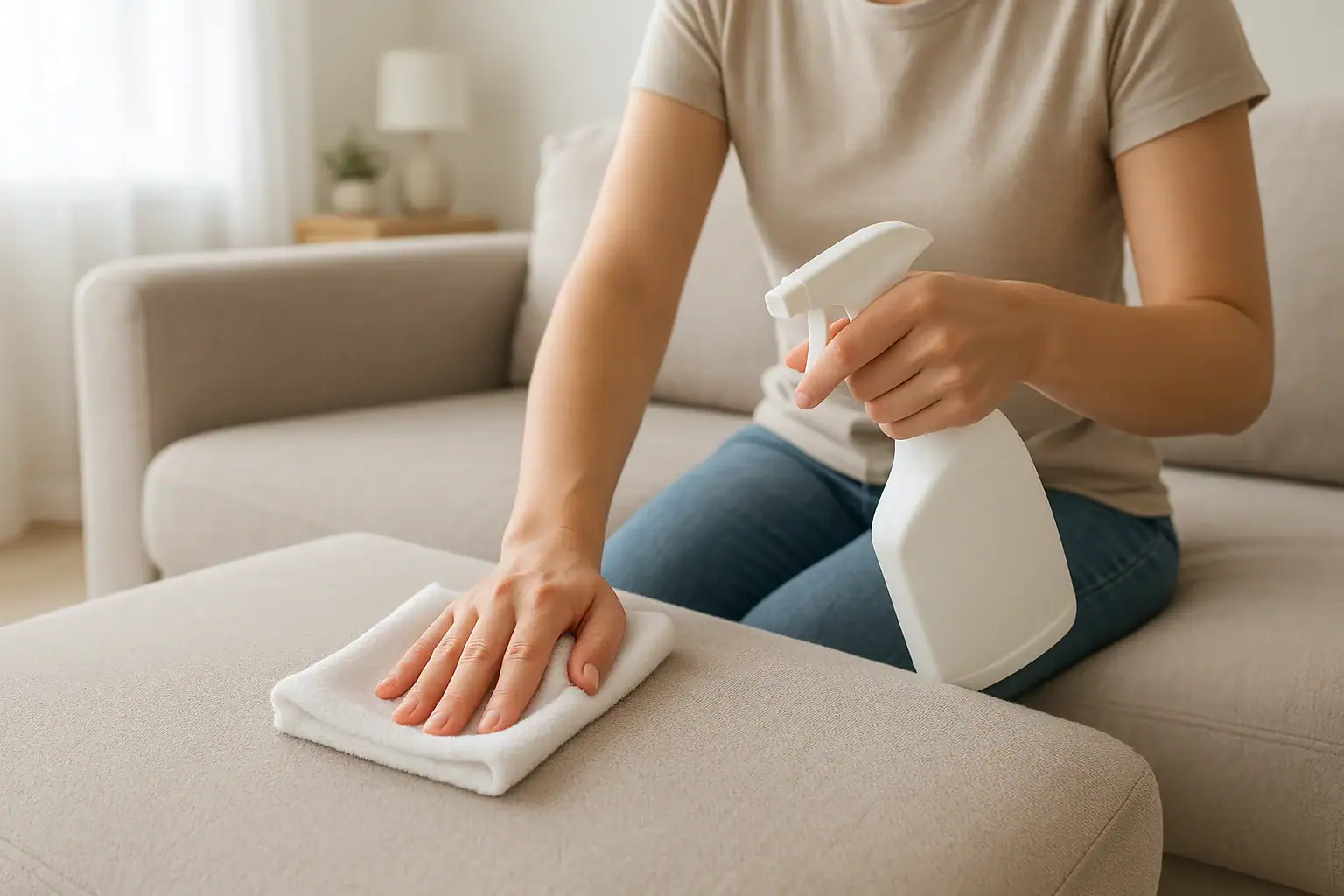
Microfiber couches are popular because they are soft, comfortable, and generally more stain-resistant than many other fabrics. But they still need regular care to stay fresh, especially in busy homes with kids, pets, or frequent guests. The good news is that once you understand the cleaning codes on the label, gather the right tools, and learn how to spot test properly, keeping your microfiber couch clean becomes a simple routine instead of a stressful chore.
On this page(click to collapse)
- Step 1: Read the Cleaning Label on Your Microfiber Couch
- Step 2: Gather the Right Tools and Supplies
- Step 3: Always Spot Test Before Cleaning
- Step 4: Do a Thorough Dry Clean First
- Step 5: Clean a Microfiber Couch with Water-Based Methods (W or W/S)
- Step 6: Clean a Microfiber Couch with Solvent-Based Methods (S or W/S)
- Step 7: Treat Common Stains on a Microfiber Couch
- Step 8: Deodorize and Freshen Your Microfiber Couch
- Step 9: Maintain and Protect Your Microfiber Couch
- When to Call a Professional
- Bringing It All Together
- Related guides
This guide walks you through everything you need to know: how to read the cleaning label, which tools and supplies to use, how to remove everyday dirt and crumbs, and how to tackle stains without damaging the fabric. You will also learn how to keep the cushions looking smooth and fluffy, how often to clean, and what to avoid so your couch lasts longer and looks better.
Step 1: Read the Cleaning Label on Your Microfiber Couch
Before you spray or scrub anything, find and read the care label on your couch. This label tells you which cleaning solutions are safe for the fabric. Using the wrong type of cleaner can leave water rings, stiff patches, or even permanent damage.
Common microfiber cleaning codes
Most microfiber couches use a simple letter code. Look for a small tag under the seat cushions, along the underside of the couch, or on the back frame.
- W: Water-based cleaners are safe. You can use mild soapy water or a fabric-safe upholstery cleaner that is water based.
- S: Solvent-based cleaners only. Do not use water-based cleaners, as they can leave water marks or stiffen the fabric.
- W/S or S/W: Either water-based or solvent-based cleaners are generally safe. You still need to spot test first.
- X: Vacuum only. No liquid cleaners are recommended. If you have stains on an X-coded couch, professional cleaning is usually the safest option.
If you cannot find the label
If the label is missing or worn off, proceed carefully:
- Start with dry cleaning methods only: vacuuming and gentle brushing.
- If you decide to use a cleaner, test a very small amount in a hidden area and allow it to dry completely before cleaning visible areas.
- When in doubt, treat the couch as if it were S or X and avoid soaking the fabric.
Step 2: Gather the Right Tools and Supplies
Cleaning a microfiber couch is easier and safer when you have the right tools on hand. You do not need anything fancy, but you do need items that will not scratch or over-wet the fabric.
Basic tools for routine cleaning
- Vacuum with an upholstery attachment or soft brush attachment
- Soft-bristle upholstery brush or clean, soft toothbrush for seams
- Lint roller or sticky lint brush for hair and fuzz
- Clean, white or light-colored microfiber cloths
- Bucket or small bowl for mixing cleaning solutions (if allowed by label)
Cleaning products based on label codes
Match your cleaning products to the letter code on the couch label.
- For W and W/S couches:
- Mild liquid dish soap or gentle laundry detergent
- Warm water (not hot)
- Optional: a water-based upholstery cleaner that is fabric safe
- For S and W/S couches:
- Solvent-based upholstery cleaner that is safe for home use
- Rubbing alcohol in a spray bottle (often used for microfiber, but always spot test first)
- For X couches:
- Vacuum only
- Dry upholstery brush
Always use white or very light-colored cloths. Dark or bright cloths can sometimes transfer dye to the couch, especially when used with cleaning solutions.
Step 3: Always Spot Test Before Cleaning
Spot testing is the most important step when learning how to clean a microfiber couch. Even if you have cleaned it before, changes in fabric wear, sunlight exposure, or a new product can cause different reactions. A quick test prevents large, visible damage.
How to spot test correctly
- Choose a hidden area. Look behind a cushion, along the back edge, or under the skirt of the couch.
- Prepare your cleaner. Mix your water-based solution or pour a small amount of solvent into a bowl or spray bottle as needed.
- Apply a tiny amount. Lightly dampen a white cloth and dab the hidden area. Do not soak the fabric.
- Blot, do not rub. Gently blot the area and let it sit.
- Allow to dry completely. This is key. Microfiber can look fine while wet but show rings or stiffness after drying. Let it dry for at least 30 to 60 minutes.
- Check for changes. Look for color fading, darkening, water rings, stiff texture, or any damage to the fibers.
If the test area looks and feels normal after drying, you can move forward with cleaning the rest of the couch using the same method. If you notice any damage, stop and try a gentler method, or consider professional cleaning.
Step 4: Do a Thorough Dry Clean First
Before you introduce any moisture, remove loose dirt, crumbs, and hair. Dry cleaning steps are safe for all label codes, including X. This alone can dramatically improve the look of your couch.
Vacuuming the couch
- Remove cushions. Take off any loose seat or back cushions and set them aside.
- Vacuum all surfaces. Use the upholstery attachment to vacuum the seat, back, arms, and sides. Move slowly to lift dust and dirt from the fibers.
- Clean seams and crevices. Use a crevice tool or soft brush to reach along seams, between cushions, and in corners where crumbs collect.
- Vacuum both sides of cushions. Flip each cushion and vacuum thoroughly on all sides.
Remove hair, lint, and fuzz
After vacuuming, use a lint roller or sticky lint brush to remove pet hair and fine lint that the vacuum might miss. A light pass with a soft-bristle brush can also help lift the nap of the fabric and loosen any remaining debris.
Step 5: Clean a Microfiber Couch with Water-Based Methods (W or W/S)
If your couch label includes W, you can safely use water-based cleaning solutions. The key is to avoid over-wetting the fabric and to work in small sections.
Mix a gentle cleaning solution
- Fill a small bowl or bucket with warm water.
- Add a few drops of mild liquid dish soap or gentle laundry detergent.
- Stir until you see light suds. You want a weak solution, not a strong, soapy mix.
Clean the couch in sections
- Dampen a cloth. Dip a clean, white microfiber cloth into the solution and wring it out thoroughly so it is just damp, not dripping.
- Blot, do not scrub. Gently blot or lightly wipe a small area of the fabric, following the grain of the microfiber. Avoid circular scrubbing, which can crush the fibers.
- Rinse the cloth often. Rinse, wring, and continue, always working with a clean section of cloth.
- Wipe with plain water. If needed, follow with another slightly damp cloth dipped in plain water to remove any leftover soap.
- Blot dry. Use a dry cloth to blot up extra moisture.
Dry the fabric and restore the texture
Allow the couch to air dry completely. Once dry, lightly brush the fabric with a soft-bristle brush to fluff the fibers and restore the smooth, even look.
Step 6: Clean a Microfiber Couch with Solvent-Based Methods (S or W/S)
For S-coded microfiber, avoid water-based cleaners. Solvent-based cleaners evaporate quickly and help prevent water rings and stiffness.
Using a solvent-based cleaner or rubbing alcohol
Always work in a well-ventilated area and follow all safety instructions on the product label.
- Transfer to a spray bottle (if needed). If you are using rubbing alcohol, pour it into a clean spray bottle for easier, even application.
- Lightly mist the fabric. Spray a small section of the couch until it is lightly damp, not soaked.
- Blot with a clean cloth. Use a white microfiber cloth to blot the area, lifting dirt and oils from the fabric.
- Repeat as needed. For heavier soil, you may need to mist and blot more than once.
- Let it dry. Solvents dry quickly, but give the fabric time to fully air dry.
Fluffing the microfiber after solvent cleaning
Solvent cleaning can sometimes leave the fibers slightly stiff or matted. Once the couch is completely dry, gently brush the fabric with a soft-bristle brush in one direction to restore its softness and even appearance.
Step 7: Treat Common Stains on a Microfiber Couch
Even with a stain-resistant fabric, spills happen. Addressing stains quickly and using the right method for your label code can keep them from becoming permanent.
General rules for stain removal
- Blot spills immediately with a clean, dry cloth. Do not rub, which can push the stain deeper.
- Work from the outside of the stain toward the center to avoid spreading it.
- Use the mildest method that matches your label code.
- Always spot test before treating a visible stain.
Food and drink stains
For W or W/S couches:
- Blot up as much of the spill as possible with a dry cloth.
- Dampen a cloth with your mild soapy water solution.
- Blot the stained area gently until the stain begins to lift.
- Follow with a cloth dampened with plain water to remove soap residue.
- Blot dry and allow to air dry completely, then brush the fabric.
For S or W/S couches:
- Blot the spill with a dry cloth.
- Lightly mist the area with a solvent-based cleaner or rubbing alcohol.
- Blot with a clean cloth, repeating as needed.
- Allow to dry and brush the fabric to restore texture.
Oily or greasy stains
Oil-based stains can be more stubborn, but microfiber often responds well if treated promptly.
- Blot away any excess oil with a dry cloth or paper towel.
- For W or W/S: use a slightly stronger soap solution, but still avoid soaking the fabric.
- For S or W/S: use a solvent-based cleaner or rubbing alcohol, applied sparingly.
- Blot, do not rub, until the stain fades.
- Allow to dry fully, then brush the area.
Water rings and uneven spots
If you notice water rings or uneven patches after cleaning:
- Lightly re-dampen the entire affected panel using the appropriate cleaner.
- Work the cleaner evenly across the panel instead of just the stained spot.
- Allow to dry completely.
- Brush the fabric in one direction to even out the appearance.
Step 8: Deodorize and Freshen Your Microfiber Couch
Over time, couches can trap odors from food, pets, and everyday use. Deodorizing helps your living space feel cleaner and more inviting.
Dry deodorizing method
This method is safe for most microfiber couches, but always double-check your label and spot test.
- Sprinkle a light, even layer of baking soda over the couch, including cushions and crevices.
- Let it sit for 15 to 30 minutes to absorb odors.
- Vacuum thoroughly using the upholstery attachment.
Air out the cushions
On a dry day, remove cushions and stand them on end to allow air to circulate around them. This helps release trapped odors and moisture.
Step 9: Maintain and Protect Your Microfiber Couch
Regular maintenance keeps your microfiber couch looking cleaner between deep cleanings and extends its lifespan.
Weekly or biweekly care
- Vacuum the couch to remove dust, crumbs, and hair.
- Use a lint roller on areas where people or pets sit most often.
- Gently brush high-traffic areas to keep the nap from flattening.
Monthly or seasonal care
- Rotate and flip cushions to even out wear.
- Spot clean any visible marks before they set in.
- Perform a light overall clean using the method recommended by your label code.
Preventive tips
- Keep food and colored drinks away from the couch when possible.
- Use washable throws or slipcovers in high-use areas, especially with pets or small children.
- Avoid placing the couch in direct sunlight to reduce fading and fabric drying.
- Do not use harsh chemicals, bleach, or abrasive scrubbers on microfiber.
When to Call a Professional
Even with careful home cleaning, there are times when professional help is the safest choice.
- Your couch has an X label and visible stains you cannot safely treat.
- There are large, deep-set stains that do not respond to home methods.
- The fabric is heavily soiled across large areas, not just in spots.
- You notice color bleeding, fabric thinning, or other signs of wear that make you hesitant to clean it yourself.
A professional upholstery cleaner can evaluate the fabric and use specialized tools and solutions that are not recommended for home use.
Bringing It All Together
Learning how to clean a microfiber couch comes down to three essentials: understanding the label, using the right tools, and always spot testing before you start. Once you know whether your couch needs water-based, solvent-based, or vacuum-only care, you can confidently remove dirt, tackle stains, and keep the fabric soft and inviting.
With regular vacuuming, gentle stain treatment, and occasional deep cleaning that follows the label instructions, your microfiber couch can stay comfortable, fresh, and attractive for years. A few simple habits make a big difference in how your living space looks and feels every day.
If you are building a whole-home cleaning routine, consider adding your couch care to a monthly or seasonal checklist so it never becomes an overwhelming project again.
Related posts
Browse this topic →
Pantry Organization Basics: Zones, Labels, and a Simple Maintenance Routine
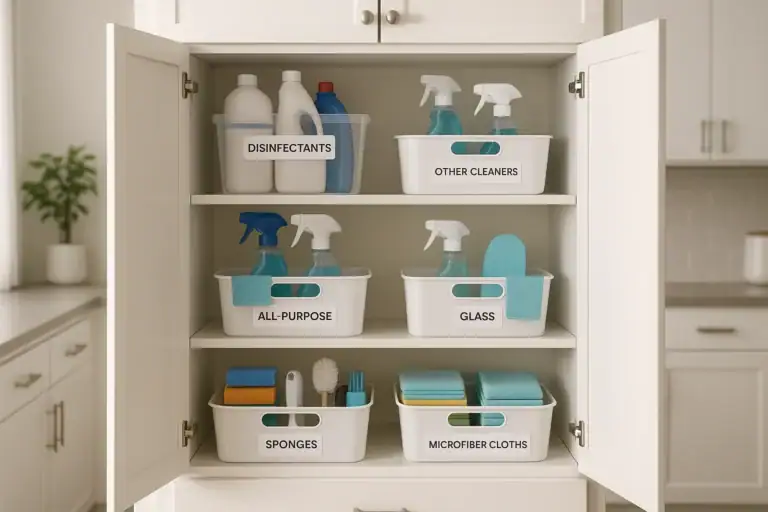
How to Organize Cleaning Supplies for Speed and Safety at Home

Spring Cleaning Checklist for the Whole Home (Printable Plan)
How to Disinfect Surfaces Safely: What Really Needs It and What Does Not
How to Clean Hardwood Floors Without Ruining the Finish
Best Way to Clean Laminate Floors Without Swelling or Haze
Keep reading

About this site
Signature Home Guide publishes practical, independent home guides. We aim to be clear, helpful, and transparent.
Affiliate disclosure
As an Amazon Associate, we earn from qualifying purchases. Some links on this site may be affiliate links. If you buy through these links, we may earn a small commission at no extra cost to you. This helps support our content. Learn more.