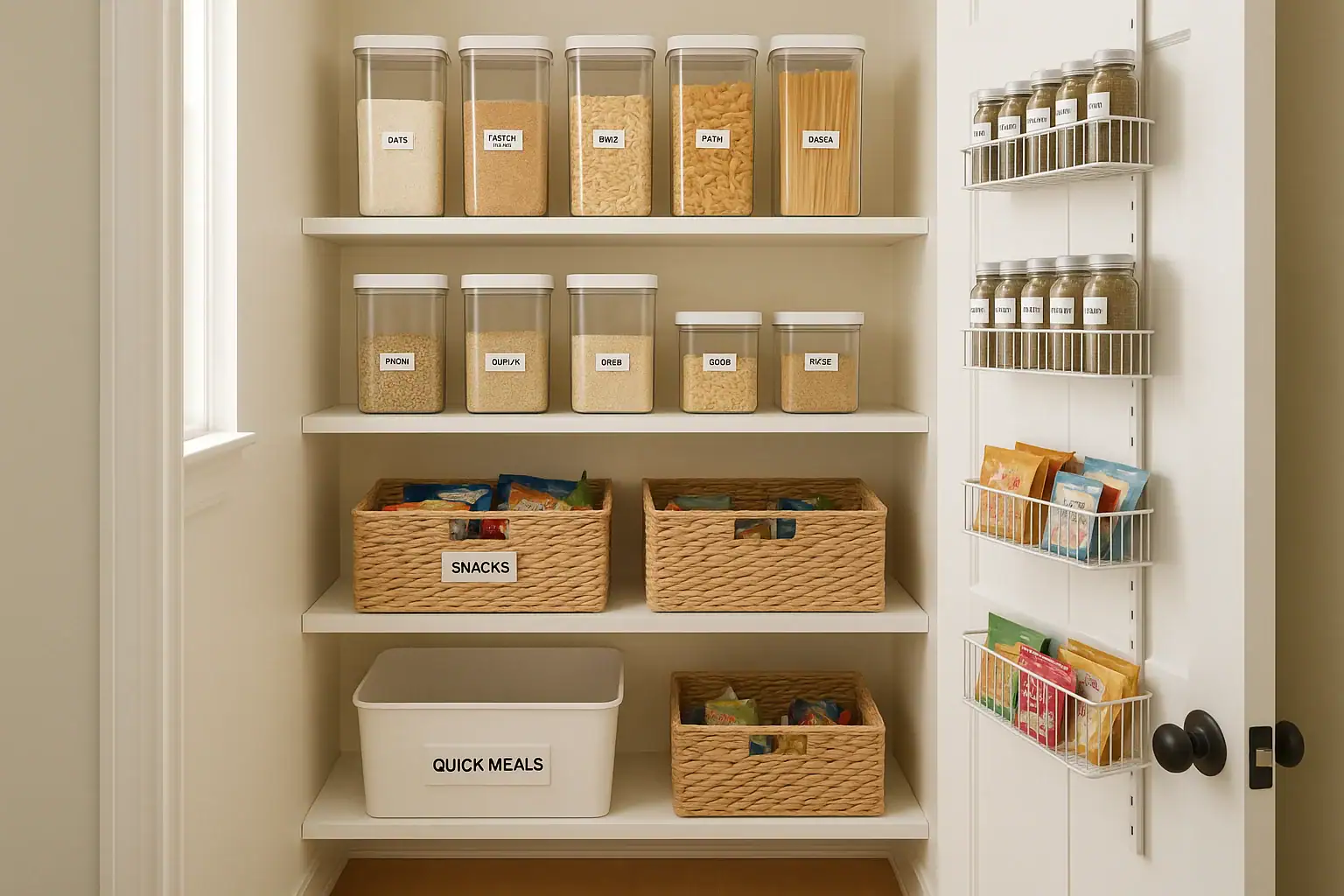
A small kitchen pantry can either be your biggest frustration or your secret weapon for stress-free cooking. When space is tight, every shelf, bin, and container needs to work harder. The good news is that you do not need a huge walk-in pantry or expensive systems to make meal prep faster and easier. With a clear plan, a few simple tools, and some smart habits, you can turn even a tiny pantry cabinet or closet into a highly efficient meal-prep station.
On this page(click to collapse)
- Step 1: Declutter Before You Organize
- Step 2: Measure and Map Your Small Pantry
- Step 3: Create Zones for Faster Meal Prep
- Step 4: Choose Space-Saving Containers and Tools
- Step 5: Label Everything for Speed and Consistency
- Step 6: Arrange Items for Faster Meal Prep Flow
- Step 7: Use a Simple Inventory System to Avoid Overbuying
- Step 8: Maintain Your Small Pantry with Weekly Mini-Resets
- Small Pantry Ideas for Different Kitchen Setups
- Pantry Safety and Food Storage Tips
- Putting It All Together
- Related guides
This guide walks you step-by-step through how to organize a small kitchen pantry for faster meal prep. You will learn how to declutter, plan pantry zones, choose the right containers, and set up routines that keep everything running smoothly. Whether you cook daily or just a few times a week, these strategies will help you find what you need quickly, reduce food waste, and make dinner feel less like a chore.
Step 1: Declutter Before You Organize
Before you buy containers or move shelves, you need to know what you actually use and what is just taking up space. Decluttering is the most powerful step for a small pantry.
Empty and Sort Everything
Start by completely emptying your pantry shelves, one section at a time so your kitchen does not feel overwhelming.
- Place items on a counter or table in broad categories: grains, canned goods, baking, snacks, breakfast, sauces, and so on.
- Check expiration dates and toss anything that is spoiled or clearly past its prime.
- Set aside items you know your household will not eat; consider donating unopened, unexpired items to a local food pantry.
Be Honest About What You Actually Use
In a small kitchen pantry, every inch counts. Ask yourself:
- Do we use this at least once a month?
- Do I have duplicates that can be combined or reduced?
- Is this taking up space that could be used for something more useful?
Keep your everyday staples front and center. Specialty items you rarely use should live on higher shelves or in a separate storage area if possible.
Step 2: Measure and Map Your Small Pantry
Once you know what is staying, it is time to plan. A small pantry works best when every shelf has a clear purpose and fits your containers properly.
Measure Your Space
Use a tape measure and note:
- Width, depth, and height of each shelf
- Distance between shelves
- Door width and height if you have a pantry door
These measurements will help you choose containers, risers, and baskets that actually fit, so you do not waste money on items that are too big or too small.
Create a Simple Shelf Plan
On a piece of paper or in a notes app, sketch a rough layout. Think about what you reach for most often and what can be stored higher or lower.
- Eye-level shelves: Everyday items and meal-prep staples
- Lower shelves: Heavy items like bulk containers, drinks, or small appliances
- Upper shelves: Backstock, rarely used ingredients, and seasonal items
Step 3: Create Zones for Faster Meal Prep
Zones are the key to a pantry that supports quick cooking. Instead of grouping items only by type, think about how you actually cook and what you grab together.
Essential Pantry Zones to Consider
Choose the zones that match your household and cooking style. In a small pantry, you may combine some of these, but the idea is to give every item a logical home.
- Everyday cooking basics: Oils, vinegar, salt, pepper, common spices, broth, and canned tomatoes
- Grains and pasta: Rice, quinoa, pasta, couscous, and other staples
- Breakfast zone: Oats, cereal, nut butters, spreads, and breakfast bars
- Snack station: Crackers, nuts, dried fruit, and grab-and-go snacks
- Baking zone: Flour, sugar, baking powder, cocoa, chocolate chips, and baking extras
- Quick-meal kits: Shelf-stable items that can become a meal in 15–20 minutes
- Backstock zone: Extras and duplicates that refill your main containers
Set Up a Quick-Meal Zone
To speed up meal prep, dedicate one visible zone to quick meals. This can be a single shelf, a bin, or a basket.
Ideas for a quick-meal zone:
- Pasta and jarred sauce
- Canned beans, rice, and seasoning packets
- Tortillas, canned chicken or tuna, and salsa
- Pre-measured spice blends for favorite dinners
When you are tired or short on time, you will know exactly where to look for an easy meal.
Step 4: Choose Space-Saving Containers and Tools
You do not need a full matching set of containers to organize a small kitchen pantry for faster meal prep. Focus on a few tools that maximize vertical space and visibility.
Use Clear Containers for Frequently Used Staples
Clear, stackable containers help you see what you have at a glance and reduce visual clutter. They are especially useful for:
- Rice, pasta, and grains
- Flour, sugar, and baking staples
- Snacks like crackers or pretzels
If you prefer to keep items in original packaging, use bins or baskets to group similar products together. Label the bin instead of each item.
Maximize Vertical Space
In a small pantry, vertical space is your best friend. Consider:
- Shelf risers: Ideal for canned goods and small jars so you can see items in the back.
- Stackable bins: Great for snacks, packets, and baking supplies.
- Door organizers: If you have a door, use it for spices, packets, wraps, and foil.
Contain Small and Slippery Items
Packets, seasoning envelopes, drink mixes, and small snacks easily get lost. Corral them in:
- Narrow bins or drawer organizers
- Small baskets labeled by type (taco, soup, marinades, baking add-ins)
- Clear jars for items like bouillon cubes or snack packs
Step 5: Label Everything for Speed and Consistency
Labels are what keep your system working over time. They also help everyone in the household put things back where they belong, which keeps meal prep fast and frustration-free.
What to Label
- Front of bins and baskets (“Snacks,” “Breakfast,” “Pasta & Grains”)
- Clear containers with the item name and, if needed, cooking instructions
- Backstock area so you know where extras go
Keep Labels Simple and Flexible
You do not need fancy tools. You can use:
- Removable labels or masking tape and a permanent marker
- Clip-on tags for baskets
- Chalkboard labels if you want to change categories easily
Use broad categories so you can adjust as your habits change. For example, “Snacks” is easier to maintain than “Granola Bars” and “Chips” as separate labels in a tiny pantry.
Step 6: Arrange Items for Faster Meal Prep Flow
Now that you have zones, containers, and labels, it is time to put everything back in a way that supports how you cook. Think about your typical weeknight dinner and what you reach for first.
Prioritize Prime Real Estate
In a small kitchen pantry, the most accessible spots should always go to the items that save you the most time.
- Place your quick-meal zone and everyday cooking basics at eye level.
- Keep breakfast items together and easy to grab during busy mornings.
- Store snacks where the right people can reach them. If you have children, consider a lower snack bin just for them.
Group Items by How You Use Them
Instead of only grouping by type, group by function. For example:
- Pasta night bin: Pasta, sauce, canned tomatoes, and Italian-style seasoning.
- Taco night bin: Shells or tortillas, beans, seasoning packets, salsa, and canned corn.
- Baking bin: Baking powder, baking soda, vanilla, chocolate chips, and cupcake liners.
When it is time to cook, you can pull out one bin instead of hunting across multiple shelves.
Step 7: Use a Simple Inventory System to Avoid Overbuying
Overbuying is one of the fastest ways to overwhelm a small pantry. A light inventory system will help you avoid duplicates and make meal planning easier.
Keep a Running List
Post a small notepad or magnetic list near the pantry. When you use the last of an item, add it to the list immediately. Focus on:
- Core staples (rice, pasta, broth, canned beans)
- Favorite quick-meal ingredients
- Breakfast and snack essentials
Shop Your Pantry First
Before grocery shopping, quickly scan your pantry:
- Check your quick-meal zone and note what is running low.
- Plan at least one or two meals using items you already have.
- Avoid buying more of anything that does not clearly fit in your current system.
This habit keeps your small pantry from overflowing and makes sure your organization continues to support fast meal prep.
Step 8: Maintain Your Small Pantry with Weekly Mini-Resets
Even the best setup will get messy over time. The key is to build in small, regular resets so clutter never gets out of control.
Weekly Five-Minute Tidy
Once a week, set a timer for five to ten minutes and:
- Return stray items to their zones.
- Combine duplicates (such as two open boxes of the same cereal).
- Wipe up crumbs or spills.
- Move older items to the front to use them first.
Monthly Quick Review
Once a month, do a slightly deeper check:
- Scan expiration dates on canned goods and baking items.
- Adjust zones if you notice a bin is always overflowing.
- Remove anything you tried and did not like or no longer use.
These small habits protect the time you invested in organizing and keep your pantry working for you, not against you.
Small Pantry Ideas for Different Kitchen Setups
Not every home has a dedicated pantry closet. If you are working with cabinets, open shelves, or a combination, you can still create an efficient system.
If You Have Only Cabinets
- Use the cabinet closest to your main prep area for everyday pantry items.
- Add shelf risers and turntables to reach items in the back more easily.
- Use labeled bins to pull out entire categories at once, like a drawer.
If You Have a Narrow Pantry Closet
- Place the most-used zones between shoulder and hip height.
- Use shallow bins so items do not get lost behind each other.
- Take advantage of the door with over-the-door racks for spices and packets.
If You Use Open Shelving
- Choose matching or coordinated containers to reduce visual clutter.
- Keep packaging minimal and decant where it makes sense.
- Store less attractive backstock in a closed cabinet or secondary area.
Pantry Safety and Food Storage Tips
Safe storage is just as important as organization, especially in a small space where items are close together.
Protect Food from Moisture and Pests
- Use airtight containers for flour, grains, and snacks to keep them fresh.
- Wipe shelves regularly to remove crumbs that can attract pests.
- Avoid storing food directly on the floor; use the lowest shelf or a bin.
Store Heavy Items Safely
- Keep heavy bottles, glass jars, and bulk containers on lower shelves.
- Do not overload high shelves; use them for light, rarely used items.
- Make sure bins are not so heavy that they are difficult to pull down.
Putting It All Together
Organizing a small kitchen pantry for faster meal prep is less about perfection and more about creating a system that fits your real life. By decluttering, measuring your space, creating clear zones, and using simple containers and labels, you turn a cramped pantry into a powerful tool for everyday cooking.
Start with one shelf, one bin, or one zone at a time. As you live with your new setup, adjust it based on what you reach for most and how your routine changes. With a few thoughtful choices and regular mini-resets, your small pantry can support quick, calm, and efficient meal prep day after day.
Related posts
Browse this topic →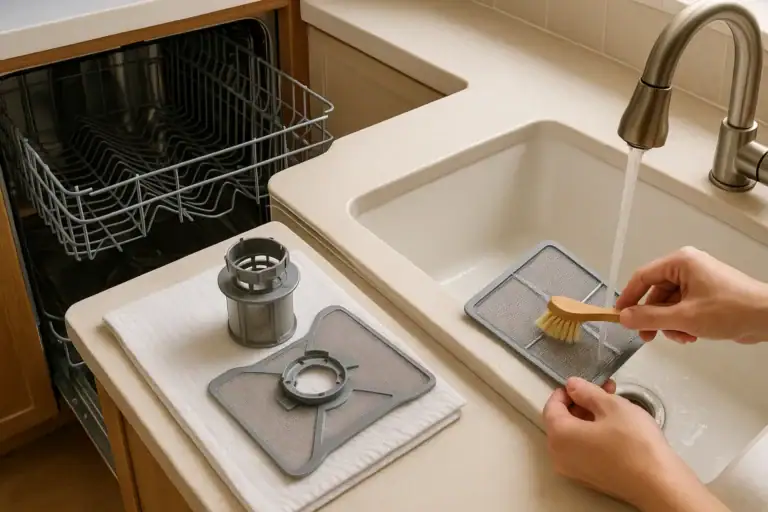
How to Clean a Dishwasher Filter (and How Often You Should Do It)
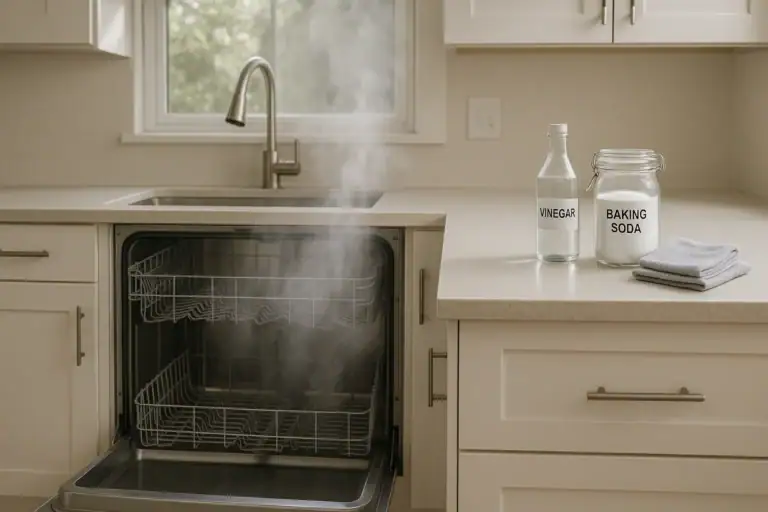
Dishwasher Smells: Why It Happens and How to Fix It for Good
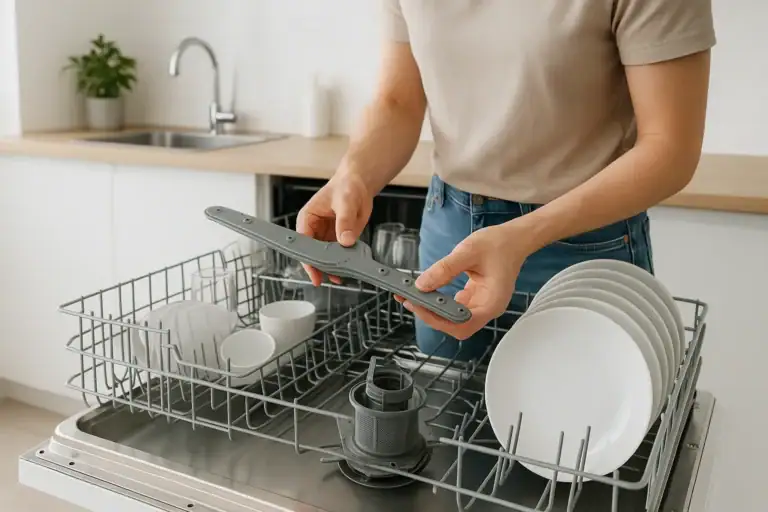
Dishwasher Not Cleaning Well? Spray Arm, Filter, and Loading Fixes
How to Sharpen Kitchen Knives at Home: Simple Method and Safety Tips
Cutting Board Hygiene: Wood vs Plastic and How to Sanitize Safely
Food Storage Safety: Fridge Zones and How Long Food Really Lasts
Keep reading
About this site
Signature Home Guide publishes practical, independent home guides. We aim to be clear, helpful, and transparent.
Affiliate disclosure
As an Amazon Associate, we earn from qualifying purchases. Some links on this site may be affiliate links. If you buy through these links, we may earn a small commission at no extra cost to you. This helps support our content. Learn more.