Stains happen, whether it is a splatter of cooking oil on your favorite shirt, a morning coffee spill on the couch, or a glass of red wine tipping over during dinner. You want those stains gone fast, but you may not want to reach for harsh chemical cleaners that smell strong, irritate skin, or worry you around kids and pets. The good news is that many common stains can be treated effectively with gentle, everyday ingredients you probably already have at home. With the right steps and a little patience, you can lift oil, coffee, and wine stains while keeping your home’s cleaning routine simple and low‑tox.
On this page(click to collapse)
This guide walks you through how to handle these three common stains on clothing, upholstery, and carpets. You will learn what to do immediately after a spill, which natural ingredients work best, and what mistakes to avoid so you do not accidentally set the stain. Keep this guide handy so the next time a spill happens, you can act quickly and confidently.
General Rules for Natural Stain Removal
Before jumping into specific stain types, it helps to understand a few basic rules that apply to almost any stain. These simple habits can make the difference between a quick fix and a permanent mark.
Act Fast, But Do Not Panic
- Treat stains as soon as possible. The longer a stain sits, the deeper it soaks into fibers and the harder it is to remove.
- Blot, do not rub. Rubbing pushes the stain deeper and can spread it. Gently press with a clean cloth or paper towel.
- Work from the outside in. Start at the outer edge of the stain and move inward to keep it from spreading.
Test Before You Treat
Even natural ingredients can discolor delicate fabrics or finishes.
- Test your solution on a hidden area first.
- Wait a few minutes to check for color changes or damage.
- If the fabric is labeled “dry clean only,” avoid aggressive wet treatments and consider professional cleaning.
Helpful Natural Stain-Fighting Ingredients
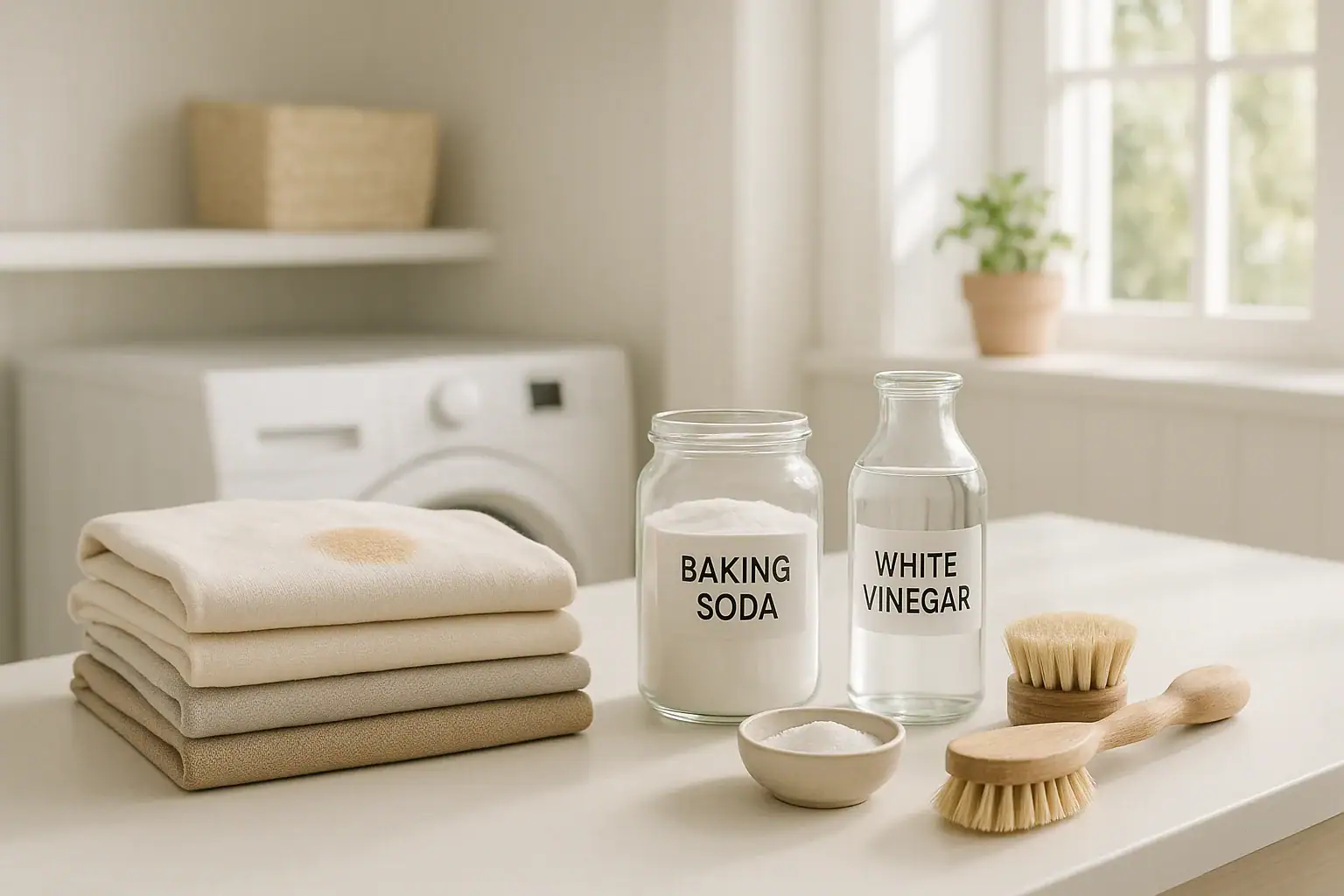
Keep a small stain-removal kit in your laundry area or cleaning caddy. Useful items include:
- Baking soda
- White vinegar
- Mild liquid dish soap
- Hydrogen peroxide (3%)
- Table salt
- Cornstarch or unscented baby powder
- Clean white cloths or microfiber cloths
- Soft-bristled brush or old toothbrush
How to Remove Oil and Grease Stains Without Harsh Chemicals
Oil stains from cooking, salad dressings, and greasy foods can be stubborn because they soak into fibers. The key is to absorb as much oil as possible before washing and to use gentle degreasing ingredients.
Step-by-Step: Oil Stains on Clothing
-
Blot the fresh stain.
Place a paper towel or clean cloth under the stained area. Gently blot the top with another cloth to remove excess oil. Avoid rubbing.
-
Apply an absorbent powder.
Sprinkle cornstarch, baking soda, or unscented baby powder generously over the stain. These powders help pull oil out of the fabric.
- Let it sit for at least 15–30 minutes for fresh stains.
- For older or heavier stains, leave it on for a few hours.
-
Brush off the powder.
Shake or gently brush away the powder. You may already see some improvement.
-
Pre-treat with mild dish soap.
Apply a small drop of mild liquid dish soap directly to the stain. Dish soap is designed to cut grease but is still gentle.
- Use your fingers or a soft toothbrush to gently work the soap into the fabric.
- Let it sit for 5–10 minutes, but do not let it dry completely.
-
Rinse with warm water.
Rinse the stained area from the back side of the fabric with warm (not hot) water to help push the oil out of the fibers.
-
Launder as usual.
Wash the garment according to the care label, using the warmest water safe for the fabric.
-
Air-dry and check.
Let the item air-dry before using a dryer. Heat can set oil stains permanently. If the stain remains, repeat the steps before drying.
Oil Stains on Upholstery and Furniture
Upholstery cannot be tossed in the washer, so you need to focus on absorbing and gently lifting the oil.
- Blot up any fresh grease with a dry cloth.
- Sprinkle baking soda or cornstarch over the stain and let it sit for at least 30 minutes, longer for heavy stains.
- Vacuum or brush off the powder.
- Mix a small bowl of warm water with a few drops of mild dish soap.
- Dip a clean cloth into the soapy water, wring it out well, and gently blot the stain.
- Follow with a cloth dampened with plain water to remove soap residue.
- Blot dry with a dry towel and allow the area to air-dry completely.
Oil Stains on Carpet
For carpet, the process is similar to upholstery, but you may need to repeat it more than once.
- Blot up as much oil as possible with paper towels.
- Cover the stain with baking soda or cornstarch and let it sit for at least 1 hour.
- Vacuum thoroughly.
- Blot with a cloth dipped in warm, mildly soapy water.
- Rinse by blotting with a cloth dampened with plain water.
- Press with a dry towel to remove moisture, then let the carpet air-dry.
How to Remove Coffee Stains Naturally
Coffee stains combine color, sugar, and sometimes dairy, which can leave a yellow or brown mark if not treated quickly. Fortunately, coffee responds well to simple household ingredients.
Fresh Coffee Stains on Clothing
-
Rinse immediately with cold water.
Hold the stained area under a gentle stream of cold water from the back of the fabric. This helps flush out as much coffee as possible.
-
Blot, do not rub.
Use a clean cloth to blot the area, lifting away moisture and color.
-
Pre-treat with a vinegar solution.
Mix equal parts white vinegar and cold water. Apply to the stain with a cloth or spray bottle.
- Let it sit for about 5–10 minutes.
- Blot with a clean cloth to lift the stain.
-
Add a small amount of mild dish soap if needed.
If the stain is still visible, gently rub a tiny amount of mild dish soap into the area and let it sit for a few minutes.
-
Rinse well and launder.
Rinse thoroughly with cold water, then wash according to the garment’s care label. Air-dry and check before using heat.
Dried Coffee Stains on Clothing
Older coffee stains may need a bit more attention, but they are still often removable.
- Soak the stained area in cold water for 15–30 minutes to loosen the dried coffee.
- Mix 1 part white vinegar with 2 parts cold water and add a small drop of mild dish soap.
- Apply the mixture to the stain and gently work it in with your fingers or a soft brush.
- Let it sit for 10–15 minutes, then rinse thoroughly.
- Launder as usual and air-dry to check results.
Coffee Stains on Upholstery
- Blot up as much coffee as possible with a clean, dry cloth.
- Mix a solution of 1 cup warm water, 1 tablespoon white vinegar, and a few drops of mild dish soap.
- Dip a clean cloth into the solution, wring it out, and gently blot the stain.
- Use a separate cloth dampened with plain water to blot and remove any soapy residue.
- Blot dry with a towel and let the area air-dry completely.
Coffee Stains on Carpet
- Blot the spill immediately with paper towels, pressing firmly to absorb liquid.
- Mix 1 cup warm water with 1 tablespoon white vinegar and 1 teaspoon mild dish soap.
- Apply a small amount of the solution to the stain with a cloth or spray bottle.
- Blot with a clean cloth, repeating until the stain begins to fade.
- Rinse by blotting with a cloth dampened with plain water.
- Press with a dry towel to remove moisture and allow to air-dry.
How to Remove Red Wine Stains Without Harsh Chemicals
Red wine is one of the most dreaded stains because of its deep color. The key is to act quickly and use ingredients that help lift and break down the pigment.
Immediate Steps for Fresh Red Wine Spills
-
Blot right away.
Use a clean, light-colored cloth or paper towel to blot the stain. Press firmly but do not rub.
-
Apply salt or baking soda.
While the area is still damp, cover the stain with a thick layer of table salt or baking soda. These powders help pull out the wine.
- Let it sit until it looks damp and discolored, at least 10–15 minutes.
-
Brush off the powder.
Shake or brush away the salt or baking soda. The stain should look lighter.
Red Wine Stains on Clothing
-
Rinse with cold water from the back.
Hold the stained fabric under cold running water, letting the water push the wine out from the back side.
-
Pre-treat with a vinegar and soap solution.
Mix 1 tablespoon white vinegar, 1 tablespoon mild dish soap, and 2 cups cool water.
- Apply the solution to the stain with a clean cloth.
- Blot gently, working from the outside in.
- Continue blotting until the stain fades.
-
For stubborn stains, use hydrogen peroxide carefully.
On white or colorfast fabrics, you can try a mix of equal parts 3% hydrogen peroxide and mild dish soap.
- Test on a hidden area first to check for color change.
- Apply a small amount to the stain, gently work it in, and let it sit for 5–10 minutes.
-
Rinse and launder.
Rinse thoroughly with cold water, then wash according to the care label. Air-dry and inspect before using a dryer.
Red Wine Stains on Upholstery
- Blot up as much wine as possible with a clean cloth.
- Cover the area with salt or baking soda and let it sit for 10–20 minutes, then vacuum or brush it off.
- Mix 1 cup cool water with 1 tablespoon white vinegar and 1 teaspoon mild dish soap.
- Dip a cloth into the solution, wring it out, and gently blot the stain.
- Blot with a clean cloth dampened with plain water to remove residue.
- Press with a dry towel and allow the upholstery to air-dry.
Red Wine Stains on Carpet
- Blot the spill immediately with paper towels until no more liquid lifts.
- Sprinkle baking soda or salt over the area and let it sit for 15–30 minutes.
- Vacuum up the powder.
- Mix 1 cup warm water with 1 tablespoon white vinegar and 1 teaspoon mild dish soap.
- Apply a small amount to the stain with a cloth and blot, repeating as needed.
- Rinse by blotting with a cloth dampened with plain water.
- Blot dry with a towel and let the carpet air-dry fully.
When to Repeat, When to Stop
Natural stain removal often works best in several gentle rounds rather than one harsh treatment. It is normal to repeat steps, especially with older or darker stains.
- Repeat up to three times. If a stain is fading with each attempt, keep going.
- Stop if colors start to bleed. If fabric dye begins to run, stop and rinse immediately.
- Avoid high heat. Do not use hot water or a dryer until you are satisfied with the results, since heat can set stains.
Simple Prevention Tips for a Low-Stress Home
While spills are part of everyday life, a few small habits can reduce how often you deal with tough stains.
- Use washable slipcovers or throws on frequently used furniture.
- Keep coasters and washable placemats on tables.
- Store a small “stain first-aid kit” with cloths, baking soda, vinegar, and mild soap where spills are likely.
- Encourage everyone in the household to blot spills right away instead of waiting.
With these natural methods and a little practice, you can handle oil, coffee, and wine stains confidently without relying on harsh chemicals. Your fabrics, indoor air, and skin will thank you, and your home will stay fresh and welcoming.
For more tips on keeping your home clean and organized with simple routines and gentle products, explore additional guides in the cleaning and organization section of your favorite home reference site.
Related posts
Browse this topic →
Pantry Organization Basics: Zones, Labels, and a Simple Maintenance Routine
How to Organize Cleaning Supplies for Speed and Safety at Home

Spring Cleaning Checklist for the Whole Home (Printable Plan)
How to Disinfect Surfaces Safely: What Really Needs It and What Does Not
How to Clean Hardwood Floors Without Ruining the Finish
Best Way to Clean Laminate Floors Without Swelling or Haze
Keep reading

About this site
Signature Home Guide publishes practical, independent home guides. We aim to be clear, helpful, and transparent.
Affiliate disclosure
As an Amazon Associate, we earn from qualifying purchases. Some links on this site may be affiliate links. If you buy through these links, we may earn a small commission at no extra cost to you. This helps support our content. Learn more.