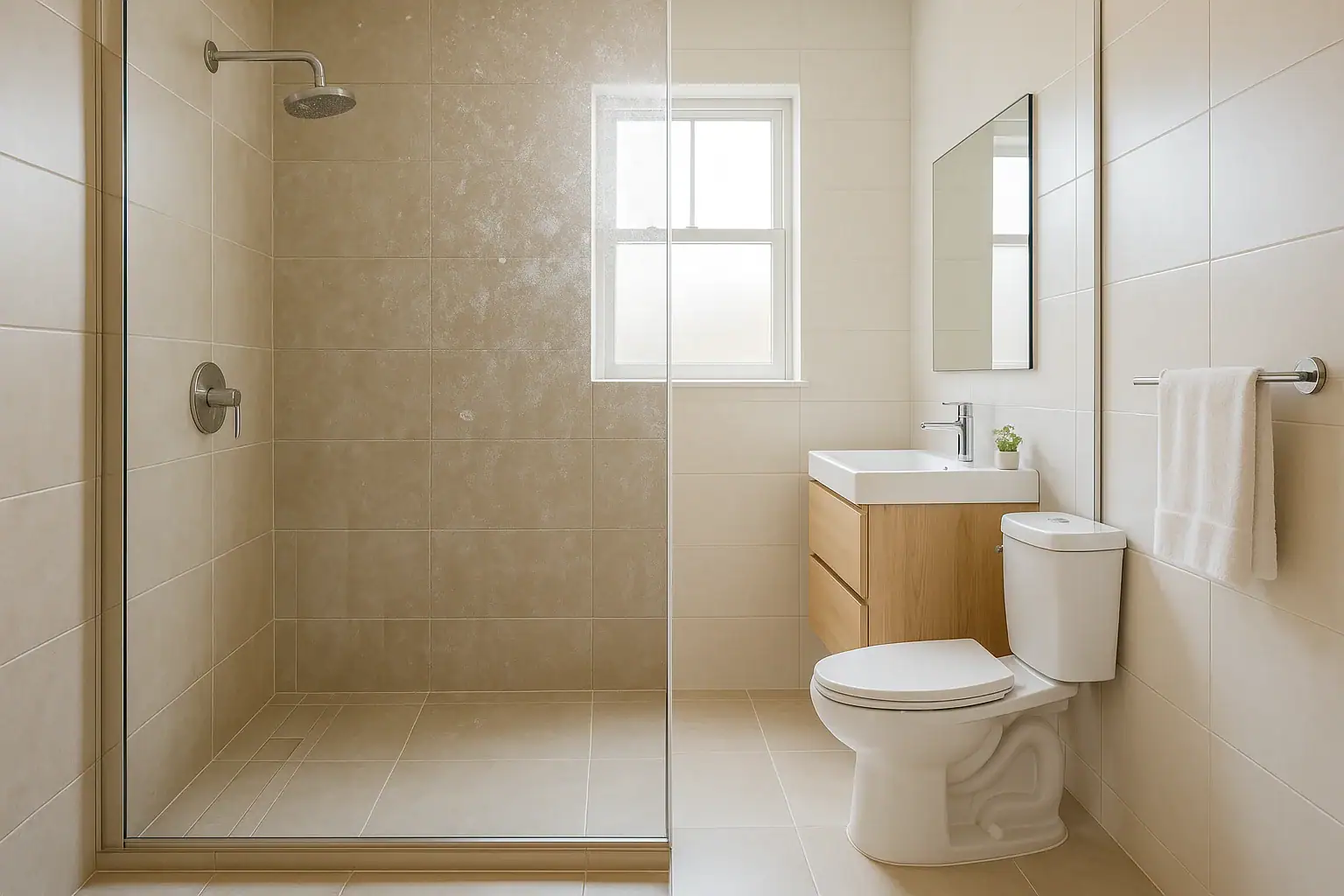
Cloudy glass shower doors can make a clean bathroom look dingy, even when you scrub regularly. Hard-water stains leave white, chalky spots and hazy film that seem to cling to glass no matter how often you wipe. The good news is that you do not need specialty cleaners to get your shower doors clear again. With the right tested approaches, a little patience, and consistent habits, you can remove existing buildup and slow it down in the future.
On this page(click to collapse)
- Understanding Hard-Water Stains on Glass Shower Doors
- Hard-Water Stains vs. Soap Scum: How to Tell the Difference
- Safety and Prep Before You Start Cleaning
- Tested Methods to Remove Hard-Water Stains From Glass Shower Doors
- Dealing With Very Old or Severe Hard-Water Stains
- How to Prevent Hard-Water Stains From Coming Back
- Simple Routine to Keep Glass Shower Doors Clear
- When to Call in a Professional
- Key Takeaways
- Related guides
This guide walks you through what hard-water stains are, how to tell the difference between soap scum and mineral deposits, and several proven cleaning methods using common household ingredients. You will also find step-by-step instructions, safety tips, and realistic expectations about what each method can and cannot do. By the end, you will know exactly which approach to try first, how to combine methods if needed, and how to keep your glass shower doors looking clear with minimal effort week after week.
Understanding Hard-Water Stains on Glass Shower Doors
Before you start scrubbing, it helps to understand what you are dealing with. Hard water contains higher levels of dissolved minerals, mainly calcium and magnesium. When water droplets dry on your glass shower doors, those minerals are left behind as a thin, chalky film. Over time, layers of mineral deposits build up and turn into stubborn hard-water stains.
These stains often appear as:
- White or gray spots that follow the pattern of dried water droplets
- Cloudy or hazy patches that do not wipe away with plain water
- Rough or gritty areas you can feel when you run your fingers over the glass
Mineral buildup can bond tightly to glass, especially if it has been sitting for months or years. That is why quick daily wiping works well for prevention but is not enough once heavy deposits have formed. In those cases, you need targeted methods designed to dissolve or gently abrade the minerals without scratching the glass.
Hard-Water Stains vs. Soap Scum: How to Tell the Difference
Glass shower doors usually have a mix of hard-water stains and soap scum. Knowing which one is dominant helps you choose the most effective cleaning method.
Signs you are dealing with soap scum
- Film feels waxy or greasy when you touch it
- Smears easily when you wipe with a dry cloth
- Often has a slightly off-white or yellowish tint
- Comes off more easily with hot water and a degreasing cleaner
Signs you are dealing with hard-water stains
- Spots look chalky, powdery, or crystalline
- Surface feels rough or bumpy even after washing with soap
- Plain glass cleaner barely makes a difference
- Stains follow drip lines where water runs down the door
In reality, you often have both. A practical approach is to remove soap scum first with a basic bathroom cleaner or a mixture of dish soap and warm water. Once the greasy film is gone, you can clearly see the true mineral stains and tackle them with the methods below.
Safety and Prep Before You Start Cleaning
Even when you are using common household ingredients, it is important to protect yourself and your bathroom surfaces. A few minutes of prep makes the job faster and safer.
Basic safety tips
- Open a window or turn on the bathroom fan for good ventilation.
- Wear gloves to protect your skin from dryness or irritation.
- Avoid mixing different cleaners, especially anything with bleach and anything acidic.
- Test any new method on a small, inconspicuous corner of the glass first.
- Protect nearby metal fixtures and stone surfaces from acidic solutions.
Prep your shower doors
- Rinse the glass with warm water to remove loose dust and soap.
- Use a mild bathroom cleaner or dish soap and a soft sponge to remove surface grime.
- Rinse again and squeegee or towel-dry so you can clearly see the remaining stains.
- Lay a towel at the bottom of the shower to catch drips and protect the tub or floor.
Tested Methods to Remove Hard-Water Stains From Glass Shower Doors
Different levels of buildup call for different strategies. Start with the gentlest method that fits your situation and work up to more intensive options if needed. You can also combine methods, as long as you rinse thoroughly between them and avoid mixing incompatible products.
Method 1: White Vinegar Soak (Best First Step)
White vinegar is mildly acidic and can dissolve many mineral deposits with enough contact time. It is a good first method for light to moderate hard-water stains.
You will need
- White distilled vinegar
- Spray bottle or bowl
- Soft microfiber cloth or non-scratch sponge
- Water for rinsing
Step-by-step
- Warm the vinegar slightly (do not boil). Warm vinegar works faster on mineral deposits.
- Pour into a spray bottle or dip a cloth into a bowl of vinegar.
- Generously apply vinegar to the stained glass, making sure it stays wet.
- Let it sit for 10 to 20 minutes. For heavy stains, re-wet areas that start to dry.
- Gently scrub with a soft cloth or non-scratch sponge in circular motions.
- Rinse thoroughly with warm water.
- Dry with a microfiber cloth or squeegee to check your progress.
What to expect
Vinegar works well on newer or moderate stains and is safe for most glass. Very old, etched stains may only lighten, not disappear completely. You can repeat this method a few times to gradually improve results.
Method 2: Baking Soda Paste for Stubborn Spots
Baking soda adds gentle abrasion that helps lift mineral deposits without scratching glass when used with a soft cloth. This method works well on stubborn spots left after a vinegar soak.
You will need
- Baking soda
- Water or white vinegar
- Small bowl
- Soft cloth or non-scratch sponge
Step-by-step
- In a bowl, mix baking soda with just enough water to form a thick paste. For extra power, use vinegar instead of water, but do this in a well-ventilated area.
- Apply the paste directly to the hard-water stains using your fingers or a cloth.
- Let it sit for 5 to 10 minutes so it can work on the deposits.
- Gently rub the paste in circular motions. Do not apply heavy pressure that could grind particles into the glass.
- Rinse thoroughly with warm water until all residue is gone.
- Dry the glass and inspect. Repeat on stubborn areas if needed.
What to expect
This method is effective on rough, chalky spots that did not fully respond to vinegar alone. It is still fairly gentle but should be used with care on any coated or treated glass to avoid wearing down protective layers over time.
Method 3: Citric Acid or Lemon for Mineral Buildup
Citric acid, found in lemons and some powdered cleaners, is another mild acid that can break down mineral deposits. It is especially useful if you dislike the smell of vinegar.
You will need
- Fresh lemons or food-grade citric acid powder
- Water
- Spray bottle or bowl
- Soft cloth or sponge
Step-by-step with lemons
- Cut a lemon in half and rub the cut side directly on the stains, squeezing gently to release juice.
- Let the juice sit on the glass for 5 to 10 minutes.
- Wipe with a damp cloth or sponge, then rinse thoroughly.
- Dry and check the glass. Repeat if needed.
Step-by-step with citric acid solution
- Mix 1 to 2 tablespoons of citric acid powder with 1 cup of warm water in a spray bottle.
- Spray generously on the stained glass.
- Allow it to sit for 10 to 15 minutes, keeping the surface wet.
- Gently scrub with a soft cloth, then rinse well.
- Dry the glass completely.
What to expect
Citric acid can be as effective as vinegar on many hard-water stains and often leaves a fresher scent. As with any acidic cleaner, avoid prolonged contact with natural stone surfaces and rinse metal fixtures afterward.
Method 4: Non-Scratch Scrubbing Tools
Sometimes the key is not a stronger chemical but a better tool. Non-scratch scrub pads, melamine sponges, and specialized glass-safe scrubbers can boost the effectiveness of mild cleaners.
Tips for using scrub tools safely
- Always test on a small, low-visibility area first.
- Keep the glass and the scrubber wet while cleaning.
- Use light to moderate pressure; let the tool do the work.
- Avoid any pad labeled for heavy-duty or outdoor use on glass.
Pair these tools with vinegar, citric acid, or a mild bathroom cleaner to lift mineral deposits without scratching. If you feel the glass catching or see fine lines, stop and switch to a softer cloth.
Method 5: When to Consider a Commercial Hard-Water Remover
If you have tried multiple household methods and the glass still looks hazy, you may be dealing with very old buildup or etching. In those cases, a commercial hard-water remover designed for glass can sometimes make a noticeable difference.
When using any store-bought product, always:
- Read and follow the label instructions exactly.
- Wear gloves and ensure good ventilation.
- Keep the product off natural stone, unsealed grout, and delicate metal finishes.
- Rinse thoroughly and dry the glass afterward.
Even the strongest cleaners cannot fix glass that has been permanently etched by minerals. If the surface feels rough even after cleaning and looks cloudy from every angle, the damage may be permanent. In that case, replacement glass or a professional restoration service might be the only way to restore a truly clear appearance.
Dealing With Very Old or Severe Hard-Water Stains
Severe hard-water stains often build up over many years, especially in showers that do not get wiped down regularly. In these cases, one quick cleaning session is unlikely to restore perfect clarity. Instead, plan on a series of treatments and realistic expectations.
Signs stains may be permanent
- Glass looks cloudy even when completely dry and freshly cleaned.
- You can feel a permanent roughness or pitting with your fingernail.
- Multiple methods (vinegar, baking soda, citric acid, and careful scrubbing) have little effect.
Mineral deposits can slowly etch into the surface of the glass, similar to how sand can wear down stone over time. Once that happens, cleaning can only remove surface buildup, not reverse the damage.
What you can still do
- Use the gentlest method that gives you visible improvement, and repeat it weekly.
- Focus on keeping new buildup from forming so the glass does not get worse.
- Consider replacing only the most damaged panel instead of the entire enclosure.
- If you plan to sell your home, a clearer shower door can be a worthwhile upgrade.
How to Prevent Hard-Water Stains From Coming Back
Once you have put in the effort to remove hard-water stains from your glass shower doors, a simple routine can keep them from returning. Prevention is much easier than deep cleaning.
Daily or after-shower habits
- Squeegee after each shower: A quick pass from top to bottom removes most water droplets before they dry.
- Wipe edges and corners: Use a small towel or microfiber cloth to dry areas where water tends to collect.
- Leave the door open: Propping the door open helps the shower dry faster and reduces moisture buildup.
Weekly maintenance routine
- Spray the glass with diluted vinegar (about half vinegar, half water) once a week.
- Let it sit for a few minutes, then rinse and dry with a microfiber cloth.
- Check for new spots and address them before they harden into thick deposits.
Long-term options to reduce hard water
If your area has very hard water, you may notice mineral buildup not only on shower doors but also on faucets, sinks, and dishes. In that case, you might consider:
- Installing a whole-house or point-of-use water treatment system.
- Using a rinse aid or drying aid on glass surfaces where appropriate.
- Choosing shower fixtures with smoother surfaces that are easier to wipe down.
While these options require an upfront investment, they can significantly cut down on cleaning time and extend the life of fixtures and glass.
Simple Routine to Keep Glass Shower Doors Clear
To make maintenance realistic, it helps to have a quick routine you can follow without thinking too much about it. Here is a simple plan you can adapt to your household.
After every shower
- Squeegee the glass from top to bottom.
- Wipe the bottom edge of the door and metal tracks with a small towel.
- Leave the door slightly open to air out.
Once a week
- Spray the glass with diluted vinegar or a gentle bathroom cleaner.
- Wipe with a microfiber cloth, paying attention to corners and edges.
- Rinse if needed and dry thoroughly.
Once a month
- Inspect for any new hard-water spots or soap scum buildup.
- Use a vinegar soak or baking soda paste on any problem areas.
- Check caulk lines and door seals for mold or leaks while you are there.
By breaking tasks into small, regular steps, you avoid the need for heavy scrubbing sessions and keep your shower looking fresh with much less effort.
When to Call in a Professional
Most hard-water stains on glass shower doors can be handled with the methods in this guide. However, there are times when bringing in a professional makes sense.
Consider professional help if
- The glass is severely etched and still looks cloudy after multiple cleanings.
- You are unsure whether your doors have special coatings that require specific care.
- You notice cracks, chips, or loose hardware while cleaning.
- You are planning a bathroom refresh and want the doors polished or replaced.
A professional can evaluate whether your glass can be restored or if replacement is a better long-term solution. This can be especially helpful before listing a home for sale or completing a major bathroom update.
Related posts
Browse this topic →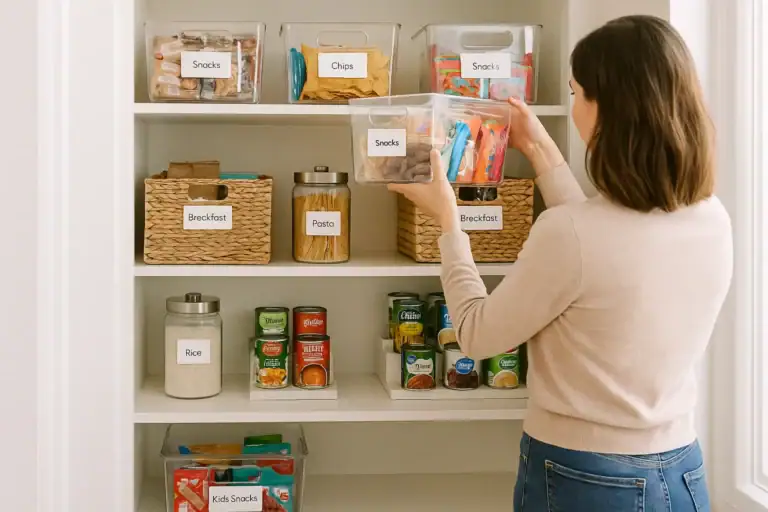
Pantry Organization Basics: Zones, Labels, and a Simple Maintenance Routine
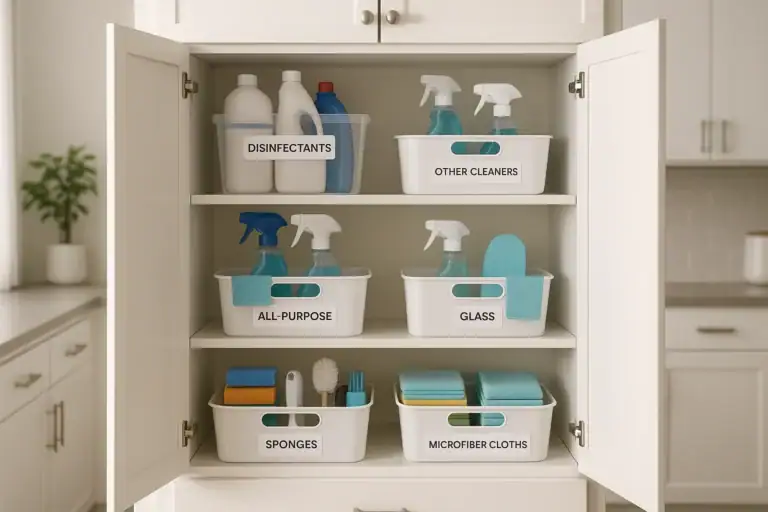
How to Organize Cleaning Supplies for Speed and Safety at Home

Spring Cleaning Checklist for the Whole Home (Printable Plan)
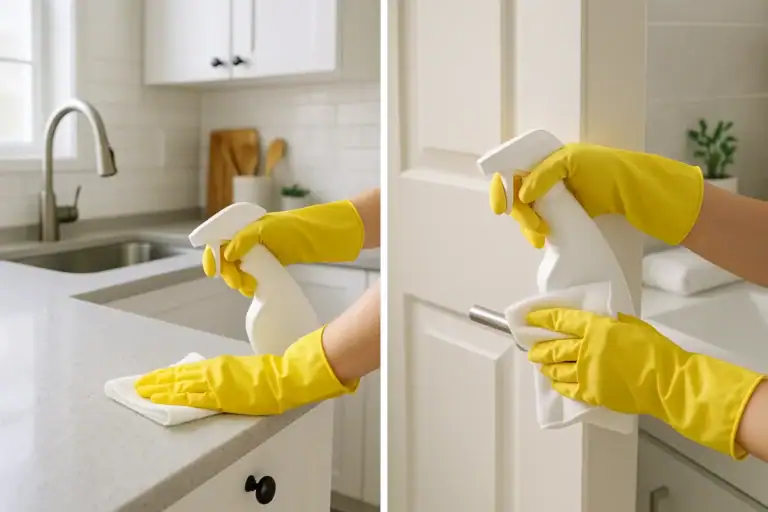
How to Disinfect Surfaces Safely: What Really Needs It and What Does Not
How to Clean Hardwood Floors Without Ruining the Finish
Best Way to Clean Laminate Floors Without Swelling or Haze
Keep reading
About this site
Signature Home Guide publishes practical, independent home guides. We aim to be clear, helpful, and transparent.
Affiliate disclosure
As an Amazon Associate, we earn from qualifying purchases. Some links on this site may be affiliate links. If you buy through these links, we may earn a small commission at no extra cost to you. This helps support our content. Learn more.