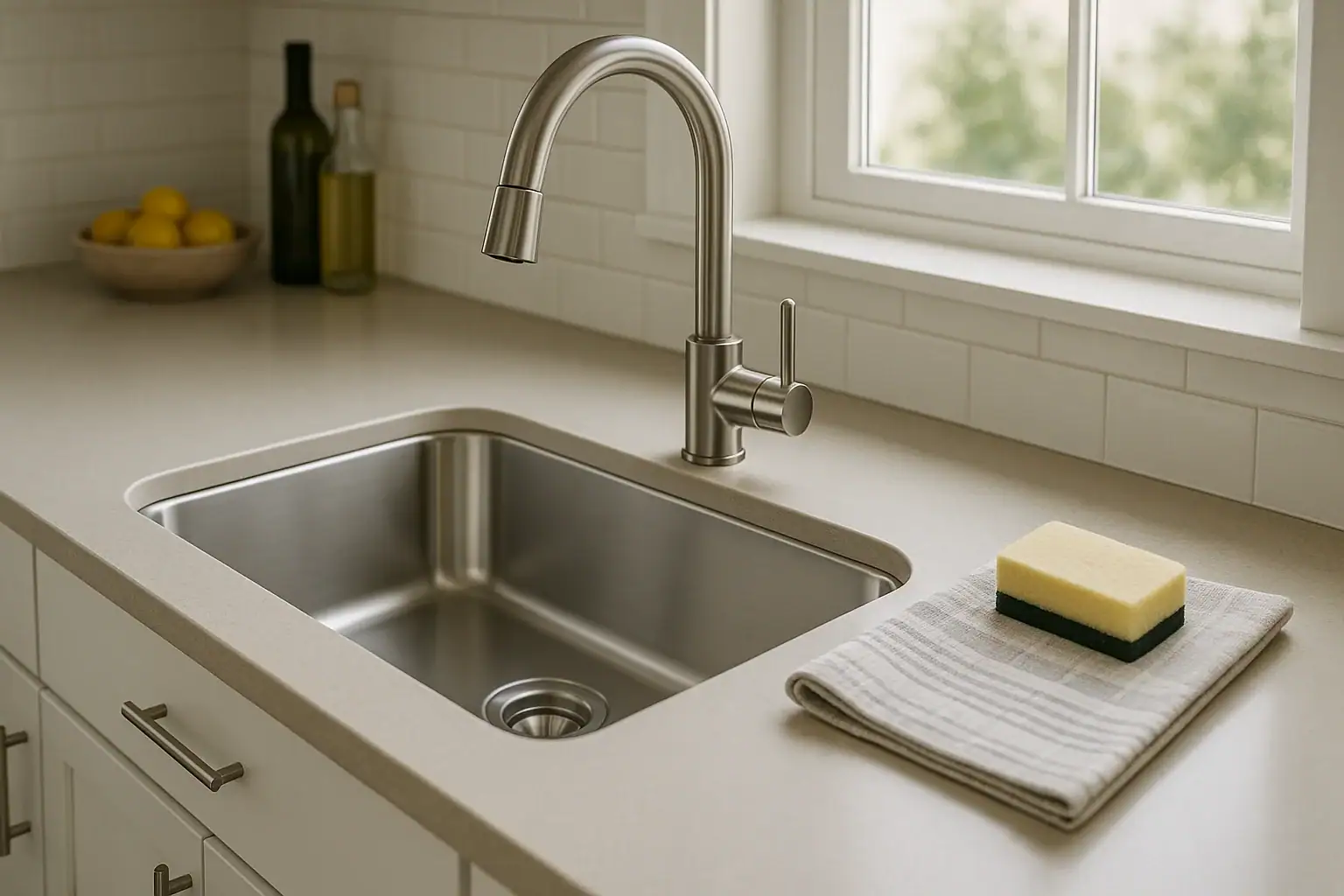
A stainless steel sink can make a kitchen look clean, bright, and modern, but it also shows every water spot, fingerprint, and food stain. If you scrub too hard with the wrong tools or products, you can end up with fine scratches, cloudy haze, or dull patches that never seem to shine again. The good news is that you can keep a stainless steel sink looking smooth and reflective without harsh chemicals or risky abrasives. With the right routine and a few simple habits, you can safely remove grime, stains, and mineral deposits while protecting the finish. This guide walks through step-by-step cleaning methods, what to avoid, and how to keep your sink looking like new for years.
On this page(click to collapse)
- Understanding Stainless Steel Sinks
- What to Avoid on Stainless Steel Sinks
- Daily Safe Cleaning Routine (No Scratches, No Haze)
- Weekly Deep Clean for Shine Without Haze
- How to Prevent Scratches in Stainless Steel Sinks
- How to Avoid Haze and Cloudy Film
- Removing Common Stains Safely
- Long-Term Care Tips for a Shiny Stainless Steel Sink
- Safe Cleaning for Stainless Steel Sinks: Key Takeaways
- Related guides
Understanding Stainless Steel Sinks
Knowing how stainless steel behaves helps you choose safe cleaning methods. Stainless steel is durable, but it is not indestructible. The finish can be scratched, etched, or dulled by the wrong tools or chemicals.
How Stainless Steel Resists Rust
Stainless steel contains chromium, which reacts with oxygen in the air to form a thin, invisible protective layer. This layer helps resist rust and corrosion. When the surface is scratched or damaged, that protective layer can be disrupted until it reforms.
This is why gentle cleaning is important. Deep scratches or harsh chemicals can make it harder for that protective layer to stay intact, which may lead to discoloration, spotting, or a dull, hazy look.
The Direction of the Grain
If you look closely at your sink under good light, you will notice faint lines running in one direction. This is the grain of the stainless steel. Always clean and wipe in the same direction as the grain, not across it. Working with the grain helps you:
- Reduce visible swirl marks
- Limit fine surface scratches
- Maintain a more even, consistent shine
What to Avoid on Stainless Steel Sinks
Safe cleaning starts with knowing what not to use. Certain tools and products can cause permanent or hard-to-fix damage, especially over time.
Tools That Can Scratch
Avoid these items on your stainless steel sink:
- Steel wool pads or metal scouring pads
- Stiff wire brushes
- Abrasive scrub sponges labeled heavy-duty or for grill cleaning
- Powdered cleansers with gritty particles
These can leave fine scratches that catch light and create a dull, cloudy look. Over time, they may also make the surface harder to clean because dirt and minerals settle into the tiny scratches.
Products That Can Cause Haze or Damage
Use caution with strong chemicals. It is best to avoid:
- Undiluted bleach or bleach-based gels left sitting in the sink
- Drain cleaners that splash or sit on the metal
- Oven cleaners or grill cleaners
- Harsh acidic cleaners not labeled safe for stainless steel
These can discolor the metal, create dull spots, or leave a permanent cloudy film. If you must use a strong product nearby, rinse the sink thoroughly afterward.
Habits That Lead to Stains and Haze
Even if you use gentle products, certain habits can slowly damage the finish:
- Leaving wet sponges, rubber mats, or dishcloths in the sink overnight
- Letting standing water sit for long periods
- Leaving metal cans, cast iron, or tools in a damp sink
- Allowing acidic foods like tomato sauce or citrus juice to sit without rinsing
These can cause rust-colored stains, mineral buildup, or faint etching that looks like haze. Quick rinsing and drying help prevent most of these issues.
Daily Safe Cleaning Routine (No Scratches, No Haze)
A gentle daily routine keeps your sink clean and shiny without a lot of effort. The key is to remove food, oils, and minerals before they have time to dry and harden.
Step-by-Step Daily Cleaning
-
Rinse away food particles.
After washing dishes or preparing food, rinse the sink with warm water. Flush away crumbs, coffee grounds, and food scraps so they do not dry on the surface.
-
Use a soft cloth or non-scratch sponge.
Apply a small amount of mild dish soap to a soft sponge or microfiber cloth. Gently wipe the entire sink, including the sides and around the drain, following the direction of the grain.
-
Pay attention to corners and seams.
Use the edge of the sponge or a soft-bristled brush to clean around the drain, faucet base, and seams where grime can collect. Stay gentle to avoid scratching.
-
Rinse thoroughly with warm water.
Rinse away all soap residue. Leftover soap can dry into a film that looks like haze or streaks, especially in hard water areas.
-
Dry with a soft towel.
Wipe the sink dry with a clean microfiber cloth or soft dish towel. Again, follow the grain. Drying prevents water spots and keeps minerals from building up.
Quick After-Use Habits
To keep your sink looking its best between cleanings, try these simple habits:
- Rinse the sink after pouring coffee, tea, or colored liquids
- Remove metal cookware or cans instead of leaving them in standing water
- Hang sponges and cloths to dry instead of storing them in the sink
- Give the sink a quick wipe with a towel at the end of the day
Weekly Deep Clean for Shine Without Haze
Once a week, give your stainless steel sink a slightly deeper clean to remove light stains, soap film, and mineral deposits. You can do this safely without scratching or dulling the surface.
Gentle Deep-Clean Method
Use this method when your sink looks dull, has water spots, or feels slightly rough from buildup.
-
Start with a clean, wet sink.
Rinse the sink with warm water. Make sure the surface is damp so any cleaning ingredient spreads easily and does not scratch.
-
Apply a gentle cleaning paste if needed.
For safe cleaning, use only very fine, non-scratch products or a homemade paste made with a small amount of mild cleaner and water. Avoid gritty powders. Spread the paste lightly with a soft sponge.
-
Work with the grain.
Using light pressure, move the sponge in the same direction as the grain lines. Do not scrub in circles. Focus on areas with water spots or faint discoloration.
-
Rinse thoroughly.
Rinse with warm water until the sink feels completely smooth and no cleaner remains. Any leftover film can dry into streaks or haze.
-
Dry and buff.
Dry the sink with a soft microfiber cloth. Then use a second dry cloth to buff the surface along the grain. This brings out a natural, even shine without coatings.
Safe Ways to Tackle Stubborn Spots
If you notice a few stubborn spots that do not come off with mild soap, try these targeted approaches:
- Hard water spots: Dampen a soft cloth with warm water and a small amount of gentle cleaner. Press it on the spot for a minute, then wipe with the grain and rinse.
- Light discoloration: Use a non-scratch sponge with a bit of mild cleaner. Work gently in the direction of the grain and avoid scrubbing in one area for too long.
- Greasy film: Add a drop of dish soap to a damp microfiber cloth. Wipe the area, rinse well, and dry completely.
Always test any new cleaner on a small, less visible area of the sink first to make sure it does not leave haze or streaks.
How to Prevent Scratches in Stainless Steel Sinks
Once scratches appear, they are difficult to remove at home. Prevention is the safest approach. A few simple changes in how you use the sink can protect the finish for the long term.
Protect the Sink Surface
Consider these protective habits:
- Place a non-scratch sink grid or rack on the bottom to cushion pots and pans.
- Lift heavy cookware instead of dragging it across the sink.
- Use cutting boards on the counter, not directly in the sink.
- Avoid dropping sharp utensils or tools into the basin.
Use the Right Cleaning Tools
Keep a small set of sink-safe tools nearby so you are not tempted to grab something abrasive:
- Soft microfiber cloths
- Non-scratch sponges labeled safe for delicate surfaces
- Soft-bristled brushes for corners and around the drain
Retire any sponge or cloth as soon as it feels rough or embedded with grit. Even a once-soft sponge can become abrasive over time.
How to Avoid Haze and Cloudy Film
Haze on a stainless steel sink often comes from leftover cleaner, mineral deposits, or fine scratches that scatter light. You can prevent this cloudy look with a few consistent steps.
Rinse and Dry Every Time
Two habits make the biggest difference in preventing haze:
- Rinse thoroughly. After using any soap or cleaner, rinse until the water runs clear and the surface feels smooth. Do not let cleaner dry on the metal.
- Dry with a soft cloth. Wipe away water before it dries. This prevents mineral spots and streaks, especially if you have hard water.
Limit Layers of Product
Using too many different products can leave a dull film. Try to:
- Stick to one gentle cleaner for regular use
- Avoid heavy waxes or polishes that can build up
- Use only a small amount of cleaner at a time
If your sink already looks hazy, a thorough rinse and buff with a clean, dry microfiber cloth often restores clarity.
Removing Common Stains Safely
Even with good habits, stains and marks can appear. The goal is to remove them without scratching or etching the surface.
Rust-Colored Marks
Rust-colored stains usually come from metal items left in a wet sink, not from the sink itself. To remove them safely:
- Rinse the area with warm water.
- Apply a small amount of mild cleaner to a soft cloth.
- Gently rub with the grain until the stain lightens.
- Rinse thoroughly and dry.
For stubborn marks, repeat the process rather than scrubbing harder. Patience is safer than pressure.
Tea, Coffee, and Food Stains
Colored liquids can leave faint stains if they sit for a while. To handle them:
- Rinse the sink as soon as you notice the stain.
- Use a soft sponge with dish soap to gently clean the area.
- Rinse and dry thoroughly.
Water Spots and Mineral Deposits
Hard water can leave white or gray spots and a rough feel. To reduce this without scratching:
- Wet a soft cloth with warm water.
- Apply a small amount of gentle cleaner.
- Press the cloth on the area for a minute to soften deposits.
- Wipe with light pressure along the grain.
- Rinse very well and dry with a microfiber cloth.
Regular drying after use is the best long-term solution for hard water spots.
Long-Term Care Tips for a Shiny Stainless Steel Sink
Safe cleaning is not just about what you do today, but what you repeat over months and years. A few long-term habits help your sink stay smooth and bright.
Build a Simple Routine
Use this easy schedule as a starting point and adjust based on how often you use your kitchen:
- Daily: Rinse, wipe with mild dish soap if needed, and dry.
- Weekly: Do a gentle deep clean to remove film and water spots.
- Monthly: Inspect for stains, scratches, or dull areas and address them early.
Watch for Early Signs of Trouble
Catch issues early before they become permanent:
- New dull patches that do not shine after drying
- Areas that feel rough or gritty even when clean
- Repeated water spots in the same area
These can signal buildup or early etching. Increase your rinsing and drying routine and stay away from harsh products in those areas.
When to Consider Professional Help
If your sink has deep scratches, severe discoloration, or heavy etching, home methods may not fully restore the surface. In that case, a professional refinishing or replacement may be the only way to achieve a like-new look. For most everyday wear, however, the gentle methods in this guide are enough to keep a stainless steel sink looking clean and bright.
Safe Cleaning for Stainless Steel Sinks: Key Takeaways
Keeping a stainless steel sink free of scratches and haze comes down to a few core principles:
- Use soft tools only: microfiber cloths, non-scratch sponges, and soft brushes
- Avoid harsh chemicals, gritty powders, and metal scouring pads
- Always clean and dry in the direction of the grain
- Rinse and dry after using soap or cleaner to prevent film and spots
- Do a gentle deep clean weekly to remove buildup before it dulls the finish
With these habits, your stainless steel sink can stay smooth, reflective, and free from cloudy haze, even in a busy kitchen. A few minutes of safe, consistent care will protect the finish and keep your sink looking fresh for years to come.
For more water and kitchen care tips, you can explore related guides and routines that fit your home and lifestyle.
Related posts
Browse this topic →
How to Clean a Dishwasher Filter (and How Often You Should Do It)
Dishwasher Smells: Why It Happens and How to Fix It for Good
Dishwasher Not Cleaning Well? Spray Arm, Filter, and Loading Fixes
How to Sharpen Kitchen Knives at Home: Simple Method and Safety Tips
Cutting Board Hygiene: Wood vs Plastic and How to Sanitize Safely

Food Storage Safety: Fridge Zones and How Long Food Really Lasts
Keep reading
About this site
Signature Home Guide publishes practical, independent home guides. We aim to be clear, helpful, and transparent.
Affiliate disclosure
As an Amazon Associate, we earn from qualifying purchases. Some links on this site may be affiliate links. If you buy through these links, we may earn a small commission at no extra cost to you. This helps support our content. Learn more.