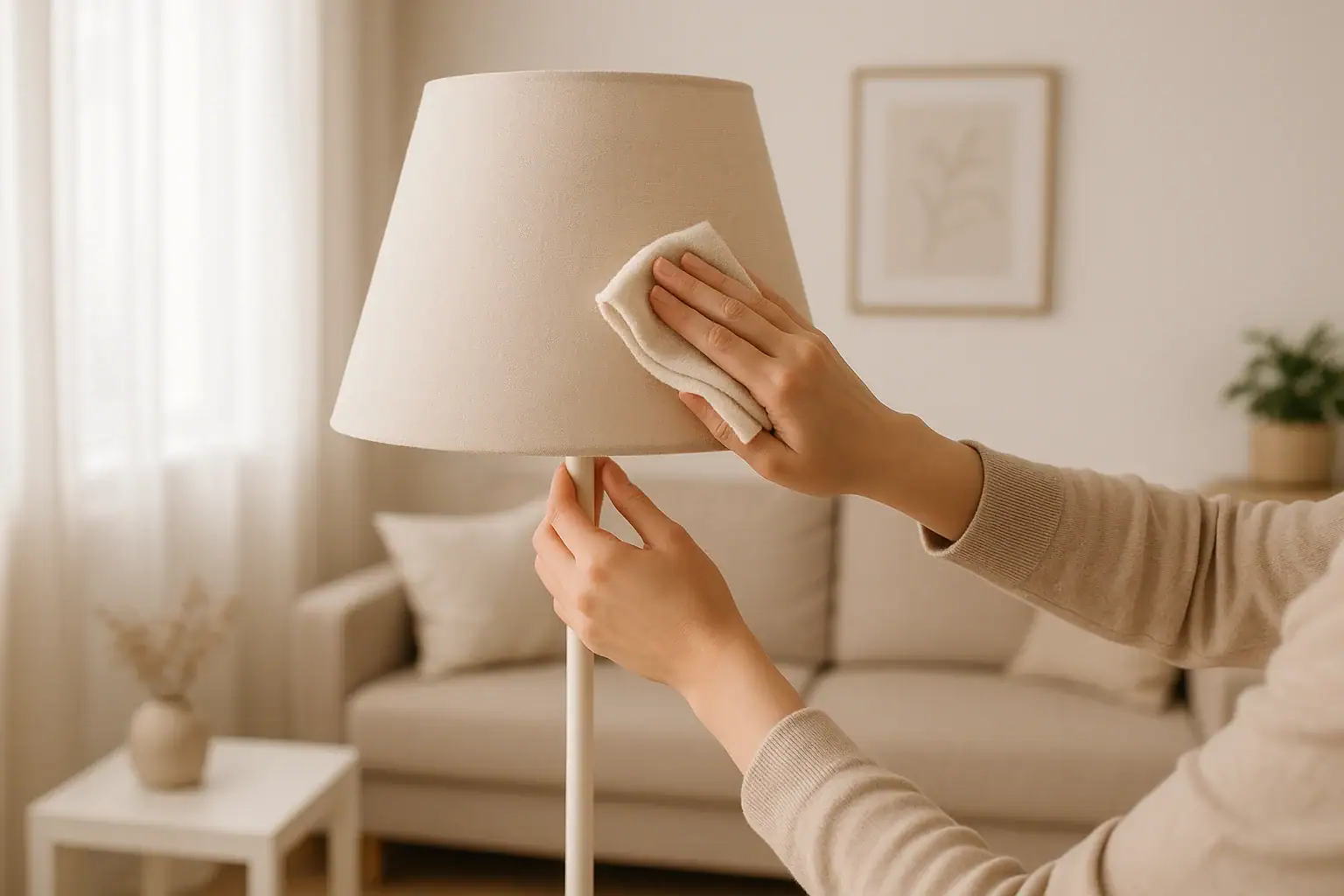
Lampshades and fabric light fixtures are dust magnets. Over time, they collect pet hair, pollen, and everyday grime that dulls your lighting and can even affect indoor air quality. Because they are made from delicate materials like linen, silk, cotton, or paper, many people avoid cleaning them, worried they will warp, discolor, or fall apart. With the right approach, though, you can safely clean lampshades and fabric fixtures at home and restore their brightness without damage. This guide walks you through what to check before you start, the best methods for different materials, and how to keep them cleaner longer.
Before You Start: Safety and Prep
Cleaning anything attached to electricity requires a few basic safety steps. Take a minute to prepare so you can work confidently and avoid damage to your fixtures.
Safety first
- Turn off the power: Switch off the light and, if possible, unplug the lamp or turn off the breaker for ceiling fixtures.
- Let bulbs cool completely: Hot bulbs can crack if exposed to moisture and can also burn your hands.
- Remove the shade if you can: It is almost always easier and safer to clean a lampshade when it is off the fixture.
- Work in a clean, dry area: A large table covered with a clean towel is ideal for most shades.
Gather your cleaning supplies
You do not need specialty products to clean most lampshades and fabric fixtures. Simple, gentle supplies usually work best.
- Soft microfiber cloths
- Lint roller or wide masking tape
- Soft-bristle brush or clean paintbrush
- Vacuum with brush attachment (optional but helpful)
- Mild dish soap
- Small bowl or bucket for soapy water
- White sponge or white cloths (to avoid color transfer)
- Baking soda (for odors)
- Cotton swabs for small crevices
- Step stool or ladder for ceiling fixtures
Identify your lampshade material
Different materials require different cleaning methods. Check the underside of the shade or the lamp base for any care tags. If there is no label, look closely and feel the surface.
- Fabric shades: Cotton, linen, polyester, silk, or blends. Often slightly textured and flexible.
- Paper or parchment shades: Very lightweight, often with seams or decorative details. These should never be soaked.
- Plastic or acrylic shades: Smooth, slightly glossy, and rigid.
- Fabric-covered frames: Fabric stretched over a wire frame, sometimes pleated.
If you are unsure, treat the shade as delicate and stick to dry methods and very light damp cleaning only.
How to Dust Lampshades and Fabric Light Fixtures
Regular dusting is the easiest way to keep lampshades and fabric fixtures looking clean. It also reduces how often you need deeper cleaning.
Dry dusting for all lampshades
- Remove the shade: Unscrew the finial or clips and lift the shade off carefully.
- Loosen surface dust: Use a soft-bristle brush or clean paintbrush to gently sweep dust from top to bottom.
- Vacuum gently: With a brush attachment on low suction, vacuum the outside and inside of the shade. Support the shade with your hand from inside so you do not bend the frame.
- Use a lint roller: For fabric shades that attract pet hair and lint, roll a lint roller lightly over the surface. If you do not have one, wrap masking tape around your hand, sticky side out, and dab gently.
Dusting fabric ceiling fixtures
Fabric-covered ceiling fixtures and hanging drum shades can be trickier because they are overhead, but the same principles apply.
- Turn off power and let bulbs cool: Always start with safety.
- Use a step stool or ladder: Make sure it is stable and placed on a flat surface.
- Brush off dust: Use a long-handled duster or a soft brush to loosen dust. Work around the shade, not just from one angle.
- Vacuum carefully: If you can reach safely, use a vacuum brush attachment on low suction to remove dust. Avoid pressing too hard.
For most homes, a light dusting every two to four weeks keeps lampshades and fabric fixtures from getting noticeably dirty.
Deep Cleaning Fabric Lampshades
When dusting is not enough and you notice stains, yellowing, or general dinginess, it is time for a deeper clean. The method depends on how delicate the fabric is and how the shade is constructed.
Spot cleaning stains on fabric shades
Always test any cleaning solution on a hidden area first, such as the inside near the top rim.
- Mix a mild solution: Add a few drops of mild dish soap to a bowl of lukewarm water. Stir to create light suds.
- Dampen a white cloth: Dip a clean white cloth or sponge into the soapy water, then wring it out thoroughly. It should be damp, not wet.
- Blot, do not rub: Gently blot the stained area, working from the outside of the stain toward the center to prevent spreading.
- Rinse with a second cloth: Dampen another cloth with clean water, wring it out well, and blot to remove any soap residue.
- Dry quickly: Blot with a dry towel to remove excess moisture, then allow the shade to air dry completely before reattaching.
Hand washing sturdy fabric lampshades
This method works for many cotton, linen, or polyester shades with sturdy frames and no glued-on trims. Avoid on silk, paper, or shades with lots of decorative details.
- Fill a tub or sink: Use lukewarm water and a small amount of mild dish soap. Swish the water to distribute the soap.
- Submerge the shade: Gently lower the shade into the water, holding it by the frame. Move it slowly up and down to let dirt loosen.
- Clean with a sponge: Use a soft sponge or cloth to lightly wipe the inside and outside of the shade. Do not scrub hard or twist the frame.
- Rinse thoroughly: Drain the soapy water and refill with clean lukewarm water. Rinse the shade until no suds remain.
- Shake off excess water: Lift the shade and let water drip off. Do not wring or bend the fabric.
- Dry in shape: Place the shade on a clean towel or hang it on its frame so air can circulate. Turn it occasionally as it dries to prevent water marks.
Allow at least several hours, or overnight, for the shade to dry completely before reinstalling. Moisture trapped inside can lead to odors or warping.
Cleaning delicate or lined fabric shades
Many high-end shades have linings or glued seams that can loosen if soaked. For these, stick to dry cleaning methods and very light spot cleaning.
- Vacuum with a brush attachment on low suction.
- Use a lint roller to remove hair and lint.
- Spot clean only with a barely damp cloth and mild soap, blotting carefully.
- Avoid soaking, submerging, or heavy scrubbing.
How to Clean Paper and Parchment Lampshades
Paper and parchment shades are especially sensitive to moisture. Too much water can cause warping, stains, or even tears. Keep cleaning as dry as possible.
Dusting and surface cleaning
- Brush gently: Use a soft, dry paintbrush or makeup brush to sweep dust from the surface, starting at the top and working down.
- Vacuum carefully: If the paper is sturdy, you can use a vacuum brush attachment on the lowest suction setting, held slightly away from the surface.
- Use a dry sponge: A dry cleaning sponge or a clean, dry white sponge can help lift surface grime without moisture. Wipe lightly in one direction.
Dealing with spots and fingerprints
Because paper absorbs liquid, avoid wet cleaning if possible. For small marks:
- Try a white art eraser, used very lightly, to lift smudges.
- Test in an inconspicuous area first to be sure it does not remove color or finish.
- If a stain is deep or large, it may be safer to live with a small imperfection than risk tearing the shade.
Cleaning Fabric-Covered Ceiling Fixtures and Drum Shades
Fabric drum shades and semi-flush fixtures mounted to the ceiling gather dust, kitchen grease, and even insects. Cleaning them brightens the room and improves light output.
Routine cleaning for ceiling fixtures
- Turn off power: Switch off the light and, if possible, flip the circuit breaker.
- Remove the shade if possible: Many drum shades are held by small screws or clips. Support the shade with one hand as you loosen hardware.
- Dust thoroughly: Use a soft brush or vacuum brush attachment to remove dust from inside and outside surfaces.
- Wipe hardware: Use a slightly damp cloth to wipe metal or plastic parts, avoiding any electrical components.
Deeper cleaning for fabric ceiling shades
If the shade is stained or yellowed, you can often clean it using the same methods as a table lamp shade, with a few extra precautions.
- Check the frame and lining: Make sure the frame is sturdy and the fabric is not brittle.
- Spot clean first: Use mild soapy water and a damp cloth to treat visible spots.
- Hand wash only if safe: For sturdy fabric shades that detach fully, you can submerge and hand wash as described earlier.
- Dry completely before reinstalling: Any remaining moisture near electrical parts is unsafe, so be sure the shade is fully dry.
Removing Odors from Fabric Lampshades and Fixtures
Fabric shades can hold onto odors from cooking, smoke, or pets. Cleaning the surface helps, but you may need extra steps to freshen the fabric.
Simple deodorizing methods
- Baking soda treatment: Lightly sprinkle baking soda over a dry fabric shade, let it sit for 30 to 60 minutes, then vacuum it off using a brush attachment.
- Fresh air: Place the shade in a shaded outdoor area on a dry, breezy day. Avoid direct sun, which can fade fabric.
- Repeat as needed: Deep odors may require several rounds of baking soda and airing out.
Avoid spraying fabric fresheners directly onto the shade. They can leave residue, attract more dust, or cause discoloration over time.
Special Situations: Grease, Smoke, and Yellowing
Some buildup is more stubborn than everyday dust. Kitchens and smoking areas are especially hard on lampshades and fabric fixtures.
Grease and kitchen film
Shades near stoves or open kitchens can develop a tacky film that attracts dust.
- Mix a slightly stronger solution of mild dish soap and warm water.
- Dampen a cloth, wring thoroughly, and wipe the shade gently in sections.
- Rinse each section with a second damp cloth and blot dry.
- Repeat if needed rather than scrubbing hard in one pass.
Smoke residue and yellowing
Smoke can leave a yellow or brown film on fabric and plastic shades.
- Start with a thorough dusting and vacuuming to remove loose particles.
- Use mild soapy water and a damp cloth to wipe surfaces, working in small areas.
- Rinse with a clean damp cloth and dry well.
- Some deep yellowing is permanent, especially on older plastic or paper shades. In those cases, replacement may be the only way to restore a bright look.
How Often to Clean Lampshades and Fabric Fixtures
How often you clean depends on your home environment, but a simple schedule makes it easy to stay on top of buildup.
- Every 2–4 weeks: Light dusting with a brush or vacuum attachment.
- Every 3–6 months: Deeper cleaning for frequently used lamps, especially in living rooms and bedrooms.
- At least twice a year: Full cleaning of fabric ceiling fixtures and drum shades.
- As needed: Spot cleaning for spills, fingerprints, or visible stains.
Homes with pets, smokers, or open kitchens may need more frequent cleaning to keep shades looking fresh.
Tips to Keep Lampshades Cleaner Longer
A few simple habits can reduce how often you need to do deep cleaning and help your shades last longer.
- Dust the room regularly: Less dust in the air means less dust on your shades.
- Use lower-wattage or cooler bulbs: Excess heat can weaken fabric and attract more dust.
- Avoid touching shades with oily hands: Skin oils leave marks that grab dirt.
- Keep shades away from direct cooking steam: Steam carries grease that settles on fabric.
- Rotate lamps occasionally: Turning them slightly can help prevent uneven fading and dust patterns.
When to Replace Instead of Clean
Even with careful cleaning, some lampshades and fabric fixtures eventually reach the end of their useful life.
- Severely warped frames: If the frame is bent or broken, cleaning will not restore the original shape.
- Brittle or cracking fabric: Old fabric that cracks or tears easily will not hold up to cleaning.
- Heavy staining or burn marks: Deep stains, scorch marks, or melted areas are safety concerns.
- Strong lingering odors: If smoke or other odors remain after several cleanings, replacement may be best.
Replacing a worn shade while keeping the lamp base is often an affordable way to refresh a room without buying new lighting.
 How to Clean Baseboards Quickly Without Spreading Dust Everywhere
 How to Clean Blinds Without Removing Them: A Simple Step-by-Step Guide
 How to Remove Lint and Pet Hair from Laundry More Effectively