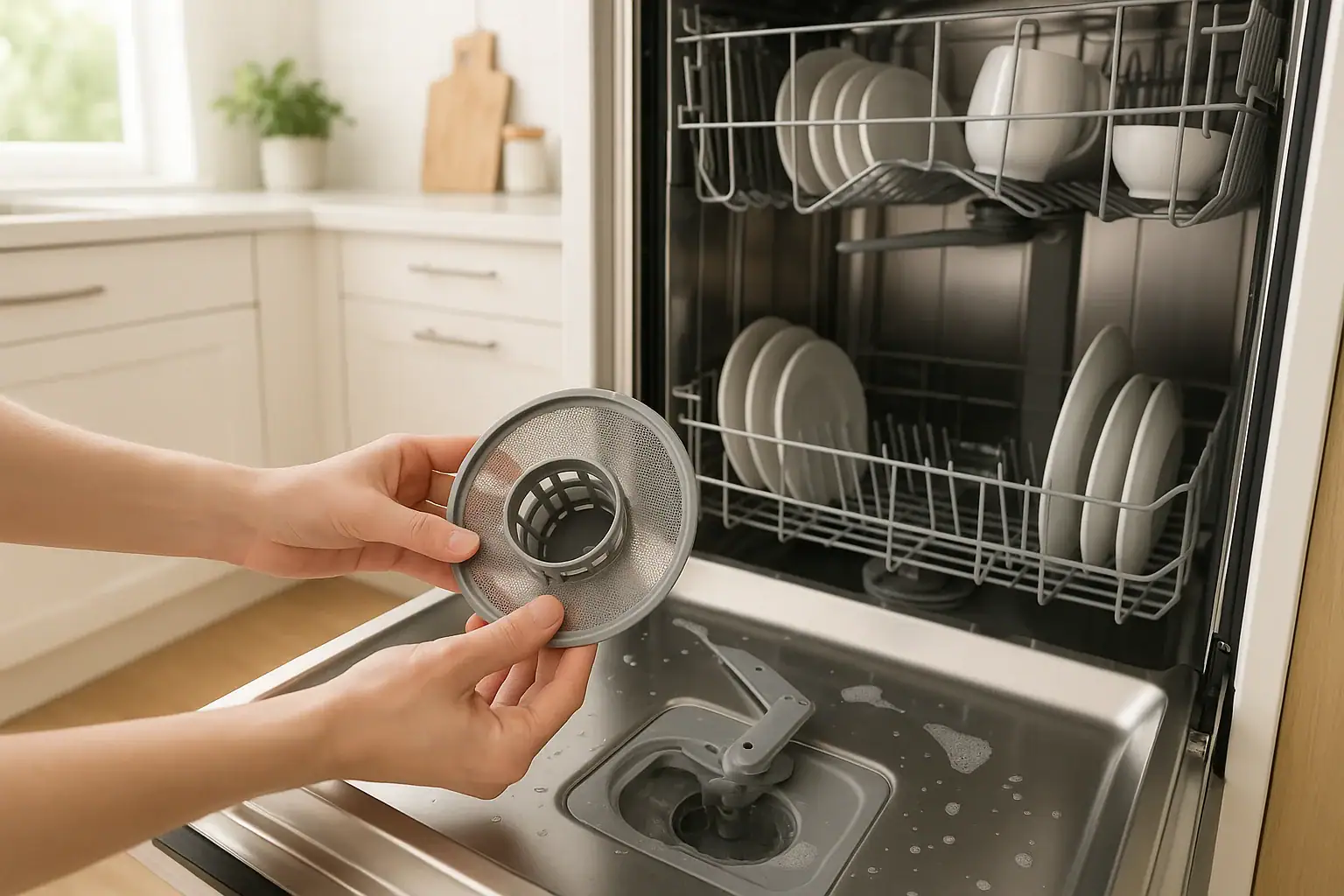
A dirty dishwasher filter can undo all the work your appliance is trying to do. Food particles, grease, and mineral buildup collect in the filter over time, leaving dishes cloudy, glasses spotted, and the interior smelling less than fresh. The good news is that cleaning a dishwasher filter is simple, requires very little time, and can dramatically improve how well your dishwasher performs. With a few basic supplies and a clear step-by-step process, you can handle this task yourself without calling a professional.
This guide walks you through how to clean a dishwasher filter step by step, how often to do it, and what signs to watch for that tell you it is overdue. You will also learn how to safely remove and reinstall the filter, what cleaning products to use, and how to keep your dishwasher running efficiently with a simple monthly routine. Whether you have never cleaned a dishwasher filter before or just need a refresher, these instructions are designed for everyday homeowners and renters who want reliable results.
Why Cleaning Your Dishwasher Filter Matters
Modern dishwashers rely on a filter system to trap food particles and prevent them from recirculating onto your dishes. When that filter gets clogged, the appliance has to work harder, uses more energy, and still leaves items dirty. Regular filter cleaning is one of the easiest ways to keep your dishwasher efficient and your dishes sanitary.
What the Dishwasher Filter Actually Does
The filter sits at the bottom of the dishwasher tub, usually under the lower spray arm. Its job is to:
- Catch food scraps and debris before they reach the drain
- Prevent clogs in the drain hose and pump
- Reduce the chance of food particles being sprayed back onto dishes
- Protect the internal parts of the dishwasher from damage
When the filter is clean, water can flow freely, and the spray arms can do their job effectively. When it is dirty, water pressure drops and cleaning performance suffers.
Signs Your Dishwasher Filter Needs Cleaning
You do not have to wait for a problem to appear before cleaning the filter, but certain warning signs suggest it is overdue:
- Dishes come out with dried or stuck-on food
- Glasses look cloudy or have spots even after a full cycle
- There is standing water in the bottom of the dishwasher after a cycle
- You notice unpleasant or musty odors when you open the door
- The dishwasher sounds louder than usual during draining
If you notice any of these issues, plan to clean the filter before running the next load.
Types of Dishwasher Filters
Most modern dishwashers use a removable filter system, but the design can vary. Understanding what type you have will help you clean it correctly and avoid damage.
Manual vs. Self-Cleaning Filters
There are two main categories of dishwasher filters:
- Manual filters: These must be removed and cleaned by hand. They are common in newer, quieter dishwashers because they do not rely on a noisy grinder.
- Self-cleaning filters: These use a built-in grinder to break down food particles. They require less frequent maintenance but can still benefit from occasional cleaning to remove buildup.
Most dishwashers in homes today use a manual filter system with a cylindrical or flat mesh design that twists or lifts out for cleaning.
How to Identify Your Filter Style
To figure out what you have, look at the bottom of the dishwasher tub:
- If you see a round or oval mesh piece that looks like it can be turned or lifted, you likely have a manual filter.
- If the bottom appears mostly solid with only small openings and no obvious removable parts, it may be a self-cleaning system.
Even with a self-cleaning design, you can still wipe around the drain area to remove grease and residue. For manual filters, follow the detailed steps below.
What You Need to Clean a Dishwasher Filter
You do not need specialized cleaners to get the job done. Basic household items are usually enough.
Simple Supply Checklist
- Soft dish brush or old soft-bristled toothbrush
- Soft sponge or non-scratch scrub pad
- Mild dish soap
- Warm water
- Small bowl, basin, or sink for soaking
- Paper towels or a clean microfiber cloth
- Optional: white vinegar for mineral buildup
- Optional: rubber gloves if you prefer not to touch food debris
Avoid using abrasive pads, metal brushes, or harsh cleaners on the filter, as they can damage the mesh and plastic parts.
How to Clean a Dishwasher Filter Step by Step
Set aside about 15 to 20 minutes the first time you do this. Once you are familiar with the process, it often takes less than 10 minutes.
Step 1: Turn Off and Empty the Dishwasher
For safety and convenience, start with an empty, cool dishwasher.
- Make sure the dishwasher has finished its last cycle and has cooled down.
- Open the door fully and remove the bottom rack completely so you can access the filter area.
- If there is standing water in the bottom, soak it up with a towel before proceeding.
Step 2: Locate the Filter Assembly
The filter is usually found on the floor of the dishwasher, near the center or toward the back. It may consist of two parts:
- A cylindrical or cone-shaped upper filter
- A flat, mesh lower filter that lies flush with the dishwasher floor
Look for a round or rectangular piece with a handle, arrows, or a twist symbol. This is typically the removable section.
Step 3: Remove the Filter Carefully
How you remove the filter can vary slightly, but these general steps apply to most models:
- Grip the filter handle or center section firmly.
- Rotate it counterclockwise if there are arrows indicating a twist to unlock.
- Lift the cylindrical filter straight up once it feels loose.
- If there is a flat filter underneath, gently lift or slide it out next.
Do not force any part. If it feels stuck, check for locking tabs or consult your user manual for specific instructions.
Step 4: Rinse Away Loose Debris
Take the filter pieces to the sink for an initial rinse.
- Turn on warm water, not scalding hot, to avoid warping plastic parts.
- Rinse the filter from the inside out so water pushes debris away from the mesh, not deeper into it.
- Use your fingers or a soft brush to gently dislodge larger particles.
This first rinse will remove most of the loose food and grime, making it easier to see any stubborn buildup.
Step 5: Soak and Scrub the Filter
Next, give the filter a deeper clean to remove grease and mineral deposits.
- Fill a basin or sink with warm water and add a few drops of mild dish soap.
- Place the filter parts into the soapy water and let them soak for 5 to 10 minutes.
- Use a soft brush or toothbrush to gently scrub the mesh, seams, and crevices.
- Pay special attention to any areas where grease or film is visible.
For mineral deposits or hard water stains, you can:
- Soak the filter in a mixture of equal parts warm water and white vinegar for about 10 minutes.
- Scrub again with a soft brush until the buildup loosens.
Rinse thoroughly under clean running water to remove all soap or vinegar residue.
Step 6: Clean the Filter Housing and Drain Area
While the filter is soaking or drying, clean the area inside the dishwasher where the filter sits.
- Use a damp cloth or sponge with a small amount of dish soap.
- Wipe around the filter opening, drain area, and any visible crevices.
- Remove any food particles, glass shards, or debris you can see.
- Rinse the cloth and wipe again with plain water to remove soap residue.
This step helps prevent odors and keeps the drain pathway clear.
Step 7: Dry and Reinstall the Filter
Before putting the filter back, make sure it is clean and free of damage.
- Inspect the mesh for tears, holes, or cracks. If damaged, it should be replaced.
- Shake off excess water and pat dry with a towel if desired.
- Place the flat lower filter back into position first, making sure it lies flat and locked into place.
- Insert the cylindrical upper filter into the center opening.
- Turn it clockwise until it clicks or feels firmly locked. It should not wobble or lift easily.
Once the filter is secure, slide the bottom rack back into the dishwasher.
Step 8: Run a Short Rinse Cycle (Optional but Helpful)
To finish, you can run a short cycle to flush out any loosened residue.
- Run an empty rinse or quick-wash cycle.
- Check the bottom afterward for any remaining debris and wipe if needed.
This quick step helps ensure your next full load starts with a clean interior and fresh filter.
How Often to Clean a Dishwasher Filter
The right cleaning schedule depends on how often you run your dishwasher and how you load it.
General Timing Guidelines
- Light use (1 to 3 loads per week): Clean the filter every 2 to 3 months.
- Average use (4 to 6 loads per week): Clean the filter about once a month.
- Heavy use (daily or more): Check the filter every 2 weeks and clean as needed.
If you often load dishes with heavy food residue or starchy foods, you may need more frequent cleanings.
Quick Monthly Maintenance Routine
To keep things simple, combine filter cleaning with a basic monthly dishwasher tune-up:
- Remove and clean the filter.
- Wipe the door gasket and edges with a damp cloth.
- Check and clean the spray arm holes with a toothpick if they look clogged.
- Run a hot wash cycle with a cup of white vinegar on the top rack to help cut grease and odors.
This routine helps maintain performance, reduce smells, and extend the life of your appliance.
Tips to Keep Your Dishwasher Filter Cleaner Longer
A few small habits can reduce how quickly your filter clogs, saving you time and effort.
Smart Loading Habits
- Scrape, but do not fully rinse, plates before loading to remove large chunks of food.
- Avoid overloading the racks so water can reach every surface.
- Place heavily soiled items facing the spray arms.
- Do not stack bowls or utensils in a way that traps food and blocks water flow.
Foods That Clog Filters Faster
Certain foods can be especially tough on dishwasher filters and drains:
- Coffee grounds
- Egg shells
- Large amounts of rice, pasta, or oatmeal
- Stringy vegetables like celery or onion skins
- Seeds, popcorn kernels, and bones
Try to scrape these items into the trash or compost before loading dishes to reduce buildup.
Troubleshooting Common Filter and Drain Problems
Even with regular cleaning, you might occasionally notice issues that point to filter or drain trouble. Here is how to handle a few common situations.
Standing Water in the Bottom of the Dishwasher
If you see a pool of water after a cycle:
- Check and clean the filter as described above.
- Look for visible clogs or debris around the drain opening.
- Inspect the drain hose under the sink for kinks or clogs.
- Run a short cycle after cleaning to see if the issue is resolved.
If water remains after these steps, the problem may be with the pump or plumbing and could require professional service.
Persistent Odors Even After Cleaning the Filter
Odors can come from more than just the filter. To tackle lingering smells:
- Clean the interior walls and door with warm, soapy water.
- Wipe the rubber gasket around the door, where grime can collect.
- Run a hot cycle with a cup of white vinegar on the top rack.
- Sprinkle a small amount of baking soda on the bottom and run a short cycle to help neutralize odors.
Dishes Still Dirty After Filter Cleaning
If cleaning the filter does not solve poor cleaning performance:
- Check that the spray arms can spin freely and are not blocked by tall items.
- Inspect spray arm holes for clogs and clean them gently if needed.
- Confirm you are using the right cycle and water temperature for heavily soiled loads.
- Make sure you are not overloading the racks.
If problems continue, there could be an issue with water temperature, water pressure, or internal parts that may need professional attention.
Simple Checklist: Dishwasher Filter Cleaning at a Glance
Use this quick checklist whenever you clean your dishwasher filter:
- Empty dishwasher and remove bottom rack
- Locate and remove the filter assembly
- Rinse away loose debris with warm water
- Soak in warm, soapy water and scrub gently
- Use a vinegar soak for mineral buildup if needed
- Wipe the filter housing and drain area
- Rinse, inspect, and reinstall the filter securely
- Run an optional short rinse cycle to flush the system
With this routine, your dishwasher can run more efficiently, your dishes will come out cleaner, and you will reduce the risk of unexpected breakdowns or repairs.
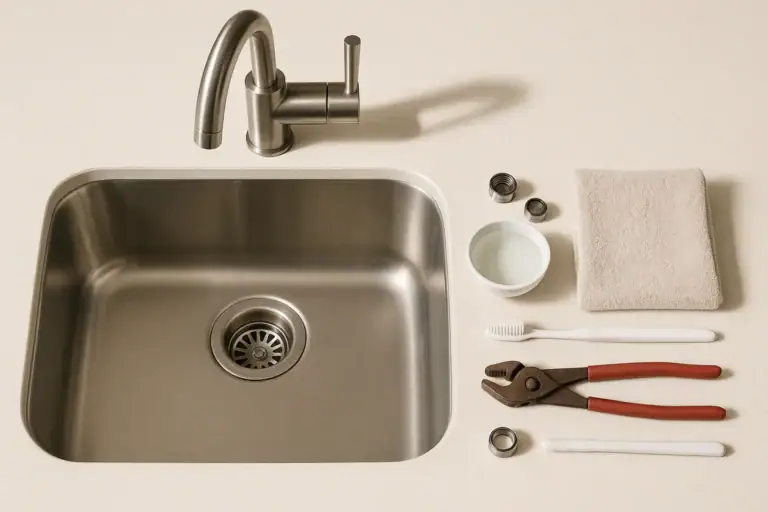 Kitchen Sink Aerator Cleaning for Low Water Flow: A Step-by-Step Guide
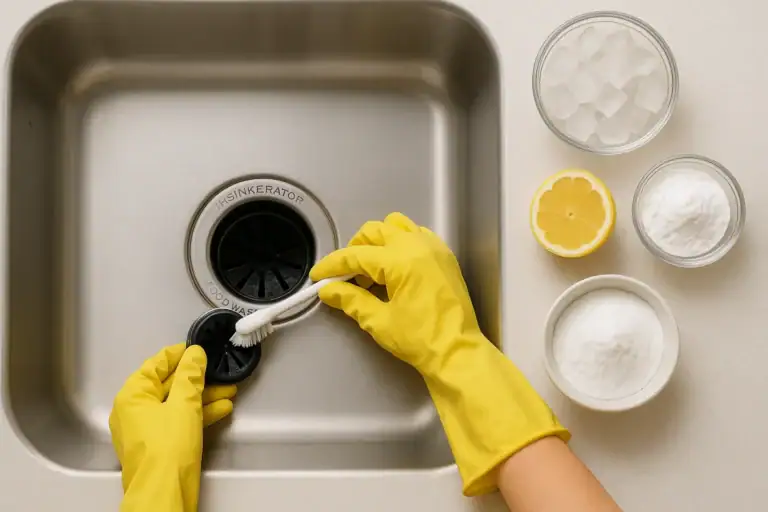 Garbage Disposal Smell Causes and a Simple Cleaning Routine That Works
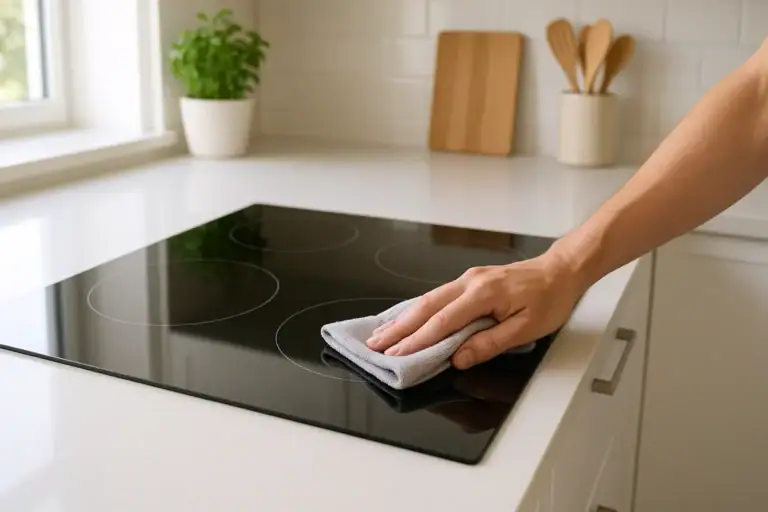 How to Clean an Induction Cooktop Without Scratches: Step-by-Step Guide