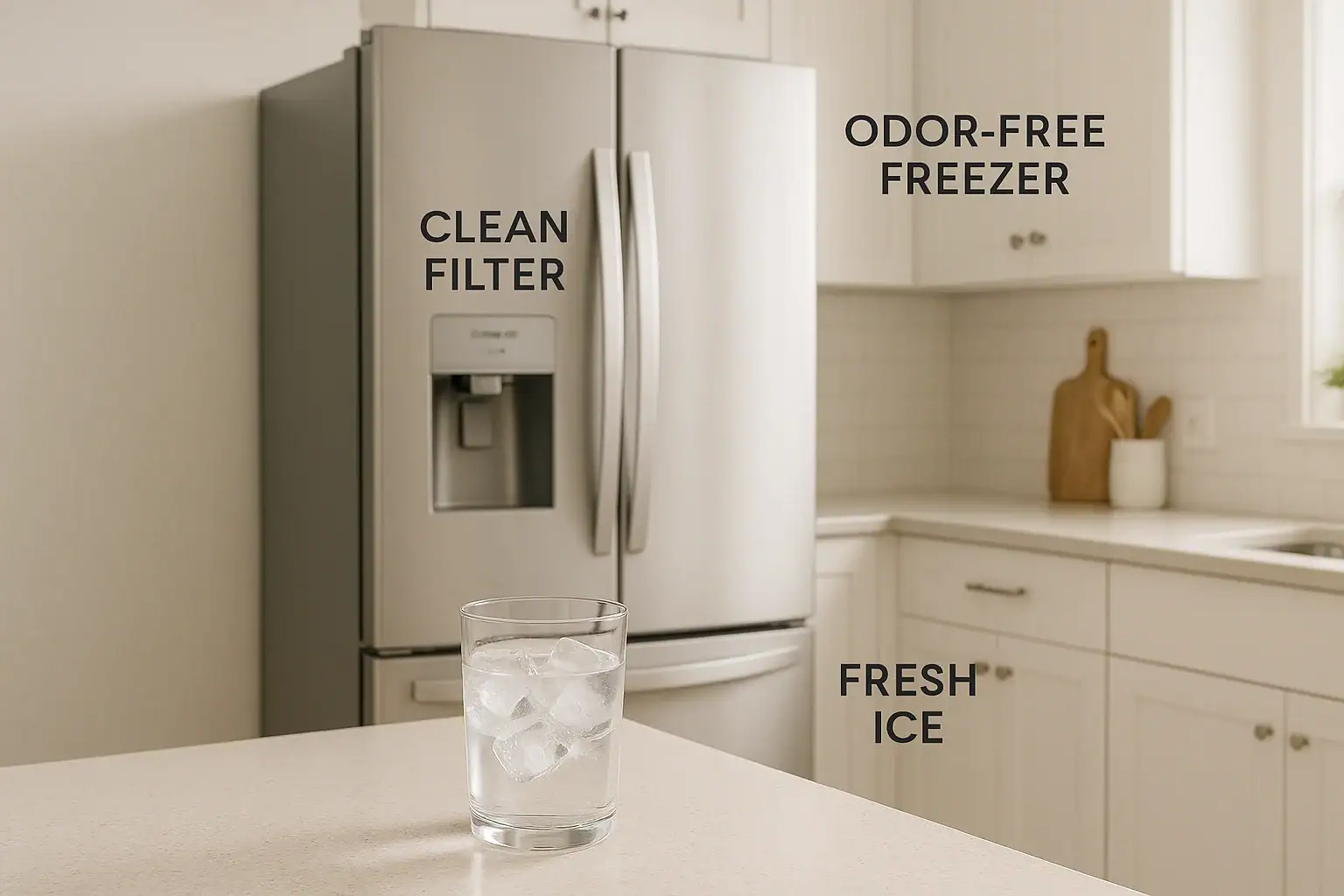
If your ice maker water tastes bad, smells strange, or leaves an odd film in your drink, you are not alone. Many homeowners eventually notice that their ice cubes no longer taste clean and refreshing. Instead, the ice may taste metallic, moldy, chemical-like, or simply “off.” The good news is that this is almost always fixable with some basic troubleshooting and maintenance. In most cases, the problem comes down to water quality, dirty components, or storage issues inside the freezer. Understanding the root cause will help you restore fresh-tasting ice and keep it that way.
This guide walks through the most common reasons your ice maker water tastes bad and the practical steps you can take to fix each one. You will learn how to identify different taste problems, what they usually mean, and which cleaning or repair tasks are worth trying before you consider calling a professional. These tips apply whether you have a built-in refrigerator ice maker, a countertop unit, or a freezer ice tray system connected to a water line.
How to Tell If Your Ice Maker Is the Problem
First, confirm that the bad taste is actually coming from the ice maker and not from the water supply or something else in your kitchen.
Simple tests to pinpoint the issue
- Test tap water: Fill a glass with cold tap water from the same source your ice maker uses. If the water tastes fine but the ice tastes bad, the problem is likely inside the ice maker or freezer.
- Melt some ice: Let a few cubes melt in a glass and then smell and taste the melted water. Sometimes odors are more noticeable after melting.
- Compare with bottled water: Make a few cubes in a simple ice tray using bottled or filtered water. If those cubes taste clean while the ice maker cubes taste bad, the issue is with the machine or water line, not your overall water supply.
- Check other fixtures: Taste water from another faucet in the house. If all water tastes off, you may have a home-wide water quality issue.
Once you know the bad taste is limited to the ice maker, you can focus on the most likely causes and solutions below.
Common Causes of Bad-Tasting Ice
Several different issues can make ice taste or smell bad. Often, more than one factor is involved. Use the descriptions below to match what you are experiencing.
1. Dirty ice bin and internal parts
Over time, ice bins, trays, and internal ice maker parts collect dust, food particles, spilled liquids, and mineral buildup. These can transfer odors and flavors to the ice.
Signs this is the cause:
- Ice looks cloudy or has small particles frozen inside
- Visible residue or film on the ice bin or ice scoop
- Musty or stale smell when you open the freezer door
2. Old or stale ice
Ice that sits in the bin for weeks can absorb odors from the freezer and develop a stale, freezer-burned taste.
Signs this is the cause:
- Ice cubes are stuck together in large clumps
- Frost buildup around the ice bin
- Bad taste improves after you dump old ice and make a fresh batch
3. Strong food odors in the freezer
Ice is porous and easily absorbs odors from uncovered or strongly scented foods stored nearby. Even if food is safe to eat, its smell can ruin the taste of your ice.
Common odor sources:
- Leftovers stored without tight lids
- Open packages of meat or seafood
- Onions, garlic, or spicy foods
- Spilled liquids or leaks in the freezer
4. Old or clogged water filter
If your refrigerator or ice maker has a water filter, it needs to be replaced regularly. An expired or clogged filter may stop removing contaminants effectively and can even release trapped particles back into the water.
Signs this is the cause:
- Filter has not been replaced in many months
- Reduced water flow from the dispenser
- Ice and water both taste slightly earthy, metallic, or chemical
5. Mineral-heavy or hard water
Hard water contains higher levels of minerals like calcium and magnesium. These minerals can affect taste and cause scale buildup inside the ice maker and water line.
Signs this is the cause:
- White, chalky deposits on faucets or showerheads in your home
- Cloudy ice that cracks easily
- Metallic or mineral taste in both ice and tap water
6. Contaminated or aging water line
The thin water line that feeds your ice maker can develop buildup, biofilm, or a plastic-like taste over time, especially if it is very old or has not been flushed in years.
Signs this is the cause:
- Bad taste persists even after cleaning the ice bin and replacing the filter
- Water from the dispenser (if on the same line) also tastes off
- The refrigerator or line is several years old and has never been serviced
7. Incorrect freezer temperature
If the freezer is too warm, ice can partially melt and refreeze, trapping odors and changing texture. If it is too cold, you may get excessive frost, which can also affect taste.
Signs this is the cause:
- Ice cubes have irregular shapes or cracks
- Frequent frost buildup on walls or around the ice bin
- Food in the freezer shows signs of freezer burn or soft spots
8. Local water quality issues
Sometimes the problem is not your appliance at all. Municipal or well water can contain chlorine, sulfur, or other compounds that affect taste and smell.
Signs this is the cause:
- Tap water has a noticeable chlorine, sulfur, or earthy taste
- Neighbors have similar complaints about water taste
- Ice from other machines using the same water also tastes off
Step-by-Step Fixes for Bad-Tasting Ice
Once you have a sense of what might be wrong, follow these practical steps. Many homeowners find that a thorough clean and a fresh filter solve the problem.
1. Empty and clean the ice bin
- Turn off the ice maker: Use the switch or control panel to stop ice production.
- Dump all existing ice: Throw away all cubes in the bin, even if they look fine.
- Wash the bin: Remove the ice bin and wash it with warm water and mild dish soap. Rinse thoroughly.
- Sanitize: Wipe the bin with a solution of 1 tablespoon of unscented household bleach in 1 gallon of water, then rinse and air-dry completely.
- Clean the scoop: Wash and sanitize the ice scoop the same way.
2. Clean internal ice maker parts and freezer surfaces
Always unplug the appliance or turn off power at the breaker before cleaning internal parts.
- Wipe down the ice maker assembly: Use a soft cloth dampened with warm, soapy water. Avoid soaking electrical components.
- Remove visible buildup: Gently scrub away mineral deposits or sticky residue with a soft brush or toothbrush.
- Clean freezer walls and shelves: Remove nearby items and wipe down surfaces with a mild cleaning solution. Rinse with a clean, damp cloth.
- Dry thoroughly: Moisture can lead to frost and odor issues, so dry all surfaces before turning the freezer back on.
3. Replace the water filter
If your refrigerator or ice maker has a built-in filter, replacing it is one of the quickest ways to improve taste.
- Locate the filter: It is often inside the refrigerator compartment or at the base grille.
- Follow the instructions: Use the owner’s manual or the label on the filter housing for replacement steps.
- Flush the new filter: Run several cups of water through the dispenser (if available) to clear air and loose carbon particles.
- Discard the first batches of ice: Throw away the first 2–3 bins of ice after installing a new filter to ensure clean-tasting cubes.
4. Check and adjust freezer temperature
Most freezers work best at around 0°F (about -18°C). Temperatures far above or below this range can cause ice quality issues.
- Use an appliance thermometer: Place it in the freezer and check after a few hours.
- Adjust the setting: Set the freezer to maintain close to 0°F.
- Avoid overpacking: Do not block air vents; good airflow helps keep temperature stable.
5. Reduce food odors in the freezer
- Cover strong-smelling foods: Store leftovers, meats, and pungent items in airtight containers or sealed bags.
- Clean up spills: Wipe any leaks or drips immediately with warm, soapy water.
- Add odor absorbers: Place an open box of baking soda or a dedicated odor absorber in the freezer to help control smells.
- Rotate food: Use older items first and avoid letting food sit for months.
6. Flush or replace the water line
If you suspect the water line is contributing to bad taste, a flush or replacement may help.
- Turn off the water supply: Locate the shutoff valve behind or under the refrigerator.
- Disconnect the line: Place a towel or pan under the connection to catch drips.
- Flush the line: Run water through the line into a bucket until it flows clear and odor-free. If the line is old or damaged, consider replacing it with a new one rated for drinking water.
- Reconnect and check for leaks: Turn the water back on and inspect connections.
- Discard the first ice: After reconnection, throw away the first few batches of ice.
7. Address hard water and overall water quality
If your home has hard water or noticeable chlorine taste, improving overall water quality can make a big difference in your ice.
- Use a higher-quality filter: Choose a refrigerator or under-sink filter certified to reduce chlorine taste, odor, and sediment.
- Consider a whole-house solution: A water softener or whole-home filtration system can help if you have widespread hard water issues.
- Check local water reports: Many water utilities publish annual quality reports that show mineral levels and treatment methods.
Matching Taste Problems to Likely Causes
Different off-flavors can point to specific issues. Use this quick reference to narrow things down.
Chemical or chlorine taste
This often comes from treated municipal water or an aging filter.
- Replace the refrigerator filter on schedule.
- Flush several gallons of water through the system.
- Consider an additional under-sink filter if chlorine levels are high.
Metallic or mineral taste
Common with hard water or older plumbing.
- Inspect for mineral buildup on fixtures and inside the freezer.
- Use a filter designed for heavy metals and minerals.
- Discuss persistent metallic taste with a licensed plumber or local water specialist.
Musty, moldy, or earthy taste
Usually indicates organic buildup or mold growth in the bin, freezer, or water line.
- Deep-clean the ice bin, internal parts, and freezer.
- Sanitize with a mild bleach solution, then rinse thoroughly.
- Replace the filter and consider flushing or replacing the water line.
Freezer-burned or “stale” taste
Often caused by old ice or strong food odors in the freezer.
- Dump old ice regularly and avoid long-term storage in the bin.
- Keep foods well-wrapped and labeled with dates.
- Maintain a stable freezer temperature around 0°F.
Preventive Maintenance for Fresh-Tasting Ice
Once you have solved the immediate problem, a simple maintenance routine will help prevent bad-tasting ice from returning.
Monthly tasks
- Empty and refresh ice: Throw out any ice that has been sitting for more than a few weeks and let the bin refill with fresh cubes.
- Quick bin wipe-down: Wipe the inside of the bin with a clean, damp cloth and dry it.
- Check for odors: Open the freezer and smell for any strong or unusual odors.
Every 3–6 months
- Replace the water filter: Follow the manufacturer’s recommended schedule, or sooner if water flow slows or taste changes.
- Deep-clean freezer and ice maker: Remove food, wipe all surfaces, and clean the ice maker assembly and bin thoroughly.
- Inspect the water line: Check for kinks, leaks, or visible discoloration.
Yearly or as needed
- Review water quality: Look at your local water report or test your water if you use a private well.
- Assess appliance age: Older units may benefit from professional inspection, especially if taste problems keep returning.
When to Call a Professional
Most bad-tasting ice problems can be solved with cleaning, filter replacement, and basic adjustments. However, there are times when professional help is wise.
Consider contacting a qualified appliance technician or plumber if:
- You have thoroughly cleaned and flushed the system, replaced the filter, and the ice still tastes bad.
- You notice visible mold, rust, or damage inside the ice maker assembly or water line.
- There are leaks behind the refrigerator or along the water line.
- The ice maker stops producing ice or produces very small, hollow, or misshapen cubes along with bad taste.
A professional can inspect the internal components, test water pressure, and check connections that are difficult to access safely on your own.
Enjoy Clean, Fresh-Tasting Ice Again
Bad-tasting ice is frustrating, especially when you rely on your ice maker daily. Fortunately, the causes are usually straightforward: dirty components, stale ice, food odors, aging filters, or water quality issues. By methodically testing your water, cleaning the ice maker and freezer, replacing filters on schedule, and paying attention to freezer organization, you can restore crisp, clean-tasting ice and keep it that way.
If you maintain a simple routine of cleaning and filter changes, your ice maker should continue to provide clear, fresh ice for years. And if problems persist even after you follow these steps, do not hesitate to involve a professional who can diagnose deeper mechanical or plumbing issues. With a little troubleshooting and regular care, you can feel confident that the ice in your drinks is as clean and refreshing as the water you expect from your kitchen.
 Coffee Maker Descaling Schedule for Better Taste: A Simple Checklist
 Cloudy Glasses From the Dishwasher: Causes and Simple Fixes
 Freezer Frost Around the Door: Simple Fixes and Checks