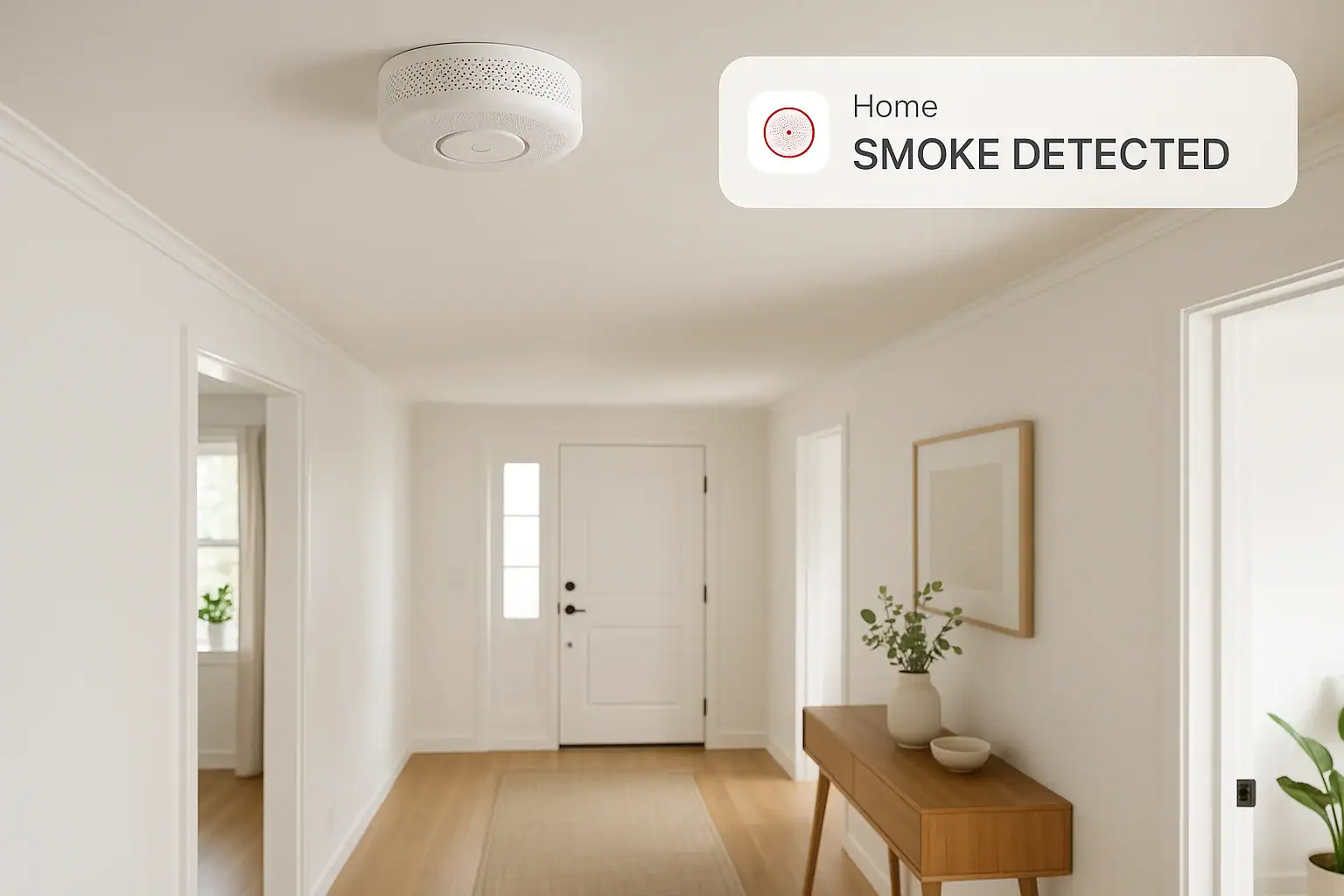
Smoke detectors are one of the simplest, most important safety devices in any home. Yet many homes still rely on older, basic models that only sound a loud alarm inside the house. Newer smart smoke detectors add app alerts, self-testing, and integration with other smart home devices. But they also cost more and depend on Wi‑Fi and apps that not everyone wants to manage. Understanding smart smoke detectors vs standard models helps you decide what fits your budget, lifestyle, and comfort with technology.
This guide breaks down how each type works, what you gain with smart features, and what you do not. You will see where smart detectors clearly improve safety and convenience, and where traditional detectors still do the job just fine. By the end, you should know whether to upgrade, replace only a few key units, or stick with a simple setup that you test and maintain regularly.
Smart vs Standard Smoke Detectors: The Basics
Both smart and standard smoke detectors have the same core purpose: to detect smoke early and warn you so you can escape or address a small problem before it becomes a major fire. The difference lies in how they alert you, how they are powered, and how easy they are to monitor and maintain.
What is a standard smoke detector?
A standard smoke detector is the familiar round device mounted on ceilings or high on walls. It may use one of two main sensing technologies:
- Ionization sensors — Typically better at detecting fast, flaming fires.
- Photoelectric sensors — Typically better at detecting slow, smoldering fires.
Some models combine both types of sensors. Standard detectors usually:
- Sound a loud audible alarm when smoke is detected
- Run on replaceable batteries or household power with a backup battery
- Have a basic test button and low-battery chirp
- May be interconnected with wires or wireless pairing so all alarms sound together
What is a smart smoke detector?
A smart smoke detector adds connectivity and extra features on top of the same basic sensing technology. Most smart models:
- Connect to your home Wi‑Fi network or a smart home hub
- Send alerts to your phone or tablet when they detect smoke or low battery
- Allow you to silence nuisance alarms from an app (within safety limits)
- Offer self-testing or regular status checks
- May detect both smoke and carbon monoxide
- Can integrate with other smart home devices such as lights or thermostats
In short, standard detectors alert you only inside the home. Smart detectors can reach you wherever you are, as long as you have an internet connection and your system is set up correctly.
What You Gain with Smart Smoke Detectors
Smart smoke detectors offer several advantages over basic models. Some benefits are about safety, while others are about convenience and peace of mind.
1. Phone alerts when you are away
This is the single biggest advantage of smart smoke detectors. If smoke is detected while you are at work, on vacation, or simply out running errands, a smart detector can send a notification to your phone. That allows you to:
- Call 911 quickly if you confirm there is a real emergency
- Contact a neighbor or family member to check on your home
- Respond to issues in vacation homes or rental properties
With a standard detector, an alarm might sound for minutes or hours with no one hearing it. By the time anyone notices, damage can already be extensive.
2. Early warnings and clearer alerts
Many smart detectors use voice alerts or app notifications that tell you more than just “beep.” They may specify:
- Which room has detected smoke
- Whether it is a smoke or carbon monoxide alert
- Whether the alarm is urgent or just a warning level
Knowing the location and type of alert helps you respond faster and more safely. For example, if the detector in the kitchen sends a non-urgent warning, you might first check for burned food. If a basement detector sends an urgent smoke alert, you know to focus there or evacuate immediately.
3. Easier testing and maintenance
Smart detectors often run automatic self-checks. The app can show whether the sensor, battery, and Wi‑Fi connection are working properly. Benefits include:
- Fewer surprises from dead batteries
- Reminders when it is time to test or replace a unit
- Clear status for each room at a glance
With standard detectors, you must remember to press the test button monthly and replace batteries on schedule. Many homeowners forget, which can leave detectors silent when they are needed most.
4. Reduced nuisance alarms (in some setups)
Smart detectors may offer features that help reduce false alarms from cooking or steam:
- More advanced sensors or algorithms that better distinguish real smoke from everyday activities
- App controls that let you hush an alarm from a safe distance without waving a towel at the ceiling
- Pre-alerts that warn of rising smoke before a full alarm sounds
Fewer nuisance alarms can make you less likely to disable or remove a detector, which keeps your home safer overall.
5. Integration with other smart home devices
Smart smoke detectors can become part of a broader smart home safety system. Depending on your setup, an alarm can trigger actions such as:
- Turning on all lights to help you see during an evacuation
- Unlocking smart locks so you can exit quickly
- Shutting off a smart thermostat or fan to slow the spread of smoke
- Sending alerts to family members or caregivers
These automations are not essential for basic safety, but they can add layers of protection and convenience, especially in larger homes or for households with children, older adults, or people with mobility challenges.
6. Better support for multi-property owners
If you own a second home, vacation property, or rental, smart detectors can be especially valuable. They allow you to:
- Monitor multiple locations from a single app
- Receive alerts even when the property is vacant
- Document that detectors are installed and working
Standard detectors provide no remote visibility. You must rely on physical visits or tenant reports to know whether alarms are functional.
What You Do Not Gain (and Possible Downsides)
Smart smoke detectors are not a magic upgrade in every way. Some limitations and tradeoffs may matter more than the extra features, depending on your situation.
1. No replacement for basic fire safety habits
Both smart and standard detectors rely on the same underlying sensing technologies. A smart detector does not detect smoke earlier simply because it is connected to Wi‑Fi. You still need to:
- Install detectors on every level, inside bedrooms, and outside sleeping areas
- Test alarms regularly
- Replace units every 8 to 10 years, or as recommended by the manufacturer
- Create and practice a home fire escape plan
Smart features support these habits but do not replace them.
2. Higher upfront cost
Smart smoke detectors usually cost significantly more per unit than basic models. In a typical home, you might need 6 to 10 detectors to cover all required locations. Upgrading every unit to a smart model can add up quickly.
For some households, a better use of budget might be:
- Ensuring you have the right number of standard detectors first
- Adding carbon monoxide detectors where needed
- Upgrading only a few key locations to smart models, such as hallways near bedrooms or the main living area
3. Dependence on Wi‑Fi and apps
Smart detectors rely on a stable home network for remote alerts. If your Wi‑Fi goes down or your internet service is interrupted, you will still hear the local alarm, but you will not receive phone notifications.
Other considerations include:
- You must be comfortable setting up devices on your network
- You need a smartphone or tablet to use most features
- Apps and firmware may need occasional updates
If you prefer a low-tech home or have unreliable internet, standard detectors may be simpler and more dependable for your needs.
4. Battery life and maintenance tradeoffs
Many smart detectors use long-life batteries, sometimes rated for several years. However, wireless connectivity can also draw more power, and some units may require more frequent battery changes than you expect.
Potential downsides include:
- Higher cost for specialized battery packs
- More complex replacement steps compared to standard 9‑volt or AA batteries
- Reliance on app notifications to know when batteries are low
Standard detectors are usually simpler: inexpensive batteries, a chirp when they are low, and no apps to manage.
5. Privacy and data considerations
Smart detectors connect to the internet and may share data such as device status, alerts, and usage patterns with cloud services. While this is generally limited information, some people prefer to minimize connected devices in their home.
If privacy is a concern, you may want to:
- Review the privacy policy and data practices before buying
- Use strong, unique passwords for your smart home accounts
- Enable two-factor authentication when available
Side-by-Side Comparison: Smart vs Standard
The table below summarizes the main differences between smart and standard smoke detectors.
| Feature | Standard Smoke Detector | Smart Smoke Detector |
|---|---|---|
| Core function | Detects smoke and sounds local alarm | Detects smoke and sounds local alarm |
| Phone alerts | No | Yes, via app and internet |
| Location-specific alerts | Usually no | Often yes (room name in alerts) |
| Self-testing and status | Manual testing with button | Automatic checks with app status |
| Integration with other devices | Limited or none | Can trigger lights, locks, and more |
| Cost per unit | Lower | Higher |
| Dependence on Wi‑Fi | None for basic function | Needed for remote alerts |
| Ease of setup | Simple install and test | Install plus app and network setup |
When Standard Smoke Detectors Are Enough
There are many situations where standard smoke detectors still make sense and offer solid protection, especially when they are installed and maintained correctly.
Good fit for smaller homes and tight budgets
If you live in a smaller home or apartment and you are usually nearby when you are cooking or using appliances, basic detectors can be perfectly adequate. They are also the most budget-friendly way to meet safety recommendations.
Best choice for low-tech households
Standard detectors may be a better fit if you:
- Prefer not to use smartphone apps
- Have limited or unreliable internet service
- Do not want to manage connected devices or accounts
In these cases, focusing on proper placement, regular testing, and timely replacement of standard detectors can still provide strong protection.
Reliable backup even in smart homes
Even if you install smart detectors in key areas, standard units can still be used in less critical spaces such as storage rooms, detached garages, or unfinished basements. This can help you balance cost and coverage.
When Smart Smoke Detectors Are Worth It
Smart detectors shine in situations where remote visibility and extra context can make a real difference.
Homes that sit empty for long stretches
Smart detectors are especially useful if you:
- Travel frequently for work
- Own a vacation home or cabin
- Manage a rental or investment property
Being able to receive alerts when you are away can reduce the risk of a fire going unnoticed for hours or days.
Families with children or older adults
Voice alerts, clearer notifications, and automatic lighting can all help during an emergency. Smart detectors can also send alerts to multiple phones, which is useful if caregivers or family members live elsewhere but still want to stay informed.
Homes already using smart devices
If you already have connected lights, locks, cameras, or thermostats, adding smart smoke detectors can tie your safety system together. For example, a smoke alarm could:
- Turn on hallway and exterior lights
- Record video clips from smart cameras
- Shut off a connected heating or cooling system
These automations are not required, but they can improve visibility and safety during an emergency.
Choosing the Right Mix for Your Home
You do not have to choose all smart or all standard detectors. Many households benefit from a mixed approach that balances cost, coverage, and convenience.
Step 1: Confirm proper coverage first
Before upgrading, make sure you meet basic safety recommendations. In general, you want smoke detectors:
- On every level of your home, including the basement
- Inside every bedroom
- Outside each sleeping area, such as in a hallway
- Near the kitchen (but not so close that normal cooking constantly triggers alarms)
Step 2: Decide where smart features matter most
Consider installing smart detectors in locations where fast, detailed alerts are most valuable, such as:
- Hallways outside bedrooms
- Main living areas
- Near major appliances or mechanical rooms
Standard detectors can fill in other areas where remote alerts are less critical.
Step 3: Plan for maintenance and replacement
Whether you choose smart, standard, or a mix, create a simple plan to keep them working:
- Test each detector monthly
- Replace batteries at least once a year, or as recommended
- Vacuum around detectors a few times a year to remove dust
- Replace the entire unit when it reaches the end of its service life
Set reminders on your phone or calendar, or rely on app notifications from smart detectors to stay on track.
Key Takeaways: Smart Smoke Detectors vs Standard
When you compare smart smoke detectors vs standard, both types can protect your home if they are installed and maintained correctly. The main differences come down to how you receive alerts, how much information you get, and how much convenience you want.
- Smart detectors add phone alerts, self-testing, and integration with other devices, which are especially valuable if you travel, own multiple properties, or already use smart home technology.
- Standard detectors are affordable, simple, and effective, particularly for smaller homes and households that prefer low-tech solutions.
- A mixed approach often works best: smart detectors in key areas, supported by standard units elsewhere.
Whichever you choose, the most important step is to ensure you have enough working detectors in the right places and a clear plan for testing, maintenance, and evacuation. From there, smart features can be a meaningful upgrade, but solid basics always come first.
If you are building out a broader connected home, you can explore more smart home and safety ideas at this smart home safety hub.
 Smart Smoke Alarm vs Standard Smoke Alarm: Which Is Better for Your Home?
 How to Install a Smart Thermostat Safely
 What Is a Smart Thermostat and How Does It Work?