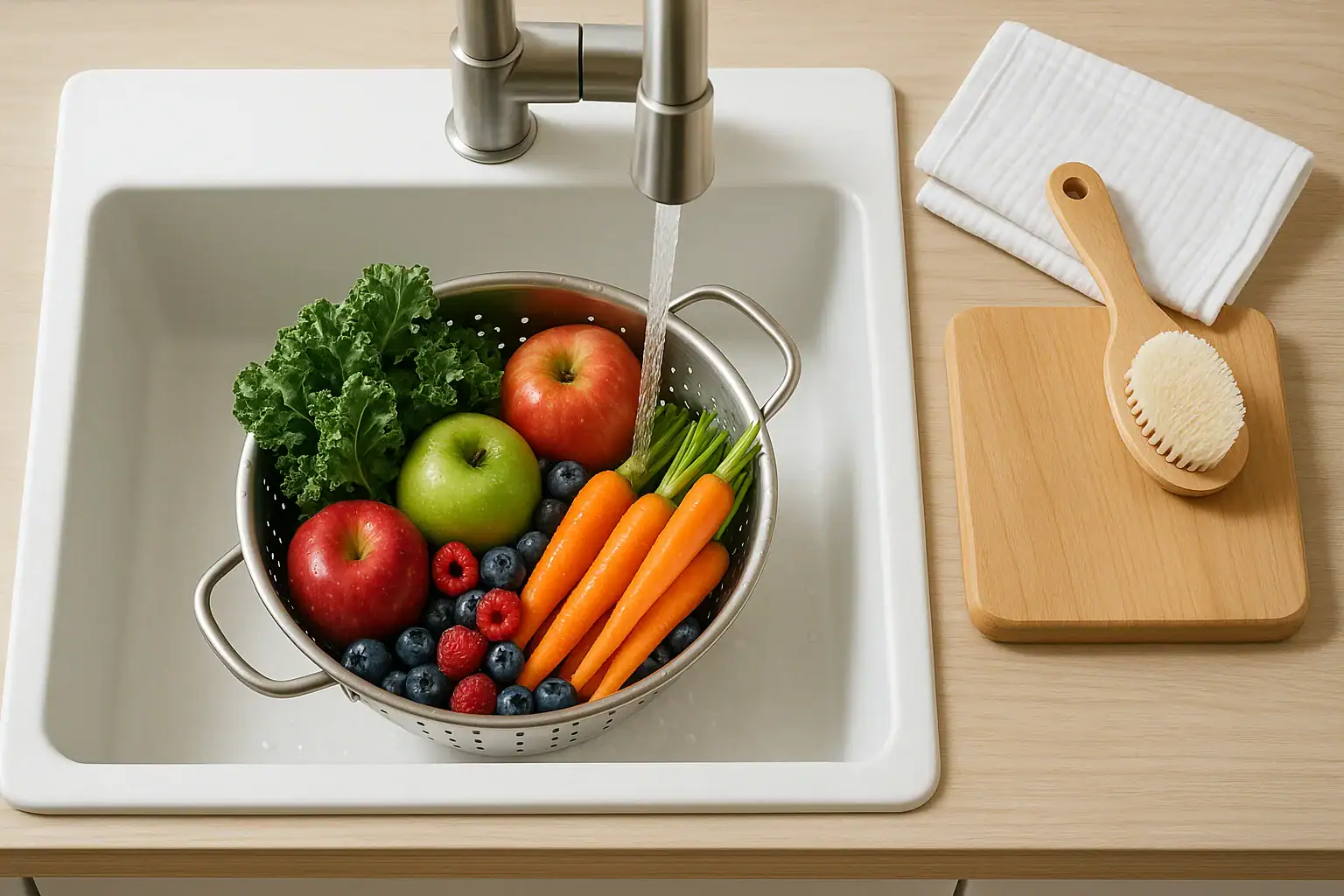
Washing fruits and vegetables seems simple: turn on the tap, give them a quick rinse, and you are done. But if you are trying to reduce germs, dirt, and pesticide residues, there is more to it than a splash of water. Some common habits people rely on in the kitchen do very little to make produce safer, and a few can even make things worse. A clear, science-informed routine can help you protect your household while keeping food fresh and flavorful.
On this page(click to collapse)
- Why Washing Produce Matters
- General Rules for Washing Fruits and Vegetables
- What Actually Works for Washing Produce
- What Does Not Work (and What to Avoid)
- How to Wash Different Types of Fruits and Vegetables
- Leafy Greens (Lettuce, Spinach, Kale, Herbs)
- Firm Fruits With Edible Peels (Apples, Pears, Peaches, Plums)
- Firm Vegetables (Carrots, Potatoes, Cucumbers, Squash)
- Produce With Inedible Rinds (Melons, Citrus, Pineapple, Winter Squash)
- Berries and Delicate Fruits (Strawberries, Blueberries, Raspberries, Grapes)
- Cruciferous Vegetables (Broccoli, Cauliflower, Brussels Sprouts)
- When to Wash: Before Storage or Before Eating?
- Kitchen Safety Tips to Support Clean Produce
- Frequently Asked Questions About Washing Produce
- Putting It All Together
- Related guides
This guide walks through what actually works for cleaning produce, what does not, and how to handle different types of fruits and vegetables. You will learn the role of plain water, when to use a brush, how to handle leafy greens, and why soap, bleach, and other harsh cleaners should never touch your food. Use these practical steps to build a simple, safe routine that fits your everyday cooking.
Why Washing Produce Matters
Fresh fruits and vegetables can pick up unwanted contaminants at many points: in the field, during transport, in the store, and in your own kitchen. Washing them properly helps reduce:
- Dirt and debris such as soil, sand, and dust
- Bacteria and other germs that may be on the surface
- Pesticide residues that can remain on peels and skins
- Allergens and traces of other foods from shared equipment
Washing will not make produce sterile or remove every trace of chemicals, but it can significantly lower the amount of surface contamination. Combined with safe storage, clean hands, and good cutting habits, it is one of the simplest ways to support food safety at home.
General Rules for Washing Fruits and Vegetables
Before getting into specific types of produce, it helps to have a basic routine you follow every time. These habits make a big difference and are easy to remember.
Start With Clean Hands and Tools
Washing produce is not helpful if your hands or tools are dirty. Before you touch fruits and vegetables:
- Wash your hands with soap and water for at least 20 seconds.
- Make sure cutting boards, knives, colanders, and bowls are clean.
- Use separate cutting boards for raw meat and produce when possible.
Use Cool or Lukewarm Running Water
For most fruits and vegetables, cool or slightly lukewarm running water is all you need. Hold the produce under the stream and gently rub the surface with your hands. Rinsing under running water helps wash away loosened dirt and microbes more effectively than soaking alone.
Wash Before You Peel or Cut
Always wash produce before you cut, peel, or slice it. Knives and peelers can transfer germs from the outer surface into the part you eat. This is especially important for items with firm rinds, like melons or squash.
Dry With a Clean Towel or Paper Towels
After rinsing, dry produce with a clean kitchen towel or paper towels. This step can remove even more surface germs and water that might encourage spoilage. Wash reusable towels frequently in hot water.
What Actually Works for Washing Produce
Many home methods claim to make fruits and vegetables safer. Here are the ones that are supported by food safety guidance and basic science.
Plain Running Water
Plain water is the foundation of effective produce washing. Rubbing and rinsing under running water helps physically remove dirt, some bacteria, and some pesticide residues from the surface. You do not need special products for everyday use.
Rubbing, Scrubbing, and Soaking
- Firm produce: For items with tougher skins, such as apples, potatoes, cucumbers, and carrots, use a clean produce brush to scrub while rinsing.
- Delicate produce: For berries and soft fruits, place them in a colander and let cool water flow over them while you gently move them around with your hands.
- Soaking: For very sandy items, like some leafy greens, soak briefly in a clean bowl of cool water, swish to loosen dirt, then drain and rinse under running water.
Optional: Mild Vinegar Solution
Some people like to use a mild vinegar solution to help with surface germs and residues. If you choose to do this:
- Use about 1 part white vinegar to 3 parts cool water in a clean bowl.
- Soak firm produce for a few minutes, then rinse thoroughly under running water.
- Do not use strong or undiluted vinegar on delicate berries, as it can affect texture and flavor.
Vinegar is not required, and it does not make produce sterile, but it can slightly improve removal of some microbes compared with water alone when followed by a good rinse.
What Does Not Work (and What to Avoid)
Some common practices can be ineffective or even unsafe. Avoid these methods when washing fruits and vegetables.
Soap, Detergent, and Dishwashing Liquid
Household soaps and dish liquids are made for dishes and surfaces, not food. They can leave residues that are not meant to be eaten and may cause stomach upset or irritation. Even if you rinse well, it is hard to remove all traces. Stick to water and, if you choose, a mild vinegar solution.
Bleach, Disinfectants, and Household Cleaners
Bleach, disinfecting sprays, and other cleaning products should never be used on food. These products are designed for countertops, sinks, and floors. Using them on produce can leave harmful chemicals on the surface and does not make food safe to eat.
Hot Water for Delicate Produce
Very hot water can damage delicate fruits and vegetables, causing them to soften, split, or lose nutrients. It can also create small cracks in the skin where bacteria can hide. Use cool or lukewarm water instead.
Washing With Only a Quick Splash
Simply running water over produce for a second or two without rubbing or moving it around does not do much. Physical action is important. Gently rubbing, scrubbing, or swishing helps loosen and remove contaminants from the surface.
Relying on Peeling Alone
Peeling can remove some residues, but if you peel unwashed produce, the knife or peeler can drag germs from the outside to the inside. Always wash first, then peel if you want to remove the skin.
How to Wash Different Types of Fruits and Vegetables
Different textures and shapes call for slightly different approaches. Use these specific tips for common types of produce.
Leafy Greens (Lettuce, Spinach, Kale, Herbs)
Leafy greens can trap dirt and sand between layers, so they need a bit more attention.
- Remove and discard any wilted or damaged outer leaves.
- Separate leaves or cut heads into halves or quarters.
- Fill a clean bowl or basin with cool water.
- Submerge the leaves and gently swish them around to loosen dirt.
- Let the dirt settle to the bottom, then lift the leaves out instead of pouring the water over them.
- Rinse the leaves under running water.
- Dry thoroughly using a salad spinner or clean towels. Excess moisture can lead to faster spoilage.
Firm Fruits With Edible Peels (Apples, Pears, Peaches, Plums)
- Rinse under cool running water.
- Gently rub the surface with your hands to remove any waxy film and dirt.
- For very firm fruits, you can use a soft produce brush.
- Dry with a clean towel or paper towels.
Firm Vegetables (Carrots, Potatoes, Cucumbers, Squash)
- Rinse under running water, using your hands to remove visible dirt.
- Use a clean produce brush to scrub the surface, especially for root vegetables that grow in soil.
- Rinse again to wash away loosened dirt.
- Dry before storing or cooking.
Produce With Inedible Rinds (Melons, Citrus, Pineapple, Winter Squash)
Even though you do not eat the rind, it should still be washed. Knives can carry germs from the outside to the edible interior.
- Rinse under cool running water.
- Scrub the surface with a clean produce brush.
- Rinse again to remove any remaining dirt.
- Dry with a clean towel before cutting.
Berries and Delicate Fruits (Strawberries, Blueberries, Raspberries, Grapes)
Delicate produce can break apart easily, so be gentle.
- Place berries or grapes in a colander.
- Rinse under a gentle stream of cool water.
- Move them around with your hands so all sides are rinsed.
- Let them drain, then spread on a clean towel to dry.
For best texture, wash berries just before you plan to eat them. Washing too far in advance can cause them to soften and spoil more quickly.
Cruciferous Vegetables (Broccoli, Cauliflower, Brussels Sprouts)
- Trim any damaged or discolored parts.
- For broccoli and cauliflower, cut into florets so water can reach inside.
- Soak briefly in a bowl of cool water, swishing to remove trapped dirt.
- Rinse under running water to finish.
- Drain well or pat dry before cooking or storing.
When to Wash: Before Storage or Before Eating?
Timing matters. Washing adds moisture, and moisture can encourage mold and spoilage if produce is stored for long periods.
- Wash just before eating or cooking: Berries, mushrooms, and delicate leafy greens last longer if you wait to wash them.
- Optional pre-wash: Firm items like apples, oranges, and root vegetables can be washed before storage if you dry them thoroughly and store them in a breathable container.
- Pre-washed greens: If packaged greens are labeled as pre-washed or ready to eat, you can use them as is. If you choose to rewash them, handle gently and dry well.
Kitchen Safety Tips to Support Clean Produce
Washing fruits and vegetables is only one part of keeping food safe. Combine it with these kitchen habits for better overall protection.
Prevent Cross-Contamination
- Keep raw meat, poultry, and seafood separate from produce in your cart, bags, and refrigerator.
- Use different cutting boards for raw animal products and fruits or vegetables.
- Wash knives and cutting boards with hot, soapy water after cutting raw meat and before using them on produce.
Store Produce Properly
- Refrigerate cut fruits and vegetables within two hours.
- Keep produce that needs refrigeration in the crisper drawer or in breathable bags or containers.
- Store whole fruits and vegetables away from raw meat to avoid drips and spills.
Know When to Discard
Washing cannot fix produce that has already gone bad. Discard items that are:
- Very slimy or sticky where they should be firm
- Covered in mold or have mold spreading beyond a small surface spot
- Giving off a strong, unpleasant odor
Frequently Asked Questions About Washing Produce
Do I need special produce washes or sprays?
For most households, special produce washes are not necessary. Cool running water, gentle rubbing, and optional use of a mild vinegar solution are usually enough to remove most dirt and some surface contaminants. If you choose to use a commercial wash, follow the label directions carefully and always rinse thoroughly.
Does washing remove all pesticides?
No method removes every trace of pesticides, especially those that are absorbed into the flesh of the fruit or vegetable. Washing under running water, scrubbing firm surfaces, and peeling when desired can reduce surface residues. Buying a mix of produce types, varying your diet, and trimming outer leaves can also help limit exposure.
Should I wash bagged salads and pre-cut fruit?
If the package says the contents are pre-washed or ready to eat, additional washing is not required. Some people still prefer to rinse them briefly under cool water. If you do, handle gently and dry well to avoid sogginess and faster spoilage.
Is it safe to wash produce in the sink?
You can wash produce in the sink if the sink is clean. Before you start, scrub the sink with hot, soapy water, rinse, and, if desired, sanitize with a food-safe method. Many people prefer to use a clean colander or bowl placed in the sink so the produce does not sit directly on the surface.
Putting It All Together
Effective washing of fruits and vegetables does not require complicated steps or harsh chemicals. A simple routine built around clean hands, cool running water, gentle rubbing or scrubbing, and proper drying can significantly reduce surface germs and dirt. Avoid soaps, bleach, and other cleaners that are not meant for food, and tailor your approach to the type of produce you are handling.
By combining these best practices with smart storage and good kitchen hygiene, you can enjoy fresh produce with more confidence. Over time, these habits become quick, automatic steps in your cooking routine, helping you serve safer, cleaner fruits and vegetables at every meal.
Related posts
Browse this topic →
Easy Meal Prep Workflow for Busy Weeks: Tools, Storage, and Time-Saving Tips

How to Reduce Plastic in the Kitchen: Practical Swaps That Last
How to Store Emergency Water Safely: Containers, Rotation, and Taste Tips

Kitchen Fire Safety: Grease Fires and Extinguisher Basics Explained

How to Detect and Handle Limescale in Pipes and Fixtures at Home

Whole-House Sediment Filters: Sizing and Replacement Schedule Guide
Keep reading


About this site
Signature Home Guide publishes practical, independent home guides. We aim to be clear, helpful, and transparent.
Affiliate disclosure
As an Amazon Associate, we earn from qualifying purchases. Some links on this site may be affiliate links. If you buy through these links, we may earn a small commission at no extra cost to you. This helps support our content. Learn more.