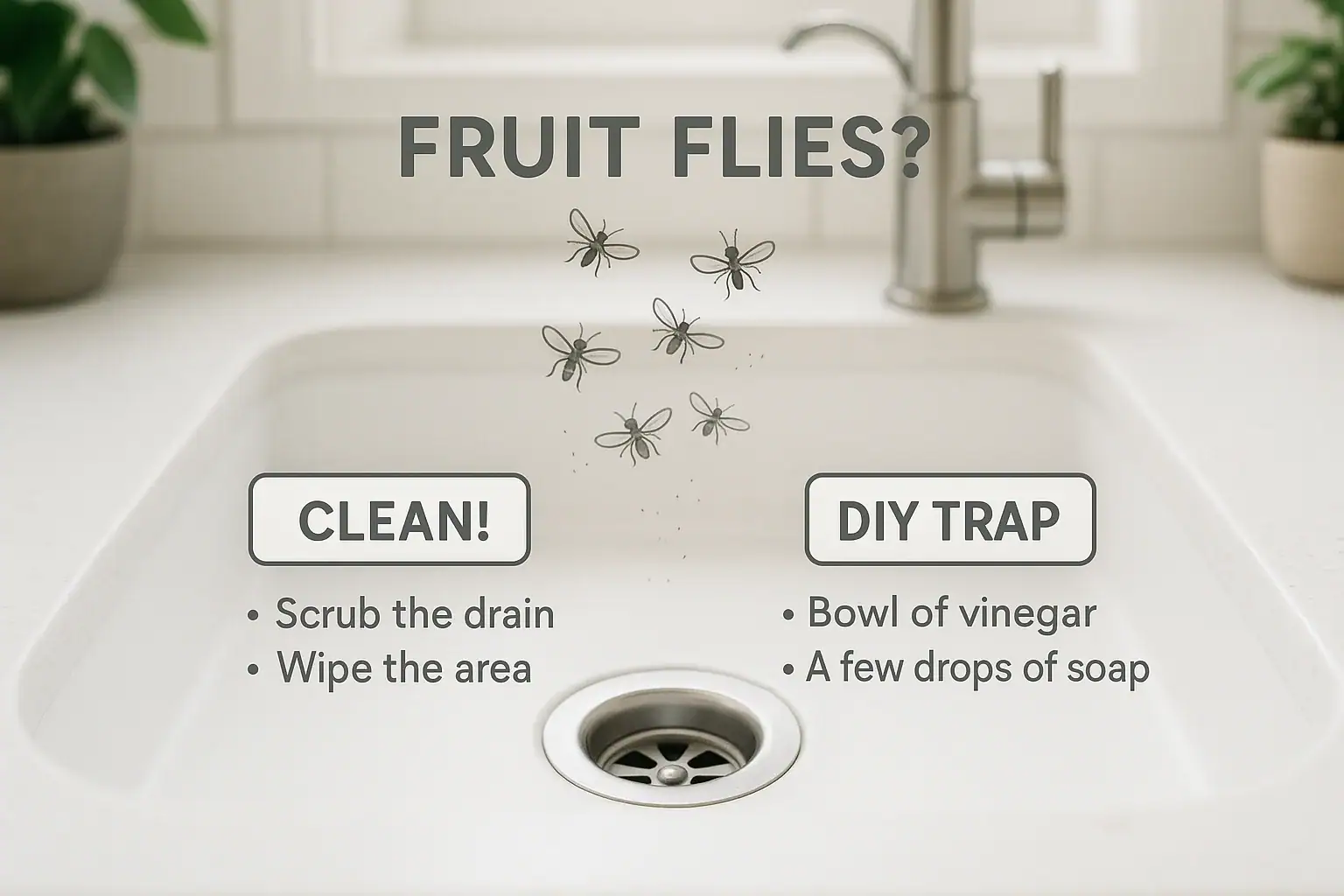
Finding fruit flies hovering around your kitchen sink is frustrating, especially when you feel like you clean regularly. These tiny insects seem to appear out of nowhere, swarming near the drain, garbage disposal, and even clean dishes. While they are more of a nuisance than a direct health threat, fruit flies can spread bacteria from drains and trash to food preparation areas. The good news is that you can get rid of them and keep them from coming back by understanding what attracts them, how they breed in and around sink drains, and which control methods actually work. This troubleshooting guide walks through practical steps to identify the source, clean and treat your drains, set up effective traps, and build long-term prevention habits that fit into your normal kitchen routine.
Understanding Fruit Flies in Sink Drains
Before you can solve a fruit fly problem, it helps to know what you are dealing with and why they are drawn to your sink in the first place.
Fruit flies vs. drain flies: Know the difference
Many people call any tiny fly in the kitchen a fruit fly, but there are two common culprits:
- Fruit flies: Small, tan or brown, often with red or dark eyes. They are attracted to fermenting fruit, sugary liquids, and food residue.
- Drain flies: Fuzzy, moth-like appearance. They breed in the slime layer inside drains and pipes.
This guide focuses on fruit flies, but many of the cleaning and prevention steps also help with drain flies. If you see fuzzy, moth-like insects resting on walls near the sink, you may have drain flies as well and should pay extra attention to scrubbing inside the drain.
Why fruit flies love your sink drain
Fruit flies are attracted to areas where food and moisture collect. Your sink drain is a perfect spot for them because it often contains:
- Food scraps rinsed from plates and cutting boards
- Residue from sugary drinks, juice, and alcohol
- Grease and soap film that trap particles
- Warm, moist conditions that speed up fermentation
Even if your sink looks clean on the surface, a sticky film can build up inside the drain, garbage disposal, and overflow opening. This slimy layer is where fruit flies lay eggs and where larvae feed until they emerge as adults.
Troubleshooting: Find the Real Source of Fruit Flies
If you only treat the sink but ignore other breeding sites, the flies will keep coming back. Use this troubleshooting checklist to track down every possible source.
Step 1: Confirm the sink drain is involved
To see whether the drain is part of the problem, try this simple test:
- Dry the sink and surrounding countertop thoroughly at night.
- Place a piece of clear plastic wrap or a small clear bowl over the drain opening.
- Secure it with a rubber band or tape so that air can still move but flies cannot easily escape.
- Check it in the morning for flies trapped inside or resting underneath.
If you see several fruit flies around or under the cover, the drain is likely a breeding site and needs a deep clean.
Step 2: Inspect other common breeding areas
Even if the drain is active, fruit flies may also be breeding elsewhere in the kitchen. Check for:
- Overripe or damaged produce on the counter, in fruit bowls, or in cabinets.
- Open or sticky containers of juice, wine, vinegar, or condiments.
- Recycling bins with un-rinsed bottles and cans.
- Trash cans with food scraps or spills under the liner.
- Dishwashers with food residue in the filter or standing water at the bottom.
- Mop buckets, sponges, and dishcloths that stay wet and dirty.
Remove or clean anything that looks like a potential food source. Effective fruit fly control means treating both the sink drain and these surrounding areas at the same time.
Deep Cleaning the Sink Drain to Break the Breeding Cycle
Once you have confirmed the drain is part of the problem, the next step is to remove the slime and food buildup where eggs and larvae live. This is the foundation of long-term control.
Step-by-step drain cleaning routine
Use this method for a standard kitchen sink drain. If you have a garbage disposal, see the next section for extra steps.
- Clear the sink
Remove dishes, food scraps, and any standing water. Wipe the basin with hot, soapy water. - Remove the drain stopper or strainer
Take out the stopper or basket and scrub it thoroughly with hot water, dish soap, and a small brush or old toothbrush. Pay attention to any rubber gaskets where slime can hide. - Scrub inside the drain opening
Use a narrow bottle brush or stiff pipe brush with hot, soapy water. Push the brush as far as you can reach and rotate it to scrub the sides of the pipe. Rinse with very hot water. - Use a baking soda and vinegar flush
Pour about half a cup of baking soda into the drain, followed by one cup of white vinegar. The mixture will fizz and help loosen organic buildup. Let it sit for 10–15 minutes, then flush with a full kettle or large pot of hot (not boiling) water. - Repeat as needed
If the drain has not been cleaned in a long time, repeat the process the next day to remove remaining residue.
Extra steps for garbage disposals
Garbage disposals often hold food residue and are a common fruit fly hotspot. To clean them thoroughly:
- Turn off power
Switch off the disposal and, if possible, unplug it or turn off the breaker for safety. - Clean the splash guard
Lift or remove the rubber splash guard and scrub both sides with hot, soapy water. This area often has a thick layer of slime and food particles. - Scrub the grinding chamber
Use a long-handled brush with hot, soapy water to scrub inside the disposal. Do not put your hand inside. - Flush with hot water
Restore power, run hot water, and turn on the disposal for 20–30 seconds to rinse. - Deodorize with ice and salt (optional)
Add a handful of ice cubes and a few tablespoons of coarse salt, then run the disposal with cold water. This can help scour the blades and chamber.
Do and do not: Drain cleaning for fruit flies
- Do focus on physical scrubbing to remove biofilm and food residue.
- Do flush with hot water after cleaning.
- Do not rely only on pouring boiling water; it may not reach or remove sticky buildup.
- Do not mix chemical drain cleaners with other products, as this can be unsafe.
DIY Fruit Fly Traps That Work with Clean Drains
Cleaning the drain removes breeding sites, but you will still have adult flies for a few days. Traps help capture them while you wait for any remaining eggs and larvae to disappear.
Simple vinegar and soap trap
This is one of the most effective and inexpensive traps you can set up near your sink.
What you need
- Small glass or cup
- Apple cider vinegar or another vinegar
- A few drops of liquid dish soap
- Plastic wrap and a toothpick (optional)
How to set it up
- Fill the glass with about half an inch of vinegar.
- Add a few drops of dish soap and swirl gently. The soap breaks the surface tension so flies sink instead of landing on top.
- For an open trap, simply place the glass near the sink drain or fruit fly hotspot.
- For a covered trap, stretch plastic wrap over the top, secure it, and poke several small holes with a toothpick. Flies will crawl in but have trouble finding their way out.
Replace the mixture every day or two until you no longer see flies.
Paper cone trap with fruit bait
If you have overripe fruit, you can use it as bait to lure fruit flies away from your sink.
What you need
- Small jar or cup
- Piece of overripe fruit or fruit peel
- Sheet of paper and tape
How to set it up
- Place the fruit or peel in the bottom of the jar.
- Roll the paper into a cone with a small opening at the narrow end and tape it so it holds its shape.
- Place the cone in the jar with the narrow end pointing down, just above the fruit, leaving no gaps around the rim.
- Set the trap near the sink or wherever you see the most flies.
Flies will follow the scent, crawl down the cone, and have difficulty escaping. Dispose of the trap outside after a day or two.
Placement tips for better results
- Set traps near the sink drain, garbage disposal, and trash can.
- Use more than one trap if the infestation is heavy.
- Keep traps away from open food and food preparation surfaces.
- Combine traps with thorough cleaning for the fastest results.
Daily and Weekly Habits to Prevent Fruit Flies in Sink Drains
Once you have cleared an infestation, prevention is much easier than starting over. These simple habits help keep your sink and drain uninviting to fruit flies.
Daily sink and drain habits
- Rinse food particles away immediately instead of letting them sit in the sink.
- Run hot water for 20–30 seconds after washing dishes or using the disposal.
- Wipe the sink basin with hot, soapy water at the end of the day.
- Empty and rinse the sink strainer or stopper so food does not sit overnight.
- Take out kitchen trash daily, especially in warm weather or after handling produce.
Weekly or biweekly deep-clean tasks
- Scrub the drain opening with a small brush and hot, soapy water.
- Clean the garbage disposal splash guard and chamber if you have one.
- Run a baking soda and vinegar flush followed by hot water to reduce buildup.
- Wash trash cans and recycling bins with soap and water, and let them dry completely.
- Clean the dishwasher filter and wipe the door seal if your kitchen has a dishwasher.
Food storage and kitchen organization tips
Managing how and where you store food can greatly reduce the chance of fruit flies returning.
- Store ripe fruit in the refrigerator when possible, especially in hot weather.
- Keep produce bowls clean and discard overripe or damaged items promptly.
- Rinse bottles and cans before placing them in recycling bins.
- Wipe up juice, soda, and alcohol spills immediately.
- Do not leave dirty dishes or glasses with sugary drinks in the sink overnight.
Troubleshooting Stubborn Fruit Fly Problems
Sometimes fruit flies seem to stick around even after you clean and set traps. When that happens, it is time to dig deeper and look for hidden issues.
If fruit flies keep returning to the sink
Consider these possibilities and solutions:
- Hidden buildup in pipes
If your sink or disposal has not been professionally cleaned in a long time, there may be heavy buildup farther down the line. Regular scrubbing and flushing can help, but very old plumbing may need professional attention. - Slow or partially clogged drains
Standing water or slow drainage can create a perfect breeding area. Address clogs with safe mechanical methods such as a plunger or drain snake, or consult a professional if needed. - Overflow openings and secondary drains
Some sinks have overflow holes or secondary drains that collect residue. Clean these with a small brush and hot, soapy water.
If you see flies in multiple rooms
When fruit flies appear in bathrooms, laundry rooms, or other areas, you may be dealing with multiple breeding sites or a different type of fly.
- Check all drains, including bathroom sinks, tubs, and floor drains, for slime and slow drainage.
- Inspect indoor trash, pet feeding areas, and forgotten produce in bags or drawers.
- Look for signs of drain flies, which may require more frequent scrubbing of drains and overflow areas.
When to consider professional help
Most fruit fly problems can be solved with consistent cleaning and trapping. However, you may want to contact a plumbing or pest control professional if:
- The infestation persists for several weeks despite thorough cleaning and traps.
- You notice strong sewer odors, gurgling drains, or frequent backups.
- You suspect a broken pipe, leak, or hidden moisture problem behind walls or under floors.
Putting It All Together: A Simple Action Plan
To make this manageable, here is a quick action plan you can follow over the next week to get fruit flies out of your sink and keep them away.
- Day 1: Identify and remove sources
Throw out overripe fruit, clean up spills, rinse recycling, and empty trash. Test the sink drain with plastic wrap or a clear bowl overnight. - Day 2: Deep clean the sink and drain
Scrub the drain opening, stopper, and, if present, garbage disposal. Use a baking soda and vinegar flush followed by hot water. - Day 2–3: Set multiple traps
Place vinegar and soap traps near the sink, trash can, and any other hotspots. Replace as needed. - Day 3–7: Maintain daily habits
Rinse the sink after use, avoid leaving dirty dishes overnight, and run hot water through the drain each evening. - Week 2 and beyond: Prevent and monitor
Repeat drain scrubbing weekly or biweekly, store produce properly, and keep an eye out for early signs of fruit fly activity.
By combining thorough drain cleaning, effective traps, and simple daily habits, you can troubleshoot fruit fly problems at the source and keep your kitchen sink clean, fresh, and free of unwanted pests.
 Microwave Sparking Inside: Safe Checks and Next Steps
 Dishwasher Not Draining: Step‑by‑Step Fix Guide
 How to Safely Remove a Stuck Refrigerator Water Filter