First steps when your dishwasher won’t drain
If your dishwasher is not draining, start by stopping the cycle and cutting power to the appliance. Turn the dishwasher off at the control panel and, if you’ll be working under the sink or removing panels, switch off the breaker or unplug the unit.
Most drainage problems come from a simple clog or kinked hose that you can see and clear without special tools. Work through the checks below in order, and stop if you run into anything you’re not comfortable handling.
Check for standing water and obvious blockages
Open the dishwasher and look at the bottom of the tub:
- A little water is normal: A shallow pool over the filter area can be part of normal operation.
- Several inches of water: This usually means a blockage or a pump issue.
Before you start, lay a towel on the floor in front of the dishwasher.
- Remove dishes and racks. Take out the bottom rack so you can see the sump area and filter.
- Bail out excess water. Use a cup or small container, then a sponge or towel to remove as much water as possible. This makes it easier to see and reduces spills.
- Look for visible debris. Check the area around the drain opening for food scraps, broken glass, labels, or plastic that could block water flow. Remove anything you can safely reach.
Clean the dishwasher filter and sump area
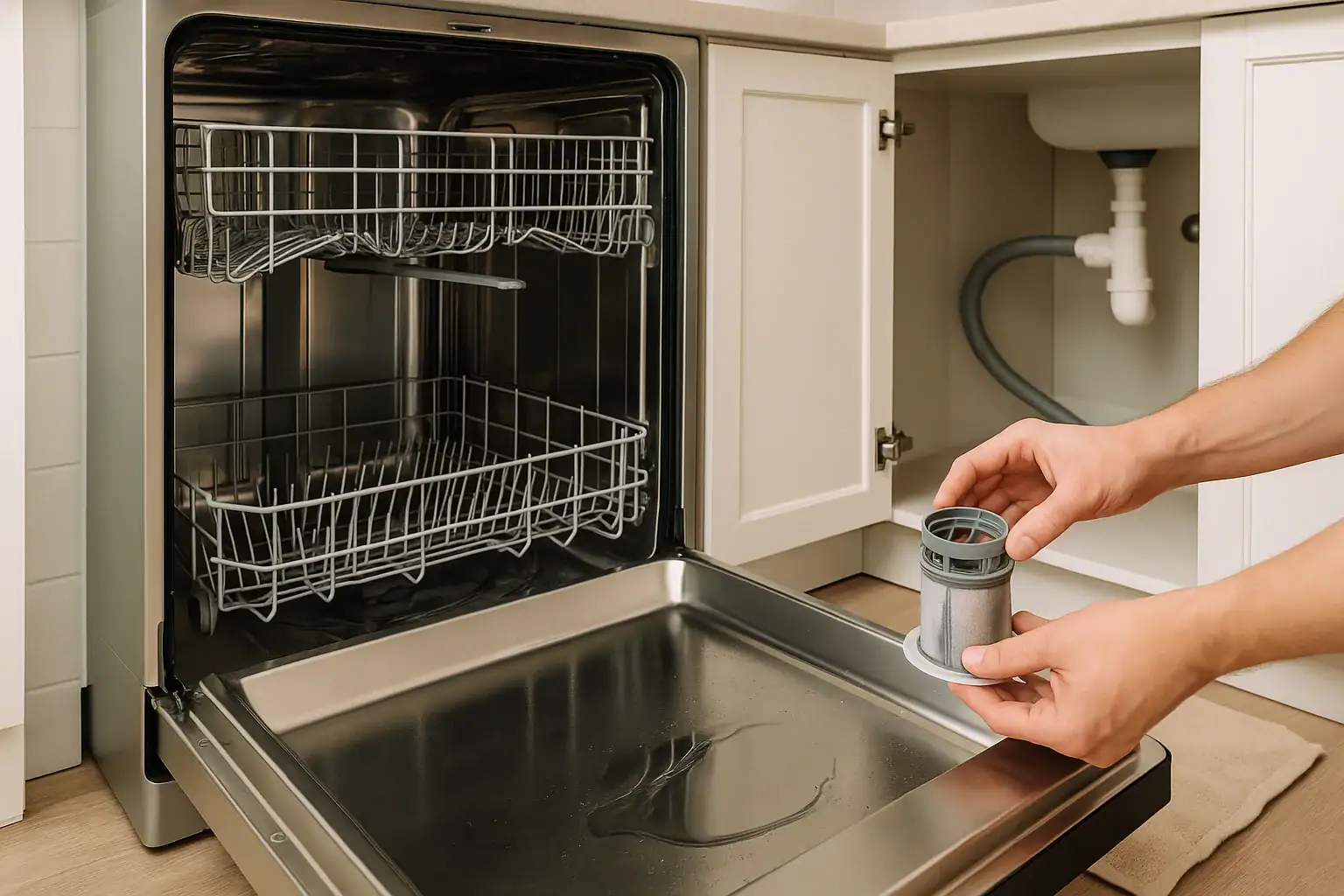
Most modern dishwashers have a removable filter assembly at the bottom. A clogged filter is one of the most common reasons for poor draining.
- Remove the filter. Typically, you twist the cylindrical filter counterclockwise and lift it out, then remove any flat screen below it. If you’re unsure, check your user manual or the manufacturer’s website for a diagram.
- Wash the filter. Rinse under warm running water and gently scrub with a soft brush or sponge. Avoid harsh tools that could damage the mesh.
- Inspect the sump. With the filter out, look down into the opening for food, bones, glass, or other debris. Carefully remove anything you can reach with your fingers or a plastic utensil.
- Reinstall the filter correctly. Make sure it seats flat and locks into place. A loose filter can allow debris into the pump.
Run a short rinse cycle to see if the dishwasher now drains. If not, continue with the steps below.
Confirm the garbage disposal and air gap are clear
Many dishwashers drain through the kitchen sink plumbing. A clog there can back water up into the dishwasher.
If you have a garbage disposal
- Run the disposal with water. Turn on cold water and run the disposal for 20–30 seconds to clear food buildup that might block the dishwasher drain connection.
- Check for a knockout plug (new installations). If the dishwasher was recently installed or the disposal was replaced, the small knockout plug where the dishwasher hose connects may not have been removed. This requires removing the hose and following the disposal manufacturer’s instructions; if you’re unsure, it’s safer to have a pro handle it.
If you have an air gap on the sink
An air gap is a small fitting on the sink or countertop that prevents dirty sink water from siphoning into the dishwasher.
- Remove the air gap cap. It usually lifts straight up or twists off.
- Check for debris. Look inside for food buildup or blockages and clear them with a small brush or by rinsing under running water.
- Reinstall the cap and run a short cycle to test draining.
Inspect the drain hose under the sink
The drain hose carries water from the dishwasher to the sink drain or disposal. Kinks, clogs, or incorrect routing can keep water from leaving the tub.
- Locate the hose. Under the sink, find the flexible hose running from the dishwasher to the disposal or sink drain tailpiece.
- Check for kinks or crushing. Make sure nothing is pinching the hose (cleaning supplies, trash can, or sharp bends). Straighten the hose gently if needed.
- Verify a high loop or air gap. The hose should rise up under the counter before dropping to the drain connection. This “high loop” or an air gap helps prevent dirty sink water from flowing back into the dishwasher.
- Feel for clogs. With the power off, gently squeeze along the hose. A hard or lumpy section may indicate buildup.
If you suspect a clog and are comfortable working with plumbing:
- Place a towel and small bucket under the connection.
- Loosen the clamp and disconnect the hose from the disposal or drain tailpiece.
- Check the hose end and the fitting for gunk; clear gently with a small brush or running water.
- Reconnect securely and test for leaks after the next cycle.
If the hose is brittle, cracked, or heavily clogged, replacement by a qualified technician is often the safest option.
Listen for the drain pump
When the dishwasher should be draining (usually near the end of the cycle), you should hear a humming or pumping sound from the bottom of the unit.
- Pump runs but water doesn’t leave: More likely a clog in the hose, air gap, or sink plumbing.
- Pump is silent or only hums briefly: The pump may be jammed or failed.
Accessing and replacing a drain pump usually involves removing panels and working with electrical connections. If you suspect a pump issue, it’s generally best to contact an appliance repair technician rather than attempting a full replacement yourself.
Check the sink drain and household plumbing
If your kitchen sink drains slowly or backs up, the problem may be in the home’s plumbing rather than the dishwasher itself. A clogged sink drain can cause dishwasher water to back up into the tub.
- Run water in the sink and watch how quickly it drains.
- If water backs up into the other side of a double sink or drains very slowly, you may need to clear the sink trap or call a plumber.
For guidance on safe home water and plumbing practices, the U.S. Environmental Protection Agency’s drinking water resources provide helpful background on protecting household water systems.
When to reset the dishwasher
Some dishwashers may stop draining due to a control glitch or a triggered flood sensor.
- Try a control reset: Many models can be reset by turning the power off at the breaker for a few minutes, then turning it back on. Check your user manual for the correct reset method for your brand.
- Look for error codes: If the control panel shows a code, search the model number and code on the manufacturer’s site for specific guidance.
If a leak or overflow has activated a safety float or pan sensor, the dishwasher may refuse to run or drain until the underlying leak is fixed and any water in the base is removed. In that case, professional service is recommended.
Safety notes before deeper DIY repairs
Any time you remove panels, work near wiring, or disconnect plumbing, take basic precautions:
- Turn off power at the breaker before accessing internal components.
- Use towels or a shallow pan to catch water when disconnecting hoses.
- Avoid using chemical drain cleaners inside the dishwasher or its hoses; they can damage components and may create fumes during hot cycles.
The U.S. Consumer Product Safety Commission’s home safety guidance offers general tips on working safely around household appliances.
When to call a professional
After you’ve checked and cleaned the filter, air gap, drain hose, and sink plumbing, it’s reasonable to contact an appliance repair technician if:
- The dishwasher still leaves a large pool of water in the bottom.
- You hear grinding, burning, or no sound at all from the drain pump.
- You see leaks under or around the dishwasher.
- Error codes keep returning after a reset.
A qualified technician can test electrical components, replace a failed drain pump, or diagnose control board and sensor issues that are difficult to confirm without proper tools.
Preventing future drain problems
A few simple habits can reduce the chances of your dishwasher failing to drain again:
- Scrape, don’t rinse. Scrape large food pieces and bones into the trash, but you don’t need to fully wash dishes before loading.
- Clean the filter regularly. Many manufacturers recommend rinsing the filter every 1–3 months, depending on use.
- Run hot water at the sink for a few seconds before starting the dishwasher to help the machine fill and drain with hot water.
- Keep the sink drain clear. Avoid putting fibrous foods, grease, or large quantities of food waste down the disposal.
For more practical kitchen water and appliance tips, you can explore the main Water & Kitchen guide on Signature Home Guide.
Summary: Working through a no‑drain dishwasher
When a dishwasher is not draining, the most common fixes are cleaning the filter and sump, clearing the air gap or garbage disposal connection, and checking the drain hose for kinks or clogs. If those steps don’t restore normal draining, the issue may be with the drain pump, sensors, or household plumbing, which is usually the point to bring in a professional.
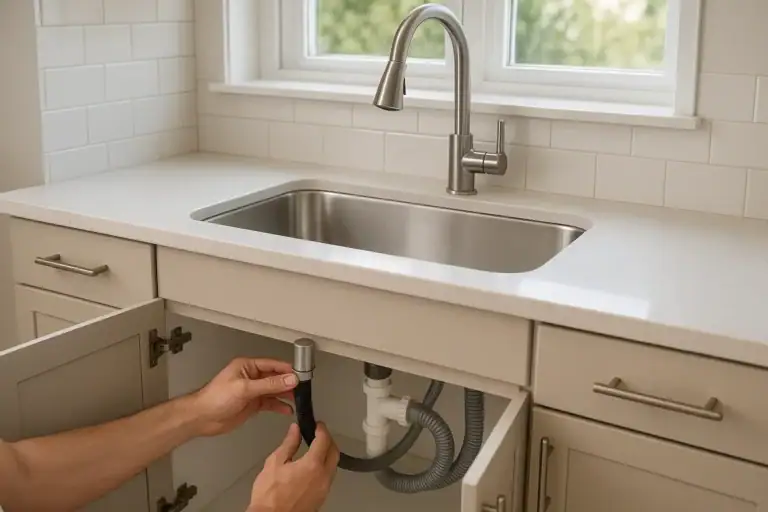 Dishwasher Air Gap Leaking: How to Find and Fix the Cause
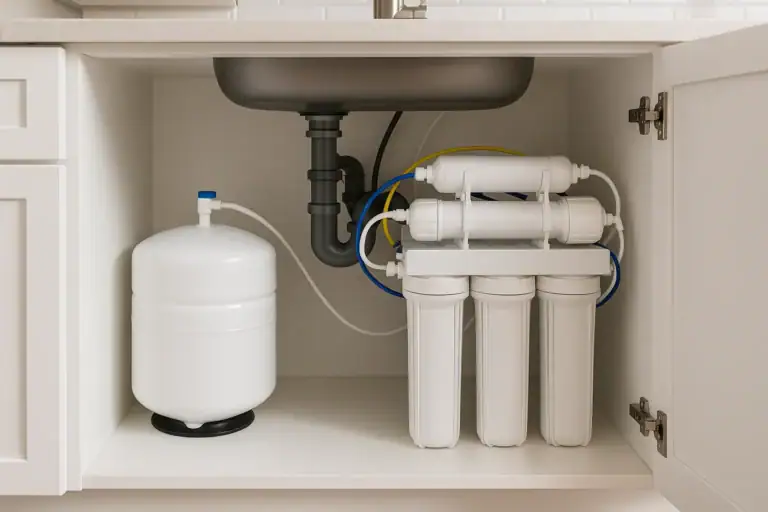 Reverse Osmosis Tank Not Filling: Step‑By‑Step Fix
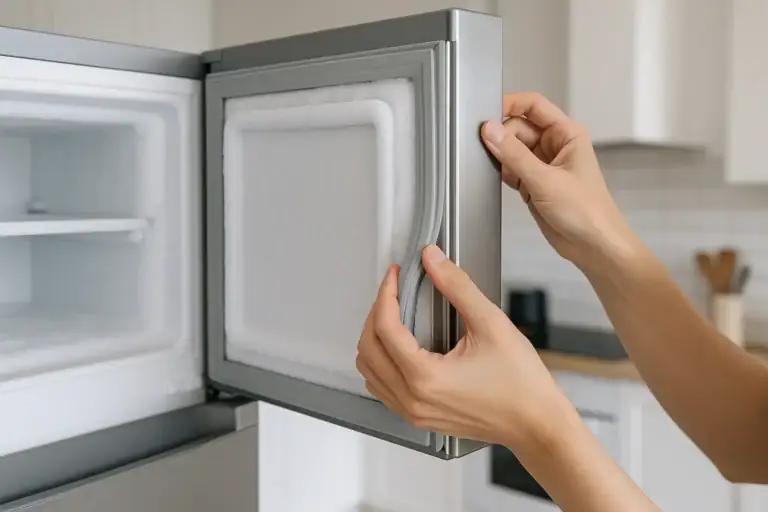 Freezer Frost Around the Door: Simple Fixes and Checks