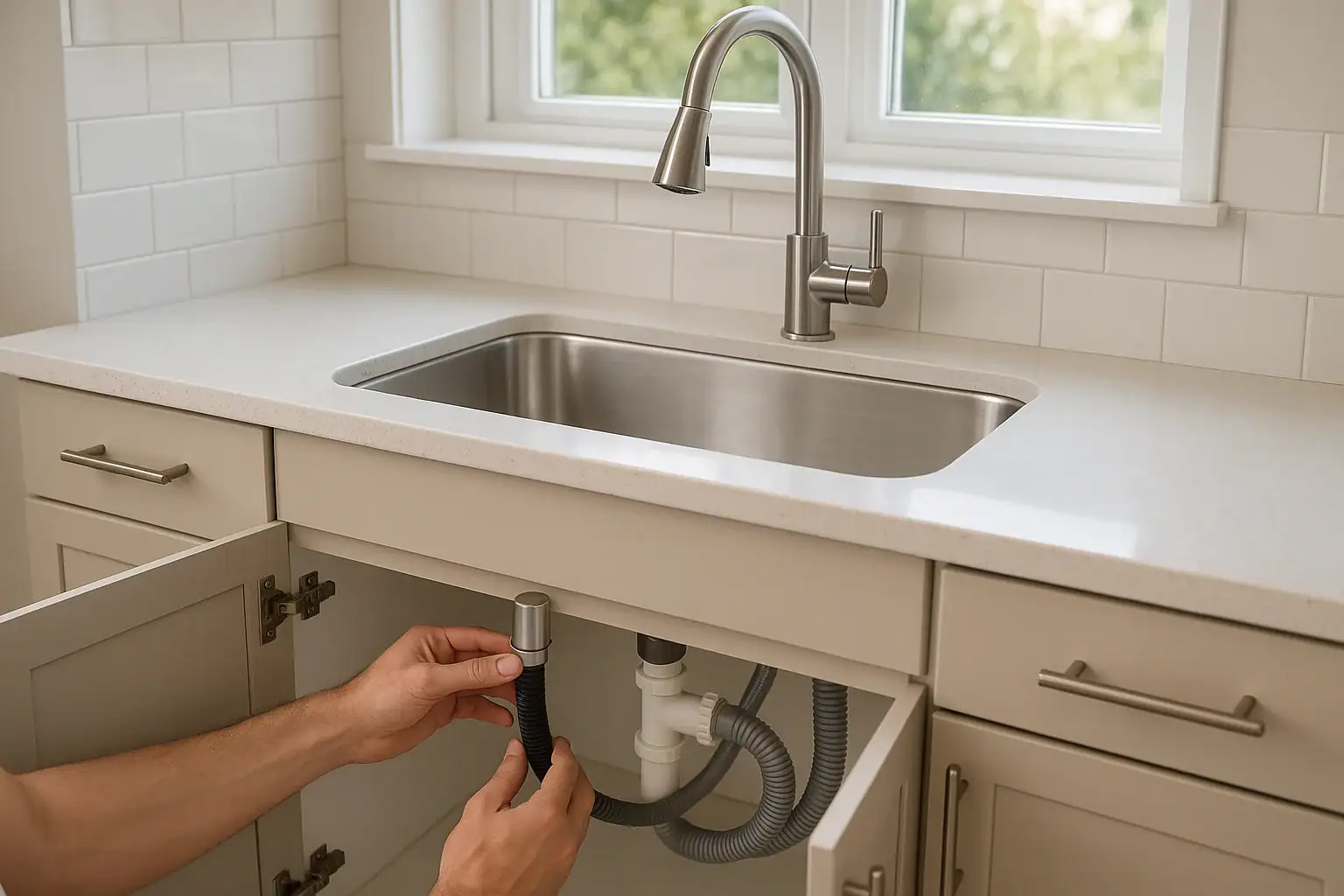
Why your dishwasher air gap is leaking
A leaking dishwasher air gap usually means one of three things:
- The drain hose from the air gap to the sink drain or garbage disposal is clogged or kinked
- The hose from the dishwasher to the air gap is partially blocked
- The air gap body or connections are loose, cracked, or installed incorrectly
When water can’t flow freely from the air gap into the drain, it backs up and spills out of the air gap cap onto the countertop or under the sink. In most homes, you can stop the leak by clearing blockages and tightening fittings, without replacing the dishwasher.
An air gap is a simple but important backflow prevention device that keeps dirty sink or disposal water from siphoning into your dishwasher. Many plumbing codes in the U.S. require some form of backflow protection for dishwashers; an air gap is one of the most reliable options. If you are unsure what your local code requires, check with your city or county building department or a licensed plumber.
Quick checks before you start
Do these quick checks first to narrow down the problem:
- Notice when it leaks. Does it leak only when the dishwasher drains? That usually points to a clog or restriction in the drain hose or disposal inlet.
- Check the garbage disposal. If the disposal is new, the dishwasher knockout plug may never have been removed, blocking the air gap drain hose.
- Look for obvious kinks. Under the sink, see if either hose connected to the air gap is sharply bent or pinched.
- Inspect the countertop area. Make sure the air gap cap is seated correctly and not cracked.
If you see signs of burned wiring, melted plastic, or standing water in cabinets or walls, stop and contact a qualified appliance technician or plumber. Water leaks can lead to mold and structural damage if they are not addressed promptly.
Step-by-step: How to troubleshoot a leaking dishwasher air gap
1. Make the area safe and accessible
- Turn off the dishwasher at the control panel.
- Clear out the cabinet under the sink so you can see the hoses and fittings.
- Place a towel or shallow pan under the plumbing to catch any drips.
You normally do not need to shut off household water for basic air gap checks, but if you see active leaking from supply lines or valves, close the shutoff valves under the sink and consider calling a professional.
2. Remove and inspect the air gap cap
- On top of the sink or countertop, lift or twist off the decorative air gap cap. Most caps either pull straight up or twist a quarter turn.
- Look inside the exposed plastic body for food debris, grease, or mineral buildup.
- Wipe away loose buildup with a cloth or paper towel.
If you see heavy mineral deposits, you can gently clean the accessible parts with a cloth dampened in vinegar, taking care not to push debris down into the hoses.
3. Check the hoses under the sink
Under the sink, you should see two hoses connected to the air gap:
- Dishwasher-to-air-gap hose: Usually smaller diameter, coming from the dishwasher.
- Air-gap-to-drain hose: Usually larger, going from the air gap to either the garbage disposal or sink drain tailpiece.
Inspect both hoses for:
- Kinks or sharp bends that could restrict flow
- Sagging low spots that may trap water and debris
- Loose clamps or fittings that could leak
- Cracks or soft spots in the hose material
Straighten any kinks gently. If a hose is badly kinked, brittle, or cracked, it should be replaced. A plumber or appliance technician can match the correct size and type for your dishwasher and local code.
4. Clear the hose from the air gap to the disposal or drain
This hose is the most common source of air gap leaks, because it carries all the water from the dishwasher into the drain.
- Place a towel or pan under the hose connection at the disposal or sink drain.
- Loosen the hose clamp with a screwdriver or nut driver.
- Carefully pull the hose off the disposal or drain fitting.
- Look into the hose end and the disposal or drain inlet for food particles, grease, or other debris.
- Use a small bottle brush or a length of flexible plastic tubing to gently loosen and pull out debris. Avoid using sharp metal tools that could puncture the hose.
- Run warm water through the hose (from the air gap side toward the drain end) into a bucket or the sink to flush out loosened material.
- Reconnect the hose, making sure it is fully seated and the clamp is snug but not cutting into the hose.
If your hose connects to a garbage disposal and the disposal is new, confirm that the dishwasher inlet knockout plug was removed during installation. If it is still in place, the hose will have nowhere to drain and the air gap will leak. Removing the knockout plug usually involves disconnecting the hose and carefully knocking out the plastic plug inside the disposal inlet, following the disposal manufacturer’s instructions.
5. Check the hose from the dishwasher to the air gap
This hose can also clog, especially if dishes are heavily soiled or the dishwasher filter is dirty.
- Locate the smaller hose running from the dishwasher to the air gap.
- Check for kinks, sharp bends, or visible damage.
- If you can easily access the connection at the air gap, place a towel underneath and loosen the clamp.
- Remove the hose from the air gap and look for buildup at the opening.
- Use a small brush or flexible plastic snake to gently clear debris from the hose end.
- Reattach the hose and tighten the clamp securely.
For deeper clogs inside the hose or at the dishwasher connection, you may need to pull the dishwasher out from the cabinet. If that feels beyond your comfort level, it is reasonable to call a professional at this point.
6. Inspect the air gap body and mounting
With the cap removed, look closely at the plastic air gap body where it passes through the countertop:
- Check for cracks in the plastic that could let water escape.
- Verify that the mounting nut under the sink is snug, so the air gap is firmly seated and upright.
- Make sure the hoses are attached to the correct ports (dishwasher hose to the inlet, drain hose to the outlet). The ports are often labeled or sized differently.
If the air gap body is cracked or badly warped, replacement is usually the most reliable fix. Many homeowners can replace an air gap with basic tools, but if you are unsure about matching the correct fittings or sealing the countertop opening, a plumber can handle it quickly.
7. Test the system
- Reinstall the decorative cap on the air gap.
- Run the dishwasher on a short cycle and stay nearby during the drain portion.
- Watch the air gap on the countertop and check under the sink for any leaks at hose connections.
A small amount of splashing under the cap during draining can be normal, but water should not spill onto the countertop. If leaking continues after you have cleared hoses and checked connections, the air gap itself may be defective, or there may be a deeper issue with the dishwasher pump or drain plumbing.
When a leaking air gap points to a bigger problem
Sometimes the air gap is doing its job by exposing a problem elsewhere in the system. Consider calling a qualified technician or plumber if you notice:
- Slow or repeated backups in the kitchen sink, even when the dishwasher is off
- Standing water in the bottom of the dishwasher after cycles finish
- Gurgling drains or sewage odors from the sink or dishwasher
- Water damage in cabinets, walls, or flooring near the sink or dishwasher
These can indicate partial blockages in the household drain line, venting issues, or a failing dishwasher drain pump. In those cases, clearing only the air gap and hoses may not solve the underlying problem.
Preventing future air gap leaks
Once you have stopped the immediate leak, a few simple habits can reduce the chance of it returning:
- Scrape, don’t rinse, dishes. Remove heavy food scraps into the trash or disposal before loading the dishwasher to reduce clogs.
- Run the disposal before the dishwasher drains. If your dishwasher drains through a disposal, run the disposal with cold water for 10–15 seconds before starting the dishwasher and again when you hear the dishwasher draining.
- Clean the dishwasher filter regularly. Many modern dishwashers have a removable filter at the bottom. Check your owner’s manual for cleaning steps.
- Inspect hoses annually. Look under the sink for kinks, sagging, or damp spots and correct them early.
For more guidance on keeping your kitchen plumbing and appliances running smoothly, you can explore the water and kitchen resources at Signature Home Guide’s Water & Kitchen hub.
Why the air gap matters for safety
The main purpose of a dishwasher air gap is to help prevent contaminated sink or drain water from flowing back into your dishwasher and onto your dishes. Backflow protection is a basic part of plumbing safety, especially where drinking or cooking surfaces are involved. The U.S. Environmental Protection Agency’s information on cross-connection control and backflow prevention explains why these devices are important for protecting water quality.
Local plumbing codes may allow other backflow protection methods, such as a high loop in the drain hose or a mechanical backflow preventer, but an air gap is one of the most straightforward ways to physically separate drain water from the dishwasher line. If you are planning a kitchen remodel or new dishwasher installation, it is a good idea to confirm current requirements with your local building department or a licensed plumber.
Addressing a leaking air gap promptly protects your cabinets and counters from water damage and helps ensure your dishwasher drain system is working as intended. If you have gone through the basic troubleshooting steps and the leak persists, involving a professional is the safest next move.
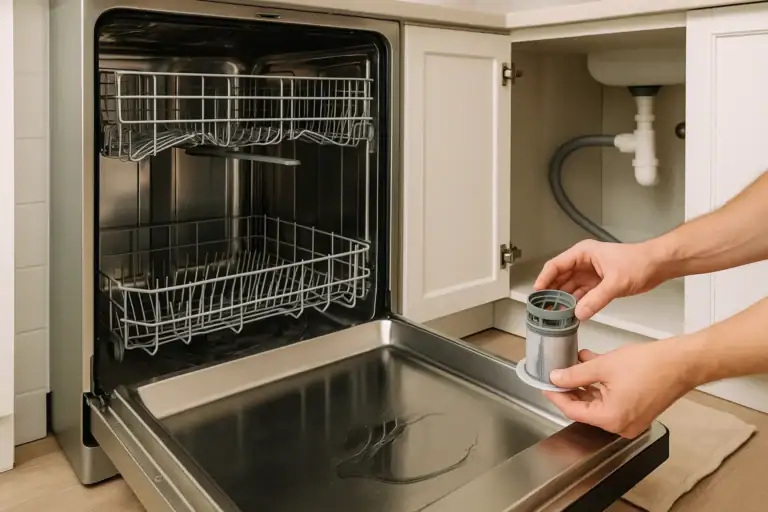 Dishwasher Not Draining: Step‑by‑Step Fix Guide
 Freezer Frost Around the Door: Simple Fixes and Checks
 Reverse Osmosis Tank Not Filling: Step‑By‑Step Fix