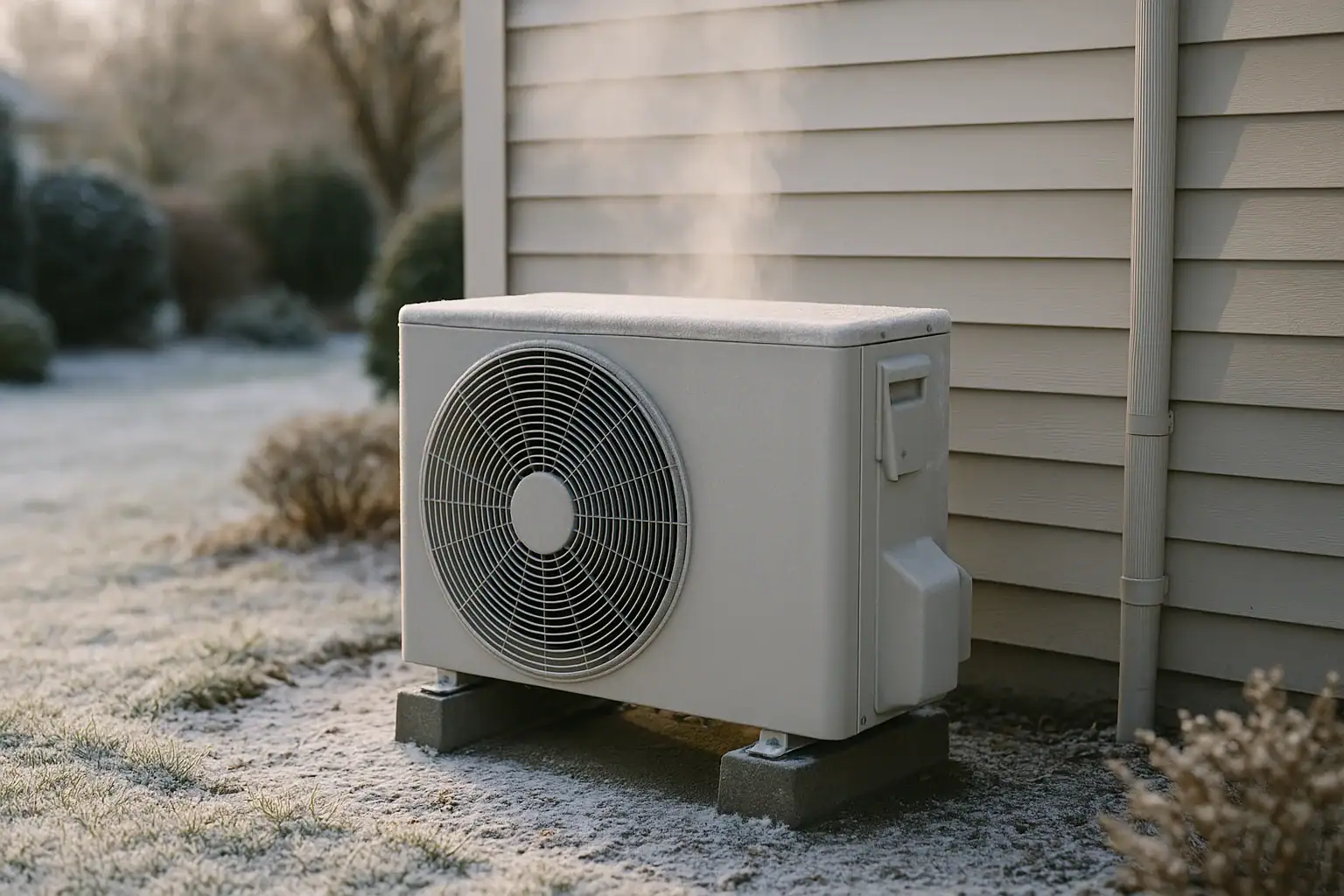
What heat pump defrost mode is
Defrost mode is a normal operating cycle your heat pump uses to melt ice that forms on the outdoor unit in cold weather. When enough frost builds up on the outdoor coil, the system briefly reverses itself, sending heat to the outdoor unit to clear the ice so it can keep working efficiently.
During defrost mode, you may notice:
- Steam rising from the outdoor unit
- The outdoor fan stopping for a few minutes
- A whooshing or swishing sound as the valve shifts
- Cooler air from indoor vents for a short time (your backup heat may limit this)
On its own, this is not a malfunction. Defrost mode protects the system and helps it keep heating your home.
Why heat pumps need to defrost
In heating mode, a heat pump pulls heat from outside air and moves it indoors. As the outdoor coil absorbs heat, its surface can drop below the outdoor air temperature. On cold, humid days, moisture in the air condenses and freezes on that coil, forming frost or ice.
Too much ice blocks airflow and heat transfer. That can cause:
- Reduced heating capacity
- Longer run times and higher energy use
- Potential strain on components over time
Defrost mode temporarily turns the system into cooling mode at the outdoor unit so the coil warms up and melts the ice. Once the coil is clear, the system switches back to normal heating.
How defrost mode actually works
Most modern air-source heat pumps use an automatic defrost cycle controlled by the outdoor unit’s board and sensors. While designs vary by manufacturer, the basic steps are similar:
- Frost detection
Temperature and/or pressure sensors monitor the outdoor coil. Some systems also use a timer. When the control board decides there is enough frost, it starts defrost mode. - Reversing valve shifts
The reversing valve changes the direction of refrigerant flow so the outdoor coil becomes the “indoor” coil for a few minutes and warms up. - Outdoor fan stops
The outdoor fan usually shuts off during defrost so the coil can heat up faster and melt ice more effectively. - Backup heat may turn on
Because the system is briefly not heating your home, electric resistance strips or another backup heat source may run to keep indoor temperatures more stable. - Cycle ends automatically
Once the coil reaches a set temperature or a time limit, the system switches back to heating mode and the outdoor fan restarts.
On many systems, a defrost cycle lasts about 3–15 minutes and may occur every 30–90 minutes in very cold, damp weather. The exact timing depends on the design and outdoor conditions.
What normal defrost behavior looks and sounds like
Because defrost mode can look dramatic, it often gets mistaken for a problem. These are usually normal signs:
- Steam clouds rising from the outdoor unit as warm coil surfaces melt ice
- Outdoor fan not spinning for several minutes while the unit defrosts
- Short whooshing or hissing sounds when the reversing valve shifts
- Thin, even frost on the outdoor coil between cycles
- Briefly cooler air from indoor registers, especially if you do not have or are not using backup heat
As long as the unit returns to normal heating and the frost clears, this behavior is typically expected.
When defrost mode may signal a problem
Some patterns suggest that something is wrong with the defrost system or the heat pump itself. Pay attention if you notice:
- Thick ice that never fully melts on the outdoor coil, fan blades, or top of the unit
- Continuous ice buildup that gets worse over hours or days
- Very frequent defrost cycles, such as every few minutes in only mildly cold weather
- Very long defrost cycles (for example, 20–30 minutes or more) with poor heating
- Outdoor fan never starting back up after defrost ends
- Breaker tripping or the system shutting off during defrost
These issues can have several causes:
- Faulty defrost sensor or control board
- Low refrigerant charge or refrigerant leaks
- Outdoor fan motor or capacitor problems
- Blocked outdoor airflow (snow, leaves, fencing, or covers too close)
- Damaged or stuck reversing valve
Because refrigerant and electrical work involve safety and code considerations, it is usually best to have a qualified HVAC technician diagnose and repair these problems.
What you should (and should not) do during defrost
Safe homeowner steps
You can support proper defrost operation with a few simple habits:
- Keep the outdoor unit clear of snow, ice, leaves, and debris. Gently brush away loose snow; do not chip at ice on the coil.
- Maintain clearance around the unit (typically at least 18–24 inches on sides and several feet above, or as your manufacturer specifies) so air can move freely.
- Check gutters and downspouts so water does not drip and freeze directly onto the unit.
- Change or clean air filters on the schedule recommended by your equipment manufacturer to help the system run efficiently. After replacing a filter, confirm the orientation with our HVAC filter arrow direction guide.
What to avoid
- Do not chip or pry ice off the coil or fan blades. This can easily damage thin metal fins or bend the fan.
- Do not pour hot water on the unit; rapid temperature changes can damage components and create more ice as water refreezes.
- Do not cover the unit tightly in winter while it is operating. A running heat pump needs airflow year-round.
- Do not bypass safety controls or wiring to “force” defrost. That can create electrical and fire hazards.
For electrical and fire safety around HVAC equipment, the U.S. Consumer Product Safety Commission provides general guidance on home fire and electrical safety. Always follow your manufacturer’s instructions first.
How defrost mode affects comfort and energy use
Defrost mode can briefly affect how your home feels and how much energy your system uses, especially in colder climates.
- Comfort: You might feel slightly cooler air from vents during defrost. Many systems use electric backup heat to offset this, but that backup heat can be more expensive to run.
- Energy use: Defrost cycles add to run time and can increase electricity use in cold, damp weather. However, without defrost, heavy icing would reduce efficiency even more.
The U.S. Department of Energy offers broader guidance on how heat pumps operate and use energy, which can help you understand what to expect from your system in different seasons.
When to call an HVAC professional
Consider scheduling service with a licensed HVAC technician if you notice any of the following:
- Ice covering the entire outdoor unit or not melting after defrost cycles
- Defrost cycles that are extremely frequent or extremely long
- Loud grinding, screeching, or metal-on-metal noises
- Burning smells, tripped breakers, or visible arcing
- Significant loss of heating capacity or rapidly rising energy bills
A professional can check sensors, refrigerant levels, the reversing valve, and the control board, and can also confirm that your system is sized and installed correctly for your climate.
For more context on keeping your home comfortable and systems running smoothly, you can explore the broader heating and cooling guidance at Signature Home Guide’s Air & Comfort hub.
Key takeaways about heat pump defrost mode
- Defrost mode is a built-in, normal function that melts ice from the outdoor coil.
- Steam, fan pauses, and short whooshing sounds during defrost are usually expected.
- Persistent, heavy ice or very unusual cycling patterns are reasons to call a pro.
- Good airflow, clear space around the unit, and routine maintenance help defrost work properly.
Understanding what defrost mode is—and what it is not—can make winter operation less stressful and help you spot real issues early.
 Bathroom Humidity After a Shower: What Is Normal and What Actually Helps
 Bathroom Humidity After a Shower: What Is Normal and What Actually Helps
 Why Your Dehumidifier Makes the Room Feel Warmer