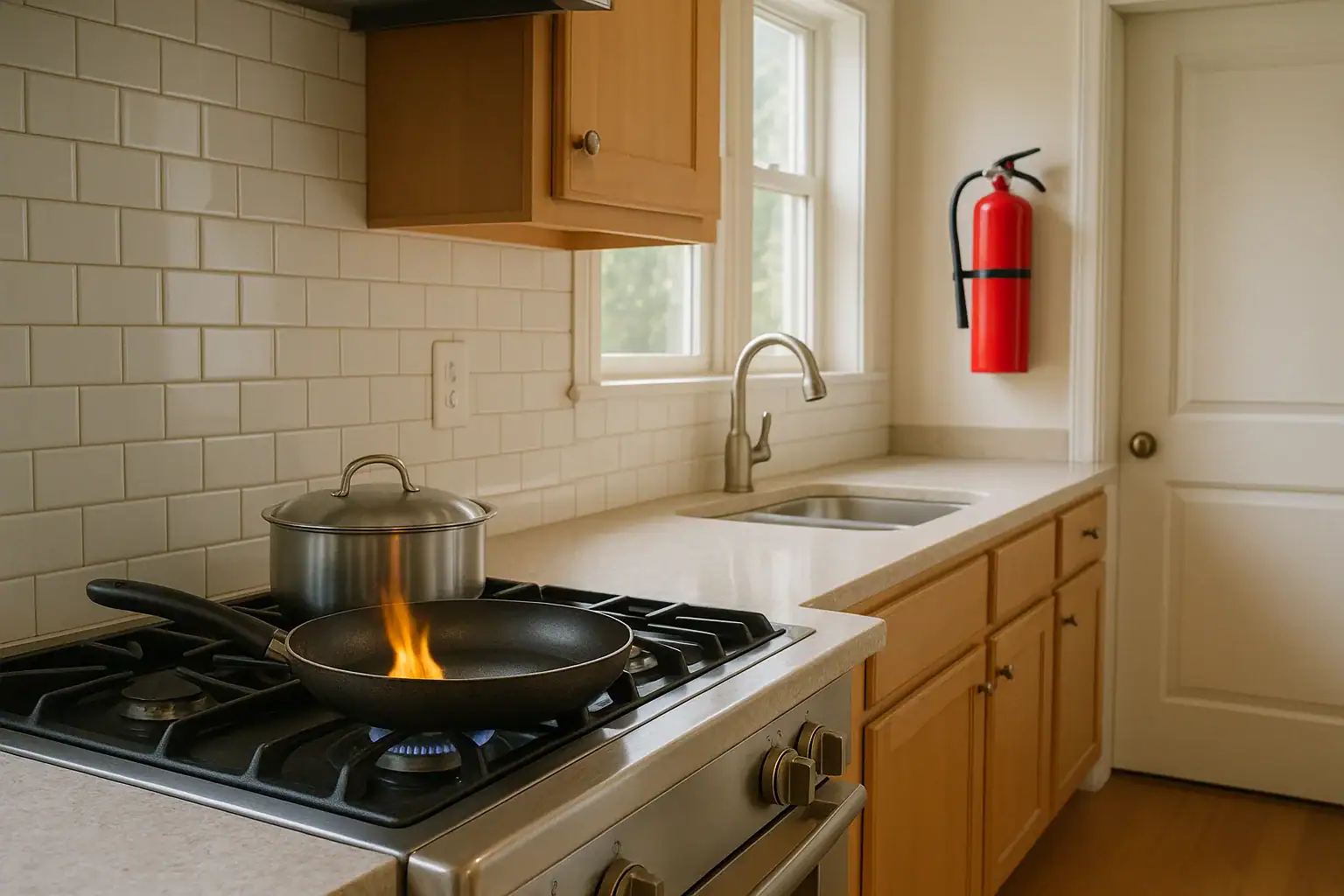
The kitchen is the heart of many homes, but it is also the most common place for a house fire to start. Hot oil, busy schedules, distractions, and cluttered counters can quickly turn everyday cooking into a dangerous situation. Understanding how grease fires start, how to prevent them, and how to respond if one breaks out is one of the most important steps you can take to protect your home and family. This guide explains kitchen fire safety in clear, practical terms, focusing on grease fires and basic fire extinguisher know-how so you can act quickly and confidently if something goes wrong.
On this page(click to collapse)
- Why Kitchen Fire Safety Matters
- Understanding Grease Fires
- How to Prevent Grease Fires in Your Kitchen
- What to Do If a Grease Fire Starts
- What Never to Do During a Grease Fire
- Fire Extinguisher Basics for the Kitchen
- How to Use a Fire Extinguisher: The PASS Method
- Maintaining Your Kitchen Fire Extinguisher
- Creating a Kitchen Fire Safety Plan
- After a Kitchen Fire: What to Do Next
- Making Your Kitchen Safer Starting Today
- Related guides
Why Kitchen Fire Safety Matters
Most home cooking fires start on the stovetop, often when oil or grease overheats or when food is left unattended. Even a small flame can spread quickly to cabinets, curtains, and nearby items. Smoke damage and water damage from firefighting efforts can be costly, even if the fire itself is contained.
Good kitchen fire safety is not about fear; it is about preparation. When you know what causes grease fires, how to prevent them, and how to use a fire extinguisher, you reduce your risk of serious damage and injury. A few simple habits can make a big difference in how safe your kitchen is day to day.
Understanding Grease Fires
Grease fires are different from many other types of fires. They behave quickly, burn very hot, and can spread in seconds if handled the wrong way. Knowing how they start and why they are so dangerous helps you respond safely.
What Is a Grease Fire?
A grease fire happens when cooking oils, fats, or grease become so hot that they ignite. This can happen in:
- Frying pans or deep fryers with oil
- Pots with meat drippings or rendered fat
- Ovens with built-up grease or spills
- Griddles or stovetops coated in old, uncleaned grease
Once the oil reaches its ignition point, it can burst into flames without direct contact with an open flame. This is why a pan can suddenly ignite even if the burner is set only a little too high or left on for too long.
How Grease Fires Start
Common causes of grease fires include:
- Overheating oil: Leaving a pan on high heat, especially when preheating oil for frying.
- Unattended cooking: Walking away from the stove to answer the door, check a message, or do a quick task.
- Oil spills near burners: Grease that drips or splatters onto burners or heating elements.
- Built-up grease: Dirty stovetops, range hoods, and oven interiors coated with old grease.
- Overfilled pans: Too much oil in a pan that bubbles over when food is added.
Because oil heats quickly and does not always show obvious signs before igniting, it is easy to underestimate how fast a grease fire can start.
Why Grease Fires Are So Dangerous
Grease fires are especially hazardous for a few reasons:
- They spread upward: Flames can leap toward cabinets, microwave ovens, and range hoods.
- They are extremely hot: Burning oil can cause severe burns and ignite nearby materials quickly.
- They react violently to water: Pouring water on burning grease can cause a fireball and spread flaming oil.
- They create thick smoke: Smoke can make it hard to see and breathe, and it can damage your home even if the fire is small.
How to Prevent Grease Fires in Your Kitchen
Prevention is the most effective fire safety strategy. With a few simple habits, you can greatly reduce your risk of a grease fire.
Safe Cooking Habits
- Stay in the kitchen: Never leave the stove unattended when frying, grilling, or broiling.
- Use moderate heat: Avoid turning burners to the highest setting when heating oil.
- Preheat slowly: Warm oil gradually and watch for signs of overheating, such as smoking.
- Keep kids and pets away: Create a kid-free zone of at least three feet around the stove.
- Use the right size pan: Choose a pan large enough so food and oil do not easily spill over.
- Dry food before frying: Excess moisture can cause oil to splatter and boil over.
Keep Flammable Items Away from Heat
Many kitchen fires spread because flammable items are stored too close to the stove. Keep these items away from burners and heat sources:
- Paper towels and napkins
- Dish towels and oven mitts
- Wooden utensils and cutting boards
- Food packaging and plastic containers
- Decorative items such as curtains or wall hangings
Clean Up Grease Regularly
Built-up grease can ignite even if you are not actively frying. Make a habit of:
- Wiping stovetops and nearby surfaces after cooking.
- Cleaning range hood filters and fan covers as recommended.
- Removing baked-on grease from oven walls and racks.
- Checking under burners and drip pans for hidden grease.
Install and Maintain Smoke Alarms
Smoke alarms are an important part of kitchen safety, even if they sometimes sound during normal cooking. Place alarms:
- Outside the kitchen but close enough to detect smoke quickly.
- On every level of your home and near sleeping areas.
Test alarms monthly and replace batteries as needed. If nuisance alarms are a problem, adjust cooking habits or ventilation rather than disabling the alarm.
What to Do If a Grease Fire Starts
If a grease fire breaks out, your response in the first few seconds matters. Always put your safety and the safety of others first. If the fire is large or spreading, get everyone out and call emergency services immediately.
First Steps: Stay Calm and Act Quickly
If a pan of oil or grease catches fire and it is still small and manageable:
- Turn off the heat: Carefully switch off the burner if you can reach it safely.
- Do not move the pan: Carrying a burning pan can spread flames and hot oil.
- Keep others back: Make sure children and pets are out of the kitchen.
Smothering a Small Grease Fire
The safest way to put out a small grease fire is to remove oxygen so the flames cannot keep burning. You can:
- Cover the pan with a metal lid or baking sheet: Slide it over the top to smother the flames. Leave it in place until the pan is completely cool.
- Use baking soda for very small fires: A generous amount of baking soda can help smother a small grease fire in a pan. Do not use baking powder or flour, which can make the fire worse.
Using a Fire Extinguisher on a Grease Fire
If the fire is not controlled by smothering, or if you cannot safely reach the pan, use a suitable fire extinguisher. Stand several feet away, aim at the base of the flames, and be prepared to leave if the fire does not go out quickly.
When to Evacuate and Call for Help
Leave the home and call emergency services if:
- The fire is spreading beyond the pan or appliance.
- Smoke is filling the room or making it hard to breathe.
- You do not feel confident you can control the fire quickly.
- You have already used an extinguisher and the fire is still burning.
Close doors behind you as you leave to slow the spread of smoke and flames.
What Never to Do During a Grease Fire
Certain reactions can make a grease fire much worse. Avoid these dangerous mistakes.
Never Use Water on a Grease Fire
Pouring water on burning oil is extremely dangerous. Water sinks below the hot oil, instantly turns to steam, and blasts the oil out of the pan in all directions. This can create a fireball and spread flames across the kitchen. Even a small splash of water can cause serious burns and rapidly increase the size of the fire.
Do Not Use Wet Towels or Cloths
Throwing a wet towel or cloth over a grease fire can have a similar effect to using water. The moisture can turn to steam and spread the burning oil. Towels and cloths themselves are also flammable and can catch fire.
Avoid Moving the Burning Pan
Carrying a pan that is on fire is very risky. Hot oil can slosh over the sides, spreading flames and causing severe burns. It is safer to leave the pan where it is, turn off the heat if possible, and smother the flames or use an extinguisher.
Do Not Use Random Powders or Liquids
Only baking soda or a proper fire extinguisher should be used on a grease fire. Other powders, such as flour or sugar, can ignite or explode in the heat. Household cleaners, drinks, and other liquids are not safe fire-fighting tools.
Fire Extinguisher Basics for the Kitchen
Having the right fire extinguisher in your kitchen and knowing how to use it can turn a dangerous situation into a contained one. It is important to choose an extinguisher that is rated for the types of fires that are most likely to occur in a kitchen.
Fire Classes You Need to Know
Fires are grouped into classes based on the fuel that is burning:
- Class A: Ordinary combustibles such as wood, paper, cloth, and some plastics.
- Class B: Flammable liquids and gases, including grease, oil, gasoline, and some solvents.
- Class C: Energized electrical equipment such as appliances and wiring.
- Class K: Cooking oils and fats, especially in commercial-style cooking.
In a home kitchen, you mainly need protection for Class A, B, and C fires, and in some cases Class K if you do a lot of high-heat frying with large amounts of oil.
Choosing a Fire Extinguisher for Home Kitchens
When selecting a fire extinguisher for your kitchen, look for:
- Appropriate rating: A multi-purpose extinguisher labeled for Class A, B, and C fires is a common choice for home use.
- Manageable size: Choose a size you can lift and operate easily. A smaller unit that you can handle quickly is better than a large one you struggle to use.
- Easy-to-read instructions: The label should clearly show how to use the extinguisher.
Where to Place Your Kitchen Fire Extinguisher
Location matters. Place your extinguisher:
- Near the kitchen exit, not directly next to the stove.
- In a visible, easily accessible spot, not behind clutter.
- At a height where all adults in the home can reach it quickly.
The goal is to be able to grab the extinguisher while keeping a clear path to the exit in case you need to leave quickly.
How to Use a Fire Extinguisher: The PASS Method
In an emergency, simple steps are easier to remember. The PASS method is a widely used way to recall how to operate most portable fire extinguishers.
Step-by-Step PASS Method
- P – Pull the pin: This unlocks the operating lever and allows you to discharge the extinguisher.
- A – Aim low: Point the nozzle or hose at the base of the fire, not at the flames.
- S – Squeeze the handle: Squeeze the handles together to release the extinguishing agent.
- S – Sweep side to side: Move the nozzle from side to side at the base of the fire until it appears to be out.
Safety Tips When Using an Extinguisher
- Stand several feet away from the fire and move closer only if it begins to shrink.
- Keep your back toward an exit so you can leave quickly if needed.
- Stop and evacuate if the fire does not go out quickly or if it starts to spread.
- Even after the flames are out, watch the area for a few minutes in case the fire reignites.
Maintaining Your Kitchen Fire Extinguisher
An extinguisher that does not work when you need it is almost as bad as not having one. Basic maintenance is simple and can be added to your regular home safety routine.
Monthly Quick Checks
Once a month, take a moment to:
- Make sure the extinguisher is in its proper place and easy to reach.
- Check that the pressure gauge needle is in the recommended range.
- Look for any signs of damage, rust, or leakage.
- Ensure the pin and tamper seal are intact.
Replacement and Professional Service
Over time, fire extinguishers may need to be replaced or professionally serviced. Follow the instructions on the label for:
- Recommended replacement dates or service intervals.
- Guidance on what to do after any use, even a brief discharge.
- Proper disposal or recycling of old or expired units.
Creating a Kitchen Fire Safety Plan
Tools and knowledge are most effective when everyone in your home knows how to use them. A simple kitchen fire safety plan helps you stay prepared.
Teach Everyone in the Household
- Show family members where the fire extinguisher is and how to use it.
- Explain what to do if a grease fire starts, including when to leave and call for help.
- Set rules about staying in the kitchen while cooking and keeping flammable items away from the stove.
Practice Safe Exits
Know how you would leave your home if a kitchen fire spreads. Walk through:
- Primary and backup exit routes from the kitchen.
- Where to meet outside so you can quickly see if everyone is safe.
- How to help children or older adults who may need assistance.
After a Kitchen Fire: What to Do Next
Even a small fire can leave behind damage and lingering smoke. Once it is safe and the fire is fully out:
- Ventilate the area by opening windows and using fans if possible.
- Document any damage with photos for insurance purposes.
- Dispose of food that was exposed to heat, smoke, or fire-fighting chemicals.
- Clean or replace items that absorbed smoke or soot.
- Review what happened and update your safety habits and plan.
If there is significant damage, consider consulting a professional for cleanup and repairs, especially for electrical systems and appliances.
Related posts
Browse this topic →
Easy Meal Prep Workflow for Busy Weeks: Tools, Storage, and Time-Saving Tips
How to Reduce Plastic in the Kitchen: Practical Swaps That Last
How to Store Emergency Water Safely: Containers, Rotation, and Taste Tips
How to Detect and Handle Limescale in Pipes and Fixtures at Home

Whole-House Sediment Filters: Sizing and Replacement Schedule Guide
Under-Sink Filter vs RO: Taste, Waste Water, and Maintenance Compared
Keep reading
About this site
Signature Home Guide publishes practical, independent home guides. We aim to be clear, helpful, and transparent.
Affiliate disclosure
As an Amazon Associate, we earn from qualifying purchases. Some links on this site may be affiliate links. If you buy through these links, we may earn a small commission at no extra cost to you. This helps support our content. Learn more.