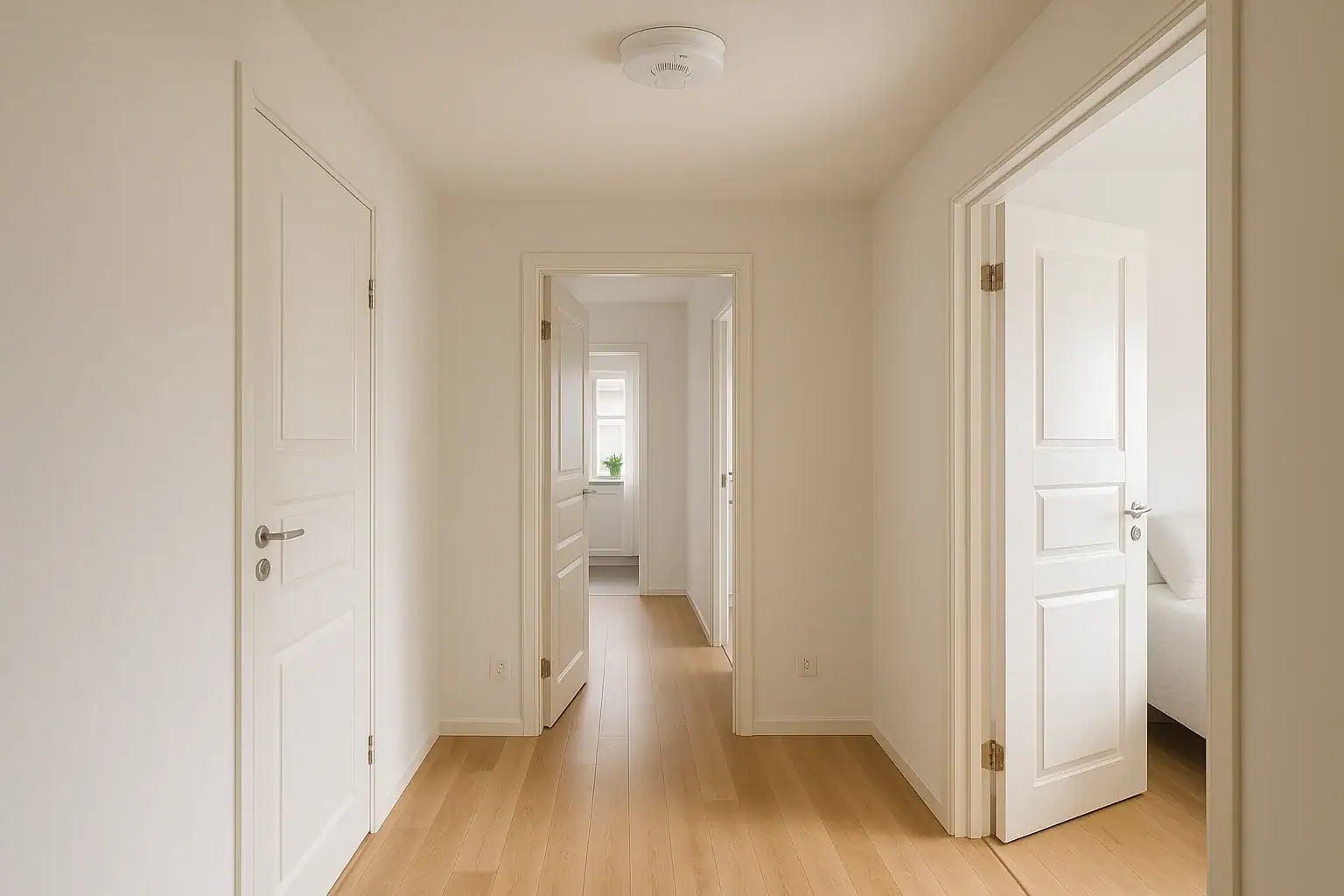
Knowing where to place smoke detectors is one of the simplest and most effective ways to protect your household. Yet many homes in the United States still have alarms installed in the wrong locations, spaced too far apart, or not maintained properly. This guide walks you through practical, room-by-room placement tips for bedrooms, hallways, and kitchens, along with a clear checklist you can use to evaluate your own home. By the end, you will know how many detectors you need, where they should go on the ceiling or wall, and what to avoid so your alarms can provide early warning when every second counts.
Why Proper Smoke Detector Placement Matters
Smoke detectors are designed to sense smoke quickly and sound an alarm while you still have time to escape. Placement directly affects how fast they can detect smoke. Poorly located alarms may respond too late, or not at all, because smoke can be blocked, diluted, or bypass the detector entirely.
Correct placement helps to:
- Detect smoke early while escape routes are still usable
- Provide warning while people are sleeping
- Reduce nuisance alarms that cause people to disable detectors
- Ensure coverage of high-risk areas like kitchens and heating equipment rooms
Most safety experts recommend installing smoke detectors in every bedroom, outside each sleeping area, and on every level of the home, including the basement. From there, good placement within each room makes the protection much more effective.
General Rules for Smoke Detector Placement
Before focusing on specific rooms, it helps to understand a few general rules that apply throughout the home.
Ceiling vs. Wall Mounting
Smoke rises, so the best location is usually on the ceiling. If ceiling mounting is not possible, wall mounting is acceptable when done correctly.
- Ceiling mounting: Place the detector at least 4 inches away from the nearest wall.
- Wall mounting: Position the top of the detector 4 to 12 inches down from the ceiling.
Avoid placing detectors in the very corner where the wall and ceiling meet, because this area can trap dead air that slows smoke movement.
Away From Air Vents and Drafts
Air movement can push smoke away from detectors or dilute it. To prevent this, keep smoke detectors at least 3 feet away from:
- Supply and return air vents
- Ceiling fans
- Windows that are often opened
- Whole-house or attic fans
Spacing and Coverage
In most average-height homes, a single detector can cover a typical bedroom or small hallway, but large spaces may need more than one. As a general guideline, many safety recommendations suggest:
- At least one smoke detector on every level of the home
- One in each bedroom and outside each separate sleeping area
- Additional detectors for large open areas, long hallways, or multi-room spaces
When in doubt, more coverage is usually safer, as long as detectors are placed thoughtfully to avoid nuisance alarms.
Bedroom Smoke Detector Placement Checklist
Bedrooms are critical locations because many home fires occur at night when people are sleeping. You need fast, loud warning in every sleeping space.
Where to Install Smoke Detectors in Bedrooms
Use this checklist when evaluating each bedroom:
- Install a smoke detector inside every bedroom, even if the hallway already has one.
- Mount it on the ceiling near the center of the room, or on a wall 4 to 12 inches below the ceiling.
- Keep it at least 4 inches away from walls if mounted on the ceiling.
- Place it at least 3 feet away from supply vents, fans, and windows to avoid airflow interference.
- Ensure the alarm is not blocked by tall furniture like wardrobes, bookcases, or drapery.
- Make sure you can reach the detector with a step stool to test and change batteries.
Common Bedroom Placement Mistakes
Review these common mistakes and correct them where possible:
- Placing detectors above ceiling fans: Spinning blades may prevent smoke from reaching the sensor quickly.
- Mounting too close to corners: Dead air pockets can delay smoke detection.
- Installing behind curtains or drapes: Fabric can block or slow smoke.
- Relying only on a hallway detector: Closed doors can delay or muffle alarms.
For homes with children, older adults, or heavy sleepers, having a detector inside each bedroom becomes even more important to provide immediate warning.
Hallway Smoke Detector Placement Checklist
Hallways often connect multiple bedrooms and lead to exits, making them key locations for early warning and safe escape routes.
Hallways Outside Sleeping Areas
Follow this checklist for hallways that serve bedrooms or sleeping areas:
- Install at least one smoke detector in the hallway outside each group of bedrooms.
- Place the detector on the ceiling in the center of the hallway whenever possible.
- If the hallway is long, consider additional detectors so that no point in the hallway is too far from an alarm.
- Keep detectors at least 3 feet away from bathroom doors to reduce nuisance alarms from steam.
- Ensure there is a clear path of sound from hallway detectors to bedrooms with doors open or closed.
Multi-Level and Split-Level Homes
For homes with more than one level, hallways often connect stairs and landings. In these cases:
- Install a smoke detector on every level, including finished basements.
- Place detectors near the top of stairways that lead to bedrooms or main living areas.
- Avoid placing detectors directly at the bottom of stairs where dust and drafts may affect performance.
Hallway detectors act as a backup layer of protection if a bedroom detector fails or if smoke enters the hallway first.
Kitchen Smoke Detector Placement Checklist
Kitchens are a leading source of home fires, but they are also the most common source of nuisance alarms. The goal is to position detectors close enough to warn of real danger, but far enough to avoid frequent false alarms from normal cooking.
Where to Place Smoke Detectors Near Kitchens
Use this checklist for kitchen areas:
- Install a smoke detector near the kitchen, but not directly in the cooking area.
- Place the detector at least 10 feet away from cooking appliances such as ranges, ovens, and toasters.
- Mount it on the ceiling or high on a wall in an adjacent room, dining area, or hallway that opens to the kitchen.
- Keep detectors away from exhaust fans and range hoods that can pull smoke away.
- Avoid placing detectors where steam and grease are most likely to collect, such as directly above the stove.
Reducing Nuisance Alarms in the Kitchen Area
Frequent false alarms often cause people to disable or remove detectors, which is unsafe. To reduce nuisance alarms:
- Use the 10-foot rule between detectors and cooking appliances.
- Turn on exhaust fans or open a window slightly when cooking at high heat.
- Do not cover or tape over detectors; instead, relocate them if they are too close to cooking areas.
- Clean detectors periodically with a soft vacuum brush to remove grease and dust.
Balancing proximity and practicality helps ensure that kitchen-area detectors respond to real fires without driving you to silence them.
Additional Key Locations for Smoke Detectors
Bedrooms, hallways, and kitchens are top priorities, but other areas also benefit from proper smoke detector placement.
Living Rooms and Family Rooms
Install detectors in living spaces where people spend a lot of time, especially if there are heat sources such as fireplaces or space heaters nearby.
- Mount detectors on the ceiling toward the center of the room.
- Keep them away from ceiling fans and high-heat sources.
- Ensure they are easily heard from adjacent rooms.
Basements
Basements often contain furnaces, water heaters, and laundry equipment that can be fire sources.
- Install a smoke detector on the ceiling near the bottom of the stairs leading to the main level.
- Keep it away from ducts and vents that may cause drafts.
- If the basement is finished, treat it like another living level and add detectors in key rooms.
Attics and Utility Areas
For attics or utility spaces used for storage or containing electrical equipment, consider additional protection if the area is accessible and frequently used. In some cases, a heat detector may be recommended instead of, or in addition to, a smoke detector, depending on temperature extremes and dust levels.
Interconnected and Smart Smoke Detectors
Placement is only part of the safety picture. How detectors communicate can significantly improve warning time, especially in larger or multi-level homes.
Benefits of Interconnected Detectors
Interconnected detectors are linked so that when one alarm senses smoke, all alarms in the home sound together. This is especially helpful if a fire starts in a remote area or on a different level.
Advantages include:
- Faster warning to everyone in the home, regardless of where the fire starts
- Better protection for bedrooms far from living areas
- Improved safety for children, older adults, and heavy sleepers
Smart Home Integration
Some modern detectors can connect to home networks and send alerts to smartphones or other devices. While not required, these features can:
- Notify you of alarms when you are away from home
- Provide low-battery and maintenance reminders
- Help you quickly identify which detector triggered the alarm
Even with smart features, proper physical placement remains essential. Technology cannot compensate for detectors installed in the wrong locations.
Maintenance and Testing Checklist
Correct placement only works if detectors are functional. Regular testing and maintenance are critical parts of home safety.
Monthly and Annual Tasks
Use this simple checklist to keep your smoke detectors in working order:
- Test every detector monthly using the test button until the alarm sounds.
- Replace batteries at least once a year, or as soon as you hear a low-battery chirp.
- Gently vacuum around detectors every few months to remove dust and cobwebs.
- Review placement once a year to ensure no new furniture or renovations are blocking detectors.
- Replace detectors according to manufacturer guidance, often every 10 years.
Household Fire Drill Planning
Knowing where detectors are located also helps when planning family fire drills. Walk through your home and:
- Point out each smoke detector to all household members.
- Discuss what to do when an alarm sounds, day or night.
- Practice at least two ways out of every room, if possible.
- Choose a safe meeting place outside and away from the home.
Combining proper detector placement with regular practice gives everyone a better chance of reacting quickly and calmly in an emergency.
Ceilings, walls, and awkward locations
Mounting details matter. Follow the exact instructions supplied with the alarm and any local code requirements. In general, alarms belong high on a wall or on the ceiling, away from dead-air pockets, strong drafts, supply registers, ceiling fans, and steam. Sloped or peaked ceilings need manufacturer-specific spacing near—but not directly in—the apex. Basement alarms are normally placed on the ceiling near the bottom of the stairs so rising smoke is not blocked by a door.
Cooking areas are a common source of nuisance alarms, but the solution is not to remove or disable an alarm. Use a listed alarm appropriate for the location and respect the manufacturer’s separation distances. See the NFPA installation and maintenance guide for illustrated placement examples.
How many smoke alarms does a home need?
Do not calculate the total from floor area alone. The practical minimum depends on the layout: inside each bedroom, outside each separate sleeping area, and on every level, including the basement. Split levels, closed doors, long corridors, and rooms used for sleeping can increase the number needed. Interconnected alarms provide better whole-home warning because when one sounds, all sound. Always confirm compatibility before mixing devices and follow the replacement date and monthly test instructions printed on each alarm.
Room-by-Room Smoke Detector Placement Quick Checklist
Use this condensed checklist as you walk through your home and compare your current setup to recommended placement.
Bedrooms
- One smoke detector inside every bedroom
- Mounted on the ceiling or high on a wall
- At least 4 inches from corners and 3 feet from vents or fans
Hallways
- Detector in the hallway outside each sleeping area
- Additional detectors in long hallways
- Mounted on the ceiling, away from bathroom steam
Kitchens
- Detector near, but not in, the kitchen
- At least 10 feet from cooking appliances
- Located in an adjacent room, dining area, or open hallway
Other Areas
- At least one detector on every level, including the basement
- Detectors in main living areas and near stairways
- Consider additional protection in utility or storage areas
Once you have worked through this checklist, note any missing detectors, poor locations, or older units that need replacement. Making these changes now can significantly improve your home's safety.
 Smart Motion Sensor Lighting Placement for Safer Entryways and Hallways
 Security Camera Placement Without Blind Spots: A Practical Homeowner’s Guide
 Door and Window Sensor Placement for Sliding Doors: A Practical Checklist