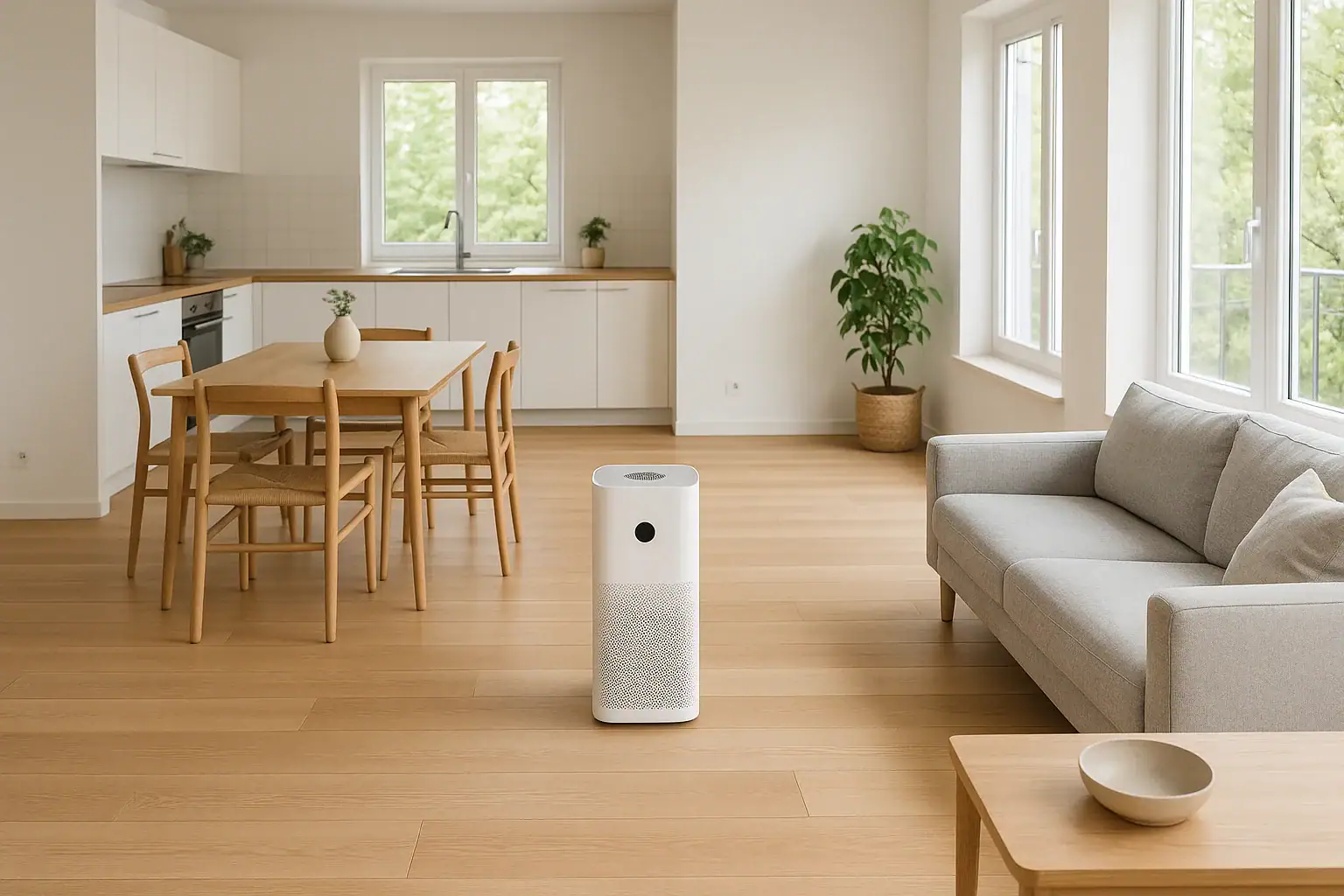
Open floor plans are popular for their spacious feel and flexibility, but they also make it harder to control indoor air quality. Cooking odors drift into the living room, dust seems to settle everywhere, and it can be unclear where to place an air purifier so it actually does its job. This guide walks through how to position an air purifier in an open floor plan, how many units you may need, and what you can realistically expect from them in a typical home. The goal is to help you improve comfort and air freshness without wasting money or energy.
How Air Purifiers Work in Large, Open Spaces
Before deciding where to place an air purifier, it helps to understand how it moves air and what it can and cannot do in a large combined area like a kitchen, dining, and living room.
Basic airflow and filtration
Most portable air purifiers work by pulling air in through an intake, passing it through one or more filters, and releasing the cleaned air back into the room. Over time, this circulation reduces the level of particles such as dust, pollen, pet dander, and some smoke.
- Intake and outlet: Air is drawn in from surrounding space and released through a vent or grille.
- Continuous circulation: The purifier needs to run long enough to cycle the room air multiple times per hour.
- Coverage ratings: Each unit is rated for a certain room size, usually in square feet.
Challenges in an open floor plan
In a traditional home with separate rooms, a purifier only needs to manage one contained space. In an open floor plan, there are fewer walls and doors, so air moves more freely. This has pros and cons:
- Pros: A purifier can influence a larger area if airflow is good and obstacles are minimal.
- Cons: Pollutants from cooking, pets, or entryways can spread quickly across the entire space.
- Result: A single purifier might help, but it may not fully control air quality across the whole open area.
Setting Realistic Expectations for Air Purifiers in Open Layouts
It is important to know what an air purifier can reasonably accomplish in a large open area so you are not disappointed.
What an air purifier can do
- Reduce airborne particles such as dust, pollen, pet dander, and some smoke.
- Help with seasonal allergies by lowering allergen levels in frequently used zones.
- Limit the spread of cooking smoke and fine particles if placed thoughtfully.
- Improve overall comfort by making the air feel fresher and less stuffy.
What an air purifier cannot do
- Instantly remove all odors, especially strong cooking or chemical smells.
- Overcome heavy sources of pollution, such as constant smoking indoors.
- Replace proper ventilation, range hoods, or bathroom exhaust fans.
- Clean surfaces; dust still needs to be wiped or vacuumed.
Reasonable expectations in an open floor plan
In a large open space, expect gradual improvement rather than overnight perfection. If the purifier is correctly sized and placed, you should notice:
- Less visible dust floating in sunlight beams.
- Reduced lingering haze after cooking.
- Milder allergy symptoms in the zones where you spend the most time.
- Cleaner air feel when you first walk into the main living area.
Step 1: Measure and Map Your Open Floor Plan
Good placement starts with understanding the size and shape of your space. An open floor plan can mean many things, from a modest combined living and dining room to a large great room with high ceilings.
Measure the space
Use a tape measure or a digital measuring tool to get the length and width of the main open area.
- Measure the longest dimension (for example, kitchen to far wall of living room).
- Measure the widest dimension (for example, window wall to opposite wall).
- Multiply length by width to get approximate square footage.
Consider ceiling height
High ceilings increase the volume of air that needs to be cleaned.
- Standard ceiling height is around 8 to 9 feet.
- Vaulted or two-story ceilings increase air volume significantly.
- If your ceilings are high, you may need a more powerful unit or more than one purifier.
Identify main activity zones
Most open floor plans have a few key zones:
- Cooking area or kitchen island
- Dining area
- Primary seating or TV area
- Entryway or mudroom zone, if it opens into the same space
Mark these zones on a simple sketch. This helps you see where pollutants are generated and where you spend the most time.
Step 2: Decide How Many Air Purifiers You Need
Once you know the size and layout of your open floor plan, you can decide whether a single purifier is enough or if you should plan for multiple units.
Single purifier vs. multiple units
In many open layouts, a single purifier is a starting point, not a complete solution. Consider the following:
- Small open spaces: If your combined area is closer to 400–600 square feet with standard ceilings, one well-placed purifier may be sufficient for general improvement.
- Medium spaces: For 600–900 square feet, one strong unit can help, but two units placed in different zones usually perform better.
- Large or high-ceiling spaces: For over 900 square feet or rooms with tall ceilings, plan on multiple purifiers to avoid weak spots.
Prioritize zones if you start with one unit
If you prefer to start with a single purifier, prioritize:
- The zone where you spend the most time, often the main seating area.
- The area closest to pollution sources, such as the kitchen, if cooking smoke is a major concern.
- The center of the combined space if you want more balanced coverage.
You can always add a second unit later if you notice that certain areas still feel stuffy or dusty.
Step 3: Best Placement for an Air Purifier in an Open Floor Plan
Placement has a big impact on performance. Even a strong purifier will struggle if it is hidden behind furniture or stuck in a corner with poor airflow.
General placement guidelines
- Keep it off the wall: Place the purifier at least 6–12 inches away from walls or large furniture so air can flow freely around it.
- Avoid tight corners: Corners restrict intake and outlet airflow, reducing efficiency.
- Use open pathways: Position the unit near natural air pathways, such as between the kitchen and living area or along a central walkway.
- Stay clear of obstacles: Do not block the intake or outlet with couches, curtains, or cabinets.
- Place on a flat, stable surface: Use the floor or a sturdy low table if the manufacturer allows elevated placement.
Placing a single purifier
If you are working with one unit in a large open plan, these strategies can help:
- Central but practical location: Aim for a spot roughly in the middle of the combined space, but not where it will be tripped over.
- Near main seating: If allergies or comfort are your main concerns, place the purifier closer to the living room seating area than the far edge of the kitchen.
- Offset from the kitchen: For cooking smoke, position it just outside the kitchen zone so it can capture particles that drift into the rest of the space.
Placing multiple purifiers
With two or more purifiers, you can target specific zones within the open plan.
- One near the kitchen: Place a unit a few feet outside the cooking area, ideally in the path where air tends to flow toward the living or dining area.
- One in the main seating area: Position another unit near the sofa or TV area, where people spend the most time.
- Optional unit near entryway: If your front door opens directly into the space, a purifier near the entry can help capture outdoor dust and pollen.
Height and orientation
- Typical height: Floor placement is usually fine, as long as vents are not blocked by rugs or low furniture.
- Elevated placement: If allowed, a low table or stand can help the purifier pull air from both seated and standing height.
- Direction of airflow: Aim the outlet toward the area you want to benefit most, such as the seating zone.
Step 4: Avoid Common Placement Mistakes
Small placement errors can make a noticeable difference in how well your air purifier performs.
Places to avoid
- Right next to walls or large furniture: This restricts airflow and can cause air to recirculate in a small pocket instead of the whole space.
- Behind couches or curtains: Airflow is blocked, and the purifier mainly cleans the air around the furniture.
- Directly under shelves or cabinets: Overhead obstructions can disrupt the outlet airflow.
- In damp areas: Avoid placing the unit where it might be exposed to moisture, such as right next to a sink.
- Near heat sources: Keep away from radiators, fireplaces, or heat vents that could affect performance or safety.
Noise and comfort considerations
In an open floor plan, noise carries. To balance performance and comfort:
- Do not place the purifier directly beside the main seating position if fan noise bothers you.
- Try positioning it a few feet away, angled toward the center of the room.
- Use lower fan speeds during quiet activities and higher speeds when the space is active or when cooking.
Step 5: Match Operation to Your Daily Routine
Placement is only half the equation. How you run the purifier matters just as much, especially in a large open area that sees constant activity.
Run time and fan speed
- Continuous operation: For open floor plans, running the purifier for most of the day is more effective than short bursts.
- Higher speed during peak pollution: Use a higher fan setting while cooking, cleaning, or when windows are open.
- Lower speed for background use: Once the air is cleaner, a lower speed can maintain air quality with less noise.
Coordinate with ventilation
Air purifiers work best alongside good ventilation practices.
- Use your kitchen exhaust fan whenever you cook.
- Open windows briefly when outdoor air quality is good to bring in fresh air.
- Close windows during high pollen days or smoke events and let the purifier handle indoor air.
Adjust placement over time
Do not be afraid to experiment. After a week or two, evaluate how the air feels in different parts of the open plan.
- If cooking smells linger in the living area, move the purifier slightly closer to the kitchen.
- If dust seems worse near windows or sliding doors, try shifting the unit toward that side of the room.
- Mark successful spots so you can return to them after rearranging furniture.
Maintenance and Long-Term Expectations
To keep your air purifier performing well in a large open space, regular maintenance is essential.
Filter care
- Check filters on the schedule suggested by the manufacturer.
- Vacuum pre-filters if they are reusable to remove visible dust and hair.
- Replace main filters when indicated; clogged filters reduce airflow and coverage.
Monitoring air quality
You can track how well your setup is working by:
- Noticing changes in allergy symptoms or respiratory comfort.
- Watching for reductions in visible dust on surfaces between cleanings.
- Using a basic indoor air quality monitor if you want data on particles or other pollutants.
When to add another purifier
Consider adding a second unit if:
- Odors or haze still linger in parts of the open floor plan after cooking.
- One side of the room feels stuffy while the other feels fresh.
- Your current unit is already sized near the limit of your square footage and runs on high most of the time.
Putting It All Together
In an open floor plan, an air purifier is most effective when it is properly sized, thoughtfully placed, and run consistently. Instead of tucking it away in a corner, treat it as part of your overall comfort strategy, similar to how you think about heating, cooling, and lighting.
Start by measuring your space, deciding whether one or more units make sense, and choosing central locations with good airflow. Avoid blocking the intake or outlet, adjust fan speed to match your daily routine, and be realistic about what the purifier can achieve. With these steps, you can create a cleaner, more comfortable environment across your open kitchen, dining, and living areas and make the most of your investment in better indoor air.
If you want to explore more ways to improve indoor comfort and air quality throughout your home, consider reviewing additional resources on air movement, humidity control, and ventilation strategies tailored to modern living spaces.
 Air Purifier for Pet Odors: What It Helps With and What It Won’t Remove
 Humidifier Placement in a Bedroom: Where It Works Best and What to Avoid
 Why Your Dehumidifier Makes the Room Feel Warmer