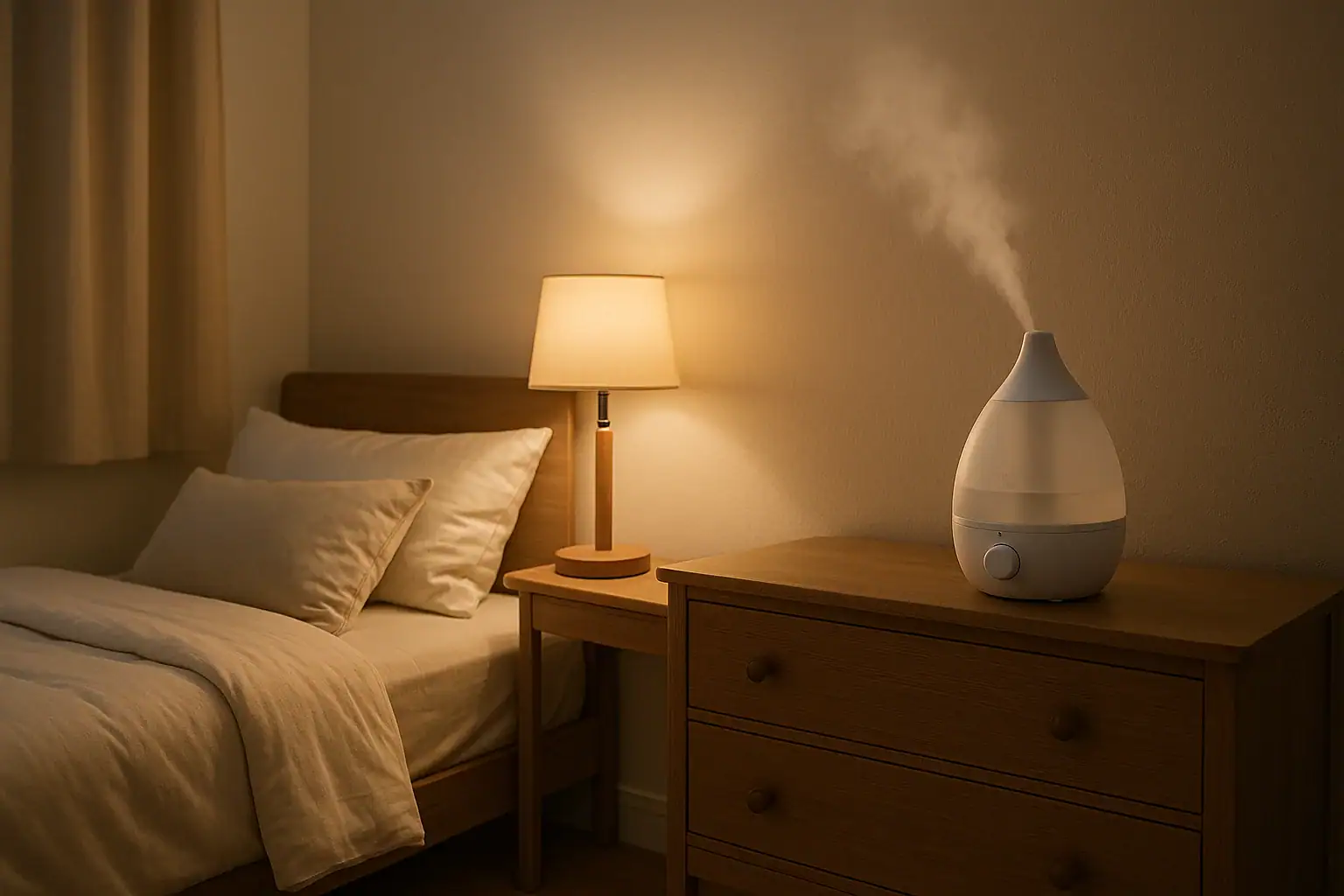
Using a humidifier in your bedroom can ease dry skin, calm scratchy throats, and make breathing more comfortable, especially during heating or cooling seasons. But where you place the unit matters just as much as turning it on. Good placement helps the moisture spread evenly, protects your furniture and walls, and keeps you safer while you sleep. Poor placement can leave parts of the room dry, create damp spots, or even damage surfaces over time.
This guide explains exactly where to put a humidifier in a bedroom, how far it should be from your bed, what surfaces are safest, and what to avoid. You will also find tips for different room sizes, shared bedrooms, and children’s rooms, plus simple maintenance habits that keep your air cleaner and your humidifier working well.
Why Bedroom Humidifier Placement Matters
Humidity is easiest to manage when the moisture is released into open air and has room to circulate. Where you set your humidifier affects:
- Comfort: The closer you are to the gentle mist, the more you feel the benefits, but too close can be uncomfortable.
- Coverage: A central, open spot helps moisture reach more of the room instead of just one corner.
- Safety: Stable placement away from cords, bedding, and outlets lowers the risk of spills and electrical issues.
- Cleanliness: Good airflow reduces condensation on walls, windows, and furniture, which can otherwise encourage mold.
- Noise and sleep: Distance and direction affect how much you hear the unit at night.
With a little planning, you can position your humidifier so it supports better sleep without creating new problems.
Best General Spot for a Humidifier in a Bedroom
There is no single perfect location for every bedroom, but a few simple rules work in most spaces. Aim for a spot that is elevated, stable, and open to air circulation.
Ideal Distance From Your Bed
For most adults, a good starting point is to place the humidifier:
- About 3 to 6 feet from the side or foot of the bed
- Where the mist can drift toward you, but not directly into your face
- Far enough away that bedding and pillows never get damp
This distance lets you feel the benefits while avoiding a concentrated stream of moisture that can irritate your nose or throat, especially with cool mist units.
Height and Surface Choice
Placement height affects how the mist spreads through the room. In many bedrooms, the best option is:
- A waist-high to chest-high surface, such as a dresser or sturdy side table
- A surface that is level and stable, so the unit cannot tip if bumped
- With a waterproof mat or tray under the humidifier to catch drips or minor spills
Placing the unit directly on the floor is not ideal because the mist may not circulate as well, and carpets or rugs can hold moisture if there are leaks or spills.
Room Center vs. Corner Placement
Whenever possible, choose a location that is:
- Closer to the center of the room than to a corner
- At least a few inches away from walls or large furniture
- Not blocked by tall items like wardrobes or bookcases
Moisture spreads more evenly when it is not trapped immediately against a wall or in a tight corner. If your room layout forces you to use a corner, pull the unit a bit away from the wall and angle the mist toward the open part of the room.
How Far From Walls, Windows, and Electronics?
Moisture can slowly damage surfaces and devices if they are constantly exposed. A few inches of space can make a big difference over time.
Distance From Walls and Windows
To protect paint, drywall, and window frames, try to keep your humidifier:
- At least 12 inches away from walls
- At least 18 inches away from windows and window sills
- Turned so the mist is not aimed directly at a wall or glass
Windows are especially prone to condensation. If you notice fogging or water droplets on the glass or sill, move the unit farther away or reduce the output level.
Distance From Electronics and Outlets
Moisture and electronics do not mix. To reduce the risk of damage:
- Keep the humidifier at least 3 feet away from televisions, computers, speakers, and other devices.
- Do not aim the mist toward power strips, chargers, or outlets.
- Route the power cord so it does not cross walkways or create a tripping hazard.
If your bedroom has a desk with electronics, avoid placing the humidifier directly on that surface. Choose a separate table or dresser instead.
What to Avoid When Placing a Humidifier in a Bedroom
Some spots might seem convenient but can lead to problems over time. Avoid these common placement mistakes.
Avoid Direct Contact With Bedding
Do not place the humidifier:
- On the bed or on a pillow
- On a nightstand where the mist blows straight onto your face
- Close enough that blankets or sheets can fall over it
Direct contact with bedding can block vents, cause damp fabrics, and increase the risk of tipping or spills.
Avoid Tight, Enclosed Spaces
Humidifiers need open air. Avoid placing them:
- Inside closets or cabinets
- On shelves with low clearance above the unit
- Under hanging clothes or fabric
Enclosed spaces can trap moisture, raising humidity too high in a small area and creating a perfect environment for mold growth.
Avoid Unstable or Soft Surfaces
To prevent tipping and spills, do not put your humidifier on:
- Soft, uneven surfaces such as beds or upholstered stools
- Stacked books, boxes, or anything that can shift easily
- Sloped or wobbly tables
Even a small bump during the night can knock the unit over if the base is not solid and level.
Avoid Direct Sunlight and Heat Sources
Direct sunlight and heat can affect how the unit runs and how clean the water stays. Try not to place the humidifier:
- Right next to radiators, baseboard heaters, or space heaters
- On window sills with strong, direct sunlight
- On top of warm electronics or near vents blowing hot air
Heat can encourage faster mineral buildup and may shorten the life of the unit. It can also cause water to evaporate unevenly inside the tank.
Adjusting Placement for Different Bedroom Types
Room size, layout, and who is sleeping in the room all influence the best humidifier location. Use the ideas below to fine-tune placement for your space.
Small Bedrooms
In a small bedroom, it is easy to over-humidify the air if the unit is too close to the bed. To keep things balanced:
- Place the unit on a small table or dresser across the room from the bed, if possible.
- Use a lower mist setting and monitor how the room feels in the morning.
- Check walls and windows for condensation and adjust distance or output if you see moisture.
Large Bedrooms
Larger rooms may need more careful placement to feel the benefits near the bed. In a spacious bedroom:
- Place the humidifier on a stable surface between the bed and the center of the room.
- If the room is very large, consider placing the unit closer to the side of the bed you use most, while keeping the 3 to 6 foot distance.
- Make sure doors and windows are closed at night so the moisture stays in the room.
Shared Bedrooms
When two people share a bedroom, you want humidity spread fairly evenly. To balance comfort:
- Place the humidifier roughly equal distance from both sides of the bed, often near the foot of the bed.
- Aim the mist slightly upward and toward the center of the room, not directly at either person.
- If one person is more sensitive, position the unit closer to the person who needs more moisture, but still not within arm’s reach.
Children’s Bedrooms and Nurseries
Safety is the top priority in rooms used by children. For a child’s bedroom:
- Place the humidifier well out of reach, usually on a high dresser or shelf that is sturdy and secure.
- Keep it at least 3 feet from the crib or bed so mist does not blow directly on the child.
- Make sure cords are tucked away and cannot be pulled.
- Check the area daily for any damp spots on walls, windows, or bedding.
Children may be more sensitive to high humidity, so consider using a humidity gauge in the room to stay within a comfortable range.
Using a Humidity Gauge to Fine-Tune Placement
Even with careful placement, it helps to know what the actual humidity level is in your bedroom. A small, inexpensive humidity gauge can guide your setup.
For most bedrooms, a comfortable indoor humidity range is:
- Around 30 to 50 percent relative humidity
To use a gauge effectively:
- Place the gauge on a nightstand or dresser at about the same height where you sleep.
- Run the humidifier for several hours and check the reading before bed and again in the morning.
- If humidity is consistently above 50 percent, move the unit farther away, lower the output, or shorten the run time.
- If humidity is below 30 percent, move the unit slightly closer or increase the mist level.
Over time, you will find the distance and settings that keep your room in a comfortable range without guesswork.
Nighttime Operation: Noise, Airflow, and Comfort
Because most people run bedroom humidifiers at night, consider how placement affects your sleep environment beyond just humidity.
Managing Noise
To keep noise from disturbing sleep:
- Place the unit several feet away from your head, not directly beside your pillow.
- If the sound is distracting, move the unit farther away rather than turning it off completely.
- Avoid placing it on hollow or rattling furniture that can amplify vibration.
Working With Bedroom Airflow
Airflow from fans or vents can help distribute moisture or push it away from you, depending on placement. You can:
- Place the humidifier so the mist drifts with the natural airflow in the room, not directly into a vent.
- If you use a ceiling fan on low, position the unit so the upward mist can be gently mixed into the room air.
- Avoid placing it directly under a strong vent that will blow the mist away too quickly.
Simple Maintenance Habits for Cleaner Bedroom Air
Even perfect placement will not help if the humidifier is dirty or filled with poor-quality water. Basic maintenance keeps your air cleaner and your bedroom more comfortable.
Daily and Weekly Tasks
Build these habits into your routine:
- Empty and refill the tank daily with fresh water so it does not sit for long periods.
- Wipe down the exterior and the area around the unit regularly to catch any drips.
- Clean the tank and base weekly following the manufacturer’s instructions, often using a mild cleaning solution and a soft brush.
- Rinse thoroughly after cleaning so no cleaner remains in the tank.
Choosing Water and Watching for Buildup
Water quality affects how often you need to clean the humidifier and how it affects the room:
- If your tap water is very hard, you may notice white dust on furniture. In that case, consider using filtered or low-mineral water.
- Check the mist outlet and surrounding area for mineral deposits or film and clean as needed.
- If you notice a musty smell, turn off the unit, clean it thoroughly, and let all parts dry before using it again.
Quick Bedroom Humidifier Placement Checklist
Use this short checklist when you set up or move your bedroom humidifier:
- Is it on a stable, level, water-safe surface with a tray or mat underneath?
- Is it 3 to 6 feet from the bed, not blowing directly on your face?
- Is it at least 12 inches from walls and 18 inches from windows?
- Is it away from electronics, outlets, and power strips?
- Is it out of reach of children and pets and away from walkways?
- Is the mist aimed toward the open part of the room, not into a corner?
- Are you checking humidity levels and adjusting placement or settings as needed?
With thoughtful placement and simple upkeep, a bedroom humidifier can quietly support better sleep, easier breathing, and a more comfortable home environment throughout the year.
 Best Bedroom Temperature Setup for Sleep Without Cooling Your Whole House
 Air Purifier Placement in an Open Floor Plan: Practical Guide and Realistic Expectations
 HVAC Filter Arrow Direction: Common Installation Mistakes and How to Fix Them