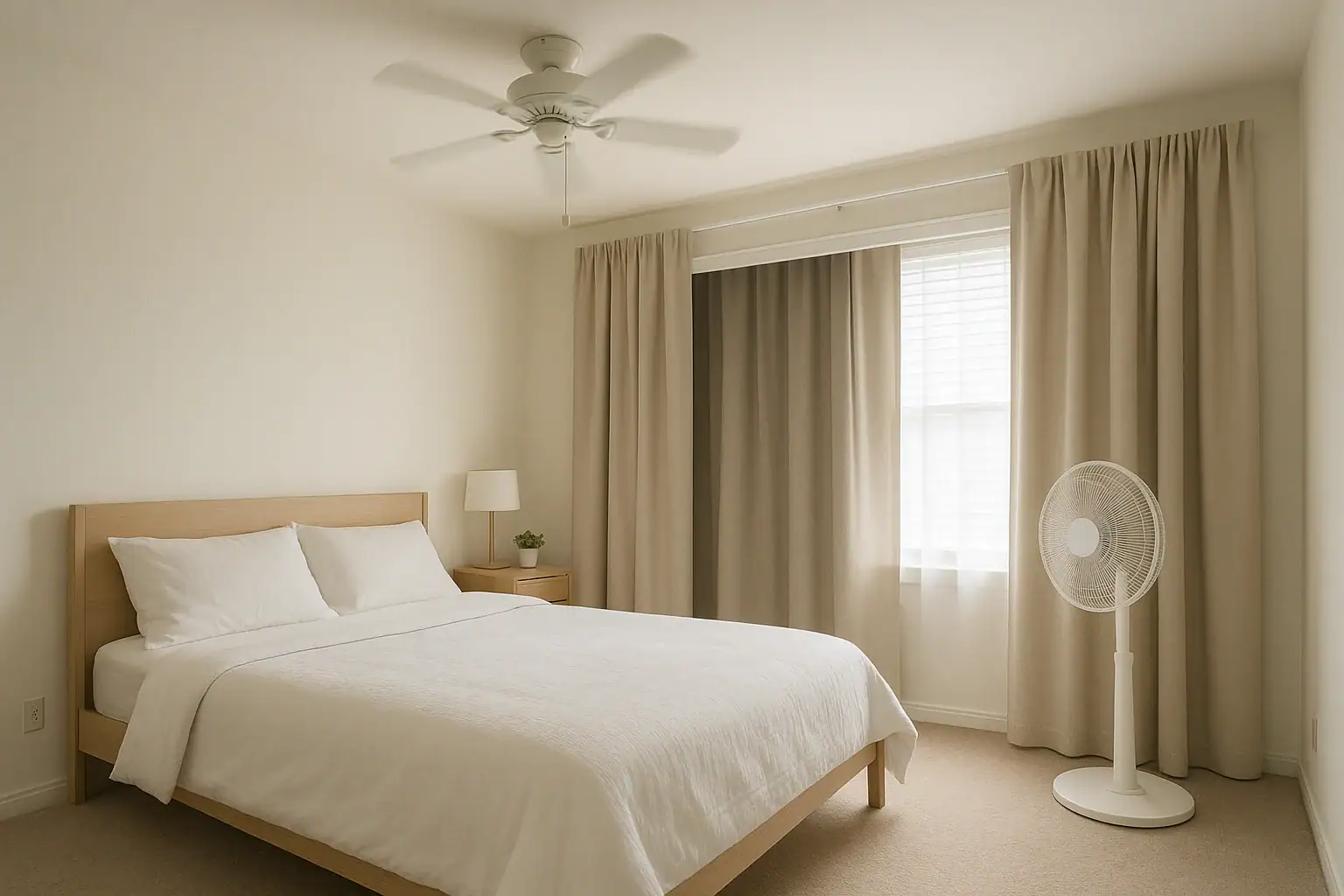
Keeping your bedroom cool on warm nights can feel like a constant battle, especially if you are trying not to rely on lowering the thermostat too much. A cooler bedroom is important for quality sleep, comfort, and even energy savings, but blasting the air conditioning is not the only option. With a few smart adjustments to airflow, insulation, lighting, and daily habits, you can make your bedroom feel noticeably cooler while keeping your thermostat at a more moderate setting.
This guide walks you through practical, low-stress ways to cool a bedroom without overusing your air conditioning. You will learn how to use fans more effectively, block heat from sunlight, manage humidity, and rearrange your room for better airflow. Most of these ideas are low-cost or free, and you can combine several of them for a big impact on comfort and energy use.
Why Your Bedroom Feels Hot Even With the Thermostat Up
Before changing your setup, it helps to understand why your bedroom might feel hotter than the rest of your home. Several factors can make one room feel stuffy and warm even when the thermostat says the temperature is reasonable.
- Sun exposure: South- and west-facing rooms absorb more afternoon sun, which can trap heat in walls, windows, and furniture.
- Poor airflow: Closed doors, blocked vents, and heavy furniture can limit air circulation and create hot spots.
- Heat from electronics: TVs, computers, game systems, and chargers all give off heat, especially in small spaces.
- Insulation issues: Thin walls, uninsulated attics, or drafty windows can let in outdoor heat.
- Body heat and bedding: Thick comforters, foam mattresses, and multiple layers can trap warmth around your body.
Once you know what is causing the extra warmth, you can target the right solutions instead of just lowering the thermostat.
Use Fans Strategically for Better Airflow
Fans do not actually lower the temperature of a room, but they make you feel cooler by moving air across your skin and helping sweat evaporate. When used correctly, fans can make a room feel several degrees cooler and let you keep the thermostat a bit higher.
Optimize Your Ceiling Fan Direction
If you have a ceiling fan, the direction of the blades matters. In warm weather, the fan should spin so that it pushes air downward, creating a gentle breeze.
- Stand under the fan and turn it on low or medium.
- If you feel a noticeable breeze directly below, it is set correctly for summer.
- If not, turn the fan off and flip the small switch on the housing to reverse the direction.
Use a lower speed at night to avoid drying out your eyes or making the room too drafty while you sleep.
Position a Box or Pedestal Fan for Cross-Breeze
A single fan in the corner of the room is better than nothing, but you can get more cooling power by creating a cross-breeze.
- Place a fan near a window on the cooler side of your home to pull in fresh air.
- Open a door or another window on the opposite side of the room or hallway to let warm air escape.
- Aim the fan slightly upward so it moves air across the room instead of just at your feet.
At night, if the outdoor air is cooler, you can place a fan in the window facing outward to push hot air out and draw cooler air in from other openings.
Use Fans Safely
Always place fans on stable surfaces where they will not tip, keep cords out of walkways, and avoid blocking exits. Clean fan blades regularly so dust does not blow around your bedroom.
Block Heat From Sunlight and Windows
Windows are one of the biggest sources of heat in a bedroom. Direct sunlight can quickly warm up the air and surfaces, and thin glass can let outdoor heat radiate inside. Reducing heat gain from windows is one of the most effective ways to keep a bedroom cooler without changing the thermostat.
Close Blinds and Curtains During the Hottest Hours
Simple habits can make a big difference:
- Close blinds, shades, or curtains in your bedroom before the sun hits that side of the house.
- Keep them closed through the late afternoon, when outdoor temperatures peak.
- Open them in the evening once the sun is down and the air outside cools.
Light-colored window coverings help reflect heat, while darker fabrics tend to absorb it. If your bedroom gets strong afternoon sun, consider using thicker curtains or layered window treatments to block more heat.
Seal Drafts and Gaps Around Windows
Even small gaps can let hot air seep into your bedroom. Inspect around the window frame and sill for drafts.
- Use weatherstripping or simple foam tape around movable parts of the window.
- Apply caulk to visible cracks where the frame meets the wall.
- Use draft stoppers or rolled towels along leaky sills as a temporary fix.
Sealing these gaps helps keep hot air out in summer and warm air in during winter, improving comfort year-round.
Reduce Heat Sources Inside the Bedroom
Many everyday items give off heat without you noticing. Reducing these sources can help your bedroom stay cooler, especially in the evening when you are trying to fall asleep.
Limit Electronics and Standby Power
Electronics and chargers can add a surprising amount of warmth in a small room.
- Unplug chargers, laptops, and other devices when you are not using them.
- Avoid running gaming systems, large TVs, or multiple screens right before bed.
- Use a power strip so you can switch off several devices at once.
Not only does this reduce heat, it can also cut down on energy use and blue light exposure at night.
Switch to Cooler Lighting
Traditional bulbs can give off a lot of heat. If your bedroom lighting feels warm to the touch, it is likely adding to the temperature.
- Use energy-efficient bulbs that produce less heat.
- Rely more on small lamps instead of bright overhead fixtures.
- Turn off unnecessary lights when you are not in the room.
Soft, lower-intensity light in the evening can also help signal your body that it is time to wind down.
Choose Bedding and Sleepwear That Stay Cool
Your bed itself can trap a lot of heat. By choosing breathable materials and adjusting your layers, you can feel cooler even if the room temperature stays the same.
Use Breathable Sheets and Lightweight Covers
Dense, heavy fabrics hold onto heat and moisture, while breathable materials allow air to circulate around your body.
- Use lightweight sheets with a moderate thread count rather than very thick ones.
- Layer a light blanket over your sheet instead of a heavy comforter.
- Keep an extra light throw nearby if you tend to get cooler toward morning.
It can help to rotate bedding seasonally, using your lightest sets in the warmer months.
Consider Your Mattress and Pillows
Some mattresses and pillows trap more heat than others. If your bed feels warm to the touch, you may be sleeping on materials that hold heat.
- Use a breathable mattress protector rather than a thick, non-ventilated cover.
- Choose pillows with good airflow and avoid very dense, solid foam styles if they make you feel hot.
- Rotate or flip your mattress as recommended to keep it from sagging and trapping heat around your body.
Wear Lightweight Sleepwear
What you wear to bed matters as much as your bedding.
- Choose loose, breathable sleepwear that does not cling tightly to your skin.
- Avoid heavy socks and thick layers unless your feet get very cold.
- Consider using separate lighter sets of sleepwear during the warmest months.
Improve Air Movement and Ventilation
Even if your thermostat is set higher, moving air in and out of your bedroom can make a big difference in comfort. Good ventilation helps remove heat, moisture, and stale air.
Keep Interior Doors and Vents Open
If your bedroom door is always closed, air can get trapped and feel stuffy.
- Keep the door at least partially open when possible to allow air to circulate.
- Make sure supply vents and return grilles are not blocked by furniture, rugs, or curtains.
- Vacuum vents occasionally to remove dust that can restrict airflow.
Use Cooler Night Air When Available
In many parts of the United States, outdoor temperatures drop at night, even after a hot day. You can take advantage of this natural cooling.
- Open windows in the evening when the outdoor air feels cooler than your bedroom.
- Use a fan to pull cooler air in and push warmer air out.
- Close windows and blinds again in the morning before the day heats up.
Always consider safety and security when leaving windows open, especially on lower floors.
Manage Humidity for a Cooler Feel
High humidity makes the air feel warmer and more uncomfortable because sweat does not evaporate as easily from your skin. Even if the thermostat reading is not high, a humid bedroom can feel sticky and hot.
Reduce Moisture Sources
Look for ways to reduce extra moisture in and around your bedroom.
- Use bathroom exhaust fans during and after showers to keep steam from drifting into nearby rooms.
- Avoid drying wet clothes in your bedroom.
- Keep plants that require heavy watering out of small, closed bedrooms.
Ventilate After Humid Activities
If you exercise in or near your bedroom, cook in an adjoining space, or run a humidifier, make sure to ventilate afterward.
- Open a window for a short time to let humid air escape.
- Run a fan to move moist air out and draw drier air in.
Keeping humidity in a comfortable range can make your bedroom feel cooler without changing the thermostat.
Rearrange Furniture for Better Comfort
The way your furniture is arranged can affect how cool or warm you feel in bed. Simple changes can improve airflow and reduce heat buildup around where you sleep.
Move the Bed Away From Hot Spots
Check what is around and under your bed.
- Avoid placing your bed directly under a sun-filled window if that wall gets very warm.
- Move the bed away from large electronics or lamps that give off heat.
- Leave some space between the bed and the wall so air can move around you.
Clear the Area Around Vents
Air conditioning and heating vents need open space to work well.
- Make sure your bed frame, dresser, or nightstands are not blocking vents.
- Keep thick rugs or storage boxes away from floor vents.
- Allow at least several inches of clearance in front of wall vents.
When cool air can flow freely, your bedroom will reach a more even temperature without extra thermostat adjustments.
Adopt Cooling Habits Before Bed
Your evening routine can either help you feel cooler or make you feel warmer. A few small habit changes can support a cooler bedroom and better sleep.
Cool Your Body, Not Just the Room
Sometimes lowering your own body temperature slightly is enough to feel comfortable, even if the room is not very cool.
- Take a lukewarm shower before bed to rinse off sweat and help your body cool.
- Drink cool water in the evening, but avoid very large amounts right before bed.
- Avoid heavy meals and alcohol late at night, as they can make you feel warmer.
Avoid Heat-Building Activities in the Bedroom
Certain activities can add heat to your bedroom right before you want to sleep.
- Avoid ironing, blow-drying hair, or using other heat-producing tools in the bedroom.
- Try not to run a computer or game system for long periods right before bed.
- Keep heavy exercise earlier in the day so your body has time to cool down.
When to Consider Bigger Changes
If you have tried several of these ideas and your bedroom still feels uncomfortably hot, you may be dealing with a larger issue such as poor insulation, duct imbalances, or aging equipment. In that case, it can be helpful to:
- Check attic insulation above your bedroom for gaps or thin spots.
- Look for signs that your bedroom is much hotter than other rooms, which can indicate airflow problems.
- Use a simple thermometer to compare temperatures in different parts of your home.
Addressing these underlying issues can improve your comfort in every season and reduce how often you feel tempted to lower the thermostat.
Putting It All Together
Making your bedroom cooler without turning the thermostat way down is all about combining small, practical steps. Use fans to move air, block heat from windows, reduce indoor heat sources, and choose breathable bedding. Improve ventilation, manage humidity, and rearrange furniture to support better airflow. Finally, adopt a cooling evening routine that helps your body and your bedroom stay comfortable.
You do not need to do everything at once. Start with the easiest changes, notice what makes the biggest difference, and build from there. Over time, you can create a bedroom that feels cooler, supports better sleep, and helps you keep your thermostat at a more energy-efficient setting.
Cool the sleeper, not just the room
Use light, breathable sleepwear and bedding, keep a cool drink nearby, and take a comfortably cool shower before bed. Avoid extreme cold packs directly on skin and keep electrical cooling products in good condition. People who are older, very young, pregnant, taking certain medicines, or living with heart or breathing conditions can be more vulnerable to heat; do not rely on comfort tricks when heat illness is possible.
Build a safe nighttime cooling routine
Close blinds or exterior shades before direct sun reaches the room. After outdoor air becomes cooler than indoor air, use secure windows and a fan to move cooler air through the space; close them again when the outdoor temperature rises. In hot, humid weather, open-window ventilation may be less effective, so use dehumidification or efficient mechanical cooling as needed.
The U.S. Department of Energy’s home-cooling guidance supports combining shading, ventilation, efficient windows, insulation, and fans to reduce cooling demand. A fan helps people feel cooler but does not lower the room temperature, so turn it off in an empty room.
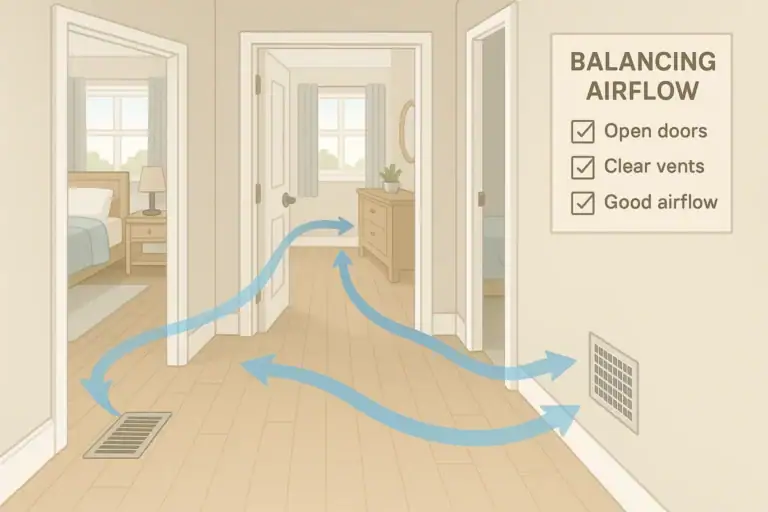 How to Balance Airflow Between Rooms at Home: A Practical Checklist
 How to Reduce Heat From Sunny Windows Without Blocking Natural Light
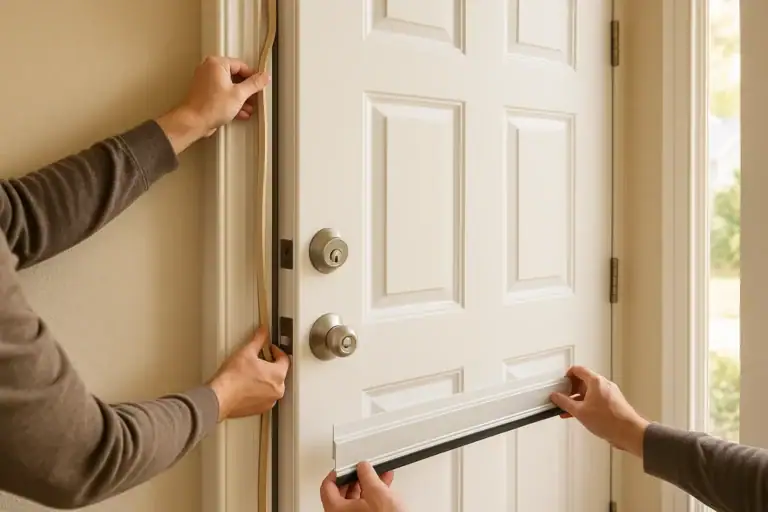 Door Sweep and Weatherstripping Comfort Upgrade Guide