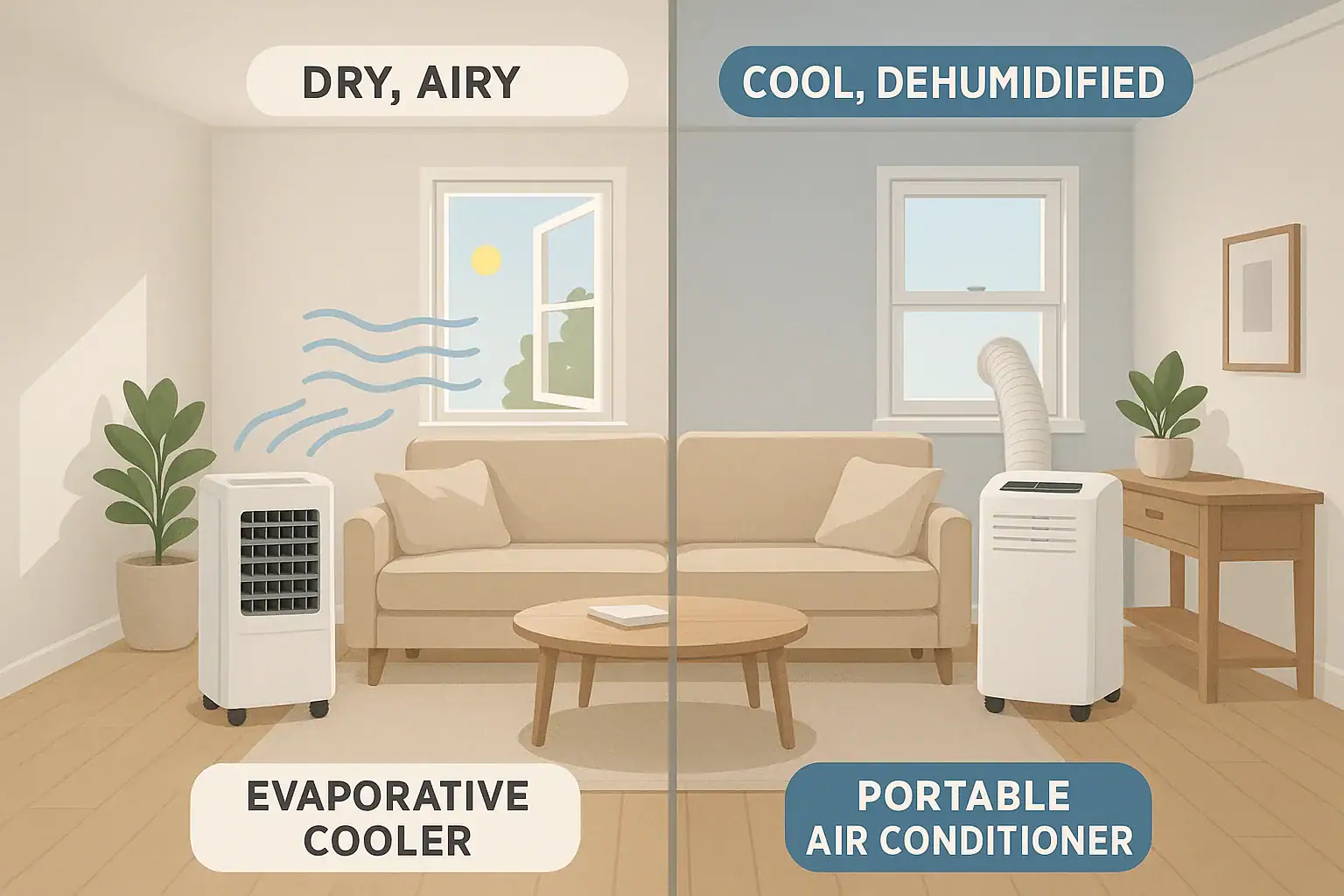
When the weather heats up, many people look for a flexible way to cool a room without installing a full central system or a permanent window unit. Two popular choices are evaporative coolers and portable air conditioners. They may look similar at first glance, but they work very differently and are not interchangeable in every climate or room type. Understanding these differences is essential if you want to stay comfortable, manage noise, and avoid wasting energy or money.
This guide compares evaporative coolers vs portable AC units for home comfort in the United States. You will learn how each system works, where each one performs best, how much they cost to run, and what to consider for different rooms such as bedrooms, living rooms, and home offices. By the end, you should have a clear idea of which option fits your home, climate, and budget.
How Evaporative Coolers Work
Evaporative coolers, sometimes called swamp coolers, use water evaporation to lower air temperature. They are especially popular in dry regions because they add moisture to the air while cooling it.
Basic operation
Evaporative coolers work using a simple physical process:
- A water tank feeds water to cooling pads.
- A fan pulls warm, dry air through the moist pads.
- As the water evaporates, it absorbs heat from the air.
- The cooler, more humid air is blown into the room.
This process does not rely on a traditional refrigerant cycle. Instead, it uses the natural cooling effect of evaporation, similar to how your skin feels cooler when sweat evaporates.
Ideal conditions for evaporative coolers
Evaporative coolers are most effective when:
- The outdoor air is hot and dry.
- Relative humidity is typically below about 40–50%.
- You can open windows or doors to allow airflow.
They are often a good fit for:
- Desert and high-plains regions
- Dry inland areas during summer
- Garages, workshops, and patios with open airflow
In humid climates, evaporative coolers become less effective because the air is already holding a lot of moisture, so it cannot absorb much more through evaporation.
How Portable Air Conditioners Work
Portable air conditioners use a refrigeration cycle similar to central air or window units. They remove heat and moisture from indoor air and exhaust that heat outdoors through a hose.
Basic operation
Most portable AC units work as follows:
- Warm indoor air is drawn into the unit.
- A compressor circulates refrigerant through coils.
- Heat is absorbed from the indoor air and transferred to the refrigerant.
- The heat is released outdoors through an exhaust hose.
- Cooler, drier air is blown back into the room.
Because they actively remove humidity, portable AC units can make a room feel cooler even at the same air temperature compared with a more humid environment.
Ideal conditions for portable AC units
Portable air conditioners are versatile and can work in a wide range of climates, including humid regions. They are especially useful when:
- You cannot install a window unit due to building rules or window style.
- You want targeted cooling for a bedroom, home office, or rental space.
- You need dehumidification as well as cooling.
However, they do require a way to vent hot air outside, usually through a window, sliding door, or wall vent.
Evaporative Cooler vs Portable AC: Key Differences
Although both devices are used for spot cooling, several major differences affect comfort, cost, and practicality.
1. Cooling performance and temperature drop
Evaporative coolers can lower the temperature by around 5–15 degrees Fahrenheit in dry conditions. The exact drop depends on outdoor temperature and humidity. As humidity rises, their cooling effect weakens.
Portable air conditioners can typically cool a room to a set temperature, often 68–75 degrees Fahrenheit, regardless of outdoor humidity, as long as the unit is properly sized and vented. They can provide a more predictable and controlled indoor climate.
2. Humidity and air quality
Evaporative coolers add moisture to the air. This can be helpful in very dry climates where indoor air often feels parched and uncomfortable. Slightly higher humidity can also reduce dry skin and irritation for some people.
However, in areas that are already humid, extra moisture can make the air feel sticky, encourage mold growth, and make it harder to sleep comfortably.
Portable AC units remove moisture from the air as they cool. This drier air often feels more comfortable in humid regions and can help reduce issues like clammy bedding, musty odors, and condensation on windows.
3. Energy use and operating cost
Evaporative coolers usually consume less electricity because they rely mainly on a fan and water pump. This can translate into lower monthly energy costs in dry climates where they are effective. However, they require regular water refills or a continuous water connection, which adds a small water cost.
Portable AC units generally use more electricity due to the compressor. Energy use varies by size and efficiency rating, but they often cost more to run, especially if used many hours per day. Still, in humid areas, they may be the only practical way to achieve real comfort.
4. Venting and installation
Evaporative coolers do not need a vent hose. They simply blow cooled air into the space. For best performance, you should open a window or door to allow warm, moist air to escape and fresh dry air to enter. Without this airflow, the room can become overly humid and less comfortable.
Portable AC units require at least one exhaust hose to vent hot air outside. This usually means:
- Installing a window kit in a vertical or horizontal window
- Using a sliding door kit
- Or creating a dedicated wall vent
This extra step adds setup time but is necessary for proper cooling.
5. Noise levels
Both types of units produce noise from fans and internal components.
- Evaporative coolers typically sound like a strong fan. Noise levels vary, but many people find them acceptable for living rooms or outdoor areas.
- Portable AC units can be louder due to the compressor. Some models offer a sleep mode with reduced noise, but they may still be noticeable in small bedrooms or quiet offices.
6. Maintenance requirements
Evaporative coolers need regular attention to stay clean and effective:
- Refilling or connecting water supply
- Cleaning or replacing cooling pads
- Draining and cleaning the tank to prevent mineral buildup and odors
Portable AC units also require maintenance, but of a different kind:
- Cleaning or replacing air filters
- Emptying or draining condensate water if not fully self-evaporating
- Checking hoses and seals for air leaks
Choosing for Different Climates in the US
Climate is one of the most important factors when deciding between an evaporative cooler and a portable AC for home comfort.
Dry and semi-arid regions
Areas with hot, dry summers often provide the best environment for evaporative coolers. Examples include many parts of the Southwest and interior West.
In these regions, an evaporative cooler can:
- Provide noticeable cooling with low energy use
- Add comfortable moisture to very dry indoor air
- Work well with open windows and doors for fresh air
A portable AC can still be used in these areas, especially in bedrooms where you want closed windows for noise or security. However, running costs may be higher than an evaporative cooler used under ideal conditions.
Humid and coastal regions
In humid regions, such as much of the Southeast, Gulf Coast, and some coastal areas, evaporative coolers are usually not a good primary cooling option. The air already contains a lot of moisture, so an evaporative cooler may provide only a small temperature drop while making the room feel muggy.
In these climates, a portable AC is usually the better choice because it:
- Removes humidity as it cools
- Provides more consistent temperature control
- Helps reduce mold and mildew risk associated with high humidity
Mixed or variable climates
Some regions experience both dry and humid periods throughout the year. In these areas, you might consider how you plan to use the unit:
- If you mainly need cooling during dry heat waves, an evaporative cooler could still work well.
- If your warm season is long and often humid, a portable AC is usually more reliable.
Room-by-Room Considerations
Beyond climate, think about where and how you will use the cooling device inside your home.
Bedrooms
For sleeping comfort, temperature, noise, and humidity all matter.
- Evaporative cooler: Works best if you can keep a window slightly open for airflow. In dry regions, it can feel refreshing. In humid areas, it may feel too damp for comfortable sleep.
- Portable AC: Better for closed, quiet bedrooms where you want specific temperature control and lower humidity. Noise from the compressor may be a consideration for light sleepers.
Living rooms and open spaces
Living rooms often have more foot traffic and sometimes open to other areas or outdoor spaces.
- Evaporative cooler: Can be effective in dry climates, especially if you can open windows or doors to promote air exchange. Works well when you want a breeze and do not mind some outdoor air mixing in.
- Portable AC: More suitable if you want to keep doors and windows closed, maintain a set temperature, and control humidity, especially in humid regions.
Home offices
In a home office, you may be concerned about noise, equipment heat, and air quality.
- Evaporative cooler: Can provide a gentle breeze and some cooling in dry climates but may raise humidity around electronic equipment. It also relies on open windows, which can increase outdoor noise.
- Portable AC: Often better for controlling both temperature and humidity in a closed office, which can help protect electronics and maintain comfort during long workdays.
Garages, workshops, and outdoor areas
These spaces often have large openings and less insulation.
- Evaporative cooler: A strong option in dry climates because it can push cooler air into semi-open spaces without worrying about sealing windows. It also adds moisture, which is less of a concern in these areas.
- Portable AC: Usually less practical unless the space is well sealed and you can vent the unit properly.
Cost Comparison: Purchase and Long-Term Use
When comparing evaporative coolers vs portable AC units, consider both upfront and ongoing costs.
Upfront cost
In many cases, evaporative coolers are less expensive to purchase than similarly sized portable AC units. However, costs can vary based on capacity, features, and build quality.
Operating cost
Operating costs include electricity and, for evaporative coolers, water use.
- Evaporative coolers: Typically have lower energy use, which can reduce monthly bills in dry climates where they work efficiently.
- Portable AC units: Use more electricity but may be the only option that delivers true comfort in humid climates. Running them only when needed and choosing an appropriately sized unit can help control costs.
Maintenance and replacement
Both types of units have components that wear out over time.
- Evaporative coolers: Cooling pads, pumps, and tanks may need periodic replacement or cleaning.
- Portable AC units: Filters, hoses, and sometimes internal parts may require maintenance or replacement after several seasons.
Pros and Cons at a Glance
The following lists summarize the main advantages and drawbacks of each option.
Evaporative cooler pros
- Lower energy use in dry climates
- Adds moisture to very dry indoor air
- No exhaust hose or complex installation
- Can provide a fresh, breezy feel with open windows
Evaporative cooler cons
- Much less effective in humid climates
- Requires regular water refills and pad maintenance
- Can raise indoor humidity too much if windows are closed
- Cooling level is less precise and depends on outdoor conditions
Portable AC pros
- Works in both dry and humid climates
- Removes humidity for a drier, more comfortable feel
- Provides more precise temperature control
- Good for enclosed bedrooms and home offices
Portable AC cons
- Higher energy use and operating cost
- Requires proper venting through a window or wall
- Can be louder due to the compressor
- Heavier and sometimes more difficult to move between rooms
Which Is Better for Your Home Comfort?
The best choice between an evaporative cooler and a portable AC depends on your climate, home layout, and comfort priorities.
Consider an evaporative cooler if:
- You live in a hot, dry region with low humidity.
- You like the idea of open windows and fresh air circulation.
- You want to minimize electricity use and are comfortable with regular water and pad maintenance.
Consider a portable AC if:
- You live in a humid or mixed climate.
- You want precise temperature control in enclosed rooms.
- You need to reduce humidity for better comfort, sleep, or air quality.
In some homes, a combination of both approaches can make sense. For example, an evaporative cooler might be used in a dry-climate living area during the day, while a portable AC cools a closed bedroom at night.
Next Steps
Before you buy, take a moment to:
- Check your typical summer humidity levels.
- Measure the size of the room you want to cool.
- Decide whether you prefer open windows or a sealed, quiet space.
- Estimate how many hours per day you will run the unit.
By matching the cooling method to your climate and room conditions, you can make a more informed choice that keeps you comfortable while managing energy use and long-term costs. For more home comfort tips and related topics, you can explore additional air and comfort resources at this hub.
 Washable vs Disposable HVAC Filters: Which Is Best for Your Home?
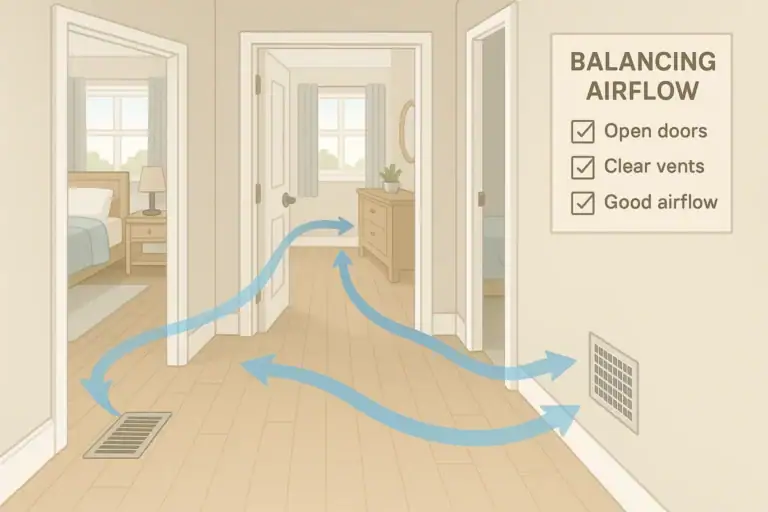 How to Balance Airflow Between Rooms at Home: A Practical Checklist
 Radiator Reflector Panels: A Practical Home Guide