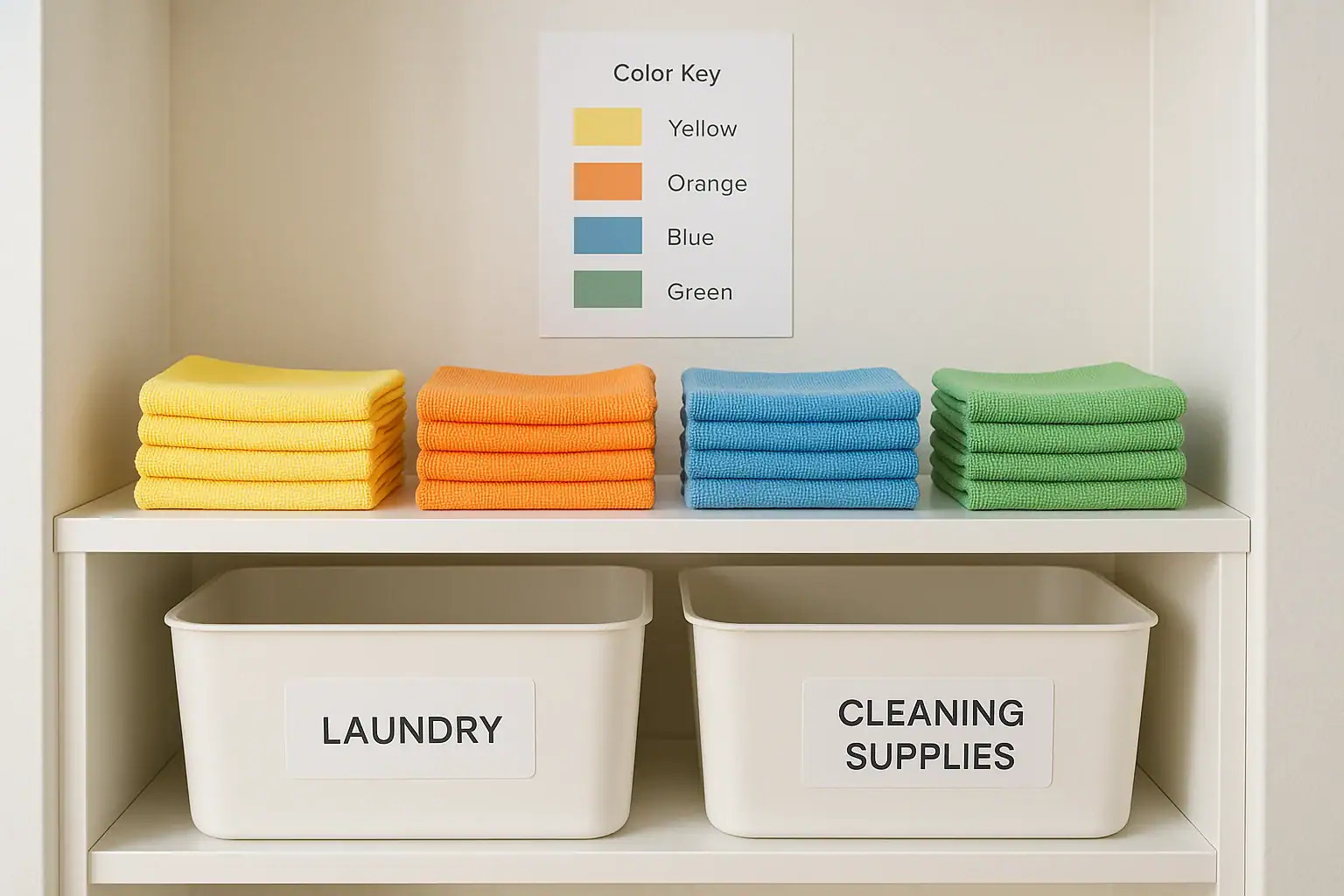
A microfiber cloth color coding system is a simple way to make home cleaning more organized, efficient, and hygienic. Instead of grabbing any cloth for any job, you assign specific colors to specific rooms or tasks. This reduces cross-contamination, cuts down on confusion, and helps everyone in your household follow the same cleaning routine. Once your system is in place, you will spend less time wondering which cloth to use and more time actually getting things clean. This approach works for apartments, large homes, and everything in between, and it is especially helpful if multiple people share cleaning responsibilities. With a little planning, your microfiber cloths can become the backbone of a tidy, well-organized home.
Why Use a Microfiber Cloth Color Coding System?
Color coding is not just about making your cleaning supplies look neat. It is an organization strategy that supports better hygiene and easier routines.
Key benefits
- Reduces cross-contamination: Different colors for bathrooms, kitchens, and general dusting help keep germs from spreading between spaces.
- Simplifies decision-making: You no longer have to guess which cloth is safe for which surface.
- Improves consistency: Everyone in the household follows the same system, so cleaning stays predictable and organized.
- Extends cloth life: When each cloth has a defined purpose, you are less likely to overuse or damage it on the wrong surfaces.
- Makes storage easier: Color groups are simple to sort, store, and grab quickly when it is time to clean.
Basic Principles of a Color Coded Cleaning System
Before you assign colors, it helps to understand the basic principles behind a microfiber cloth color coding system.
Separate by risk level
Some areas of your home naturally carry more germs and grime than others. Bathrooms and kitchens usually have the highest risk, while living rooms and bedrooms are lower risk. Your system should reflect that difference.
- High-risk areas: Bathrooms, kitchen counters, sinks, and trash areas
- Medium-risk areas: Dining tables, entryways, pet zones
- Low-risk areas: Bedrooms, living rooms, home office surfaces
Assign one purpose per color
Each color should have one clear purpose. If you start mixing tasks under the same color, the system becomes confusing and less effective. Keep it simple and easy to remember.
Use the same rules throughout the home
Whatever color you choose for bathrooms, for example, should be used for every bathroom in your home. Consistency is what makes the system work, especially when more than one person is cleaning.
Step-by-Step: Setting Up Your Microfiber Color Coding System
You can build your system in a single afternoon. Follow these steps to set it up and keep it running smoothly.
1. List your main cleaning zones
Start by writing down the main zones in your home. A simple list might include:
- Kitchen
- Bathrooms
- Living room and family room
- Bedrooms
- Entryway and hallway
- Special zones (pet area, craft area, home office)
Think about how you actually move through your cleaning routine. If you always clean the kitchen and dining area together, you can group them as one zone.
2. Decide how many colors you need
Most households can stay organized with four to six colors. Too few colors and you risk mixing tasks; too many colors and the system becomes hard to remember. A good starting point is four colors, then add more if you find you need them.
3. Assign colors to zones and tasks
Choose colors that feel intuitive or easy to remember. Here is a simple example you can copy or adapt:
- Blue: Bathroom sinks, counters, and fixtures
- Green: Kitchen counters, appliances, and cabinet fronts
- Yellow: Dusting in living areas and bedrooms
- Red or another bold color: Toilets and bathroom floors
- Gray or neutral: Glass, mirrors, and windows
You do not have to use these exact colors, but keep the pattern clear. For example, you might reserve the most intense color for the dirtiest jobs so it is easy to remember.
4. Decide how many cloths per color
Next, decide how many cloths you need for each color based on your home size and cleaning habits.
- Small space or apartment: 2–3 cloths per color
- Average single-family home: 4–6 cloths per color
- Larger home or multiple cleaners: 6–8 cloths per color
It is better to have a few extra cloths than to run short and be tempted to reuse a bathroom cloth in another area.
5. Label or chart your system
Once you have chosen colors and tasks, write them down. A simple chart taped inside a cleaning cabinet or closet keeps everyone on the same page.
Example chart:
- Blue = All bathroom surfaces (except toilets and floors)
- Red = Toilets and bathroom floors only
- Green = Kitchen counters, tables, and appliances
- Yellow = Dusting and general surfaces in living areas and bedrooms
- Gray = Glass and mirrors
If you want to go a step further, you can place small tags or stickers on shelves or storage bins that match the cloth colors.
Room-by-Room Color Coding Ideas
Here is how a microfiber cloth color coding system might look in each area of your home.
Kitchen
The kitchen is a high-traffic, high-mess area. A clear color assignment keeps food prep surfaces safer and more organized.
- Primary color: Green (or your chosen kitchen color)
- Use for: Counters, cabinet doors, appliance exteriors, table surfaces
- Optional extra color: A separate color for greasy jobs like stovetops or range hoods
Store kitchen cloths in a drawer or basket near the sink so they are easy to grab when spills happen.
Bathrooms
Bathrooms benefit the most from strict color separation. This is where you want to be especially careful about cross-contamination.
- Blue: Sinks, counters, tubs, and shower walls
- Red or bold color: Toilets and bathroom floors only
Keep the toilet cloth color completely separate. Never use that color in the kitchen or living spaces. If you can, store toilet cloths in a small bin under the bathroom sink so they do not get mixed in with other cloths.
Living room and family room
These areas usually need dusting and light wiping rather than heavy scrubbing.
- Yellow: Dusting shelves, wiping coffee tables, cleaning side tables and decor
- Gray or neutral: Glass surfaces, screens, and mirrors
Keep a small stack of dusting cloths in a hallway closet or media cabinet so you can quickly wipe surfaces during routine tidying.
Bedrooms
Bedrooms are mostly low-risk areas, but dust can build up quickly.
- Yellow (same as living room): Nightstands, dressers, headboards, and other furniture
- Gray: Mirrors and glass decor
Using the same color in both bedrooms and living areas keeps your system simple and easy to remember.
Entryway, mudroom, and pet areas
These spaces can collect dirt, pet hair, and outdoor debris.
- Optional separate color: For wiping down pet bowls, crates, and mudroom benches
- Floor-specific tools: Use mops or floor pads for heavy dirt and reserve microfiber cloths for surfaces.
If you have pets, consider dedicating one color strictly to pet-related surfaces so it does not get mixed with kitchen or dining areas.
Organizing and Storing Your Color Coded Cloths
Once your color system is defined, storage is what keeps it running smoothly. The goal is to make it obvious where each cloth belongs before and after use.
Set up a central cleaning station
Choose one cabinet, closet, or shelf to serve as your main cleaning station. Use it to store:
- Clean microfiber cloths sorted by color
- Spray bottles and cleaning solutions
- Labels or a printed color chart
- Small bins or baskets for each color
Assign one bin per color, and label each bin with the color name and its tasks. This keeps the system organized even when multiple people are doing laundry and putting cloths away.
Place mini stations in key rooms
For high-use spaces like the kitchen and bathrooms, keep a small supply of color-coded cloths nearby.
- Kitchen: A small basket under the sink with only the kitchen color cloths
- Bathrooms: A caddy or bin under the sink with bathroom-safe colors only
Refill these mini stations from your central cleaning station once a week or as needed.
Separate clean and dirty cloths
To prevent mix-ups, always keep dirty cloths away from your clean stack.
- Use a dedicated hamper or small bin for used microfiber cloths
- Do not toss used cloths back into the clean storage area, even by accident
- Wash cloths regularly based on how often you clean
If you want an extra layer of organization, you can use a mesh laundry bag for each color. This makes it easier to keep colors separated in the wash and when folding.
How to Use Color Coded Microfiber Cloths Effectively
A good system is not just about colors; it is also about how you use and care for the cloths during your cleaning routine.
Use the right cloth for the right job
Before you start cleaning, gather the cloths you need based on the room and tasks. For example, a bathroom cleaning session might require:
- One blue cloth for the sink and counters
- One blue cloth for the tub or shower
- One red cloth for the toilet
Work from the cleanest surfaces to the dirtiest, and switch cloths if one becomes heavily soiled.
Fold cloths for maximum use
To get more use from each cloth during a single cleaning session, fold it into quarters. This gives you multiple clean sections to work with.
- Fold the cloth in half, then in half again to form a square.
- Use one side until it looks dirty.
- Flip to a clean side, then unfold and refold to reveal new clean sections.
This method keeps dirt contained and helps you avoid spreading grime around.
Follow simple hygiene rules
- Never use a toilet cloth on any other surface.
- Do not move a bathroom cloth into the kitchen, even if it looks clean.
- Switch to a fresh cloth if you accidentally drop one on the floor.
- Wash your hands after handling heavily soiled cloths.
Laundry Tips for Color Coded Microfiber Cloths
Proper washing and drying keep your microfiber cloths effective and help your color coding system last longer.
Sort by use, not just by color
While color is your main guide, also think about how dirty the cloths are.
- Wash bathroom cloths together on a warm or hot cycle.
- Wash kitchen cloths separately from bathroom cloths if possible.
- Wash dusting and glass cloths together on a gentle cycle.
If you cannot separate every category, at least avoid washing toilet cloths with cloths used on kitchen or dining surfaces.
Avoid fabric softener
Fabric softeners and dryer sheets can coat microfiber and reduce its ability to grab dust and absorb liquid. Skip them when washing microfiber cloths. If you want extra freshness, you can add a small amount of white vinegar to the rinse cycle instead.
Dry on low heat or air dry
High heat can damage microfiber over time. Use a low-heat setting in the dryer or hang cloths to air dry. Once dry, sort them back into their color bins or stacks so they are ready for the next cleaning session.
Keeping the Whole Household on the Same Page
A microfiber cloth color coding system works best when everyone in the home understands and follows it.
Make the system visible
Post a simple color key where people will see it, such as:
- Inside the cleaning closet door
- On the back of a pantry door
- Near the laundry area
Use large, clear writing and list each color with its matching tasks.
Explain the “why” behind the colors
When you introduce the system to family members or roommates, explain that the goal is to keep the home cleaner and reduce the spread of germs. People are more likely to follow a system when they understand the reason behind it.
Start with a trial period
If the system feels overwhelming, start with a simple version. For example:
- One color for all bathroom tasks
- One color for all kitchen tasks
- One color for all other surfaces
Once everyone is comfortable, you can add more colors for toilets, glass, or pet areas.
Adapting the System to Your Cleaning Style
The best microfiber cloth color coding system is the one you will actually use. Feel free to adjust it to fit your routines and preferences.
If you clean room-by-room
Keep a small caddy with all the colors you need and move it from room to room. This works well if you prefer to fully finish one space before moving on.
If you clean by task
For example, you might dust the entire home one day and clean bathrooms the next. In that case:
- Grab a stack of dusting cloths in your dusting color and move through the house.
- On bathroom day, take only the bathroom colors and focus on those rooms.
This approach can be very efficient if you like to batch similar tasks together.
If you have limited storage
Even in a small home, you can keep things organized.
- Use one small basket or bin with dividers for your color groups.
- Hang a pocket organizer on the back of a door and assign one pocket per color.
Putting It All Together
A microfiber cloth color coding system turns a random pile of cleaning cloths into an organized, easy-to-follow plan. By assigning each color to a specific room or task, you reduce cross-contamination, save time, and make it simpler for everyone in your home to help with cleaning. Start by choosing your main zones, assign clear colors, label your storage, and keep clean and dirty cloths separate. With a little consistency, this simple system can make your entire cleaning routine feel more structured and less stressful, while keeping your home fresher and more hygienic week after week.
If you want to build out a full home cleaning and organization plan, you can connect your color coded cloth system with checklists, labeled storage, and a regular cleaning schedule so every space in your home gets the attention it needs.
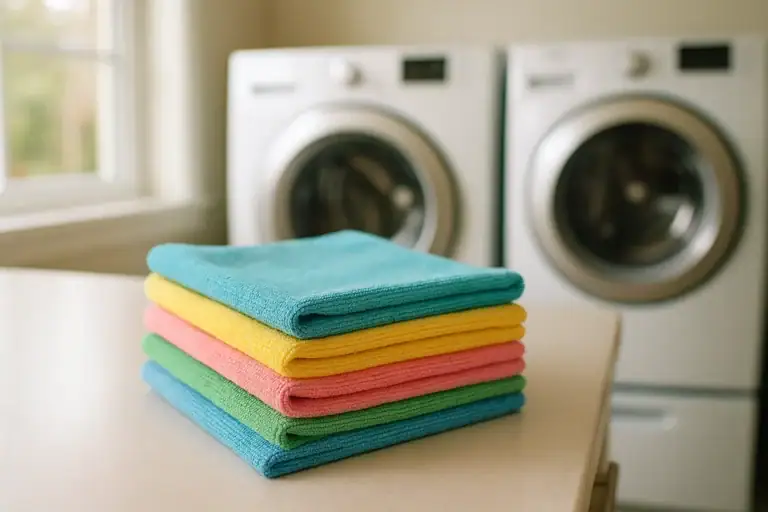 How to Wash Microfiber Cloths the Right Way
 Scent Free Cleaning Routine for Sensitive Noses: A Practical Guide
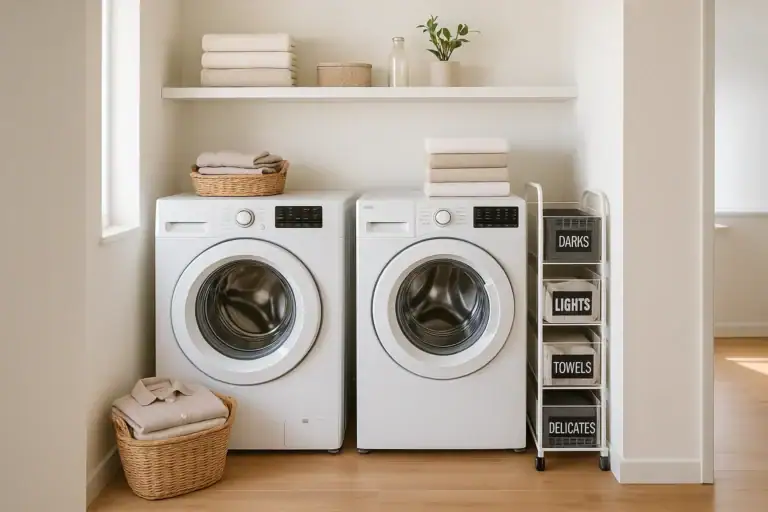 Laundry Sorting Systems for Small Households: Simple Ways to Stay Organized