If you live in a small household, laundry can feel like it should be simple. Fewer people means fewer clothes, so why does it still pile up and feel disorganized? The problem usually is not the amount of laundry, but the lack of a clear, easy system. Without a plan for sorting, storing, and running loads, clothes end up on chairs, in random baskets, or forgotten in the washer. The good news is that a small household is actually the perfect size for a streamlined laundry sorting system. With a few smart habits and space-saving tools, you can keep dirty clothes under control, make laundry day faster, and avoid last-minute searches for clean socks or workout gear.
This guide walks you through how to build a simple, effective laundry sorting system designed specifically for small households. You will learn how to choose the right hampers, where to put them in a small space, what categories to sort into, and how to create routines that match your real life. Whether you live alone, with a partner, or with one or two roommates, these ideas will help you stay organized without turning laundry into a full-time job.
Why Small Households Still Need a Laundry Sorting System
It is easy to assume that only large families need a detailed laundry system. In reality, small households benefit just as much, sometimes more, because every item matters. If you only own a few sets of workout clothes, towels, or work outfits, one missed load can throw off your whole week.
A simple sorting system helps you:
- Prevent laundry pileups: When every item has a place to go, clothes are less likely to end up on the floor or furniture.
- Run full, efficient loads: Sorting as you go makes it easier to see when you have enough for a light, dark, or delicate load.
- Protect your clothes: Separating delicates, heavy fabrics, and items that shed lint keeps your wardrobe in better shape.
- Save time on laundry day: If clothes are already sorted, you can start a load in minutes instead of sorting piles on the floor.
The key is to keep your system as simple as possible. For a small household, too many categories or complicated rules will only lead to frustration. Focus on a few clear categories and routines you can stick with consistently.
Step 1: Decide How Many Sorting Categories You Really Need
Before you buy any hampers or bins, decide how you want to sort your laundry. A small household usually does not need a dozen categories. In fact, two to four categories are often enough.
Basic Sorting Categories for Small Households
Start with these core categories and adjust based on your clothing and habits:
- Darks: Dark shirts, pants, socks, and anything that might bleed color.
- Lights and whites: Light-colored clothing, white socks, and undergarments.
- Towels and linens: Bath towels, hand towels, washcloths, and bed sheets.
- Delicates or special care: Items that need gentle cycles, air drying, or special handling.
If that feels like too much, combine categories. Many small households do well with just:
- Everyday clothes: Mixed casual items that can handle a standard cycle.
- Towels and linens: Washed separately for hygiene and to avoid lint on clothes.
- Delicates: A small bin or bag for items that need extra care.
Questions to Help You Simplify
Use these questions to decide how many categories you truly need:
- Do you wear mostly dark or mostly light clothing?
- Do you have many items that need gentle cycles or air drying?
- How often do you wash towels and bedding?
- Do you share laundry loads with someone or keep them separate?
Choose the smallest number of categories that still protects your clothes and fits your routines. The simpler the system, the more likely you are to use it consistently.
Step 2: Choose Space-Saving Hampers and Bins
In a small household, space is usually limited. The right containers can make laundry sorting easy without taking over your bedroom, bathroom, or hallway.
Smart Hamper Options for Small Spaces
Consider these space-saving ideas when choosing hampers or bins:
- Stackable bins: Vertical bins or baskets let you sort into multiple categories without using more floor space.
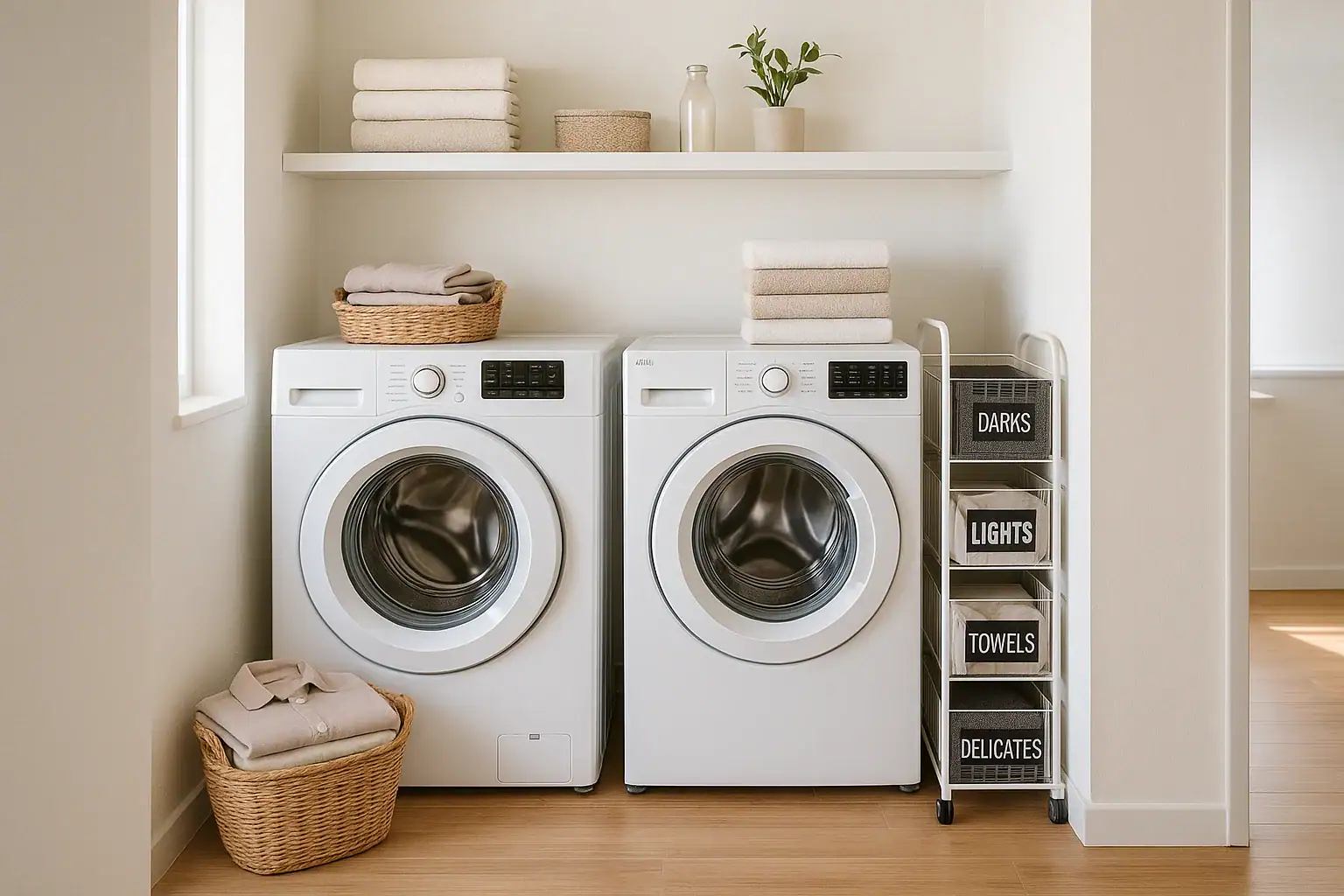
- Slim rolling cart: A narrow cart with multiple compartments can slide between a washer and dryer, in a closet, or along a wall.
- Collapsible hampers: Fabric or mesh hampers that fold flat when not in use are helpful if you do laundry at a shared facility.
- Over-the-door bags: Hanging bags on the back of a bedroom or bathroom door keep laundry off the floor and out of sight.
- Under-bed bins: Low-profile bins can hold off-season or less frequently worn items that you wash less often.
Labeling Your Hampers
Clear labeling is one of the easiest ways to keep a sorting system organized, especially if more than one person uses it. You can:
- Attach simple tags that say “Darks,” “Lights,” “Towels,” or “Delicates.”
- Use colored bins and assign each color a category.
- Write directly on fabric hampers with fabric-safe markers or use clip-on labels.
Labels remove guesswork and help everyone in the household put items in the right spot without thinking about it.
Step 3: Place Hampers Where Laundry Actually Happens
Even the best hamper will not help if it is in the wrong place. To keep your system working, put sorting containers where you naturally change clothes or handle laundry.
Best Hamper Locations in a Small Home
Think about these common spots and choose what fits your layout:
- Bedroom or closet: Ideal for everyday clothes. A divided hamper in the bedroom can hold darks and lights.
- Bathroom: A small bin or basket for towels and washcloths near the shower or tub.
- Laundry area: A spot near the washer for last-minute sorting or a bin for items that need pretreating.
- Entryway or mudroom: A small container for outdoor gear, sports clothes, or work uniforms that get dirty quickly.
In a very small home, you may only have room for one main hamper. In that case, use a divided hamper or a single large basket with smaller bags inside for each category.
One-Hamper vs. Multi-Hamper Systems
For a small household, both approaches can work:
- One divided hamper: Great if you want everything in one place. Choose a hamper with two or three sections and label them clearly.
- Multiple small bins: Helpful if you want to sort by location (for example, clothes in the bedroom, towels in the bathroom).
Choose the option that makes it easiest to put clothes away immediately. If the system feels inconvenient, clothes will end up on the floor or furniture instead.
Step 4: Create a Laundry Schedule That Fits a Small Household
A sorting system works best when it is paired with a simple routine. In a small household, you may not have enough laundry to run multiple loads every day, but you can still create a predictable schedule.
How Often Should You Do Laundry?
The right frequency depends on your lifestyle, but these guidelines work for many small households:
- Everyday clothes: One to two loads per week, depending on how many outfits you wear.
- Towels: Wash bath towels every three to four uses, or once a week.
- Bedding: Wash sheets and pillowcases about every one to two weeks.
- Workout clothes: Wash after each use or at least within a few days.
Sample Laundry Routines for Small Households
Use these sample schedules as a starting point and adjust as needed:
- One-person household:
- Midweek: One mixed load of everyday clothes (sorted by color if needed).
- Weekend: One load of towels and bedding.
- Two-person household:
- Early in the week: One load of darks and one load of lights.
- Weekend: One load of towels and one load of bedding (or alternate weeks).
Post your schedule on the wall near the laundry area or add reminders to your calendar. Once it becomes a habit, you will spend less time thinking about when to do laundry.
Step 5: Handle Special Items Without Complicating Your System
Even in a small household, some items need special attention. The goal is to manage them without creating a confusing system you will not follow.
Delicates and Air-Dry Items
For items that need gentle care, try these simple strategies:
- Keep a small mesh bag or bin labeled “Delicates” in your bedroom or closet.
- Place delicate items directly into the bag when you take them off.
- On laundry day, wash the bag with a gentle cycle and hang items to dry.
Heavily Soiled or Odor-Prone Items
Items like workout clothes, kitchen towels, or cleaning rags may need extra care:
- Use a small, breathable bin or bag just for these items.
- Rinse or pretreat stains before tossing them into the bin when possible.
- Wash them separately or with towels on a warmer cycle.
By keeping special items in their own small containers, you avoid mixing them with everyday clothes while keeping your system simple.
Step 6: Make the Most of Limited Laundry Space
Many small households use compact laundry areas, shared laundry rooms, or laundromats. A little organization can make these spaces much easier to use.
Organizing a Small Laundry Area
If you have your own washer and dryer, even in a small nook, try these ideas:
- Use vertical space: Add shelves or wall-mounted racks above the machines for detergent, stain remover, and dryer accessories.
- Install hooks: Hang mesh bags for delicates, a drying rack, or a cleaning caddy.
- Keep a small basket: Use it for stray socks, pocket items, or lost buttons until they can be put away.
Staying Organized at a Shared Laundry Room or Laundromat
If you use a shared laundry room or laundromat, planning ahead keeps the process smooth:
- Sort laundry at home into separate bags or hampers so you can start loads quickly.
- Use one sturdy bag for each category (darks, lights, towels, delicates).
- Bring a small pouch with detergent, stain remover, dryer sheets, and any payment cards or coins.
- Fold clothes as soon as they come out of the dryer to avoid wrinkles and clutter later.
A little preparation at home makes shared laundry spaces feel less stressful and more efficient.
Step 7: Keep Laundry Supplies Simple and Accessible
A well-organized laundry sorting system is easier to maintain when your supplies are also organized. You do not need a large collection of products; just a few essentials stored neatly.
Essential Laundry Supplies for Small Households
Focus on a short list of items you actually use:
- Everyday detergent suitable for your fabrics and washer type
- Stain remover or a stain treatment stick
- Dryer sheets or reusable dryer tools, if you use them
- Mesh bags for delicates
- A small brush or cloth for pretreating stains
Organizing Laundry Supplies
To keep everything tidy and easy to find:
- Use a small caddy or bin to hold all your laundry products in one place.
- Store the caddy on a shelf, in a cabinet, or on top of the washer if space allows.
- Label containers so you can quickly see what is inside, especially if you decant products into smaller bottles.
Keeping supplies streamlined reduces clutter and makes it easier to stick with your sorting routine.
Step 8: Keep Your Laundry Sorting System Working Long-Term
Any system works well for the first week. The real test is whether it still feels easy a month or six months later. Small households change over time, and your laundry habits might shift with new jobs, hobbies, or seasons.
Simple Maintenance Habits
Use these habits to keep your system running smoothly:
- Do a quick reset weekly: Empty any stray laundry piles into the correct hampers.
- Check for problem spots: If clothes keep landing on a chair or floor, consider moving a hamper closer to that spot.
- Adjust categories as needed: If one hamper is always overflowing and another is half empty, rebalance your categories.
- Set reminders: Use phone alerts or calendar notes for laundry days until the routine feels automatic.
Involving Everyone in the Household
If you share your home, make sure everyone understands the system:
- Explain where each category goes and what the labels mean.
- Agree on a basic laundry schedule so loads do not overlap or get forgotten.
- Encourage each person to empty their pockets and turn clothes right-side out before tossing them into hampers.
When everyone follows the same simple rules, laundry becomes a shared routine instead of one person’s ongoing chore.
Bringing It All Together: A Simple, Organized Laundry Routine
A good laundry sorting system for a small household does not need to be complicated. You only need a few clear categories, space-saving hampers, and a realistic schedule. By placing hampers where you actually change clothes, labeling them clearly, and keeping supplies organized, you can turn laundry from a scattered, stressful task into a quick, predictable routine.
Start small: choose your categories, set up one or two hampers, and follow a basic weekly schedule. Once that feels comfortable, you can fine-tune the system to match your space, clothing, and lifestyle. With a little planning and consistency, your laundry area can stay neat, your clothes can stay in better shape, and you can spend less time sorting piles and more time on the things you enjoy.
If you are looking to improve other areas of your home, consider using the same approach: simple categories, smart storage, and routines that fit your real life. A bit of organization goes a long way toward making everyday chores easier and more manageable.
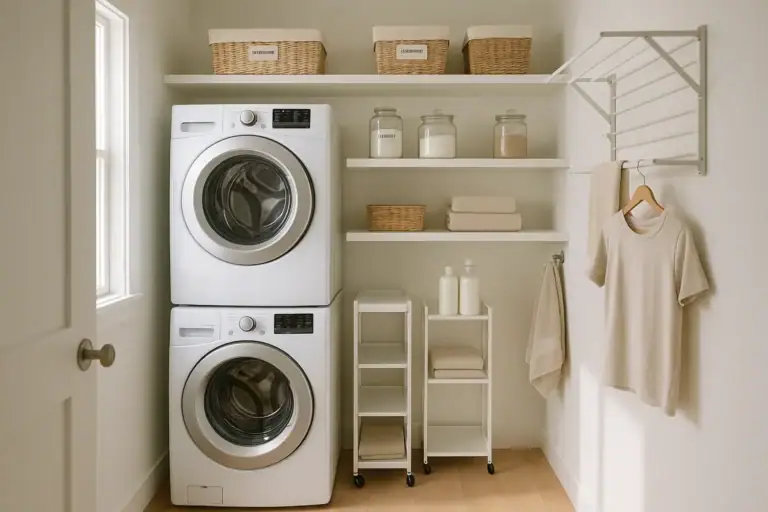 How to Organize a Laundry Room for Small Spaces
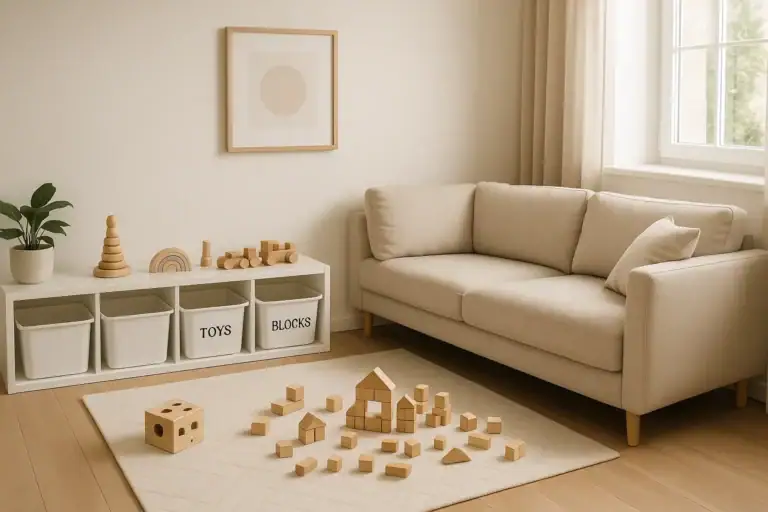 How to Create a Toy Rotation System for Small Living Rooms
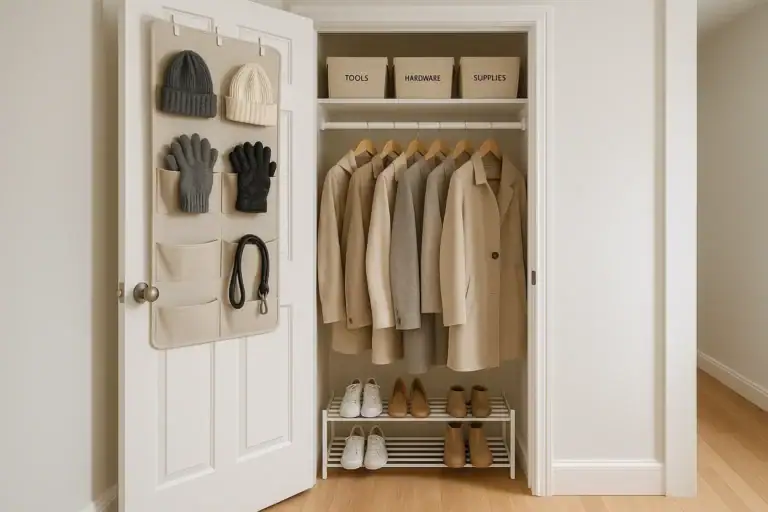 How to Organize a Hall Closet for Coats, Tools, and Everyday Items