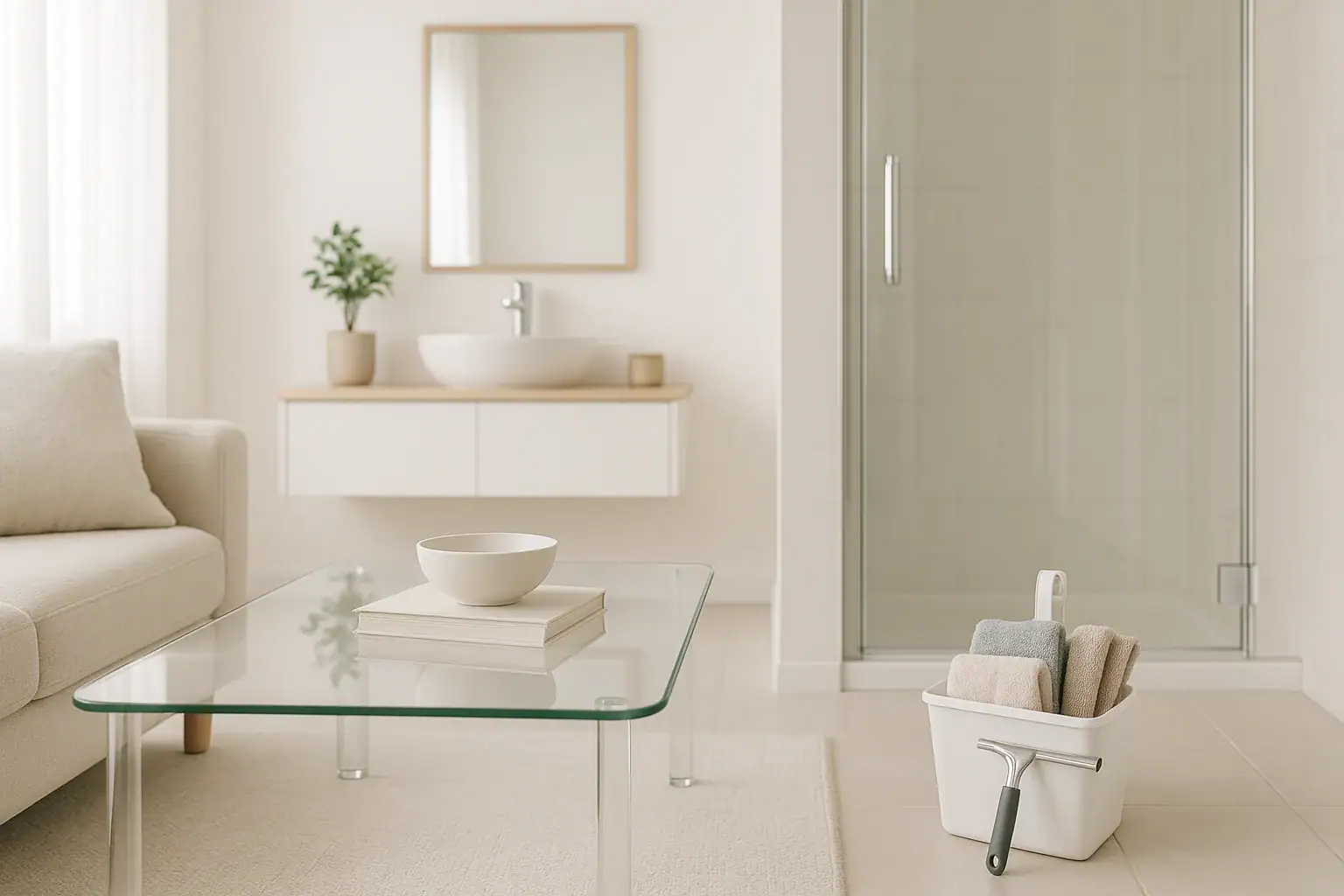
Cloudy spots, white rings, and hazy streaks can make even the nicest glass surfaces look dirty and neglected. Water stains on glass tables, mirrors, and shower glass are usually caused by minerals left behind when water evaporates. Over time, these mineral deposits build up into stubborn hard water stains that regular glass cleaner cannot touch. The good news is that with the right methods and a little patience, you can safely remove these marks and help prevent them from coming back.
This guide walks you through what causes water stains, how to tell the difference between surface deposits and etched glass, and step-by-step cleaning methods for glass tables, mirrors, and shower glass. You will also learn simple daily habits that keep glass clear longer so you spend less time scrubbing and more time enjoying a clean, bright home.
What Causes Water Stains on Glass?
Most water stains on glass are the result of minerals in tap water. When water dries on a surface, it leaves behind these minerals as visible spots or a cloudy film.
Common Causes of Water Stains
- Hard water: Water high in calcium and magnesium leaves chalky, white deposits.
- Soap and product residue: Soap, shampoo, and cleaning products can mix with minerals and dry into a dull film.
- Standing water: Puddles or droplets that sit on glass tables or shower doors for hours create rings and spots.
- Improper cleaning: Wiping with dirty cloths or not fully drying glass can spread minerals instead of removing them.
Water Spots vs. Etched Glass
Not all marks on glass are the same. It helps to know what you are dealing with before you start scrubbing.
- Surface water spots: Chalky, rough, or powdery deposits that sit on top of the glass. These usually respond well to gentle acids like vinegar or lemon juice.
- Soap scum film: Waxy or greasy film, often on shower glass, that looks cloudy and feels slick. This needs a degreasing approach plus mineral removal.
- Etched glass: When minerals sit on glass for a long time, they can slowly damage the surface. Etching looks like permanent frosted or dull patches that do not change, even after cleaning. Cleaning can minimize buildup around etched areas, but the etched texture itself cannot be fully removed at home.
General Rules for Cleaning Water Stains on Glass
Before jumping into specific surfaces, keep these general rules in mind for safe and effective cleaning.
- Avoid harsh abrasives: Steel wool, rough scouring pads, and gritty powders can scratch glass. Use soft cloths, microfiber, or non-scratch pads.
- Test in a small area first: Especially on tinted or coated glass, always test your method in an inconspicuous corner.
- Work from mild to stronger methods: Start with gentle cleaners like vinegar and baking soda before moving to stronger options.
- Never mix cleaners: Do not mix vinegar with products that contain bleach or other chemicals. Use one method at a time and rinse thoroughly between products.
- Dry thoroughly: Always finish by drying glass completely to avoid new water spots forming as it air-dries.
How to Remove Water Stains from Glass Tables
Glass tables are prone to water rings from drinks, flower vases, and cleaning sprays. Here is how to restore a clear, streak-free surface.
Step 1: Basic Cleaning
Start by removing everyday dust and fingerprints so you can see what is truly water staining.
- Clear the table of all items.
- Wipe loose dust with a dry microfiber cloth.
- Spray the table with a simple glass cleaner or a mix of equal parts water and white vinegar.
- Wipe in overlapping strokes with a clean, lint-free cloth.
If you still see cloudy rings or spots after this step, move on to mineral removal.
Step 2: Vinegar Soak for Mineral Rings
White vinegar helps dissolve mineral deposits without scratching glass.
- Mix equal parts white vinegar and warm water in a spray bottle.
- Spray the stained areas until they are fully damp.
- Lay a soft, vinegar-dampened cloth over stubborn rings so the solution can sit on the stain.
- Let it sit for 5 to 10 minutes, keeping the area moist but not dripping.
- Remove the cloth and gently rub the stain in small circles.
- Wipe clean with a fresh damp cloth, then dry with a microfiber towel.
Step 3: Baking Soda Paste for Stubborn Spots
If stains remain, a mild baking soda paste can provide extra scrubbing power without deep scratches when used gently.
- In a small bowl, mix baking soda with just enough water to form a thick paste.
- Apply a small amount of paste directly to the water spots.
- Using a soft cloth or non-scratch sponge, rub lightly in circular motions. Do not press too hard.
- Rinse the area with clean water or a damp cloth until all residue is gone.
- Dry thoroughly with a microfiber towel to prevent new spots.
Preventing Water Stains on Glass Tables
- Use coasters under cold and hot drinks.
- Place a tray or mat under plant pots and vases.
- Wipe up spills and condensation right away.
- Dust and clean glass weekly to remove early mineral deposits before they harden.
How to Remove Water Stains from Mirrors
Bathroom mirrors often collect water spots from splashes and steam. Over time, this can leave a hazy, dotted look that regular wiping does not remove.
Step 1: Protect the Mirror Edges and Backing
Many mirrors have a reflective backing that can be damaged by moisture over time. When cleaning, avoid soaking the edges.
- Do not spray cleaner directly onto the mirror in heavy amounts.
- Instead, spray cleaner onto a cloth first, then wipe the mirror.
- Keep liquids away from the bottom edge where moisture can seep behind the glass.
Step 2: Vinegar and Water Solution
This simple mix removes most water spots and streaks.
- Mix equal parts white vinegar and water in a spray bottle.
- Lightly mist a clean microfiber cloth with the solution.
- Wipe the mirror in horizontal strokes from top to bottom.
- For stubborn spots, press the damp cloth against the area for 30 to 60 seconds, then rub gently.
- Buff dry with a separate dry microfiber cloth to remove any remaining haze.
Step 3: Dealing with Tough Mineral Spots
If some dots or marks remain, they may be thicker mineral deposits.
- Dampen a cotton ball or soft cloth with undiluted white vinegar.
- Hold it against the spot for 1 to 2 minutes to soften the deposit.
- Gently rub in small circles until the spot lifts.
- Wipe the area with a damp cloth, then dry completely.
If a mark does not change at all, it may be damage to the mirror backing rather than a surface water stain. In that case, cleaning will not fully remove it.
Preventing Water Stains on Mirrors
- Keep a small microfiber cloth in the bathroom and quickly wipe the mirror after showers.
- Remind family members to avoid flicking water from hands toward the mirror.
- Use a bathroom fan or open a window to reduce humidity and condensation.
How to Remove Water Stains from Shower Glass
Shower doors and glass enclosures are exposed to water, soap, and body products multiple times a day. This makes them the most challenging surfaces to keep clear, but consistent care makes a big difference.
Step 1: Rinse and Wipe Loose Residue
- Rinse the shower glass with warm water to loosen soap and surface grime.
- Wipe with a damp, non-scratch sponge to remove any obvious buildup.
- Rinse again so you are working on fairly clean glass before tackling hard water stains.
Step 2: Vinegar Spray for Hard Water Stains
Vinegar is especially helpful in showers where mineral buildup is heavy.
- Warm white vinegar slightly (do not boil) to improve its effectiveness.
- Pour into a spray bottle. For very heavy buildup, use full-strength vinegar. For lighter stains, dilute with equal parts water.
- Spray the entire glass surface until it is evenly coated.
- Let it sit for 10 to 15 minutes. Re-spray lightly if areas start to dry.
- Using a non-scratch sponge or soft cloth, scrub gently in circular motions, focusing on cloudy areas and water lines.
- Rinse thoroughly with warm water.
Step 3: Baking Soda Boost for Stubborn Buildup
For thick, chalky deposits that do not budge with vinegar alone, add baking soda for gentle abrasion.
- After spraying vinegar and letting it sit, sprinkle baking soda onto a damp sponge.
- Scrub the stained areas with light pressure. The mixture will foam slightly as it works on the minerals.
- Rinse well with warm water until all residue is gone.
- Use a squeegee or microfiber cloth to remove remaining water.
Step 4: Addressing Soap Scum Film
If the glass still looks hazy, soap scum may be the main issue.
- Use a cleaner designed to cut through soap and body oils, or a mixture of vinegar and a small amount of liquid dish soap.
- Apply with a soft sponge, scrub gently, and rinse thoroughly.
- Dry completely with a squeegee or microfiber towel.
When Stains May Be Permanent
If you have tried these methods and certain areas remain dull or cloudy no matter what, the glass may be etched from long-term exposure to minerals. In that case:
- Continue regular cleaning to keep new buildup from forming.
- Consider using decorative coverings or frosted film if the appearance bothers you.
- For severe etching, replacement may be the only way to restore a perfectly clear look.
Daily and Weekly Habits to Prevent Water Stains
Preventing water stains is much easier than removing heavy buildup. A few quick habits can dramatically reduce cloudy glass and cut your cleaning time.
Daily Habits
- Squeegee shower glass: Keep a squeegee in the shower and run it over the glass after each use to remove water before it dries.
- Wipe bathroom mirrors: After brushing teeth or washing your face, quickly wipe splashes from the mirror.
- Dry glass tables: If you notice condensation, spills, or rings, wipe them up right away instead of letting them air-dry.
Weekly Habits
- Deep clean shower glass: Do a vinegar-based cleaning once a week in areas with hard water.
- Dust and polish glass tables: Use a microfiber cloth and a gentle cleaner to remove early mineral deposits before they harden.
- Check high-splash areas: Look at the lower sections of mirrors and shower doors where water tends to collect and address spots early.
Organizing Your Cleaning Supplies for Easier Glass Care
Keeping the right tools within reach makes it far more likely that you will keep up with quick wipe-downs instead of waiting until stains get severe.
Suggested Glass Cleaning Kit
- Spray bottle with a vinegar and water solution
- Extra bottle for plain water rinsing
- Microfiber cloths dedicated to glass only
- Non-scratch sponge or scrub pad
- Small squeegee for shower glass and large mirrors
- Baking soda stored in a labeled, easy-access container
Storage Tips
- Keep a basic kit in each bathroom so you are not running between rooms.
- Store supplies in a small caddy under the sink or in a nearby closet.
- Label bottles clearly so everyone in the household knows what they are for and how to use them.
Frequently Asked Questions About Water Stains on Glass
Can I use vinegar on all types of glass?
Vinegar is safe for most household glass surfaces, including tables, mirrors, and shower doors. However, avoid using it on natural stone surfaces around the glass, such as marble or certain types of tile, because acid can damage stone. Always test in a small area first if you are unsure.
How often should I clean shower glass to prevent stains?
In areas with hard water, a quick daily squeegee plus a weekly vinegar cleaning is usually enough to keep stains under control. If your water is very mineral-heavy, you may need to do a more thorough cleaning twice a week.
Are water stains on glass harmful?
Water stains are mostly a cosmetic issue, but over time, heavy mineral buildup can lead to etching and permanent dullness. Regular cleaning helps protect the glass and keeps your home looking fresh and well cared for.
What if I do not like the smell of vinegar?
You can dilute vinegar more heavily with water and rinse thoroughly after cleaning to reduce the smell. You can also open a window or run a fan while you clean. The vinegar scent fades quickly once the surface is dry.
 How to Remove Lint and Pet Hair from Laundry More Effectively
 How to Clean Lampshades and Fabric Light Fixtures: A Complete Guide
 How to Clean Shower Door Tracks and Prevent Slime Buildup for Good