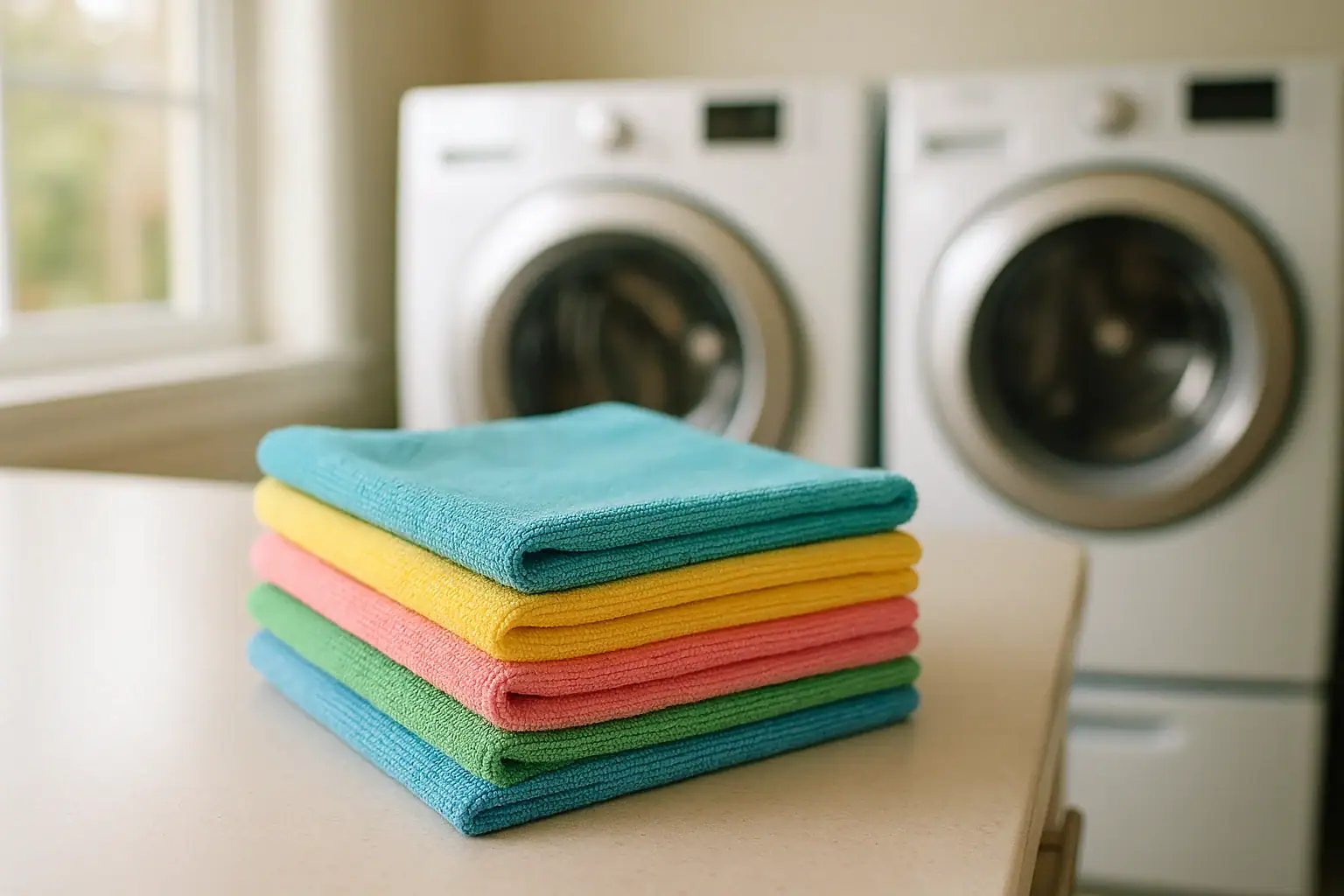
Quick guide: how to wash microfiber cloths
To wash microfiber cloths, separate them from cotton and linty fabrics, use a small amount of mild detergent, choose warm or cold water, and skip fabric softener and dryer sheets. Tumble dry on low or air dry. This keeps the fibers from clogging so the cloths stay absorbent and streak-free.
Handled gently, microfiber cloths can last through many wash cycles and keep working well for dusting, glass, and general cleaning.
Step-by-step: washing microfiber cloths
1. Sort your laundry
- Wash microfiber separately from cotton towels, clothing, and anything that sheds lint. Microfiber grabs lint and pet hair easily.
- Separate heavily soiled cloths (grease, car detailing, oily kitchen messes) from lightly soiled cloths (dusting, glass) so oils do not coat everything.
- Color sort if needed to avoid dye transfer, especially with new, brightly colored cloths.
2. Shake out and pre-rinse
- Shake cloths outside or over a trash can to remove loose dust and debris.
- For sticky messes or heavy grime, rinse under cool or warm water and gently squeeze (do not wring hard) before washing.
- If a cloth is saturated with grease, you can massage in a drop of dish soap at the sink, then rinse before adding it to the wash.
3. Choose the right detergent
- Use a mild liquid laundry detergent. Powder detergents can sometimes leave residue if they do not fully dissolve.
- Use less detergent than usual (often half your normal amount) to reduce buildup in the fibers.
- Avoid detergents that contain added fabric softener or heavy fragrances, which can coat the fibers.
4. Set the washer
- Water temperature: Use warm or cold water. Hot water can be used occasionally if the manufacturer allows it, but repeated high-heat washes may shorten the life of some microfiber.
- Cycle: Choose a gentle or normal cycle. Very aggressive cycles are usually unnecessary and can be harder on the cloths over time.
- Load size: Avoid overloading. Microfiber cleans best when it can move freely in the water.
5. What to avoid in the wash
- No fabric softener: Liquid softeners and in-wash scent boosters can leave a coating that reduces absorbency and streak-free performance.
- No bleach unless the care tag allows it: Chlorine bleach can damage some microfiber. If you need to sanitize, check the manufacturer’s instructions first.
- No high-heat sanitize cycles unless your specific cloths are rated for them.
How to dry microfiber cloths
Best drying methods
- Tumble dry on low or no heat. High heat can melt or deform the tiny fibers.
- Skip dryer sheets. They act like fabric softener and can reduce performance.
- Air drying works well. Hang cloths on a rack or line. They usually dry quickly because the fabric is thin.
Preventing lint and static
- Dry microfiber by itself or only with other microfiber items.
- If static is an issue, you can add a small, clean dryer ball instead of dryer sheets to help separate the cloths mechanically.
Dealing with stains, grease, and odor
Greasy or oily microfiber
- Pre-treat greasy spots with a small amount of liquid dish soap or laundry detergent. Gently work it into the area with your fingers.
- Rinse and then wash as usual with warm water.
- If the cloth still feels slick after drying, repeat the wash before using it on glass or mirrors.
Stains and discoloration
- Pre-treat stains promptly with a bit of detergent or a stain remover that is safe for synthetics.
- Some discoloration from heavy use (for example, car wheels, outdoor grime) may be permanent. You can reassign stained cloths to dirtier jobs and keep your best-looking ones for glass and delicate surfaces.
Musty or sour smells
- Do not leave wet microfiber in a pile or closed container for long periods; this encourages odor.
- If cloths smell musty, run a second wash with a small amount of detergent and be sure they dry completely.
- For persistent odor, check that your washer itself is clean. Many manufacturers provide cleaning cycles and instructions for their machines.
How often to wash microfiber cloths
- After each use for greasy, bathroom, or kitchen cleanup to avoid spreading residue and germs.
- Every few uses for light dusting or dry tasks, as long as the cloth is not visibly soiled.
- Retire cloths that stay rough, lose absorbency, or leave streaks even after careful washing.
Storage and care between uses
- Let cloths dry fully before storing to help prevent odor.
- Store clean microfiber in a dry, closed container or drawer to keep it from collecting dust and lint.
- Keep separate bins or shelves for kitchen, bathroom, and general cleaning cloths so they do not get mixed up.
When to replace microfiber cloths
Even with good care, microfiber will eventually wear out. Consider replacing cloths when you notice:
- Persistent streaks on glass or mirrors
- Reduced absorbency, even after thorough washing
- Noticeable thinning, fraying, or roughness
At that point, you can still use older cloths for very dirty tasks, then gradually phase them out.
Microfiber and home cleaning routines
Microfiber works best when it is clean and free of residue. A simple wash-and-dry routine helps your cloths last longer and keeps everyday cleaning easier. If you are building a broader cleaning system for your home, you can pair well-cared-for microfiber cloths with organized storage, labeled bins, and room-by-room checklists. For more ideas on setting up efficient routines, see the cleaning and organizing guides at Signature Home Guide’s Cleaning & Organization hub.
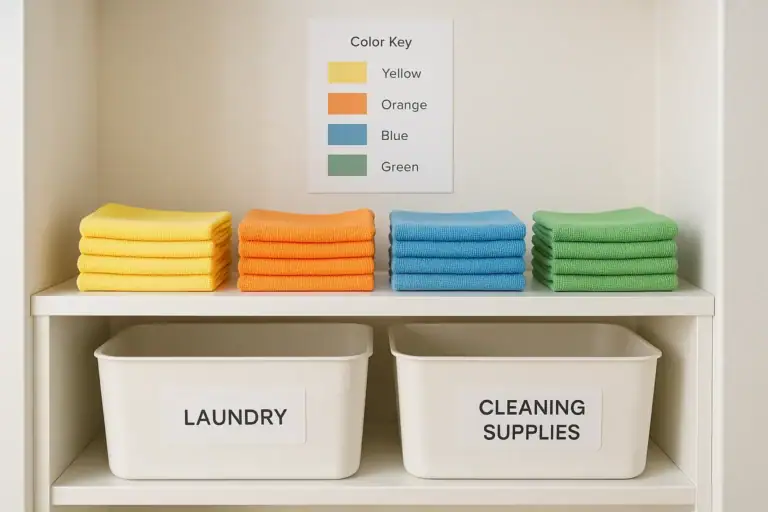 How to Use a Microfiber Cloth Color Coding System for Stress-Free Home Cleaning
 How to Build a Simple Grab-and-Go Cleaning Caddy: Step-by-Step Guide
 How to Clean Reusable Grocery Bags Safely