How to Store Items Under Your Bed Without Dust and Moisture Problems
Under bed storage can be a smart way to gain space, but it also sits where dust collects and air moves around your mattress. To keep things organized and avoid musty bins or blocked airflow, focus on three basics: raised containers, breathable materials, and a bit of clearance around vents and walls.
In practice, that means using lidded bins or bags that are slightly elevated off the floor, leaving a few inches of space around your bed for air to move, and choosing what you store under there carefully. Bulky linens, out-of-season clothes, and rarely used items usually work better than anything fragile or moisture-sensitive.
Understand What Happens Under the Bed
The space under a bed is a low, shaded area where dust naturally settles and air can feel stagnant. If your home has any humidity issues, that still air can make fabrics feel damp over time. Blocking floor vents or wall returns with solid bins can also interfere with how your room heats and cools.
Instead of avoiding the space entirely, you can plan your storage so it works with dust, moisture, and airflow rather than against them.
Choosing Under Bed Storage That Manages Dust
Dust control starts with how open your storage is and how easy it is to clean around it.
Best container styles for dust control
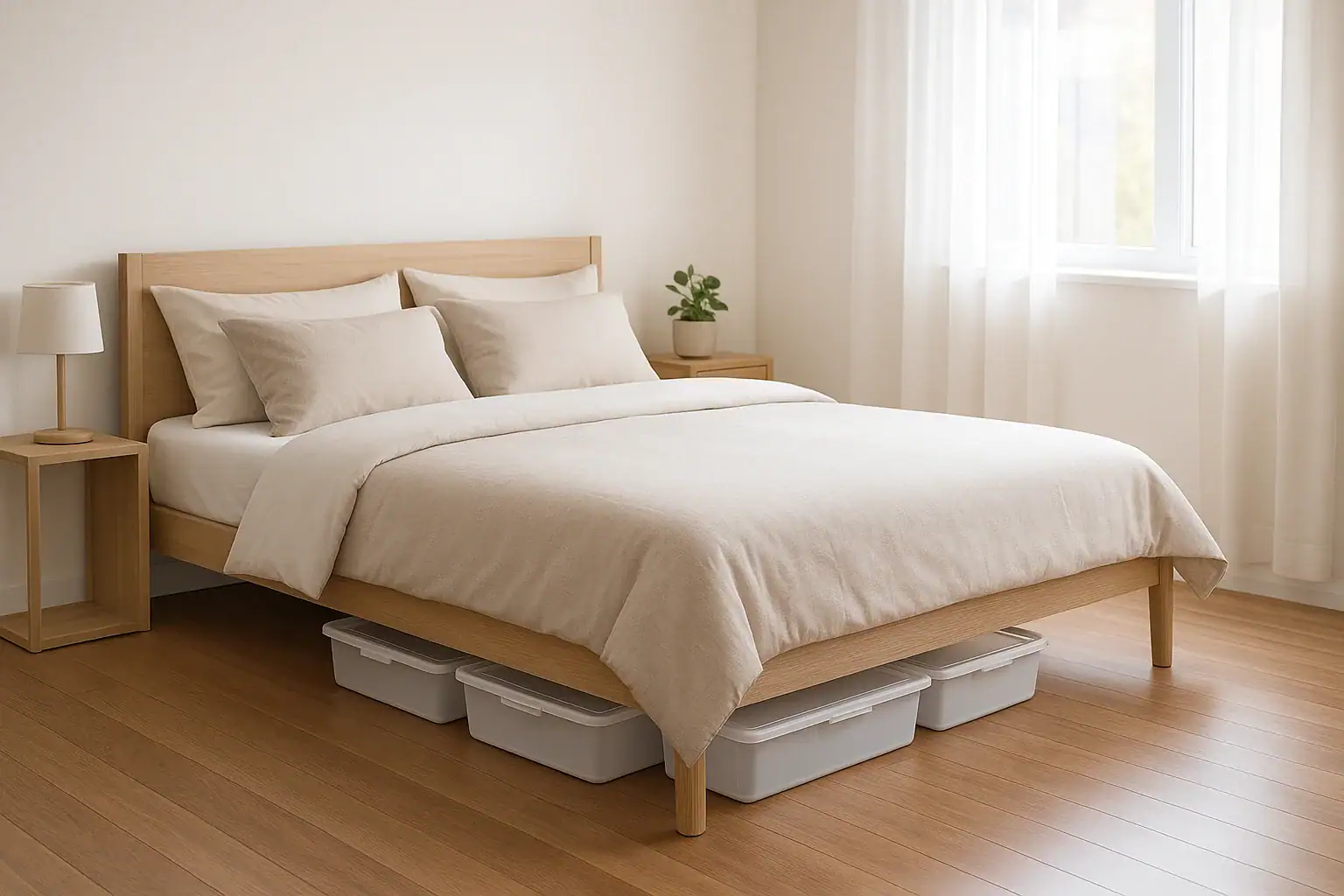
- Low-profile bins with tight lids: Hard plastic or similar bins with snap-on lids keep dust off contents and are easy to wipe down.
- Zip-closure fabric bags: Good for soft items like bedding and clothing. Look for smooth, tightly woven fabric that doesn’t shed lint.
- Drawer-style units on casters: Rolling drawers or bins make it easier to pull everything out for vacuuming.
Features that help limit dust buildup
- Smooth exteriors: Avoid deeply textured baskets that trap dust. Smooth plastic or coated fabric wipes clean quickly.
- Simple shapes: Rectangular bins that fit your bed footprint leave fewer odd gaps where dust can collect.
- Light colors: Not required, but lighter bins make it easier to see dust and dirt so you know when to clean.
Dust-friendly cleaning routine
Plan for quick, regular cleaning instead of a big overhaul:
- Every 1–2 weeks, vacuum or dust-mop the floor edges around the bed.
- Every 1–3 months, slide out bins, vacuum under the bed, and wipe bin lids and sides with a damp cloth.
- Wash fabric bags or liners as needed according to the manufacturer’s care instructions.
For more whole-home routines that keep clutter and dust down, you can explore broader organizing ideas on the Cleaning & Organization hub at Signature Home Guide.
Protecting Under Bed Storage from Moisture
Most homes have some seasonal humidity changes. Under the bed, that can show up as musty smells in fabrics or light surface rust on metal items. A few simple habits can reduce the risk.
What to store (and what to avoid)
- Good choices: Extra blankets, pillows, out-of-season clothes, spare curtains, luggage, and durable decor.
- Risky choices: Important papers, photos, electronics, and anything that could be damaged by dampness or temperature swings.
- Skip completely: Food, scented candles that can soften or leak, and items with strong odors that might transfer to fabrics.
Moisture-conscious container tips
- Use clean, dry containers: Make sure bins and bags are completely dry before filling and sliding them under the bed.
- Line bins for fabrics: A clean cotton sheet or pillowcase inside a bin can add a soft layer between plastic and textiles.
- Consider small desiccant packs: Silica gel packets or similar moisture absorbers inside closed bins can help buffer minor humidity swings. Replace them as directed by the manufacturer.
Watch for signs of a bigger moisture issue
If you notice persistent musty odors, visible mold, or damp floors, under bed storage may not be the main problem. The U.S. Environmental Protection Agency’s guidance on mold and moisture explains why addressing leaks and high humidity at the source is important. In those cases, consider limiting under bed storage until the room’s moisture issues are resolved, and consult a qualified professional if needed.
Keeping Airflow Around Your Bed
Air needs to move around your mattress and through your bedroom for comfort and to help avoid stale odors. Completely sealing off the underside of your bed with solid containers can reduce that airflow.
Simple airflow guidelines
- Leave gaps: Avoid filling the entire under-bed space edge to edge. Leave a few inches of open space along at least one long side of the bed.
- Clear vents and returns: Do not place bins directly over floor vents or in front of wall return grilles. This can interfere with heating and cooling performance and comfort.
- Use low-profile bins: Choose containers that sit a bit lower than the bed frame so air can still move above them.
- Occasional airing out: A few times a year, pull bins out, lift the mattress if practical, and let the area air out while you clean.
Bed frame and base considerations
- Slatted bases: Typically allow more airflow than solid platforms. If you use a solid base, be extra careful not to pack the under-bed area tightly.
- Bed skirts: A bed skirt hides storage but can also slow air movement and trap dust. If you use one, choose a washable fabric and launder it regularly.
Step-by-Step: Setting Up Under Bed Storage That Works
Use this quick process to organize the space under your bed with dust, moisture, and airflow in mind.
1. Measure your space
- Measure the height from floor to bottom of the bed frame.
- Measure depth from the outer edge of the bed to the center support or opposite side.
- Note any floor vents, wall outlets, or returns nearby that you need to keep clear.
2. Sort what you plan to store
- Group items by type: bedding, clothing, decor, gear, etc.
- Set aside anything fragile, moisture-sensitive, or valuable for a different storage spot.
- Donate or discard items you no longer use; there’s no reason to store clutter.
3. Choose the right containers
- Pick low bins or bags that fit your measurements with a little clearance.
- Use lidded bins for items you don’t access often and zip bags for soft goods.
- Label the ends so you can see what’s inside without pulling everything out.
4. Pack and position for airflow
- Fill containers loosely so they close easily without bulging.
- Place bins so they don’t block vents or press tightly against walls.
- Leave at least one open channel under the bed for air to move.
5. Maintain with a simple schedule
- Dust or vacuum around the bed weekly or biweekly.
- Do a deeper clean under the bed every few months.
- Check for any musty smells or dampness and adjust what you store if needed.
When Under Bed Storage Is Not a Good Fit
Under bed storage is convenient, but it is not ideal in every situation. You may want to avoid it or keep it very minimal if:
- Your bedroom has ongoing moisture problems or past mold issues that are not yet resolved.
- You rely on under-bed space for clear airflow from a floor vent or return grille.
- You have mobility or safety concerns that make bending or reaching under the bed difficult.
In those cases, consider alternative storage like a nearby closet, dresser, or shelving system and use the space under the bed mainly for cleaning access. You can find more storage ideas that don’t rely on hidden spaces in the Signature Home Guide Cleaning & Organization section.
Key Takeaways
- Use lidded or zippered containers to keep dust off your belongings.
- Store items that tolerate normal room humidity; avoid valuables and moisture-sensitive items.
- Leave gaps around bins and keep vents clear so air can move under and around your bed.
- Plan for quick, regular cleaning so dust and odors don’t build up.
With a little planning, the space under your bed can stay organized and useful without turning into a dusty, musty catch-all.
 How to Clean Under Appliances Safely Without Moving Everything
 Entryway Shoe Drop Zone Organization for Busy Families
 How to Organize a Hall Closet for Coats, Tools, and Everyday Items