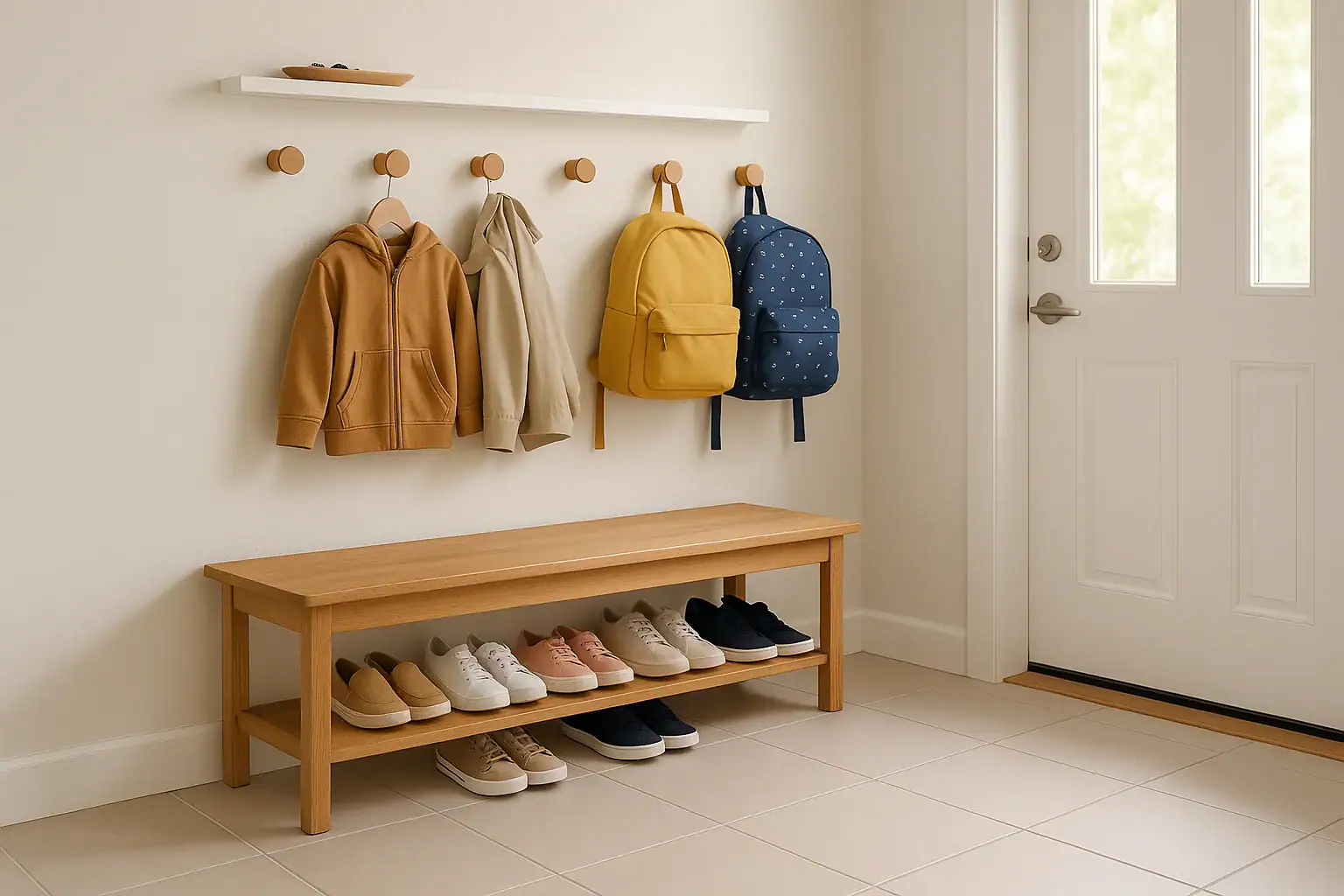
For many busy families, the entryway is a constant source of clutter and stress. Shoes pile up, backpacks get tossed on the floor, and everyone scrambles to find what they need as they rush out the door. A well-planned shoe drop zone can change that. With a few intentional choices, you can create a simple, organized system that works with your family’s real life, not against it.
This guide walks you through how to design and maintain an entryway shoe drop zone that keeps clutter under control, saves time on hectic mornings, and makes it easy for every family member to put things away where they belong.
Why Every Busy Family Needs a Shoe Drop Zone
A shoe drop zone is a designated spot near your main door where shoes, bags, and daily essentials land the moment you walk in. Instead of spreading clutter throughout the house, you contain it in one organized area.
Benefits of a Dedicated Shoe Drop Zone
- Less visual clutter: Shoes and gear have a home, so your floors and hallways stay clear.
- Faster mornings: Everyone knows exactly where to find their shoes, keys, and bags.
- Easier cleaning: Dirt stays near the door instead of being tracked through the house.
- Kid-friendly routines: Simple systems help children learn to put things away independently.
- Lower stress: A tidy entryway sets a calmer tone every time you walk in.
Step 1: Choose the Best Location for Your Shoe Drop Zone
Your shoe drop zone should live where your family naturally enters and exits most often. For some households, that is the front door; for others, it is a side door, garage entrance, or mudroom area.
Questions to Help You Pick the Right Spot
- Which door do you use most often on school and work days?
- Where do shoes and bags usually end up right now?
- Is there a wall, corner, or closet near that door that could be repurposed?
- Do you need a system that works for guests as well as family members?
If you have more than one busy entrance, focus on the one that causes the most daily chaos. You can always add a smaller secondary drop zone later if needed.
Step 2: Declutter and Set Limits on Shoes
Before you buy storage or rearrange furniture, decide how many pairs of shoes each person can keep in the entryway. Without limits, even the best system will overflow quickly.
How to Declutter Entryway Shoes
- Gather all shoes currently living near the door into one spot.
- Sort by person and by season (everyday, sports, dressy, seasonal).
- Remove anything that is out of season, too small, damaged, or rarely worn.
- Assign a realistic number of everyday pairs each person can keep in the drop zone.
For most busy families, a good starting limit is:
- Adults: 3–4 pairs (work, casual, workout, seasonal)
- Children: 2–3 pairs (school, play, sports if used several times a week)
Store off-season or rarely used shoes in bedroom closets or another storage area. The goal is to keep only what you truly need for day-to-day life at the entryway.
Step 3: Plan the Zones in Your Entryway
Think of your shoe drop zone as a mini-organization system made up of simple, clear zones. Each zone has a specific purpose and a defined home.
Core Zones to Include
- Shoe Zone: Where shoes are removed and stored.
- Bag Zone: Hooks or cubbies for backpacks, purses, and work bags.
- Small Item Zone: A place for keys, wallets, sunglasses, and mail.
- Outerwear Zone: Hooks or hangers for coats, jackets, and hats.
You may not have space for large furniture, and that is fine. Even a narrow hallway can handle a slim shoe rack, a few hooks, and a small wall-mounted organizer. The key is to decide exactly where each category of item will live.
Step 4: Choose Practical Shoe Storage Solutions
Your shoe storage should match your space, your family size, and your habits. Aim for options that are easy to use, easy to clean, and clearly defined.
Entryway Shoe Storage Ideas
- Shoe bench: Combines seating with storage underneath. Great for young children who need a place to sit while putting on shoes.
- Open shoe rack: Keeps shoes visible and encourages quick put-away. Works well for adults and older kids.
- Cubbies or bins: Individual compartments or labeled bins for each person. Ideal for families who like clear boundaries.
- Tray or mat: A waterproof tray or mat near the door for wet or muddy shoes to protect the floor.
- Over-door or vertical storage: Useful in very small spaces to keep shoes off the floor.
Tips for Choosing the Right Shoe Storage
- Measure your space carefully before buying anything.
- Prioritize open storage over closed doors for everyday shoes to make it easier for kids to use.
- Pick materials that can handle dirt and moisture, especially in wet or snowy climates.
- Leave a little extra space for guest shoes or seasonal changes.
Step 5: Create Clear Homes for Each Family Member
Busy families need systems that are obvious and easy to follow. Giving each person a defined space reduces arguments and confusion.
Simple Ways to Assign Space
- Label cubbies or bins: Use names or initials so everyone knows where their shoes go.
- Color coding: Choose different bin colors or tags for each family member.
- Vertical zones: Assign each person a shelf or section on a multi-level rack.
For young children, keep their shoe spots low and easy to reach. For teens and adults, use higher shelves or deeper bins if needed. The more obvious the system, the more likely it is to be used consistently.
Step 6: Organize Beyond Shoes – Bags, Coats, and Essentials
A truly functional entryway shoe drop zone goes beyond footwear. It also manages the other items that tend to pile up near the door.
Bag and Backpack Organization
- Install sturdy hooks at different heights for backpacks, work bags, and purses.
- Give each child a dedicated hook for their school bag and activity bag.
- Place hooks near the shoe area so kids naturally hang bags after taking off shoes.
Coats, Jackets, and Outerwear
- Use a combination of wall hooks and a nearby closet, if available.
- Limit each person to one or two coats in the entryway; store extras elsewhere.
- Add a small basket or bin for hats, gloves, and scarves during colder months.
Keys, Mail, and Small Essentials
- Mount a small shelf or organizer near the door for keys, wallets, and sunglasses.
- Use a simple tray or shallow basket to collect incoming mail.
- Keep only daily essentials here; file or recycle mail regularly to avoid piles.
Step 7: Design for Real Life – Routines and Traffic Flow
Even the best storage will fail if it does not match how your family actually moves through the space. Watch your routines and design around them.
Consider How Your Family Uses the Entryway
- Do kids come in from the garage with sports gear and muddy shoes?
- Do adults carry in work bags, groceries, and packages at the same time?
- Does anyone need a place to set things down temporarily while locking the door?
Arrange your zones in the order you use them. For example:
- Step inside and place keys and mail on a small shelf.
- Remove shoes and place them on the rack or in bins.
- Hang backpacks and coats on hooks.
- Grab what you need from the same spots when leaving.
Keep walkways clear. Avoid deep furniture that blocks doors or makes it hard for multiple people to pass through at once.
Step 8: Make It Kid-Friendly and Teen-Proof
For busy families, an entryway system only works if children and teens can use it independently. Design with them in mind from the start.
Kid-Friendly Organization Tips
- Use open bins or low shelves instead of lidded containers.
- Choose sturdy, easy-to-clean materials that can handle rough use.
- Add picture labels for younger children who cannot read yet.
- Practice the routine together: shoes off, shoes away, bag on hook.
Making It Work for Teens
- Give them a dedicated zone that feels like their own space.
- Allow some flexibility (for example, a larger bin for multiple pairs).
- Keep the system simple: one obvious place for shoes, one for bags.
Step 9: Add Simple Cleaning and Maintenance Habits
An organized shoe drop zone stays that way when you build in quick, repeatable habits. Aim for short daily resets instead of occasional big cleanups.
Daily Habits That Take Five Minutes or Less
- Evening reset: Have each person put away any stray shoes before bed.
- Quick sweep or vacuum: Focus on the area near the door where dirt collects.
- Mail check: Sort and recycle or file the day’s mail.
Weekly and Seasonal Maintenance
- Once a week, wipe down shelves, trays, and mats.
- Check for shoes that no longer fit or are no longer worn and remove them.
- At the start of each season, swap out off-season shoes and outerwear.
Post a short checklist near the entryway or add reminders to your family calendar until the new habits feel automatic.
Step 10: Small Space Entryway Solutions
Even if you live in an apartment or have a very narrow hallway, you can still create a functional shoe drop zone. The key is to think vertically and keep only the essentials.
Ideas for Tight Entryways
- Use a slim shoe rack or a low-profile bench that hugs the wall.
- Install hooks high and low to maximize wall space for coats and bags.
- Add a wall-mounted organizer for keys and mail instead of a table.
- Limit each person to one or two pairs of shoes at the door and rotate as needed.
- Place a small mat or tray inside the door for wet shoes to protect floors.
When space is tight, be strict about what earns a spot in the entryway. If it is not used daily or several times a week, store it elsewhere.
Creating a Calm, Organized Entryway That Works for Your Family
Transforming your entryway shoe drop zone does not require a major renovation. By setting limits on how many shoes can live at the door, assigning clear homes for each family member, and building simple daily habits, you can turn a chaotic space into a calm, efficient landing zone.
Start small: choose your main entrance, declutter the shoes, and set up one or two basic storage pieces. As you see what works and what does not, adjust your zones and routines. Over time, your entryway will become a place that supports your busy life, instead of adding to the stress of it.
When your shoe drop zone is organized, getting out the door on time feels easier, coming home feels more peaceful, and everyone in the family knows exactly where their things belong.
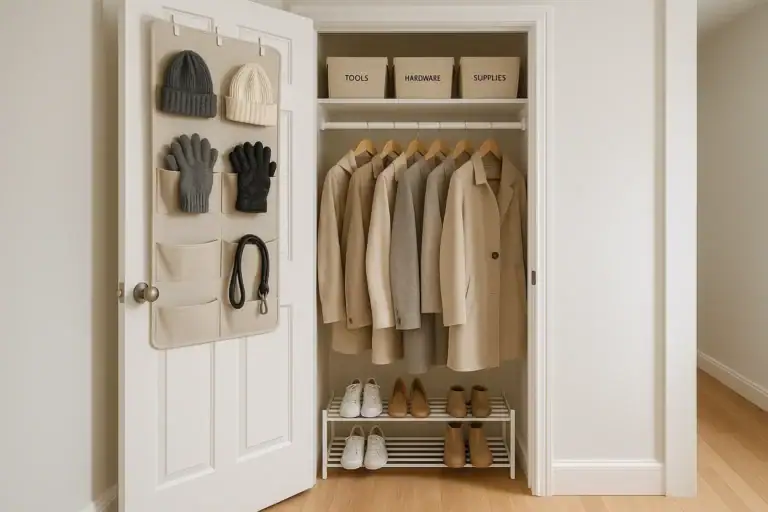 How to Organize a Hall Closet for Coats, Tools, and Everyday Items
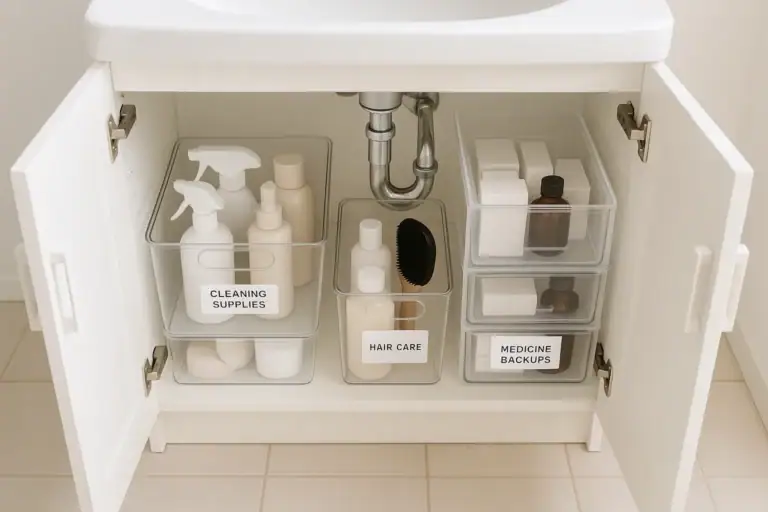 Smart Bathroom Cabinet Organization for Under-Sink Drawers and Medicine Backups
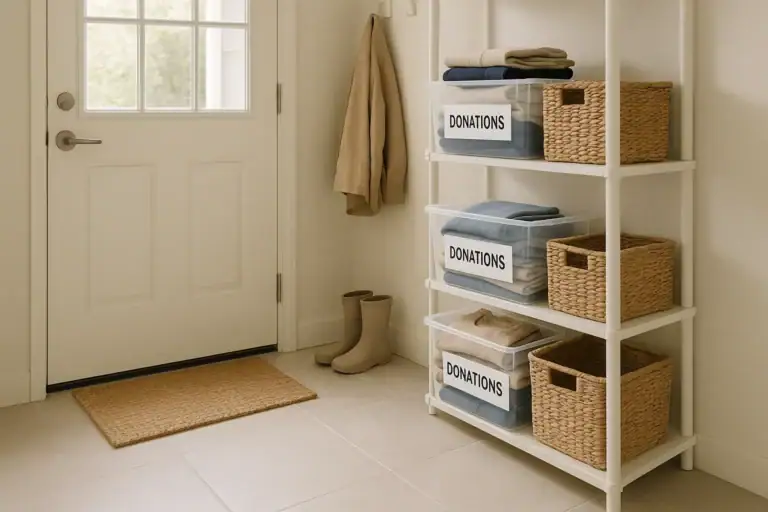 How to Set Up a Donation Staging Zone for Decluttering