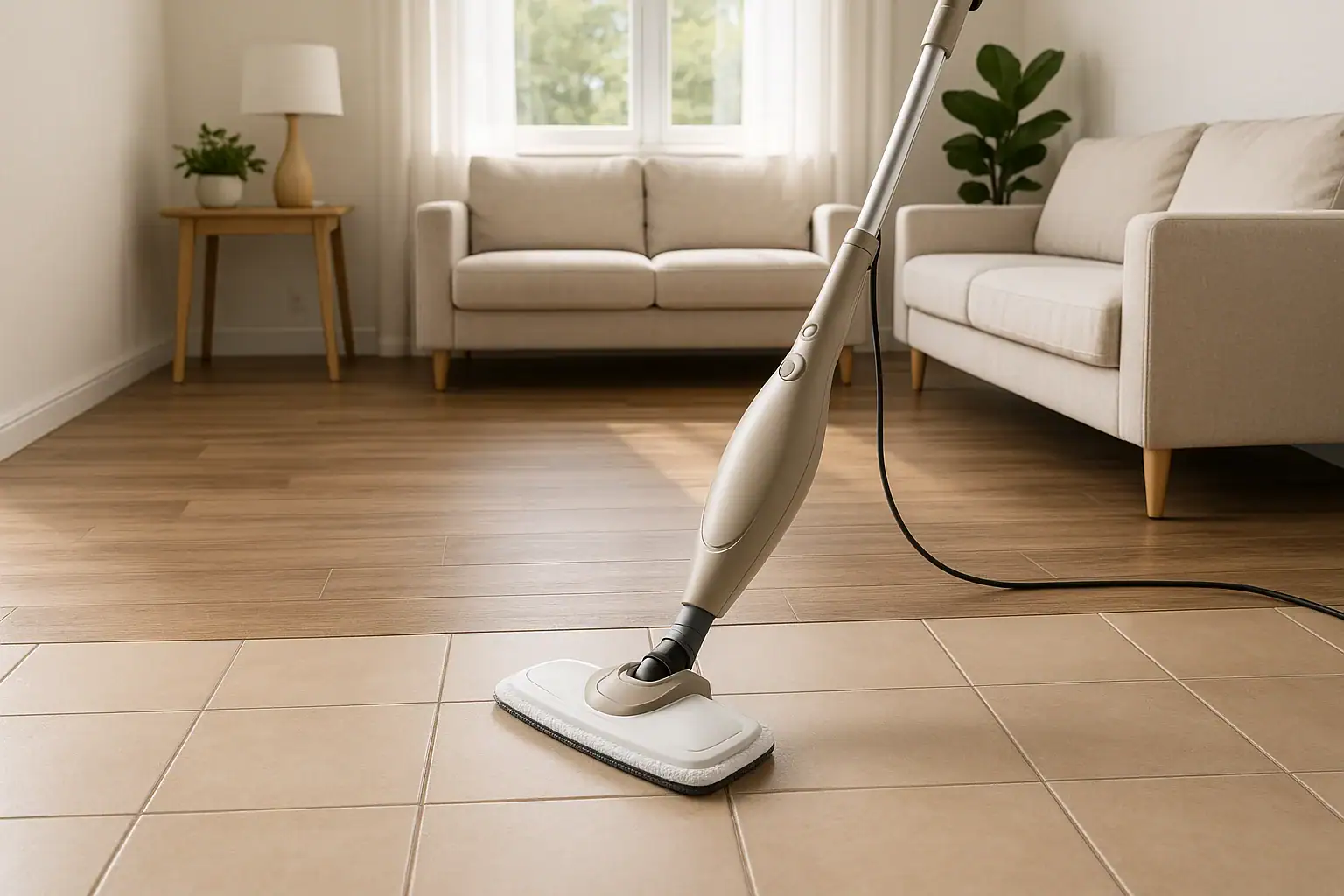
Can you use a steam mop on your floors?
Steam mops are generally safest on sealed, water-resistant hard floors like most ceramic tile and some sealed stone. They are usually not recommended on unsealed wood, many hardwood and engineered wood floors, some vinyl plank (LVP/LVT), laminate, bamboo, or any floor the manufacturer labels as “dry clean only” or “no steam.”
The most reliable answer for your home is in two places: your floor manufacturer’s care instructions and your steam mop’s manual. If either one says to avoid steam, treat that as a firm “no.”
Use the comparisons below to see how different floor types typically respond to steam and what to check before you clean. For more general cleaning strategies, you can also explore the cleaning guides on Signature Home Guide’s Cleaning & Organization hub.
Steam mop compatibility by floor type
The table below compares common floor types and how they usually handle steam. Always confirm against your specific product’s instructions.
| Floor type | Typical steam compatibility | Main risks | What to check |
|---|---|---|---|
| Ceramic or porcelain tile | Often compatible | Grout damage, loose tiles if subfloor is weak | Tile and grout sealer status; grout manufacturer care guide |
| Natural stone (sealed) | Sometimes compatible | Etching, sealer breakdown, hairline cracks | Stone installer or manufacturer maintenance instructions |
| Natural stone (unsealed) | Generally not recommended | Staining, spalling, surface softening | Whether stone is sealed and with what product |
| Solid hardwood | Often not recommended | Cupping, warping, finish clouding | Flooring warranty and care sheet; many forbid steam |
| Engineered wood | Often not recommended | Delamination, edge swelling | Product installation and care guide |
| Laminate | Usually not recommended | Swelling, bubbling, joint failure | Laminate manufacturer’s cleaning instructions |
| Vinyl plank (LVP/LVT) | Mixed; many say no steam | Warping, joint weakening, discoloration | Warranty terms; temperature limits, steam restrictions |
| Sheet vinyl | Sometimes compatible on fully glued, well-sealed floors | Seam lifting, adhesive softening | Installation method and adhesive manufacturer guidance |
| Bamboo | Often not recommended | Swelling, cracking, finish damage | Bamboo flooring care and maintenance sheet |
| Sealed concrete | Often compatible | Sealer breakdown, surface haze | Type of sealer and its temperature/moisture limits |
How to check if your specific floor can handle steam
1. Read your floor’s care and warranty documents
Look up the brand and product name from leftover boxes, receipts, or photos of labels. Search the manufacturer’s website for “care and maintenance” or “warranty.” Many modern flooring warranties clearly state whether steam cleaning is allowed.
If the document says any of the following, avoid a steam mop on that floor:
- “Do not use steam mops or steam cleaners.”
- “Use dry or slightly damp methods only.”
- “Excessive heat or moisture will void the warranty.”
2. Check your steam mop manual
Your steam mop instructions usually list compatible surfaces and any limits, such as using the lowest steam setting or avoiding prolonged contact in one spot. If the manual only mentions “sealed hard floors,” treat that as a minimum requirement, then confirm your floor is actually sealed and rated for moisture.
3. Confirm the floor is sealed and in good condition
Steam should only be used on intact, sealed surfaces:
- Tile and grout: Look for missing grout, cracks, or powdery areas. Damaged grout can let moisture reach the subfloor.
- Wood, bamboo, and engineered wood: Check for worn finish, gaps, or exposed raw wood at edges or scratches.
- Stone and concrete: Confirm a compatible sealer was applied and is still beading water instead of letting it soak in.
If you see bare, cracked, or crumbling areas, repair and reseal before considering steam—or stick with non-steam methods.
Floor-by-floor comparison and guidance
Ceramic and porcelain tile
These are among the most steam-tolerant floors when properly installed and sealed. The tile itself is usually unaffected by heat and moisture, but grout and subfloor can be vulnerable.
Better candidates for steam mopping when:
- Tiles are firmly set with no hollow sounds when tapped.
- Grout is intact and, if recommended, sealed.
- The subfloor is appropriate for moisture (e.g., cement board over a stable base).
Use caution or avoid steam when:
- Grout is cracked, missing, or powdery.
- Tiles are loose or the floor flexes.
Natural stone (marble, travertine, slate, granite)
Natural stone is more sensitive than ceramic tile. High heat and moisture can weaken some sealers or highlight existing flaws. Some stones, like marble and travertine, can etch or dull more easily.
Before using steam:
- Check the stone supplier’s maintenance guide for steam or high-heat restrictions.
- Verify that the sealer is rated for hot water or steam if the manufacturer specifies this.
If you are unsure of the stone type or sealer, a neutral-pH cleaner and microfiber mop is usually a safer default than steam.
Solid hardwood floors
Most solid hardwood manufacturers advise against steam mops. Heat drives moisture into seams and pores, which can cause cupping, warping, and finish damage over time.
Signs steam is a bad match:
- Gaps between boards or visible cracks.
- Older floors with thin or worn finish.
- Any mention of “no steam” or “dry cleaning methods only” in the care guide.
For hardwood, a vacuum or dust mop plus a slightly damp microfiber mop with a wood-safe cleaner is usually safer than steam.
Engineered wood and bamboo
Engineered wood and bamboo often have multiple layers bonded together. Steam can stress these layers, leading to swelling, delamination, or edge damage.
Many warranties for these products specifically forbid steam cleaning. If you cannot confirm that steam is allowed, treat it as incompatible and use low-moisture cleaning methods instead.
Laminate flooring
Laminate has a fiberboard core that is very sensitive to moisture. Even if the surface looks sealed, steam can reach joints and edges, causing swelling or bubbling.
Most laminate care guides recommend:
- Vacuuming or sweeping regularly.
- Using a slightly damp mop, wrung out well.
- Avoiding steam mops and wet mopping.
Unless your laminate manufacturer clearly allows steam, it is safer to avoid it.
Luxury vinyl plank (LVP) and tile (LVT)
LVP and LVT are marketed as water-resistant, but that does not always mean steam-safe. Prolonged high heat can soften or distort vinyl and affect click-lock joints or adhesives.
Check your warranty for phrases like “do not use steam mops” or maximum temperature limits. If steam is allowed, follow any restrictions on:
- Steam setting or temperature.
- How long you can hold the mop in one place.
- Frequency of steam cleaning.
Sheet vinyl
Sheet vinyl that is fully glued and well-sealed at seams may tolerate occasional low-steam cleaning, but adhesives can soften under heat and moisture, leading to bubbles or lifted seams.
Confirm with the flooring and adhesive manufacturers. If there is any doubt, use a neutral vinyl-safe cleaner and a damp mop instead of steam.
Sealed concrete
Sealed interior concrete is often robust, but the sealer itself can be sensitive. Some sealers can haze, peel, or lose gloss when exposed to high heat and moisture.
Before using a steam mop:
- Identify the sealer type (acrylic, epoxy, polyurethane, penetrating, etc.).
- Check the sealer manufacturer’s maintenance instructions for temperature or steam limits.
How to test steam on a small area
If both your floor and steam mop manuals allow steam but you are still unsure, do a controlled test:
- Pick a hidden spot such as behind a door or under movable furniture.
- Vacuum or sweep first so grit does not scratch the surface.
- Use the lowest steam setting and a clean pad.
- Keep the mop moving; do not park it in one place.
- Let the area dry fully and inspect for raised edges, dull spots, discoloration, or softening.
If you notice any change in texture, color, or shape, stop using steam on that floor.
Safer operating habits when steam is allowed
When your floor is confirmed steam-compatible, these habits help reduce risk:
- Use distilled or demineralized water if your manual suggests it to reduce mineral buildup in the mop.
- Avoid harsh chemicals in the steam tank; most manufacturers recommend water only.
- Ventilate the area to help moisture evaporate quickly. The U.S. Environmental Protection Agency notes that controlling indoor moisture helps limit mold and material damage; see their guidance on moisture and mold in homes.
- Keep the pad clean and replace it as it becomes soiled to avoid scratching or streaking.
- Do not use on loose rugs or near electrical outlets, cords, or open floor penetrations.
When to skip the steam mop entirely
Even if you like the convenience of steam, it is better to avoid it when:
- You cannot identify your flooring type or brand.
- The floor is older, already damaged, or has visible gaps and cracks.
- The manufacturer’s instructions are missing and you cannot confirm compatibility.
- Someone in the home is sensitive to humidity changes in certain rooms (for example, in small, poorly ventilated spaces).
In these cases, a vacuum or broom plus a slightly damp microfiber mop and a cleaner labeled for your floor type is usually a safer, low-risk option. For more ways to keep floors clean without damage, you can browse additional cleaning and organization tips on the Signature Home Guide Cleaning & Organization hub.
 How to Clean Grout Without Damaging Your Tile: A Safe Step-by-Step Guide
 How to Clean Blinds Without Removing Them: A Simple Step-by-Step Guide
 How to Remove Adhesive Residue by Surface Type