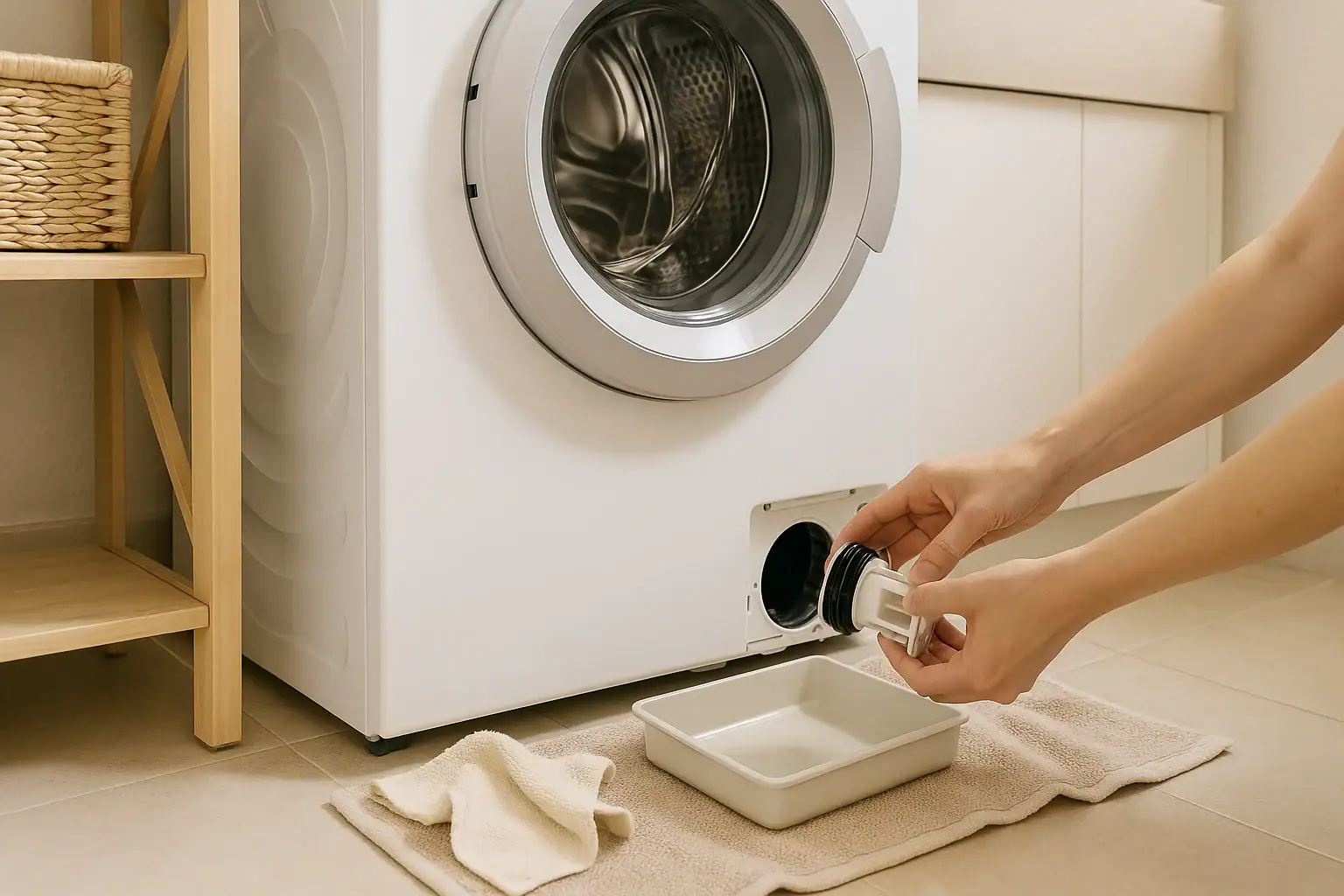
Why Your Washing Machine Drain Pump Filter Matters
The drain pump filter catches lint, coins, hairpins, and other small debris before it reaches the pump. When it clogs, you may notice:
- Water not draining or draining very slowly
- Washer stopping mid-cycle with a drain error
- Musty smells from standing water in the machine
- More vibration or noise during the spin cycle
Cleaning the drain pump filter is usually a simple task you can do yourself in 15–30 minutes. The basic process is to unplug the washer, open the access panel, drain any water, remove and rinse the filter, then reinstall it securely.
Always check your washer’s manual first. If your machine is under warranty or you are unsure where the filter is located, the manufacturer’s instructions should be your primary guide.
Before You Start: Safety and Prep
Any time you work on an appliance, reduce risk by cutting power and avoiding contact with standing water and live electrical parts. The U.S. Consumer Product Safety Commission offers general guidance on home electrical safety around appliances.
Gather basic supplies
- Old towels or rags
- Shallow tray, baking sheet, or low pan for water
- Small container or cup (for controlled draining, if needed)
- Soft brush or old toothbrush
- Rubber or disposable gloves (optional but helpful)
Unplug and shut off water if needed
- Turn off the power. Unplug the washer from the wall outlet. If it’s hard-wired and you cannot safely access the plug, consider switching off the dedicated circuit at your electrical panel and, if you’re unsure, contact a qualified electrician.
- Turn off water supply (optional but wise). If you expect to move the washer or disconnect hoses, close the hot and cold shutoff valves behind the machine.
Step 1: Locate the Drain Pump Filter
Most front-load washers have a drain pump filter behind a small access door on the lower front of the machine, usually on the right or left side. Many top-load washers do not have a user-accessible drain pump filter; instead, they may use internal filters or self-cleaning pumps.
Common locations:
- Front-load washers: Small rectangular door or panel at the bottom front. Sometimes the panel is held by clips; other times by small screws.
- Top-load washers: May not have a visible drain pump filter. Some models hide it behind the front lower panel or at the back near the drain hose. If you do not see an obvious access door, check your manual before removing panels.
If you can’t find the filter, search your model number plus “user manual” on the manufacturer’s official site. Many manuals include a diagram of the drain pump area.
Step 2: Open the Access Panel and Prepare for Water
- Place towels on the floor. Lay towels in front of the washer to catch spills.
- Position a shallow tray or pan. Slide it under the access area to catch water when you open the filter or drain hose.
- Open the access door. Use your fingers or a flat tool (like a plastic putty knife) to gently open the small door. If screws are present, remove them carefully and keep them nearby.
Many washers have a small emergency drain hose next to the filter. Others will release water as soon as you loosen the filter cap. Be ready for a steady flow, especially if the washer stopped mid-cycle.
Step 3: Drain Remaining Water
How you drain depends on your model:
If there is a small drain hose
- Pull the hose out a few inches.
- Remove the hose cap or plug over your tray or a container.
- Let water flow until it stops. You may need to empty the tray or container into a sink and repeat.
- Replace the hose cap securely and tuck the hose back in place.
If there is no drain hose
- Keep the tray directly under the filter cap.
- Slowly turn the filter cap counterclockwise just until water begins to trickle out.
- Let it drain into the tray. Tighten slightly if the flow is too strong, or pause to empty the tray as needed.
- Once water slows to a drip, fully unscrew the cap and be ready for a final small surge.
A moderate amount of water is normal. If you see an unusually large volume or signs of a leak elsewhere, you may need a technician to check hoses and internal connections.
Step 4: Remove and Clean the Drain Pump Filter
- Take out the filter. With the cap fully unscrewed, pull the filter straight out. It may feel snug due to rubber seals.
- Clear large debris. Remove coins, buttons, hairpins, lint clumps, and any other objects by hand. Use gloves if you prefer.
- Rinse under warm water. Hold the filter under running water to wash away residue. Use a soft brush or old toothbrush to scrub the mesh and grooves.
- Inspect for damage. Look for cracks, broken mesh, or a damaged rubber O-ring. If the filter or seal is damaged, check your manufacturer’s parts site or a reputable appliance parts supplier for a replacement specific to your model.
Step 5: Clean the Filter Housing
- Wipe inside the cavity. Use a damp cloth or small brush to clean the inside of the filter housing. Remove lint, sludge, and any visible buildup.
- Check the pump impeller. At the back of the cavity, you may see a small plastic impeller that spins to move water. Make sure it can turn freely and that no debris is jammed around it. Do not force it or pry on it with hard tools.
- Check the seal area. Wipe the rim where the filter’s rubber gasket sits so it can seal properly when reinstalled.
If you notice signs of mold or mildew in or around the washer, you may also want to clean the door gasket and run a cleaning cycle. For broader cleaning and organizing tips around the laundry area, see the Cleaning & Organization guides on Signature Home Guide.
Step 6: Reinstall the Filter and Close the Panel
- Reinsert the filter. Align the filter with the opening and push it in straight.
- Tighten the cap. Turn the filter cap clockwise until it is snug. It should be firmly seated but not overtightened, which can damage threads or seals.
- Secure the access door. Close the small door or reinstall any screws you removed.
- Remove towels and dry the area. Wipe up any spilled water so the floor is dry before you move around the washer.
Step 7: Restore Power and Test the Washer
- Plug the washer back in. Restore power at the outlet or breaker.
- Turn water supply back on. Open the hot and cold shutoff valves fully.
- Run a short cycle. Choose a quick wash or rinse-and-spin with no laundry in the drum. Watch the washer during fill, wash, and drain.
Check for:
- Leaks around the filter access door
- Unusual noises from the pump area
- Drain errors or standing water at the end of the cycle
If you see leaks, power the washer off, open the panel again, and confirm the filter is straight and fully tightened. Persistent leaks or loud grinding noises from the pump are signs to contact a qualified appliance technician.
How Often to Clean the Drain Pump Filter
Frequency depends on how often you wash and what you wash:
- Typical household (several loads per week): Every 3–6 months
- Heavy use (daily loads, pet bedding, very linty fabrics): Every 1–3 months
- Light use (few loads per month): Every 6–12 months
Some manufacturers recommend specific intervals in the user manual. If your washer frequently shows drain errors or has recurring odors, cleaning the filter more often may help.
When to Call a Professional
Cleaning the drain pump filter is a basic maintenance task, but some situations call for expert help:
- The access panel is not user-removable or requires significant disassembly
- Water continues to pool in the drum even after cleaning the filter
- You hear loud grinding or rattling from the pump during drain cycles
- There are signs of electrical issues, such as tripped breakers, burning smells, or visible damage to cords or outlets
- You see leaks from inside the cabinet, not just around the filter door
In those cases, a qualified appliance repair technician can safely inspect the pump, hoses, and internal components. If you have broader laundry-room organization or cleaning projects in mind, you can also explore more ideas in the Cleaning & Organization section of Signature Home Guide.
Simple Habits to Reduce Future Clogs
- Check pockets for coins, keys, and small objects before washing
- Use mesh bags for small items like baby socks and lingerie
- Avoid overloading the washer, which can strain the pump and trap more debris
- Use detergent according to the manufacturer’s directions to reduce residue buildup
- Leave the door or lid slightly open between loads to help the interior dry
With periodic cleaning of the drain pump filter and a few simple habits, you can help your washer drain more reliably and reduce odors and minor breakdowns over time.
 How to Clean Under Appliances Safely Without Moving Everything
 How to Clean Pet Bowls, Mats, and Feeding Areas Safely
 How to Clean a Dryer Vent Safely at Home