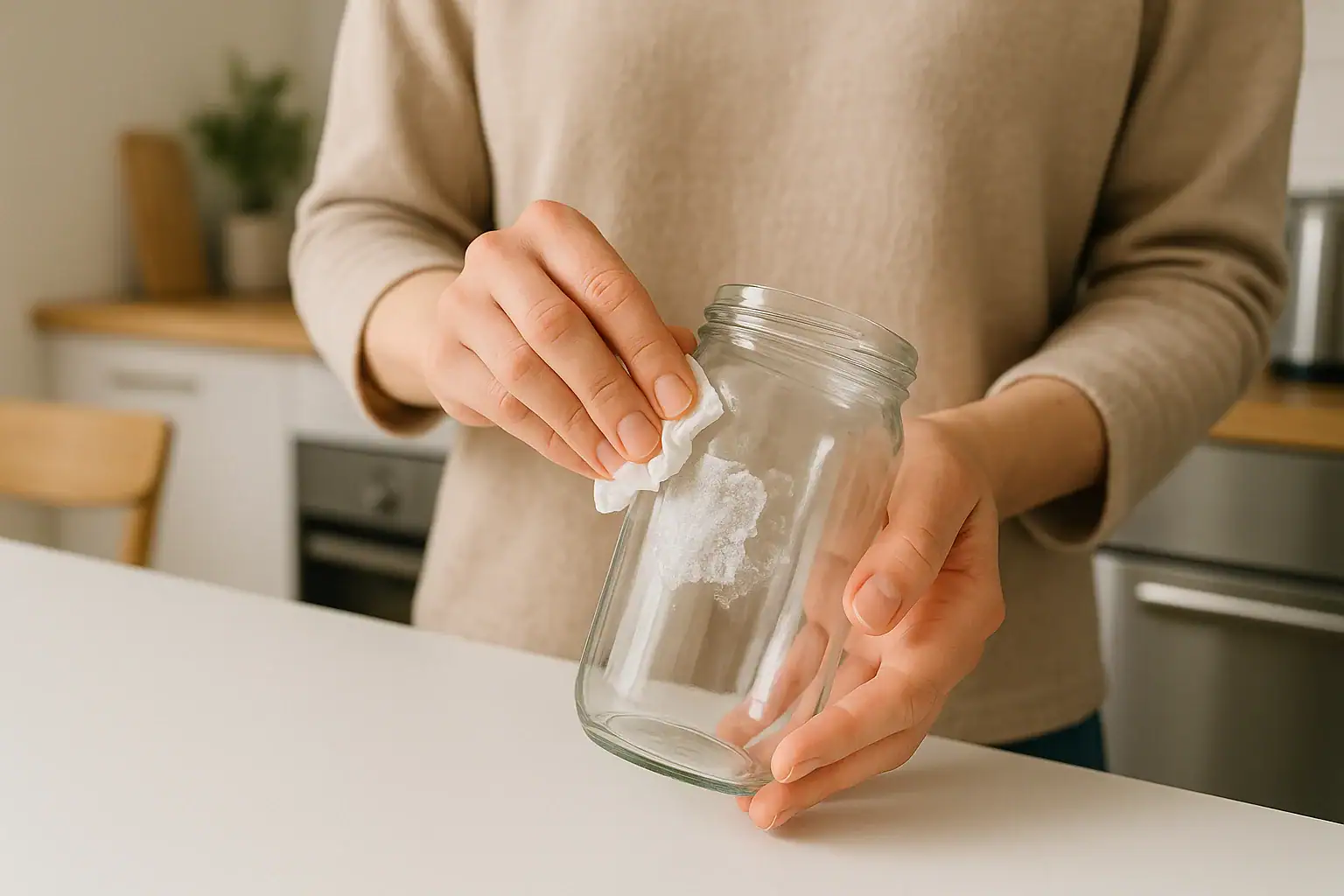
Quick guide: match the remover to the surface
To remove adhesive residue without damage, always start with the gentlest method and match the remover to the surface. Oils and soapy water are usually safest. Strong solvents like acetone or mineral spirits can work well on glass and some metals, but they can permanently damage plastics, finishes, and fabrics.
Before using any product, test it on a small, hidden area and follow the product label. If you are dealing with a large area, a valuable item, or a sensitive surface, consider asking the manufacturer or a professional for specific guidance.
This guide walks through common household surfaces and the safest order of methods for each. For more organizing and cleaning strategies, you can also explore the main Cleaning & Organization hub at Signature Home Guide.
General steps for removing adhesive residue
- Identify the surface and finish. Is it bare metal, painted wall, finished wood, plastic, or fabric? The finish matters more than the adhesive type.
- Start dry. Try gently peeling, rolling, or scraping with a plastic scraper, old credit card, or your fingernail. Avoid metal blades on delicate surfaces.
- Use a mild remover first. Warm soapy water or a small amount of cooking oil often softens residue without damage.
- Increase strength slowly. Move to rubbing alcohol, then to stronger solvents only if the surface can tolerate them.
- Clean and rinse. After the residue is gone, wash the area with mild soap and water to remove any remaining chemicals or oil.
Glass and mirrors
Glass is one of the easiest and safest surfaces for stronger removers because it is non-porous and not easily stained.
Best order of methods
- Warm soapy water
- Soak a cloth in warm, soapy water and hold it over the residue for several minutes.
- Gently rub or scrape with a plastic scraper or old gift card.
- Rubbing alcohol (isopropyl alcohol)
- Apply to a cloth and rub the residue in small circles.
- Reapply as needed until the adhesive loosens.
- Stronger solvents if needed
- Acetone or nail polish remover can be used on glass and mirrors.
- Work in a well-ventilated area and keep away from flames, as many of these products are flammable. The U.S. Consumer Product Safety Commission guidance on household hazardous products has more on safe handling.
- Wipe clean with glass cleaner afterward.
Metal surfaces (appliances, tools, fixtures)
Most bare metal can tolerate stronger solvents, but painted or coated metal should be treated more gently.
Bare or stainless metal
- Peel or scrape off as much as possible with a plastic scraper.
- Apply rubbing alcohol or a small amount of mineral spirits to a cloth and rub the residue.
- For stubborn spots, use a bit of acetone on a cloth, then wash with soapy water and dry thoroughly to prevent rust.
Painted or coated metal
- Start with warm, soapy water and a soft cloth.
- Move to rubbing alcohol on a cloth, using light pressure.
- Avoid harsh solvents like acetone unless the manufacturer confirms they are safe for that finish.
Plastic and acrylic
Plastics can cloud, crack, or melt with strong solvents. Use the mildest options and be patient.
- Warm, soapy water
- Soak a cloth and lay it over the residue for several minutes.
- Gently rub; repeat as needed.
- Cooking oil or petroleum jelly
- Apply a small amount and let it sit 5–10 minutes.
- Rub with a soft cloth, then wash with dish soap to remove the oily film.
- Rubbing alcohol (carefully)
- Test in a hidden spot first; some plastics can dull.
- If safe, dab a small amount on a cloth and work on the residue briefly.
Avoid acetone and strong paint thinners on most consumer plastics unless the manufacturer specifically states they are safe.
Finished wood (furniture, cabinets, floors)
Finished wood has a protective coating that can be dulled or stripped by aggressive solvents. The goal is to soften the adhesive without removing the finish.
- Gentle mechanical removal
- Use your fingernail or a plastic scraper at a low angle.
- Work slowly to avoid scratching.
- Cooking oil or mayonnaise
- Apply a small amount directly to the residue.
- Let sit 10–15 minutes, then rub gently with a soft cloth.
- Wash with a mild wood-safe cleaner afterward.
- Rubbing alcohol (only if needed)
- Test in an inconspicuous area first.
- If the finish is unaffected, dab a little on a cloth and work quickly on the residue.
- Immediately wipe with a damp cloth and dry.
If the wood is antique, high-value, or has a delicate finish (like shellac or lacquer), it is safer to consult a furniture refinisher before using any solvent.
Unfinished wood
Unfinished wood absorbs liquids, which can cause stains or swelling. Avoid soaking the area.
- Gently scrape off as much adhesive as possible with a plastic scraper.
- Use a small amount of mineral spirits on a cloth, dabbing only the residue.
- Work in a ventilated area and keep away from flames; mineral spirits are flammable.
- Do not saturate the wood.
- Blot with a dry cloth and allow the wood to air out completely.
Unfinished wood may still show a mark where the adhesive was. Sanding and refinishing might be needed for a perfect match.
Painted walls and trim
Painted drywall and trim can peel or discolor if you use strong solvents or pull too hard on tape.
- Warm the adhesive
- Use a hair dryer on low to medium heat, moving constantly.
- Gently peel tape or stickers as the adhesive softens.
- Wash with mild soap
- Mix a few drops of dish soap in warm water.
- Wipe the area with a soft cloth, using light pressure.
- Rubbing alcohol (spot test first)
- Test in a hidden area; some paints can dull or soften.
- If safe, dab a little on a cloth and gently rub the residue.
If the paint lifts or the wall surface feels soft, stop and consider repainting instead of continuing to rub.
Tile and grout
Ceramic and porcelain tile are durable, but grout is porous and can stain.
- Scrape off bulk residue with a plastic scraper.
- Apply warm, soapy water and scrub with a soft cloth or non-scratch sponge.
- For stubborn spots on tile (not grout), use rubbing alcohol or a small amount of acetone on a cloth, keeping it away from grout lines as much as possible.
- Rinse thoroughly with clean water.
For natural stone tile (like marble or limestone), avoid acidic or harsh solvents and follow the stone manufacturer’s care instructions.
Fabric and upholstery
Adhesive on fabric can spread or set deeper if treated with the wrong product. Always check the care label first.
- Lift off excess
- Use a dull knife or spoon to lift any thick adhesive without grinding it in.
- Pre-treat with dish soap
- Mix a few drops of liquid dish soap with warm water.
- Blot (do not rub) the area with a clean cloth.
- Rubbing alcohol for many synthetic fabrics
- Test on a hidden seam first.
- If safe, dab alcohol on a cloth and blot the residue from the outside in.
- Launder if allowed
- Wash according to the garment label once the residue is mostly gone.
For delicate fabrics, upholstery you cannot remove, or large stains, a professional cleaner is often the safest option.
Skin
Sticker and bandage residue on skin should be removed gently to avoid irritation.
- Soak the area in warm, soapy water for several minutes.
- Gently rub with your fingers or a soft washcloth.
- If needed, apply a small amount of cooking oil or petroleum jelly, wait a few minutes, then wipe away and wash with soap and water.
Avoid using strong household solvents (like acetone, mineral spirits, or paint thinner) directly on skin. For guidance on safe use of household chemicals around people and pets, the U.S. Environmental Protection Agency information on managing products safely at home is a useful reference.
Safety tips when using adhesive removers
- Ventilation: Open windows or use fans when working with any solvent-based product.
- No flames or sparks: Many solvents and aerosol adhesive removers are flammable. Keep them away from open flames, pilot lights, and smoking materials. The CPSC flammable and combustible liquids fact sheet explains these risks in more detail.
- Protective gear: Wear disposable gloves and, if splashing is possible, eye protection.
- Follow labels: Always read and follow the instructions and warnings on any commercial adhesive remover.
- Disposal: Do not pour leftover solvents down household drains unless the label specifically allows it. Local waste or sanitation departments usually provide instructions for hazardous household waste.
When to stop and get help
Stop and seek advice from the manufacturer or a qualified professional if:
- The item is valuable, antique, or irreplaceable.
- The surface begins to discolor, soften, or peel during cleaning.
- You are unsure what the surface or finish is made of.
- You are dealing with a large area of adhesive on walls, floors, or structural surfaces.
For everyday household messes, though, a careful, surface-specific approach usually removes adhesive residue without damage. For more practical cleaning strategies, you can return to the Signature Home Guide Cleaning & Organization section.
 How to Clean Under Appliances Safely Without Moving Everything
 How to Clean Blinds Without Removing Them: A Simple Step-by-Step Guide
 How to Remove Water Stains on Glass Tables, Mirrors, and Shower Glass