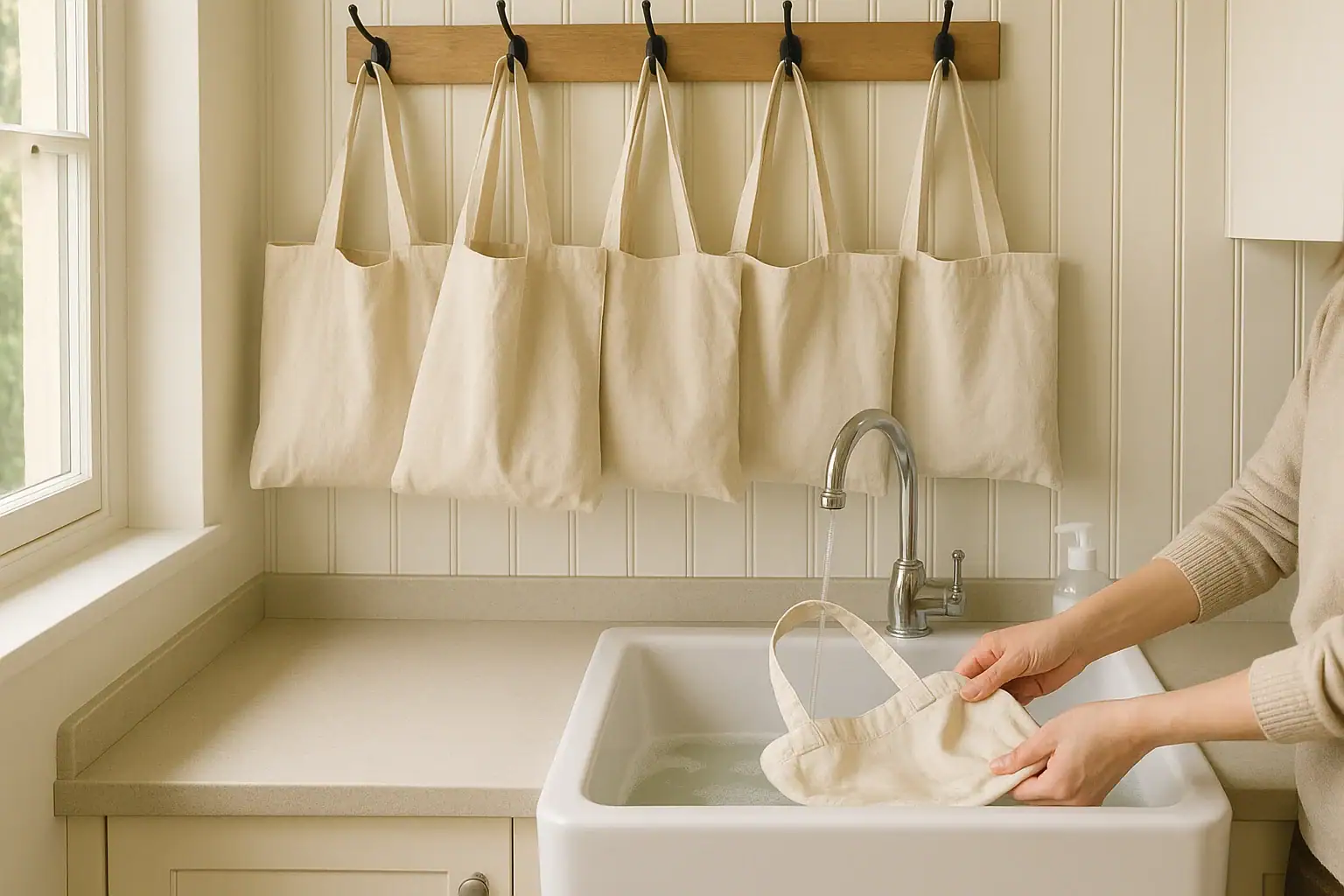
Quick guide: how to clean reusable grocery bags
Most reusable grocery bags can be cleaned with mild detergent and warm water. Cloth bags usually go in the washing machine, insulated bags are wiped or spot-cleaned, and thicker plastic bags are washed by hand and air-dried.
Always check the care tag first. When in doubt, use the gentlest method: cool or warm water, mild soap, and air drying.
Why cleaning reusable bags matters
Reusable bags often carry raw meat, produce, and ready-to-eat foods, then get tossed into car trunks or closets. Over time, they can pick up dirt and food residue. Regular cleaning helps reduce odors, stains, and the chance that residue transfers to other foods.
Basic hygiene steps like washing hands, separating raw meat from ready-to-eat foods, and cleaning surfaces are recommended by the U.S. Food and Drug Administration for safe food handling. Cleaning reusable bags fits into that same routine.
How often to wash reusable grocery bags
- After carrying raw meat, poultry, or seafood: Clean that bag before using it again for any other groceries.
- After spills or leaks: Wash or wipe the bag as soon as you can.
- General use: For regular grocery runs, aim to clean bags every 1–2 weeks, or sooner if they look or smell dirty.
Step-by-step: cleaning cloth and canvas grocery bags
These include cotton, canvas, and many polyester fabric totes.
1. Check the label
Look for a care tag inside the bag or along a side seam. Follow any specific instructions about water temperature, machine washing, or drying.
2. Shake out crumbs and debris
- Empty the bag completely.
- Turn it inside out and shake it over a trash can.
- Use a lint roller or handheld vacuum if crumbs are stuck in seams.
3. Pretreat stains (optional)
- Apply a small amount of liquid laundry detergent or a gentle stain remover to visible stains.
- Gently rub the fabric together or use a soft brush.
- Let it sit for 5–10 minutes before washing.
4. Machine wash or hand wash
- Machine wash:
- Use cold or warm water on a gentle or normal cycle.
- Wash bags with similar colors.
- Use regular laundry detergent; avoid bleach unless the care tag says it is safe.
- Hand wash:
- Fill a sink or basin with warm water and a small amount of mild detergent.
- Submerge the bag and gently agitate it.
- Pay attention to seams and the bottom where spills collect.
5. Rinse thoroughly
Rinse until the water runs clear and no soap remains. Detergent left in the fabric can attract dirt and may cause skin irritation for some people.
6. Air dry completely
- Reshape the bag and hang it by the handles or lay it flat.
- Dry in a well-ventilated area; sunlight can help with odors but may fade colors over time.
- Avoid high-heat dryers unless the care tag says they are safe, as heat can shrink or weaken fabric and straps.
How to clean insulated reusable grocery bags
Insulated bags often have a shiny, cooler-like interior and sometimes foam in the walls. These usually should not go in the washing machine.
1. Empty and shake out
- Remove all items, ice packs, and inserts.
- Shake out crumbs and wipe out any loose debris.
2. Mix a mild cleaning solution
- Fill a bowl or bucket with warm water.
- Add a small amount of mild dish soap.
3. Wipe the interior
- Dip a clean cloth or sponge into the soapy water and wring it out well.
- Wipe all interior surfaces, focusing on seams, corners, and the bottom.
- For sticky spots, let the soapy cloth sit on the area for a minute before wiping again.
4. Clean the exterior
Use the same soapy cloth to wipe the outside of the bag, including handles and zippers. Avoid soaking any fabric portions or seams.
5. Rinse with a damp cloth
- Use a second cloth dampened with clean water to wipe away soap residue.
- Do not submerge the bag; keep water out of foam layers and seams.
6. Disinfect after raw meat or leaks
If raw meat, poultry, or seafood leaked in the bag, clean first with soap and water, then use a disinfecting step that is safe for the bag’s material. The Centers for Disease Control and Prevention describes cleaning and then disinfecting as separate steps.
- After washing, apply a disinfecting wipe or spray labeled for use on nonporous food-contact surfaces, following the product directions.
- Allow the recommended contact time, then wipe with a clean damp cloth if the label instructs you to rinse.
7. Air dry fully
- Open the bag wide and stand it upright or hang it with the zipper open.
- Let it dry completely inside and out before storing to help prevent musty odors.
How to clean plastic and nonwoven polypropylene bags
Many store-branded reusable bags are made from nonwoven polypropylene (a felt-like plastic fabric) or thicker plastic. These usually do best with gentle hand washing.
1. Shake out and inspect
- Empty the bag and shake out crumbs.
- Check for tears or worn handles; retire damaged bags from heavy use.
2. Hand wash with mild soap
- Fill a sink or basin with warm water and a small amount of mild dish soap.
- Use a soft cloth or sponge to wash the inside and outside.
- Pay attention to seams and the bottom panel where spills collect.
3. Rinse and dry
- Rinse with clean water or wipe with a damp cloth until soap is removed.
- Hang the bag or place it upside down over a drying rack.
- Allow it to air dry completely before folding or stacking.
Dealing with odors and stains
Musty or sour smells
- Wash the bag using the appropriate method for its material.
- Dry it in a sunny, breezy spot if possible.
- For fabric bags, you can add a cup of white vinegar to the rinse cycle if the fabric and colors are safe for it.
Grease and food stains
- Blot fresh grease with a dry paper towel; do not rub it deeper into the fabric.
- Pretreat with a small amount of liquid dish soap or laundry detergent.
- Wash according to the bag’s care instructions.
Simple habits to keep bags cleaner
- Separate raw meats: Use a dedicated bag for raw meat, poultry, and seafood. Clean it more often and avoid using it for produce or ready-to-eat foods.
- Store bags dry: Keep bags in a dry, ventilated spot instead of a damp basement or trunk.
- Let bags air out: After shopping, open bags and let them air dry before folding and storing.
- Rotate bags: Keep a few in use so each one has time to dry fully between trips.
When to replace a reusable grocery bag
Even with good care, reusable bags will eventually wear out. Replace a bag when:
- Handles are fraying, stretched, or starting to tear.
- Seams are splitting or the bottom panel is sagging.
- Stains or odors remain after thorough cleaning.
- The interior lining is cracked, peeling, or flaking.
If your bags are beyond saving, check whether your local recycling program or store drop-off accepts that type of material. For more storage and organization ideas around the house, you can explore the cleaning and organization hub at Signature Home Guide’s Cleaning & Organization section.
 How to Clean Lampshades and Fabric Light Fixtures: A Complete Guide
 How to Clean a Dryer Lint Trap Housing Safely
 How to Clean a Washing Machine Drain Pump Filter