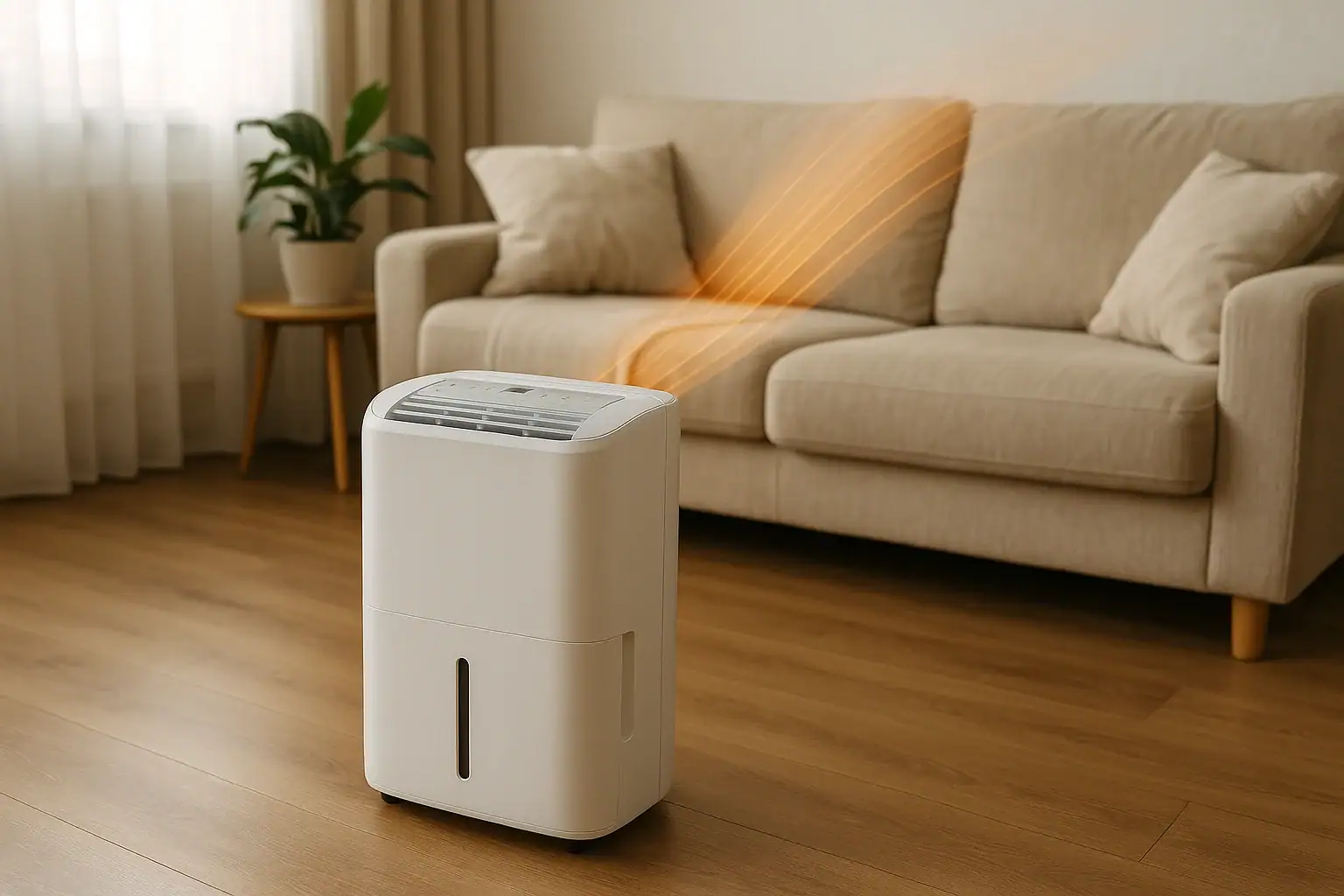
Does a dehumidifier make a room warmer?
Yes. A dehumidifier almost always makes the room a little warmer. It pulls in moist air, removes water, and then blows the dried air back out along with the heat created by its compressor and fan. That added heat stays in the room, so the air temperature usually rises a few degrees.
At the same time, the air feels less clammy because the humidity drops. Many people feel more comfortable at a slightly higher temperature when the air is drier, especially in summer.
How a dehumidifier works and where the heat comes from
Most home dehumidifiers use a refrigeration cycle, similar to a window air conditioner, but without venting heat outdoors.
- Warm, humid air is pulled in through the front or sides.
- Air passes over cold coils, where moisture condenses into water and drips into a tank or drain.
- The now-drier air is reheated slightly as it passes over warm components and is blown back into the room.
- All electrical energy becomes heat in the room, plus the heat released when water vapor condenses.
Because the unit is sitting entirely inside the room, none of that heat is dumped outdoors. That is why the room temperature tends to rise.
How much warmer can a dehumidifier make a room?
The exact temperature rise depends on the room size, insulation, and dehumidifier capacity, but common results are:
- Small, closed room (bathroom, small bedroom): often 3–6°F warmer after the unit runs for a while.
- Medium room (living room, finished basement area): often 1–4°F warmer.
- Large, open areas: the change may be small but still noticeable near the unit’s warm air outlet.
Even if the thermostat shows a higher temperature, the lower humidity can still improve comfort. The U.S. Environmental Protection Agency explains that indoor relative humidity is best kept below about 60% (ideally 30–50%) to reduce mold growth and musty odors. A dehumidifier helps you reach that range, even if the air warms slightly.
Why the room can feel warmer even if humidity drops
Two things are happening at once:
- Temperature goes up because the dehumidifier adds heat.
- Humidity goes down, which usually makes the air feel lighter and less sticky.
If you are very sensitive to heat, you may notice the temperature increase more than the comfort benefit of drier air. In a basement or cool room, you might welcome the extra warmth. In an already warm bedroom, it can feel uncomfortable.
Common situations where a dehumidifier feels too warm
Small bedrooms or home offices
In tight spaces with the door closed, the warm exhaust air can quickly raise the room temperature. If the unit is near your bed or desk, you may feel a constant warm draft.
Finished basements
Basements often need dehumidification to control dampness, but if they are already well insulated, the added heat can make them feel stuffy, especially in summer.
Rooms with limited cooling
If you do not have air conditioning, or you rely on a small window unit, the extra heat from a dehumidifier can make it harder to keep the room cool.
Ways to reduce the warming effect
You usually cannot eliminate the heat from a dehumidifier, but you can manage it so the room stays more comfortable.
1. Improve air circulation
- Run a ceiling or portable fan to mix the air so the warm exhaust does not pool in one area.
- Aim the dehumidifier’s outlet away from where you sit or sleep.
- Crack doors open so heat can spread into nearby spaces instead of building up in one small room.
2. Adjust placement
- Place the unit in a central, open spot in the area you want to dry, not in a tight corner.
- Avoid placing it right next to your bed, sofa, or desk where you will feel the warm airflow directly.
- Keep the air intake and exhaust clear of walls and furniture so it runs efficiently.
3. Use a built-in humidistat wisely
Most modern dehumidifiers let you set a target humidity. If you set it very low (for example, 30% in a warm climate), the unit may run almost nonstop, adding more heat than you need.
- In many homes, a target of 45–50% relative humidity is a good balance between comfort and moisture control.
- Once the room reaches your target, the unit should cycle off, reducing heat output.
4. Coordinate with air conditioning
In hot, humid weather, a dehumidifier and air conditioner can work together:
- The AC cools and removes some moisture, venting heat outdoors.
- The dehumidifier trims humidity further if the AC alone is not enough.
If your AC is undersized or you are trying to cool with fans only, the heat from a dehumidifier will be more noticeable. In those cases, consider whether you can:
- Run the dehumidifier mainly during cooler times of day (mornings or evenings).
- Use it in a nearby area (like a hallway or adjacent room) so the heat is not concentrated where you sleep or work.
When the extra warmth is actually helpful
There are times when the heat from a dehumidifier is a plus rather than a problem:
- Cool, damp basements that feel chilly even in summer.
- Shoulder seasons (spring and fall) when you want to dry the air but do not need full air conditioning.
- Rooms with musty odors where a bit of warmth helps speed drying of surfaces and furnishings.
In these situations, the unit is doing two jobs at once: reducing humidity and gently warming the space.
Energy and safety considerations
Because all the electrical energy used by a dehumidifier ends up as heat indoors, it can affect your cooling needs. The U.S. Department of Energy offers general guidance on using dehumidifiers efficiently, including choosing an appropriate size and operating them only when needed.
For safe operation:
- Plug the unit directly into a properly grounded outlet, not a thin extension cord.
- Keep the filter and coils clean according to the manufacturer’s instructions so it does not overheat or work harder than necessary.
- Empty the water tank regularly or use a properly routed drain hose to avoid spills and potential mold growth around the unit.
If you notice unusual heat, burning smells, or tripped breakers, turn the unit off and consult the manufacturer’s manual or a qualified electrician.
Deciding if a dehumidifier is right for your space
If you are weighing the trade-off between added warmth and drier air, focus on:
- Your climate: In hot, humid areas, pair dehumidification with adequate cooling. In cooler regions, the warmth may be welcome.
- Room size and layout: Larger, more open areas spread the heat better than small closed rooms.
- Moisture problems: If you have persistent dampness or musty smells, controlling humidity is usually more important than a small temperature rise.
For more background on managing indoor air and comfort, you can explore the Air & Comfort guides at Signature Home Guide, which cover humidity, ventilation, and everyday comfort strategies around the home.
Key takeaway
A dehumidifier does make a room warmer because it releases heat while it removes moisture from the air. In many homes, the comfort gained from lower humidity outweighs the small temperature increase, especially when you place and use the unit thoughtfully. If the room feels too warm, improving airflow, adjusting your humidity setpoint, and coordinating with your cooling system can keep both temperature and humidity in a comfortable range.
 Why One Room Feels More Humid Than the Rest of the House
 Radiator Heat Balancing Tips for Older Homes: A Practical Guide
 Why Your Home Feels Dry Even When Humidity Is Normal