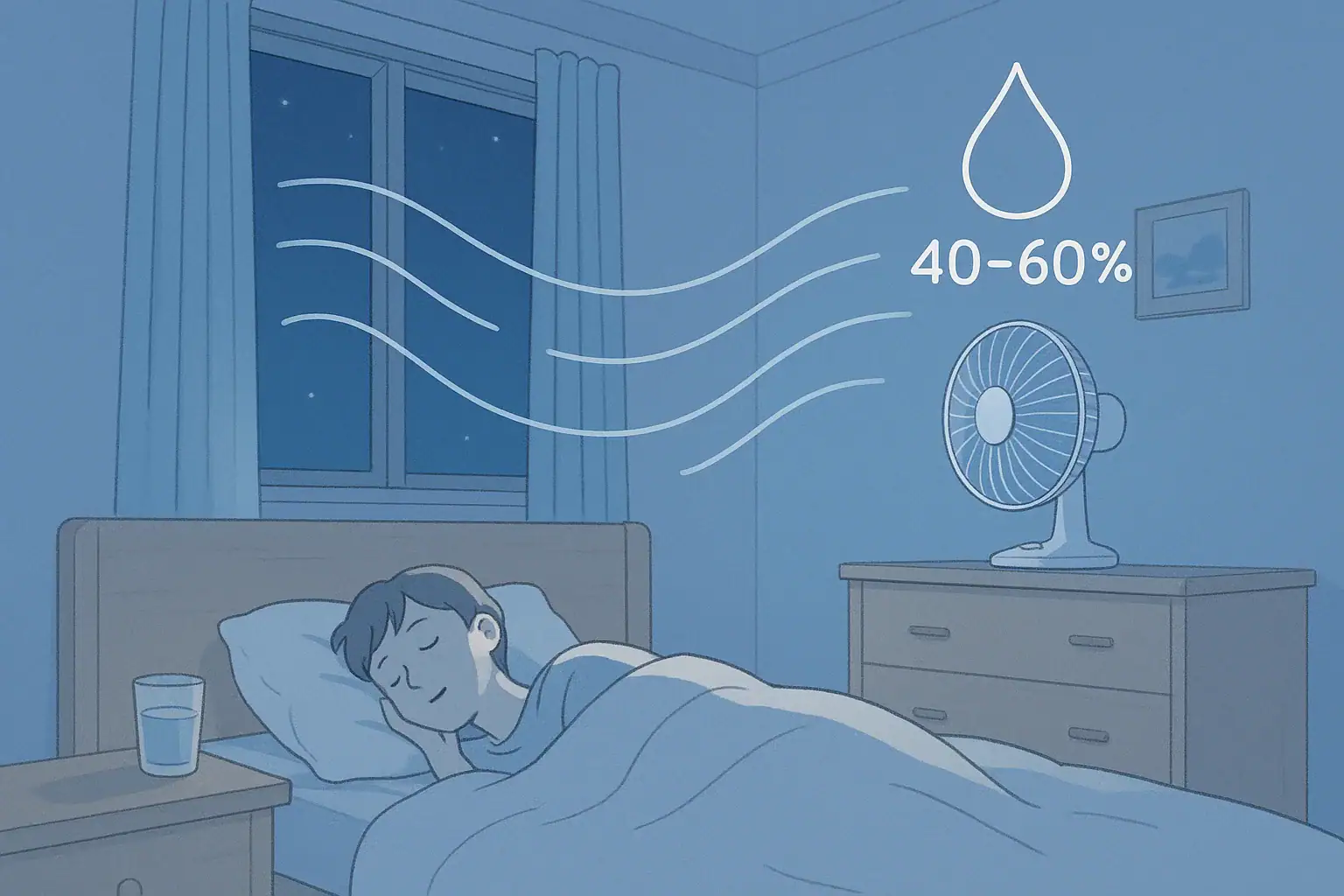
Many people love falling asleep to the gentle hum of a fan. It keeps the room cool, provides soothing white noise, and helps circulate air. But if you wake up with a scratchy, dry throat or stuffy nose, you might wonder if the fan is to blame. The answer is not a simple yes or no. A fan can contribute to a dry throat, but there are clear reasons why it happens and simple ways to fix it without giving up your cool, comfortable sleep.
This explainer walks through how fans affect your throat, nose, and overall comfort at night. You will learn the role of airflow, humidity, and your own breathing habits, plus practical steps to reduce dryness. With a few small changes, you can keep the air moving in your bedroom and still wake up feeling rested and comfortable.
Can Sleeping With a Fan Really Cause a Dry Throat?
Sleeping with a fan does not automatically cause a dry throat, but it can make dryness more likely under certain conditions. A fan does not remove moisture from the air the way a heater or air conditioner might. Instead, it moves the air that is already in the room. That moving air can:
- Increase evaporation of moisture from your mouth, nose, and skin
- Blow already-dry air directly at your face
- Stir up dust and irritants that may bother your throat
If the air in your bedroom is already dry, or if the fan is aimed straight at your face, you are more likely to wake up with a dry, scratchy feeling in your throat or nose. On the other hand, if your room has healthy humidity levels and the fan is used carefully, you may enjoy the cooling benefits with little or no dryness.
Why Your Throat Feels Dry in the Morning
A dry throat in the morning is not always caused by a fan. Several common factors can work together, and the fan may simply make an existing issue more noticeable.
1. Mouth Breathing While You Sleep
One of the biggest reasons people wake up with a dry throat is mouth breathing. When you sleep with your mouth open, air flows directly across your tongue, gums, and throat tissues. This increases evaporation and leaves everything feeling dry and irritated.
A fan can make this worse by pushing more air past these tissues, especially if it is aimed at your face. Even if the room is not very dry, constant airflow over an open mouth can lead to:
- Dry, scratchy throat
- Dry lips and mouth
- Morning hoarseness
- Increased thirst at night or on waking
2. Low Humidity in Your Bedroom
Humidity is the amount of moisture in the air. When indoor air is too dry, it draws moisture out of your skin and the delicate tissues in your nose and throat. This can happen in any season, but it is especially common when:
- Indoor heating is running for long periods
- Air conditioning is used heavily
- You live in a naturally dry climate
In low humidity, a fan will not create dryness on its own, but it can speed up the evaporation process. The result is a dry throat, dry nose, and sometimes even dry, itchy eyes.
3. Allergens and Irritants in the Air
Fans can stir up dust, pet dander, and other particles that settle on surfaces in your bedroom. If you are sensitive to these, you may experience:
- Throat irritation
- Postnasal drip
- Sneezing or stuffiness
- Itchy or watery eyes
Even if your throat is not technically dry, irritation can feel similar and make you blame the fan. In reality, the fan is just moving around irritants that were already there.
4. Dehydration and Nighttime Habits
If you are not drinking enough water during the day, your body has less fluid available to keep your throat and nasal passages moist. Add a fan blowing on you all night and the dryness can feel much worse. Other habits that may contribute include:
- Drinking alcohol in the evening
- Using caffeine late in the day
- Eating very salty foods at night
All of these can affect hydration and make nighttime dryness more noticeable.
How Airflow and Humidity Work Together
To understand how to fix a dry throat from fan use, it helps to know how airflow and humidity interact. The key idea is evaporation: moving air speeds up the rate at which moisture leaves surfaces, including your skin and throat.
What Is a Comfortable Humidity Level?
For most homes, a humidity range of about 30 to 50 percent is considered comfortable. Within this range:
- Your throat and nasal passages stay moist enough to function well
- The air does not feel overly damp or sticky
- Dust mites and some allergens are less likely to thrive
When humidity drops below this range, dryness becomes more likely. When it rises too high, the air can feel heavy and may encourage mold or mildew. A fan will feel different at various humidity levels:
- Low humidity + strong fan: Most likely to cause or worsen a dry throat
- Moderate humidity + gentle fan: Often comfortable with minimal dryness
- High humidity + fan: Fan may feel good, but air can still feel heavy or muggy
Why Airflow Matters at Night
At night, your body naturally produces less saliva and you are not drinking water, so your throat is already more vulnerable to dryness. Constant airflow from a fan can tip the balance. The stronger and more direct the airflow, the more moisture it can pull away from your mouth and nose.
This is why two people can have very different experiences. One person may sleep with a fan on low, pointed away from the bed, in a room with good humidity, and have no issues. Another may sleep with a fan on high, aimed at their face, in a very dry room, and wake up miserable.
Simple Fixes to Prevent a Dry Throat While Using a Fan
You do not have to choose between comfort and a healthy throat. By making a few adjustments to your bedroom setup and nightly habits, you can keep your fan and reduce dryness.
1. Adjust the Fan Direction and Speed
One of the easiest changes is to move or redirect the fan so it is not blowing straight at your face. Try these options:
- Point the fan toward a wall so the air bounces and diffuses before reaching you
- Angle the fan above the bed to create a gentle breeze, not a direct blast
- Use a lower speed setting at night to reduce the intensity of airflow
- Place the fan farther from the bed to soften the air movement
Even a small change in angle or distance can significantly reduce how dry your throat feels in the morning.
2. Improve Humidity in the Bedroom
If the air in your home is very dry, improving humidity can make a big difference. Here are some simple ideas:
- Use a clean, well-maintained room humidifier to add moisture to the air
- Place a shallow bowl of water in the room, away from electronics, to allow slow evaporation
- Dry laundry on a rack in the room during the day so moisture releases into the air
Whichever method you choose, avoid creating very high humidity. If the room starts to feel damp or musty, you may have gone too far. A small humidity gauge can help you keep levels in a comfortable range.
3. Keep the Fan Clean
Dust buildup on fan blades and grills can easily blow into the air when the fan is running. This dust can irritate your throat and nose, especially if you have allergies or sensitivities. To reduce this:
- Unplug the fan and wipe the blades and grill regularly with a damp cloth
- Vacuum dust from vents and surrounding areas in the bedroom
- Wash or replace any removable filters according to the manufacturer instructions
A clean fan not only helps your throat but can also improve overall air quality in your sleeping space.
4. Support Nasal Breathing
Encouraging nasal breathing instead of mouth breathing can protect your throat from dryness. Your nose naturally warms, filters, and humidifies the air you breathe. To support nasal breathing:
- Rinse your nasal passages with a gentle saline solution if they feel congested
- Use extra pillows or adjust your sleeping position to keep your head slightly elevated
- Avoid strong fragrances or irritants in the bedroom that may cause stuffiness
If you consistently breathe through your mouth at night or snore heavily, consider discussing this with a healthcare professional. There may be underlying causes such as nasal obstruction or other sleep-related issues.
5. Stay Hydrated During the Day
Good hydration does not happen in one big drink at bedtime. It is the result of steady fluid intake throughout the day. To support your throat and overall comfort:
- Drink water regularly from morning through evening
- Limit very salty foods and heavy late-night snacks
- Be mindful of alcohol and caffeine, which can be dehydrating for some people
- Keep a glass or bottle of water by your bed for small sips if you wake up thirsty
When your body is well hydrated, your throat and nasal passages are better able to handle nighttime airflow from a fan.
6. Protect Your Throat Directly
If you are still noticing dryness, you can add a few direct strategies to protect your throat:
- Use a light scarf or breathable neck covering if the fan is near your head
- Aim the fan more toward your feet or side of the bed instead of your upper body
- Consider gentle throat lozenges before bed if approved for your situation
These steps can act as a buffer between your throat and the moving air.
When a Dry Throat Might Be More Than Just the Fan
Sometimes a fan simply reveals a problem that was already there. If your throat feels dry or sore most mornings, even when you do not use a fan, it may be worth looking a little deeper.
Possible Contributing Factors
Other common reasons for chronic morning dryness include:
- Seasonal or indoor allergies
- Postnasal drip from sinus issues
- Acid reflux, which can irritate the throat at night
- Certain medications that reduce saliva production
- Smoking or exposure to smoke
In these cases, the fan may make symptoms more noticeable, but it is not the root cause.
Signs You Should Talk With a Professional
Consider seeking medical advice if you notice any of the following:
- Persistent sore throat lasting more than a couple of weeks
- Difficulty swallowing or frequent choking on food or liquids
- Severe snoring or pauses in breathing during sleep, noticed by a partner
- Unexplained weight loss, fever, or ongoing fatigue along with throat symptoms
A healthcare professional can help you sort out whether your symptoms are related to airflow, allergies, reflux, or another medical concern.
Balancing Comfort, Airflow, and Throat Health
Fans can be a helpful tool for staying comfortable at night. They move air, create a soothing sound, and can make a warm room feel more bearable. At the same time, strong or poorly directed airflow in a dry room can leave your throat feeling rough and irritated by morning.
The goal is not to get rid of your fan, but to use it wisely. By adjusting the fan direction and speed, improving humidity, keeping the fan clean, supporting nasal breathing, and staying well hydrated, you can often enjoy the benefits of a fan without the downside of a dry throat.
If you try these simple airflow and humidity fixes and still struggle with persistent dryness or other symptoms, consider checking in with a healthcare professional. With the right combination of room adjustments and personal habits, you can create a sleep environment that keeps you both cool and comfortable.
For more ways to improve the air and comfort in your home, explore additional guides and tips on indoor airflow, humidity balance, and bedroom comfort strategies.
 Why Your Home Feels Dry Even When Humidity Is Normal
 Why Your Bedroom Feels Stuffy Even With the AC On (Troubleshooting Guide)
 Supply Vent vs Return Vent: How to Tell the Difference in Your Home