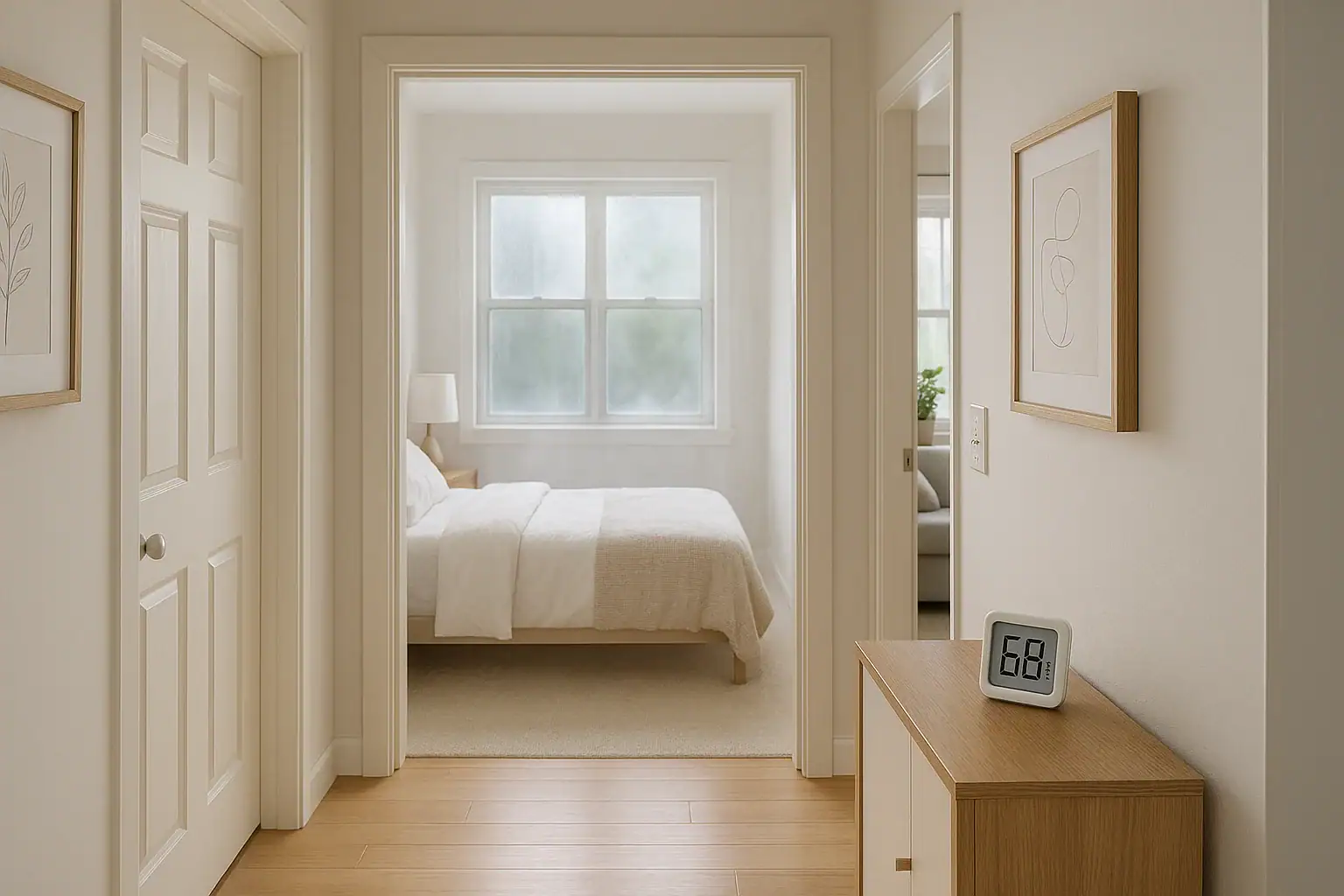
Home Comfort Guide > Air & Comfort
Walking from a cool, comfortable hallway into a single room that feels muggy and sticky is frustrating. The thermostat may say everything is fine, yet that one bedroom, office, or basement space still feels damp, smells musty, or shows signs of condensation on windows. When only one area of your home feels more humid than the rest, it usually points to a specific local issue rather than a whole-house problem. The good news is that once you track down the cause, the fix is often straightforward.
This guide walks through the most common reasons one room feels more humid, how to troubleshoot each possibility, and practical steps you can take to restore comfort. You will also learn when it is safe to handle a problem yourself and when it is better to call a professional. Use the sections below as a checklist to narrow down what is happening in your home.
First Step: Confirm It Is Really Humidity
Before you start making changes, it helps to confirm whether you are dealing with high humidity, high temperature, or both. A room can feel “heavy” or “stuffy” for different reasons.
How to quickly check humidity levels
- Use a simple digital hygrometer to measure humidity in each room.
- Compare the humid room to a comfortable room at the same time of day.
- Ideal indoor relative humidity is usually around 30%–50% for comfort.
If the problem room is consistently 10% or more higher than the rest of the house, you likely have a localized humidity issue. If humidity is similar but the room is hotter, focus more on airflow and heat sources.
Common Reasons One Room Feels More Humid
Uneven humidity almost always comes down to one or more of these factors:
- Extra moisture being generated in that room
- Poor ventilation or blocked airflow
- Air leaks to the outdoors or a damp space
- Insulation or ductwork problems
- Moisture intrusion from plumbing or the building structure
The sections below explain how each issue shows up, how to test for it, and what you can do about it.
1. Extra Moisture Sources in That Room
Some rooms naturally produce more moisture than others. If that moisture is not removed quickly, the room will feel more humid than the rest of the home.
Typical moisture sources
- Bathrooms with showers or tubs
- Laundry rooms with washers, dryers, or hanging clothes
- Kitchens with frequent cooking and boiling water
- Rooms with aquariums, indoor plants, or humidifiers
- Basements with exposed concrete or storage of damp items
What to look for
- Fogged or wet windows after showers or cooking
- Condensation on mirrors or cold surfaces
- Musty smells near stored fabrics, cardboard, or rugs
- Visible moisture on walls, ceilings, or around vents
Simple fixes you can try
- Run exhaust fans during and after showers or cooking.
- Hang wet towels or laundry in a well-ventilated area or outdoors.
- Move humidifiers or large plant collections to a better-ventilated space.
- Keep lids on pots when boiling water to reduce steam.
- Use a portable dehumidifier in rooms with frequent moisture.
2. Poor Airflow and Ventilation
Even if your whole-house system is working, a single room can feel humid if air is not circulating well. Stagnant air holds onto moisture and makes the space feel heavy and uncomfortable.
Signs of weak airflow
- The room feels stuffy compared to others.
- Air from the supply vent feels weak or barely noticeable.
- The door is often closed, limiting air movement.
- Large furniture or curtains cover vents or returns.
How to troubleshoot airflow issues
-
Check supply and return vents
- Make sure vents are fully open and not blocked by furniture or rugs.
- Vacuum dust and pet hair from vent covers and grilles.
- If there is no return vent in the room, keep the door slightly open to allow air to move.
-
Inspect air filters
- Locate your system’s main air filter and check if it is dirty or clogged.
- Replace filters on the recommended schedule, or more often if you have pets or allergies.
-
Use fans wisely
- Run a ceiling fan or small portable fan to keep air moving.
- Use the fan setting on your thermostat to circulate air throughout the home.
Improving airflow does not remove moisture by itself, but it helps your cooling and dehumidifying equipment work more effectively.
3. Air Leaks to the Outdoors or a Damp Space
If a room is connected to the outdoors or a damp area through gaps or cracks, humid air can constantly seep in. This is especially common in rooms above garages, over crawl spaces, or next to unfinished basements.
Where air leaks commonly occur
- Around windows and doors (frames, sills, and weatherstripping)
- Electrical outlets and switches on exterior walls
- Gaps around plumbing pipes or vents
- Cracks where walls meet floors or ceilings
- Unsealed attic hatches or pull-down stairs
Simple tests you can do
- On a windy day, hold your hand near window and door edges to feel for drafts.
- Use a small piece of tissue or a candle flame (carefully) to see if air is moving.
- Compare humidity readings near suspected leak areas to the center of the room.
How to seal common air leaks
- Apply fresh weatherstripping around doors and operable windows.
- Use caulk to seal gaps where trim meets walls or window frames.
- Add foam gaskets behind outlet and switch covers on exterior walls.
- Seal around plumbing penetrations with appropriate sealant or foam.
- Ensure attic hatches and access doors close tightly and are weatherstripped.
Reducing air leaks not only helps with humidity, it also improves comfort year-round and can lower your energy costs.
4. Insulation and Temperature Differences
Humidity problems are not only about the amount of moisture in the air. Temperature also plays a big role. Poorly insulated rooms tend to have colder surfaces in winter and hotter surfaces in summer, which can exaggerate humidity issues.
How insulation affects perceived humidity
- In cool weather, cold walls and windows cause moisture to condense, making the room feel damp even if humidity is not extremely high.
- In hot weather, a poorly insulated room may run warmer than the rest of the house, so the same humidity level feels more uncomfortable.
Signs of insulation problems
- Room is consistently hotter or colder than the rest of the home.
- Condensation or fog on windows, especially in winter.
- Noticeable temperature difference when you touch exterior walls.
- Room is above a garage or next to an unconditioned space.
Possible improvements
- Add or upgrade insulation in exterior walls, attics, or floors over garages.
- Use insulated window treatments to reduce temperature swings.
- Seal gaps around window frames to reduce drafts and heat transfer.
- Consider storm windows or better-performing window glass if condensation is severe.
5. Ductwork Problems Serving That Room
If your home uses a central heating and cooling system, the ductwork that feeds each room can create uneven comfort. A damaged or poorly designed duct run can leave one room more humid and less comfortable.
Possible duct-related causes
- Crushed, disconnected, or leaky ducts leading to that room
- Ducts running through hot attics or damp crawl spaces without proper insulation
- Unbalanced system where some rooms get much more airflow than others
- Closed or partially closed dampers in the duct serving that room
What you can check yourself
- Look at accessible duct sections in basements, attics, or crawl spaces for obvious damage.
- Feel for air leaks around joints while the system is running.
- Make sure any visible dampers are open to direct air to the problem room.
More complex issues, such as resizing ducts or balancing the system, are best handled by a qualified heating and cooling professional. If you suspect a duct problem and simple checks do not solve it, a professional inspection can be worthwhile.
6. Moisture Intrusion: Leaks, Basement, or Crawl Space Issues
Sometimes the extra humidity in one room comes from water getting into your home where it should not. This can be from plumbing leaks, roof leaks, or moisture rising from a damp basement or crawl space.
Warning signs of moisture intrusion
- Persistent musty odor that does not go away with cleaning.
- Visible mold or mildew on walls, ceilings, or baseboards.
- Stains, bubbling paint, or peeling wallpaper.
- Soft or warped flooring, especially near bathrooms or exterior walls.
- Water stains on ceilings below bathrooms or plumbing lines.
Check these areas carefully
- Under sinks, around toilets, and behind washing machines.
- Ceilings below bathrooms or laundry rooms.
- Basement walls and floors near the problem room.
- Crawl spaces for standing water, wet soil, or damaged vapor barriers.
Steps to reduce moisture from below
- Improve drainage around your home by keeping gutters clear and downspouts directed away from the foundation.
- Seal obvious cracks in basement walls or floors with appropriate materials.
- Use a dehumidifier in damp basements or enclosed crawl spaces.
- Consider adding or repairing a vapor barrier in crawl spaces.
If you see active leaks, significant mold growth, or structural damage, it is important to involve a professional. Long-term moisture problems can affect both indoor air quality and the durability of your home.
7. Everyday Habits That Raise Humidity in One Room
Sometimes the cause is as simple as how the room is used day to day. Small habits can add up to a big difference in humidity compared to the rest of the house.
Common lifestyle factors
- Drying clothes on racks in a bedroom or living room.
- Running a portable humidifier too often or at too high a setting.
- Keeping many potted plants in a small, closed room.
- Taking long, hot showers without running the exhaust fan.
- Keeping windows closed in mild weather when outdoor air is drier.
Simple habit changes
- Move drying racks to a ventilated area or use a vented dryer.
- Set humidifiers to a reasonable level and turn them off when not needed.
- Spread plants throughout the home instead of concentrating them in one room.
- Run bathroom fans during showers and for at least 15–20 minutes afterward.
- Open windows when outdoor conditions are comfortable and less humid.
How to Systematically Troubleshoot a Humid Room
To avoid guessing, use a simple step-by-step approach. This helps you identify the main cause instead of trying random fixes.
Step-by-step checklist
-
Measure humidity
- Use a hygrometer to compare the problem room to other rooms.
- Check at different times of day to see when humidity peaks.
-
Look for obvious moisture sources
- Showers, cooking, laundry, plants, aquariums, or humidifiers.
- Reduce or relocate these sources if possible.
-
Improve ventilation and airflow
- Open vents, clear obstructions, and run fans.
- Keep doors open when practical to allow air movement.
-
Check for air leaks and insulation issues
- Inspect windows, doors, and exterior walls for drafts.
- Seal gaps and consider insulation upgrades if the room is much hotter or colder.
-
Inspect for water intrusion
- Look for stains, mold, or damp materials.
- Check plumbing, roofs, basements, and crawl spaces.
-
Use targeted equipment if needed
- Add a portable dehumidifier in the problem room.
- Consider a whole-house solution if multiple rooms have issues.
When to Call a Professional
Many humidity issues can be improved with simple DIY steps, but some situations call for expert help. Addressing these early can prevent bigger and more expensive problems later.
Signs you should get professional help
- Visible mold growth that covers more than a small patch.
- Strong musty odors that return quickly after cleaning.
- Recurring water stains or active leaks in ceilings or walls.
- Structural concerns such as sagging floors or rotting wood.
- Suspected ductwork damage or major airflow imbalances.
- Humidity problems that persist after you have tried basic fixes.
Depending on what you find, you may need a heating and cooling technician, plumber, roofer, or moisture and mold specialist. If you are unsure where to start, a home inspection or energy audit can help identify the main causes and suggest targeted solutions.
Keeping Humidity Balanced for Long-Term Comfort
Once you get a stubborn room under control, a few ongoing habits can help keep humidity levels steady throughout your home.
Simple long-term practices
- Use exhaust fans in bathrooms and kitchens whenever you create steam.
- Stay on top of filter changes and basic heating and cooling maintenance.
- Check windows, doors, and basements seasonally for new gaps or moisture.
- Monitor humidity with a small digital meter, especially during humid seasons.
- Address small leaks or water stains promptly before they grow.
Balanced humidity supports comfort, protects your home’s finishes, and can even help with indoor air quality. By understanding why one room feels more humid than the rest and working through the most likely causes, you can create a more consistent, comfortable environment in every part of your home.
 Upstairs Bedroom Too Hot? Practical Airflow Fixes That Actually Help
 Why Your Bedroom Feels Stuffy Even With the AC On (Troubleshooting Guide)
 Why Your Home Feels Dry Even When Humidity Is Normal