Knowing where to store food in your refrigerator matters just as much as keeping it cold. Different parts of the fridge run slightly warmer or colder, and those temperature differences can impact how long food stays fresh and how safe it is to eat. When you understand your refrigerator temperature zones, you can organize food to slow spoilage, reduce waste, and help protect your household from foodborne illness.
This guide walks through the main refrigerator zones, the ideal temperatures for food safety, and how to use each shelf, drawer, and door section wisely. You will also learn how to check your fridge temperature, adjust settings, and spot signs that food may no longer be safe. Use this as a practical reference to set up your refrigerator for everyday safety and convenience.
Why Refrigerator Temperature Matters for Food Safety
Refrigeration slows the growth of bacteria, but it does not stop it completely. The goal is to keep food out of the “danger zone,” which is roughly 40 °F to 140 °F. Within this range, bacteria that can cause foodborne illness multiply more quickly.
Keeping your refrigerator at the right temperature helps:
- Reduce foodborne illness risk by slowing harmful bacteria growth
- Extend shelf life of produce, dairy, leftovers, and meats
- Preserve flavor and texture so food tastes better for longer
- Cut food waste and save money over time
Even a few degrees too warm can shorten the safe storage time for many foods, especially meat, seafood, dairy, and cooked leftovers.
Ideal Refrigerator and Freezer Temperatures
Before diving into specific zones, it helps to know the target temperatures for your refrigerator and freezer overall.
Recommended Temperature Ranges
- Refrigerator: 35 °F to 38 °F (about 1.7 °C to 3.3 °C)
- Maximum safe fridge temperature: 40 °F
- Freezer: 0 °F (-18 °C) or lower
Setting the refrigerator slightly below 40 °F gives you a buffer for warm spots and frequent door openings. Temperatures much below 32 °F can cause some foods, especially produce, to freeze or develop off textures.
How to Check Your Fridge Temperature
Built-in dials or digital displays often show a setting level rather than the actual internal temperature. To know what is really happening inside, use a simple appliance thermometer.
- Place a refrigerator thermometer in the center of the middle shelf.
- Leave it there for at least 24 hours without moving it.
- Check the reading and adjust the temperature control if needed.
- Recheck after another 24 hours to confirm the new setting.
You can also keep a second thermometer in the freezer to confirm it stays at or below 0 °F.
Understanding Refrigerator Temperature Zones
Most refrigerators are cooler in the back and near vents where cold air enters, and slightly warmer near the door and top shelves. While designs vary, these general patterns are common:
- Coldest zones: back of the lower shelves, near cold air vents
- Moderate zones: center shelves and drawers
- Warmest zones: door shelves and upper front areas
Understanding these patterns helps you match foods to the best location based on how sensitive they are to temperature changes.
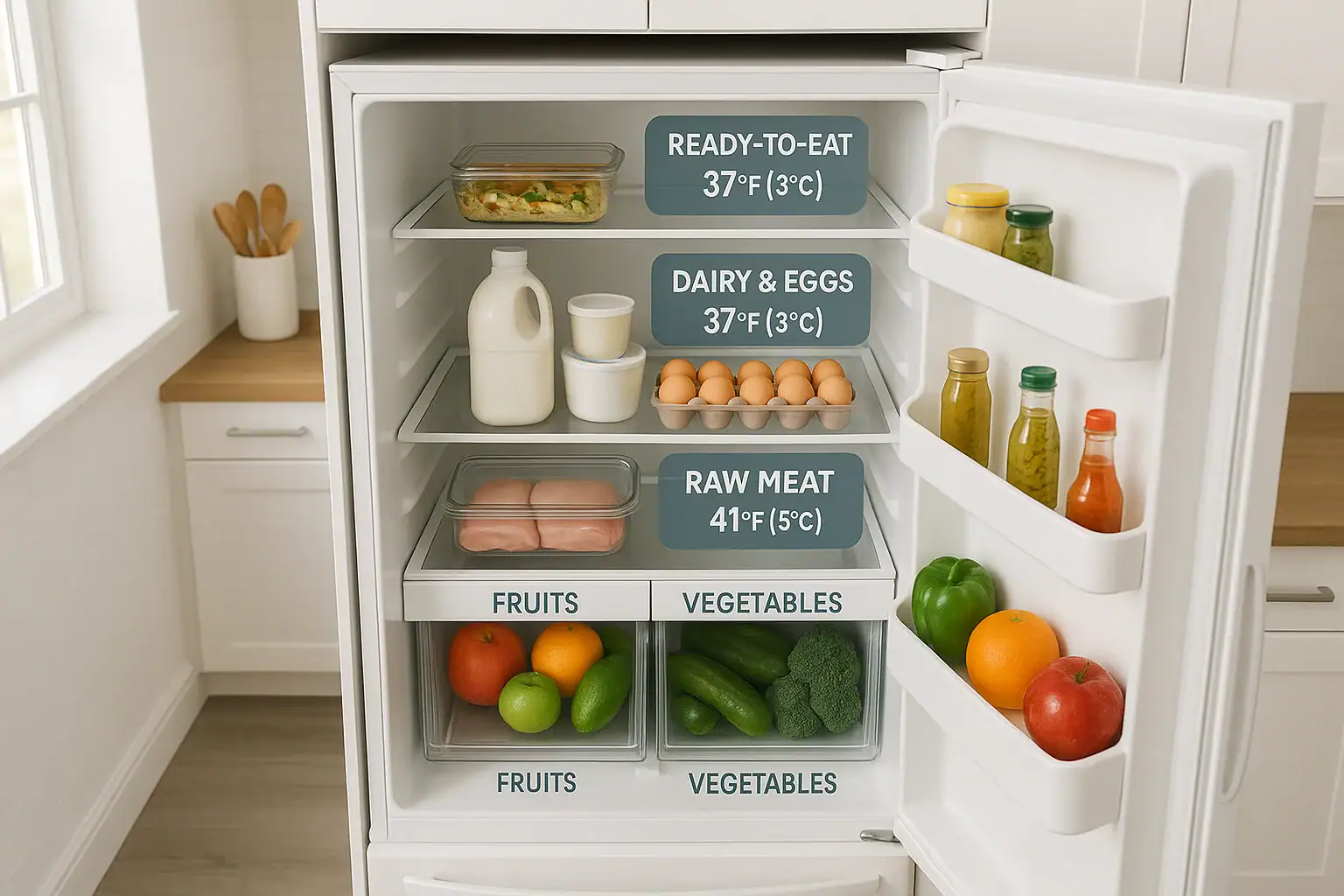
Top Shelf: Best for Ready-to-Eat Foods
The top shelf usually has a fairly stable temperature, though it may be slightly warmer than lower shelves. It is a good place for foods that are already cooked or ready to eat and do not need the coldest part of the fridge.
What to Store on the Top Shelf
- Leftovers that will be eaten within a few days
- Ready-to-eat items like dips, hummus, and spreads
- Packaged deli items and snack boxes
- Prepared salads without raw meat or seafood
- Drinks that do not require the coldest zone
Because this area is easy to see, it is also a good place for items you want to use up soon. Store leftovers in shallow, tightly covered containers, label them with the date, and aim to eat them within 3 to 4 days.
Middle Shelves: Dairy and Everyday Staples
The middle shelves typically have a consistent, moderate-cold temperature. This makes them ideal for foods that are sensitive to temperature but do not need the absolute coldest zone.
What to Store on Middle Shelves
- Milk and plant-based beverages (if not stored in the coldest lower shelf)
- Yogurt, cottage cheese, and other cultured dairy products
- Cheese in proper wrapping or containers
- Eggs in their original carton (not on the door)
- Packaged leftovers and meal prep containers
Keeping eggs and milk away from the door helps maintain a steady temperature, which supports both safety and quality. Place items you reach for often at eye level to reduce door-open time and make it easier to see what you have.
Bottom Shelf: Coldest Zone for Raw Meat, Poultry, and Seafood
The bottom shelf, especially toward the back, is usually the coldest part of the refrigerator. This is the safest place for raw animal products that need strict temperature control.
What to Store on the Bottom Shelf
- Raw meat (beef, pork, lamb, and similar items)
- Raw poultry (chicken, turkey, and other birds)
- Raw seafood (fish and shellfish)
- Vacuum-packed raw items awaiting cooking or freezing
Food Safety Tips for the Bottom Shelf
- Keep raw items in leakproof containers or trays to catch drips.
- Store raw meat and seafood below ready-to-eat foods to prevent cross-contamination.
- Use raw poultry and seafood within 1 to 2 days, and most raw meats within 3 to 5 days, or freeze them.
- Clean and sanitize the bottom shelf regularly, especially after spills.
By using the coldest shelf for raw items, you reduce the risk of both bacterial growth and accidental contamination of other foods.
Crisper Drawers: Managing Humidity for Fruits and Vegetables
Crisper drawers are designed to help manage humidity, which affects how quickly produce wilts or spoils. Many refrigerators have two drawers with adjustable vents or sliders labeled for fruits and vegetables.
High-Humidity Drawer (Usually for Vegetables)
The high-humidity setting keeps more moisture inside the drawer. This is best for produce that wilts easily and benefits from a more humid environment.
Store these in the high-humidity drawer:
- Leafy greens (lettuce, spinach, kale)
- Broccoli, cauliflower, and cabbage
- Carrots, celery, and green beans
- Herbs that prefer moisture, such as parsley and cilantro
Low-Humidity Drawer (Usually for Fruits)
The low-humidity setting allows more air to escape, which helps reduce excess moisture that can cause some fruits to mold or break down quickly.
Store these in the low-humidity drawer:
- Apples and pears
- Grapes and berries
- Citrus fruits like oranges, lemons, and limes
- Stone fruits such as peaches, plums, and nectarines (once ripe)
Produce Safety Tips
- Keep raw meat and seafood out of crisper drawers to avoid contamination.
- Do not wash berries and delicate fruits until just before eating to prevent mold.
- Place a paper towel in the drawer to absorb excess moisture and change it regularly.
- Check drawers often and remove spoiled items so they do not affect nearby produce.
Door Shelves: The Warmest Zone for Condiments and Beverages
The refrigerator door is the warmest and most temperature-variable area because it is opened and closed frequently. It is not ideal for foods that spoil quickly or require steady cold temperatures.
What to Store in the Door
- Condiments such as sauces, dressings, and spreads
- Jams, jellies, and pickled items
- Shelf-stable beverages that are being chilled
- Butter or spreads that can tolerate slight temperature swings
Avoid storing milk, eggs, or raw meat in the door. Even if there is a special compartment for them, the temperature changes can shorten their safe storage time.
Organizing Your Refrigerator for Maximum Food Safety
A thoughtful layout can make your refrigerator easier to use and safer. The goal is to keep the coldest foods where they belong and prevent raw items from contaminating ready-to-eat foods.
Simple Layout Strategy
- Top shelf: Ready-to-eat foods and leftovers
- Middle shelves: Dairy, eggs, and everyday items
- Bottom shelf: Raw meat, poultry, and seafood in covered containers
- Crisper drawers: Fruits and vegetables separated by humidity needs
- Door: Condiments, sauces, and beverages
Practical Tips to Keep Food Safe
- Label leftovers with the date and use a “first in, first out” approach.
- Do not overpack shelves; allow cold air to circulate freely.
- Wipe up spills right away, especially from raw meat or seafood.
- Keep strong-smelling foods covered to avoid odor transfer.
- Store raw foods below cooked foods at all times.
Safe Cooling and Storage of Leftovers
Even if your refrigerator is set correctly, food safety can be compromised if leftovers are not cooled and stored properly.
Cooling Hot Foods Safely
- Refrigerate leftovers within 2 hours of cooking, or within 1 hour if the room is very warm.
- Divide large portions into shallow containers so they cool faster.
- Avoid placing very hot pots directly into the fridge; let them cool slightly first.
How Long to Keep Leftovers
In general:
- Cooked leftovers: 3 to 4 days
- Cooked meat and poultry: 3 to 4 days
- Soups and stews: 3 to 4 days
When in doubt, throw it out. If you cannot remember when you stored something, it is safer not to eat it.
Recognizing Signs Food May No Longer Be Safe
Temperature control slows spoilage, but it does not make food last forever. Watch for warning signs that food should be discarded.
Common Warning Signs
- Off or sour odors that were not present before
- Unusual colors or visible mold growth
- Slime or sticky film on meat, poultry, or seafood
- Bulging or leaking containers
- Milk or dairy that curdles or separates unexpectedly
Some harmful bacteria do not change the smell, taste, or appearance of food. That is why following time and temperature guidelines is just as important as trusting your senses.
Maintaining Your Refrigerator for Consistent Temperatures
A well-maintained refrigerator is more likely to hold steady, safe temperatures across all zones. A few simple habits can make a big difference.
Routine Maintenance Tips
- Clean interior shelves and drawers regularly with warm, soapy water.
- Check door seals for gaps or cracks and clean them to ensure a tight close.
- Do not block air vents inside the fridge with large containers.
- Give the refrigerator a little space from the wall for proper airflow.
- Defrost if needed to prevent ice buildup in older models.
If you notice food spoiling faster than usual or ice forming in unusual places, recheck the temperature with a thermometer and adjust the settings. Persistent problems may signal that the appliance needs service or replacement.
Putting It All Together
Using refrigerator temperature zones wisely is one of the simplest ways to support food safety at home. Keep the overall temperature between 35 °F and 38 °F, use the coldest zones for raw meat and seafood, protect produce in the crisper drawers, and reserve the door for condiments and beverages.
Combine these storage habits with regular cleaning, proper cooling of leftovers, and attention to use-by dates, and you will create a safer, more efficient kitchen. A few small adjustments in how you organize your refrigerator can lead to fresher food, fewer unpleasant surprises, and better protection for everyone in your household.
For more ideas on organizing your kitchen and managing food safely, explore additional guides on water, kitchen, and home care topics that fit your space and lifestyle.
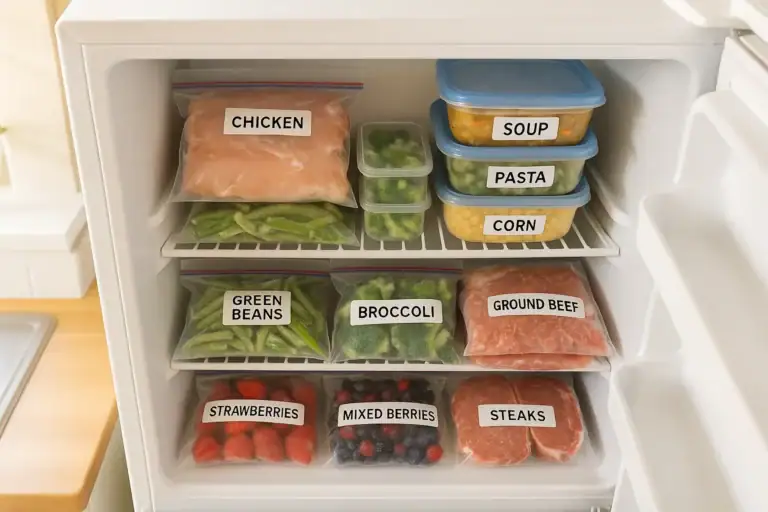 Freezer Burn Prevention: Smart Packaging and Storage Habits That Actually Work
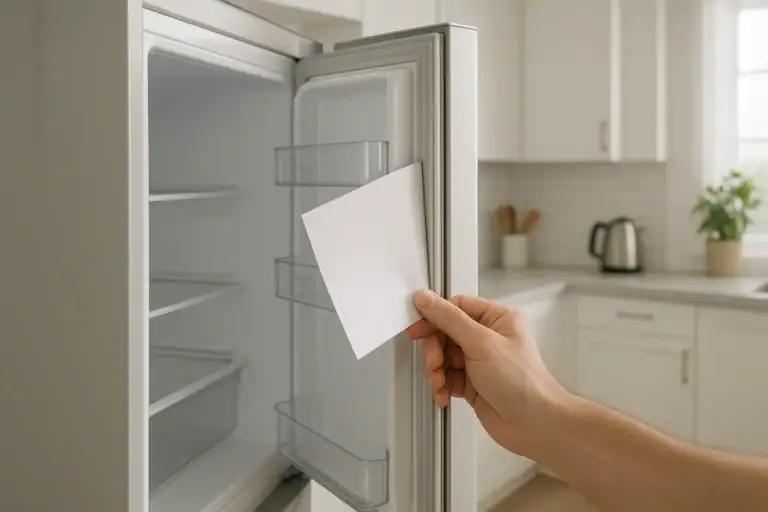 Fridge Door Seal Test Checklist for Better Energy Use and Food Safety
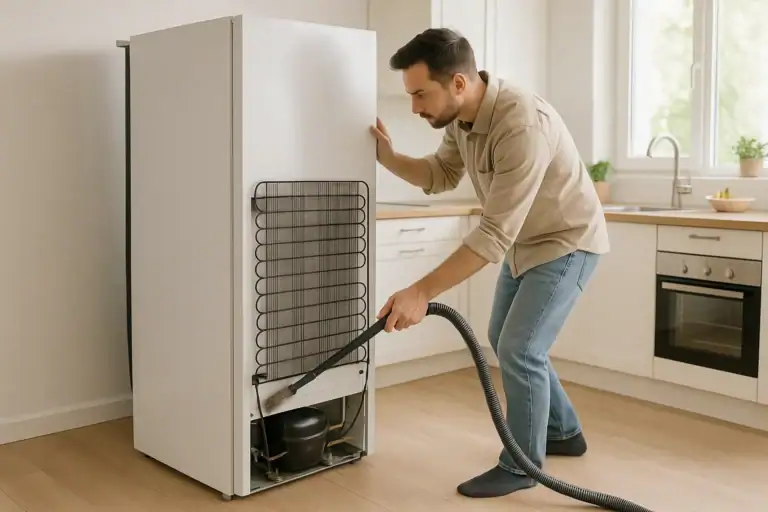 Refrigerator Coil Cleaning: How Often and Why It Matters (Checklist)